The Lazarus-like resurrection of former vice president Joe Biden’s presidential campaign rests on his strong support in the Black community—specifically from Majority Whip James Clyburn and the South Carolina Black community, who helped deliver Biden’s first major primary victory, and from Black women in particular. In recent months, the focus by many Black elected officials and activists has been to urge Biden to select an African-American woman as his vice presidential nominee.
Biden has already said he will pick a woman as his running mate, and fortunately there is a deep bench of capable women to choose from, including a number of women of color. But while the role of vice president is hugely significant, I believe that if you care about addressing the barriers that have kept America’s Black and Brown communities from closing the wealth and income gaps, the much more important and impactful position is the secretary of the Treasury.
Given the extraordinary fiscal challenges this nation currently faces—a pandemic of a severity unseen in 100 years, and racial unrest of an intensity unseen in 50 years—the need for thoughtful financial public policy is greater than ever. The current moment necessitates that the Treasury secretary not only understands the needs of the most disenfranchised, but also symbolically projects to the rest of the world that America is the land of opportunity for all.
Access to capital—or more accurately stated, the lack of access to capital—is the single most important challenge historically disadvantaged communities collectively face. It’s largely responsible for the host of economic disparities that continue to bedevil our society. The Great Recession of 2007–09 highlighted and aggravated those disparities. Before the crisis began, the average Black family earned $55,265 a year, just 64% as much as the average non-Hispanic white household. During the recession itself, Black American unemployment exceeded 16%—compared with a little under 9% for whites. African-American family incomes and net worth also suffered more than those of white households during the crisis, due to a variety of factors ranging from student debt to the rate of homeownership.
The current pandemic is replaying that script, with the Black community once again suffering disproportionately. The Black unemployment rate, which at 5.8% in February was at the lowest level since records began in 1972, tripled to 16.8% in May, according to the Labor Department. African-Americans have also been at a far higher risk than other ethnic groups of dying from COVID-19, according to the Centers for Disease Control and Prevention, in part because economic disparities make them more likely to have underlying health conditions such as high blood pressure and diabetes, and less likely to have health insurance and access to medical care.
If there is to be an economic renaissance in the Black/Brown community, Black and Brown leaders must be in a position to influence and control the tools to promote economic development. When it comes to wielding those tools, Treasury is the single most important cabinet post.
The Treasury Department impacts the domestic economy even as it projects American influence and power abroad. It combines the soft power of the State Department with the hard edge of the Defense Department. And many of its branches are particularly well positioned to deliver economic support to Black and Brown communities. The Office of the Comptroller of the Currency, for example, regulates banks and thrifts. It can influence their lending practices, making sure they eliminate practices that have excluded communities of color. The OCC can also encourage banks to provide financial literacy in these communities—offering lessons in how to save, how to invest, how to start a business, and other pivotal skills.
Under Black or Brown leadership, the Treasury Department might be more likely to make sure that emergency programs to assist economic stability, such as today’s Paycheck Protection Program or the Troubled Asset Relief Program, established after the Great Recession, are targeted to help Black/Brown businesses. The department could also address some disparities in the finance community. The federal government currently manages approximately $854 billion in pension assets, for a workforce that’s more than 18% Black. But Black/Brown-owned asset management firms manage less than 2% of those federal dollars.
Among the public policy failures coming out of the Great Recession was the lack of inclusion by those most affected by the downturn. The pandemic has created enormous challenges for small-business owners in general, and Black and Brown business owners in particular; those entrepreneurs need a person and team that understand and represent their interests. Just as Biden courageously pledged to have a woman as a running mate, he should pledge to choose a person of color as Treasury secretary.
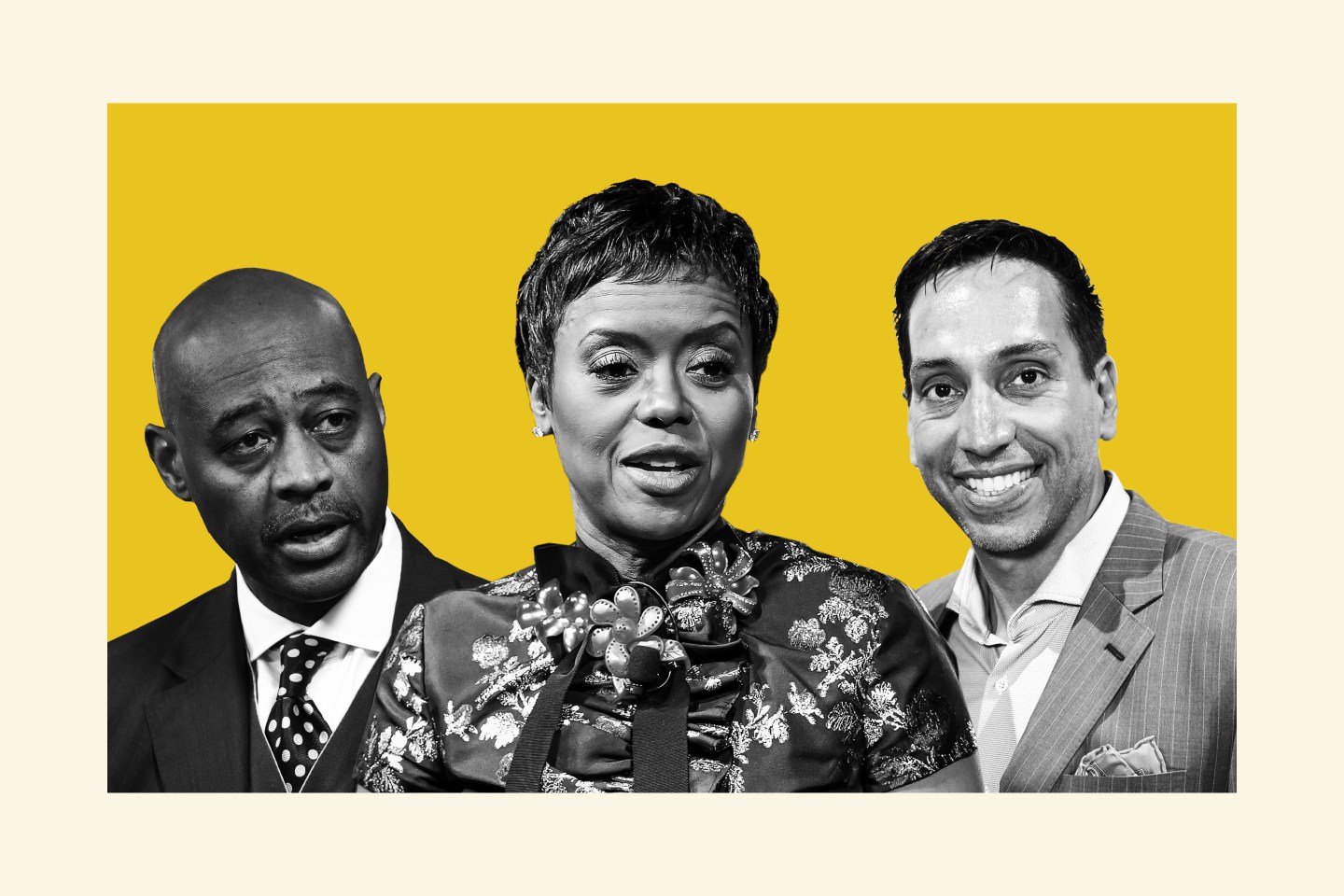
There are a number of qualified candidates to choose from, including Robert Smith, CEO of Vista Equity Partners; Ray McGuire, vice chairman of Citigroup; Mellody Hobson, co-CEO of Ariel Capital Management; José Feliciano, managing partner of Clearlake Capital Group; and Kenneth Chenault, former CEO of American Express, to name a few. And diversifying the Treasury Department shouldn’t stop at the top: Each of these individuals has relationships with a cadre of proven, talented, and accomplished men and women of color in finance, whom the next secretary could empower to assist in the effort of creating a fairer economy.
Access to opportunity is vital to securing the American dream. Equal opportunity, not equal outcomes, for all citizens—in education, safe and clean neighborhoods, health care, employment/entrepreneurship, and practicing one’s faith—is the American dream. Access to capital is an important expression of that endeavor.
Therefore, I would strongly encourage the many of us from all walks of life who care about race, not to be singularly focused on the shiny object of the vice presidency. Let’s seize this historic moment of leverage to demand the Treasury seat—to stabilize and elevate our communities, and thereby the nation and the world.
Kneeland Youngblood is founding partner and chairman of Pharos Capital Group, a health care–focused private equity firm.