If aliens had descended on the United States anytime over the past couple of months and turned to multiple news outlets to try to decipher what was really going on with this COVID-19 pandemic—bear with me here—they would have been utterly confused. What they would have seen on CNN is very different from what they would have seen on Fox News, especially in recent days, as stories of a supposed “Obamagate” scandal have overtaken virus coverage on the latter news outlet.
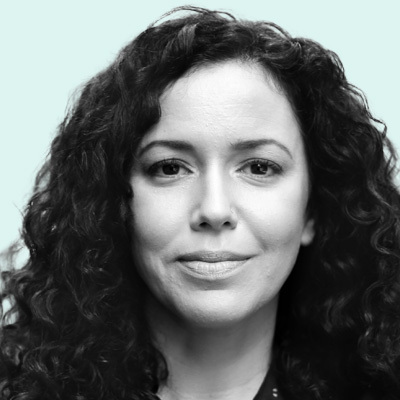
Even the words most commonly used in coverage of the virus is markedly different in liberal-leaning versus conservative-leaning outlets, according to an analysis done by Pluralytics, a formerly in-stealth startup that uses artificial intelligence to assess natural language. The Minneapolis-based company’s cofounder and chief executive officer knows a thing or two about the power of words, especially in the political realm—she is the former CEO of Public Radio International, which provides daily programming for more than 850 public radio stations.
“I have had a front-row seat to watch the growing polarization in America,” says Alisa Miller, who left PRI to start Pluralytics late last year.
Miller’s vision for Pluralytics is to serve brands looking to better connect with values-conscious consumers, turning the A.I.-based technology into a tool that can analyze and recommend words that will better connect with the masses. (She says that 70% of millennials make “values-based” purchasing decisions.) But starting with the news business was a natural fit for the media exec turned entrepreneur.
“When we saw how polarized the COVID-19 conversation was becoming, we wanted to look at media coverage and see what we could learn,” says Miller. “Media language sets the tone for how people use language more broadly.”
Here’s how the analysis worked: Over the course of two days in early April, Pluralytics’ A.I. engine ingested and analyzed articles from five publications that are considered conservative-leaning and five that are considered liberal-leaning. Miller says these definitions were made by looking at the self-described political affiliations of people who read the respective outlets. In all, more than 600,000 words used to talk about COVID-19 were studied. The findings: Well, let’s just say that Americans really are living in two different worlds.
For example, conservative-leaning publications were 30 times more likely to mention the word “terrorism” in the context of the virus, and nearly 20 times more likely to mention the word “malaria.” (Conversations about hydroxychloroquine, the antimalarial drug whose efficacy has been questioned by the Food and Drug Administration and medical experts, have been popular in some conservative circles.) On the liberal-leaning side, the words “women,” “culture,” and “vaccine” were four to five times more likely to come up in stories about the virus, as was the word “testing.”
In general, the Pluralytics study found that at least within this two-day period in early April, conservative-leaning outlets were more likely to focus on themes of security and the economy, while liberal-leaning sites veered more toward health and community. “It speaks to the different languages emerging on this issue, depending on your worldview,” says Miller.
Still, there was some common ground to be found. Miller says that both sides used words like “stimulus,” “jobs,” and “schools” with somewhat similar frequency.
“People [on both sides] want results, and they want to understand what’s essential,” says Miller.
Finding that common-ground language will be even more challenging now, with the nation’s attention shifting to reopening, a polarizing and politicized topic. And being attentive to the power of words isn’t just a focus for the news media. As more and more companies communicate their plans for resuming business to both external and internal audiences, they will have to think about how they word their messaging without enraging or ignoring large percentages of the population.
“If they’re not only doing the thing that one side opposes, but also speaking in a way that angers that side, they risk even more criticism,” says Christopher Bryan, an assistant professor of behavioral science at the University of Chicago Booth School of Business and an adviser to Pluralytics. According to Bryan, identifying and steering clear of word “land mines” can go a long way. “You can make the same substantive statement [without using words seen as explosive to one side or another],” says Bryan.
To be sure, while A.I.-powered tools like Pluralytics can help identify and suggest less divisive or more optimal language, they don’t do anything to address the underlying problems that have led to the polarization of our news business and of our politics. That thorny complexity is something the aliens will undoubtedly take even longer to comprehend.