• Home
  • Latest
  • Fortune 500
  • Finance
  • Tech
  • Leadership
  • Lifestyle
  • Rankings
  • Multimedia
RetailCoronavirus

Companies are rolling back ‘hazard pay’ for essential workers—even as risks remain

By
Anders Melin
Anders Melin
,
Ben Steverman
Ben Steverman
, and
Bloomberg
Bloomberg
Down Arrow Button Icon
By
Anders Melin
Anders Melin
,
Ben Steverman
Ben Steverman
, and
Bloomberg
Bloomberg
Down Arrow Button Icon
May 14, 2020, 7:20 AM ET

The hazard pay is disappearing. The hazard is not.

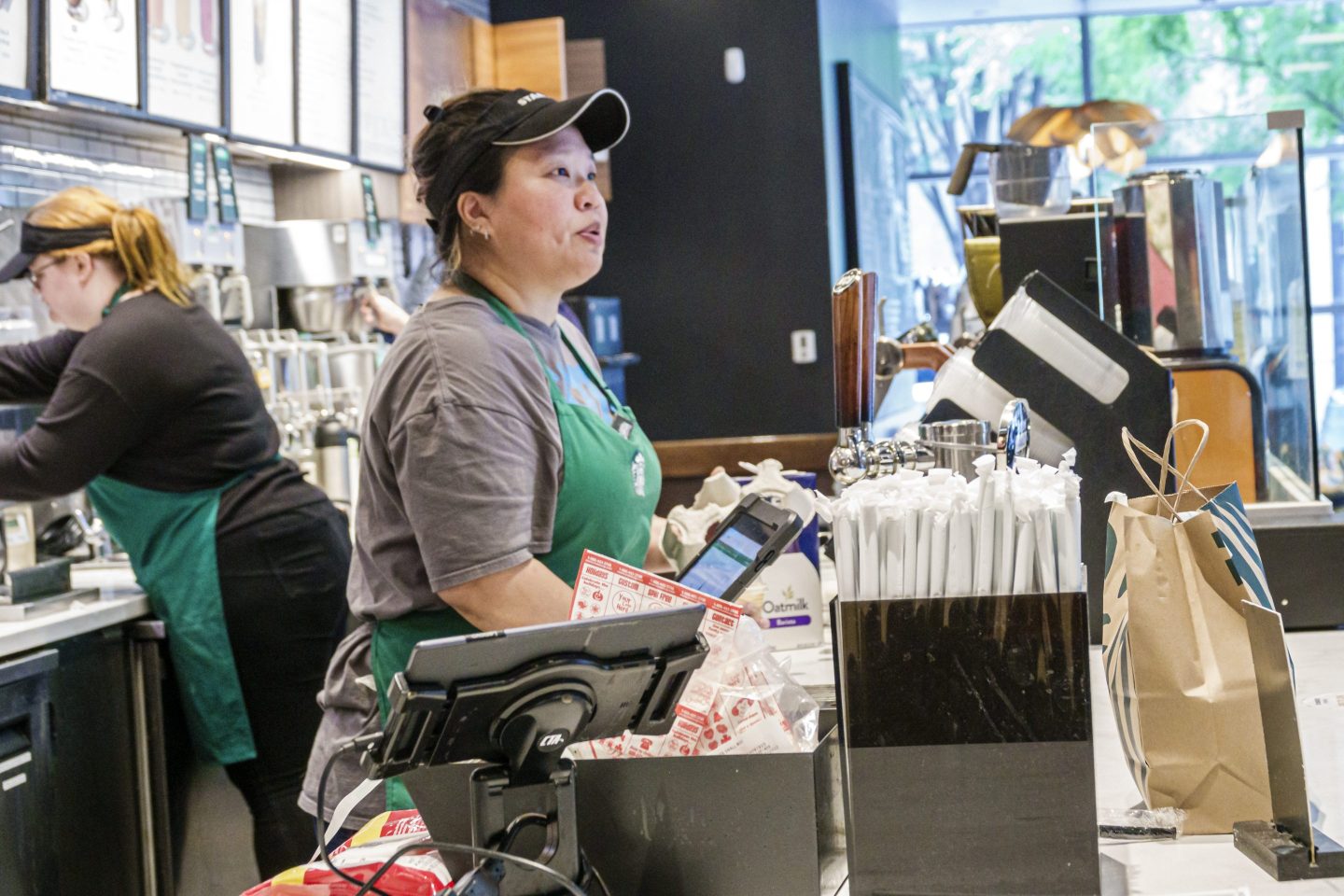
Some essential employees across the U.S. have received bonuses or pay bumps to compensate for the risk that comes with clocking in at supermarkets, hospitals and other crowded workplaces during a pandemic. 

Now companies are walking back those wage increases, even as the threat of Covid-19 lingers. 

This weekend, Kroger Co. is rescinding the $2 raise it gave to store and warehouse workers. Target Corp. and Amazon.com Inc. will follow later this month, with other firms charting similar moves.

The planned cutbacks have rankled unions, employees and customers who are accusing companies of putting profits ahead of worker well-being. They also raise questions about how to value the essential workers who are keeping society functioning. Many continue to put their health and safety on the line in exchange for relatively low wages.

“How do you go from a hero to zero when there’s still a pandemic out there?” said Steve Vairma, secretary-treasurer of the International Brotherhood of Teamsters’ Local 455 in Denver, whose members include Kroger distribution center workers. “What has changed? Our folks are still risking their safety and health by showing up for work.”

What’s changed, some experts say, is the gradual lifting of shelter-in-place orders that has people returning to workplaces. The pay premiums were meant to compensate those who had no choice but to come in, said Adrienne Altman, managing director at HR-consulting firm Willis Towers Watson Plc.

“When everyone’s back, there’s no reason for that offset,” Altman said.

But the virus, which has infected more than 1 million Americans and killed over 80,000, remains, and workplaces are still potential hotspots.

Employers, for their part, say they’ve made efforts to increase worker safety. Kroger, which will end its so-called “hero bonus” on May 16, said it will continue to offer employees testing, emergency leave and face masks. In April, it also gave full-time workers a $300 bonus and part-timers half that.

“We are committed to the continued support of our associates’ safety and mental well-being” and will continue discussions with unions, said Kristal Howard, a Kroger spokesperson. She added that without the premium employees make on average $15 an hour. 

Amazon, which has been criticized for its treatment of warehouse employees, recently extended its $2 wage bump through May. The company said it has stepped up cleaning and other precautionary measures, including leave of absence options for high-risk individuals and those impacted by school closures.

Target, which plans to roll back its raise at the end of this month, said it will continue to provide resources for workers and their families. The company offers two weeks of paid leave for employees who test positive for the virus or need to quarantine, and double that for those deemed vulnerable.

Workers on the front lines of the pandemic are some of the lowest-paid in America. Retail cashiers earn a median hourly wage of $11.37, according to the Bureau of Labor Statistics, while the typical agricultural worker makes $12.52 and slaughterhouse employees bring home about $14 an hour.

Many in these risky jobs have seen no wage increases at all. But even with a hazard premium, workers in low-wage retail jobs can earn less than they would on unemployment, which the federal government is supplementing by $600 a week through July.

Knowing that it’s controversial to roll back pay bumps, many companies opted for one-time bonuses instead. Walmart Inc. in April gave its workers bonuses and said Tuesday that it will grant another round of payments next month. CVS Health Corp. doled out as much as $500 and extended paid sick leave to part-time employees.

Neither approach properly compensates employees for the risks, said Columbia University economics professor Suresh Naidu, who calculated that front line workers should get at least an extra $10 an hour. 

“If this was a normal labor market, you imagine that wages would respond on their own,” Naidu said. Instead, companies don’t need to increase compensation to keep scared employees coming to work because, “the bottom has fallen out of the market. If you’re an essential worker, there’s no other job than the job you currently have.” And employees who quit aren’t eligible for unemployment benefits.

They’re “basically forced labor,” he said.

Lawmakers across the country have proposed an array of initiatives for government-subsidized hazard pay for essential workers.

A $3 trillion coronavirus relief bill proposed by House Democrats on May 12 includes a $200 billion “Heroes Fund” that aims to boost pay for essential workers by $13 an hour.

Republican Senator Mitt Romney floated “Patriot Pay,” a temporary $12-per-hour raise for low- and middle-income essential workers, and a bipartisan group of senators have called for a 25% raise for federal employees who can’t properly distance from others while working. The senators argued that the Trump administration has legal authority to issue the hazard pay.

So far, none of the efforts have been successful, in part as deficit concerns have cooled interest among Republican lawmakers for additional stimulus.

State legislators have run into similar issues. Officials from California to Vermont have pushed for higher pay for essential workers in both the public and private sector, but have run into budget constraints. After Vermont’s state senate approved a $60 million bill to fund hazard pay, the state’s Republican Governor Phil Scott said he “supports the intent, but needs to see how it will be funded.”

Without government action, most pay premiums for essential workers will likely expire this summer, if not earlier. That will send legions of workers back to their old wages even as the safety requirements like face masks and distancing remain.

“The retailers have made pretty clear that these are temporary in nature,” said Edward Jones retail analyst Brian Yarbrough. “I don’t think workers have a lot of leverage.”

One complicating factor for large retailers and others is what to do with pay if the virus begins spreading in some areas but not others.

Hazard pay policies are already inconsistent, even within workplaces. At the Veterans Affairs Medical Center in Iowa City, all employees wear masks and face shields but only those working directly on the Covid-19 ward are getting extra pay. 

“Coming into work and wearing a mask all day long—even if you’re not going into the ‘hot zones’—there’s a cost to that,” said Patrick Kearns, a registered nurse and president of the local chapter of the American Federation of Government Employees union, which is pushing the VA to expand hazard pay. “There’s a psychological toll that takes on people.”
About the Authors
By Anders Melin
See full bioRight Arrow Button Icon
By Ben Steverman
See full bioRight Arrow Button Icon
By Bloomberg
See full bioRight Arrow Button Icon

Latest in Retail

Finance
Lorem ipsum dolor sit amet, consectetur adipiscing elit, sed do eiusmod tempor incididunt ut labore et dolore magna aliqua. Ut enim ad minim veniam
By Fortune Editors
October 20, 2025
Finance
Lorem ipsum dolor sit amet, consectetur adipiscing elit, sed do eiusmod tempor incididunt ut labore et dolore magna aliqua. Ut enim ad minim veniam
By Fortune Editors
October 20, 2025
Finance
Lorem ipsum dolor sit amet, consectetur adipiscing elit, sed do eiusmod tempor incididunt ut labore et dolore magna aliqua. Ut enim ad minim veniam
By Fortune Editors
October 20, 2025
Finance
Lorem ipsum dolor sit amet, consectetur adipiscing elit, sed do eiusmod tempor incididunt ut labore et dolore magna aliqua. Ut enim ad minim veniam
By Fortune Editors
October 20, 2025
Finance
Lorem ipsum dolor sit amet, consectetur adipiscing elit, sed do eiusmod tempor incididunt ut labore et dolore magna aliqua. Ut enim ad minim veniam
By Fortune Editors
October 20, 2025
Finance
Lorem ipsum dolor sit amet, consectetur adipiscing elit, sed do eiusmod tempor incididunt ut labore et dolore magna aliqua. Ut enim ad minim veniam
By Fortune Editors
October 20, 2025

Most Popular

Finance
Lorem ipsum dolor sit amet, consectetur adipiscing elit, sed do eiusmod tempor incididunt ut labore et dolore magna aliqua. Ut enim ad minim veniam
By Fortune Editors
October 20, 2025
Finance
Lorem ipsum dolor sit amet, consectetur adipiscing elit, sed do eiusmod tempor incididunt ut labore et dolore magna aliqua. Ut enim ad minim veniam
By Fortune Editors
October 20, 2025
Finance
Lorem ipsum dolor sit amet, consectetur adipiscing elit, sed do eiusmod tempor incididunt ut labore et dolore magna aliqua. Ut enim ad minim veniam
By Fortune Editors
October 20, 2025
Finance
Lorem ipsum dolor sit amet, consectetur adipiscing elit, sed do eiusmod tempor incididunt ut labore et dolore magna aliqua. Ut enim ad minim veniam
By Fortune Editors
October 20, 2025
Finance
Lorem ipsum dolor sit amet, consectetur adipiscing elit, sed do eiusmod tempor incididunt ut labore et dolore magna aliqua. Ut enim ad minim veniam
By Fortune Editors
October 20, 2025
Finance
Lorem ipsum dolor sit amet, consectetur adipiscing elit, sed do eiusmod tempor incididunt ut labore et dolore magna aliqua. Ut enim ad minim veniam
By Fortune Editors
October 20, 2025
Fortune Secondary Logo
Rankings
  • 100 Best Companies
  • Fortune 500
  • Global 500
  • Fortune 500 Europe
  • Most Powerful Women
  • Future 50
  • World’s Most Admired Companies
  • See All Rankings
Sections
  • Finance
  • Fortune Crypto
  • Features
  • Leadership
  • Health
  • Commentary
  • Success
  • Retail
  • Mpw
  • Tech
  • Lifestyle
  • CEO Initiative
  • Asia
  • Politics
  • Conferences
  • Europe
  • Newsletters
  • Personal Finance
  • Environment
  • Magazine
  • Education
Customer Support
  • Frequently Asked Questions
  • Customer Service Portal
  • Privacy Policy
  • Terms Of Use
  • Single Issues For Purchase
  • International Print
Commercial Services
  • Advertising
  • Fortune Brand Studio
  • Fortune Analytics
  • Fortune Conferences
  • Business Development
About Us
  • About Us
  • Editorial Calendar
  • Press Center
  • Work At Fortune
  • Diversity And Inclusion
  • Terms And Conditions
  • Site Map
Fortune Secondary Logo
  • About Us
  • Editorial Calendar
  • Press Center
  • Work At Fortune
  • Diversity And Inclusion
  • Terms And Conditions
  • Site Map
  • Facebook icon
  • Twitter icon
  • LinkedIn icon
  • Instagram icon
  • Pinterest icon

Latest in Retail

HealthFood and drink
Chains like Sweetgreen and Chipotle are finally realizing they need to look beyond the ‘slop bowl’
By Phil WahbaFebruary 27, 2026
1 day ago
burger king
AIOpenAI
Burger King tests OpenAI-powered headsets that will track the friendliness of drive-through workers
By Dee-Ann Durbin and The Associated PressFebruary 27, 2026
1 day ago
Two restaurant workers wearing black stand in front of a silver "Flippy" fry station.
AIAutomation
Meet your new robot fry cooks: Inside the $28 billion race to disrupt White Castle and Jack in the Box
By Sasha RogelbergFebruary 26, 2026
2 days ago
Customers in the electronics section at Walmart on Black Friday in Columbus, Ohio, US, on Friday, Nov. 28, 2025. Americans are planning to spend more this holiday season than last year, according to credit reporting firm TransUnion. Photographer: Brian Kaiser/Bloomberg via Getty Images
C-SuiteLeadership
McKinsey studied 61 growth companies that outperformed their peers through COVID, inflation, and labor shocks. Here’s what they all had in common
By Geoff ColvinFebruary 26, 2026
3 days ago
The Home Depot storefront
InvestingHome Depot
Home Depot CEO says with the housing market stalemate, ‘our customers are telling us that they’re not investing’
By Jacqueline MunisFebruary 25, 2026
4 days ago
CommentaryCulture
Gen Z’s enthusiasm for all things touchable is resurrecting the analog economy—and costing parents
By Luba KassovaFebruary 24, 2026
4 days ago

Most Popular

placeholder alt text
Success
Japanese companies are paying older workers to sit by a window and do nothing—while Western CEOs demand super-AI productivity just to keep your job
By Orianna Rosa RoyleFebruary 27, 2026
1 day ago
placeholder alt text
Success
Walmart exec says U.S. workforces needs to take inspiration from China where ‘5 year-olds are learning DeepSeek’
By Preston ForeFebruary 27, 2026
2 days ago
placeholder alt text
Middle East
Iran is now on 'death ground' amid existential threat from U.S. attacks and could 'go big' in retaliation, former NATO commander warns
By Jason MaFebruary 28, 2026
7 hours ago
placeholder alt text
AI
The week the AI scare turned real and America realized maybe it isn't ready for what's coming
By Nick LichtenbergFebruary 28, 2026
15 hours ago
placeholder alt text
Personal Finance
Current price of gold as of February 27, 2026
By Danny BakstFebruary 27, 2026
1 day ago
placeholder alt text
Law
China's government intervenes to show Michigan scientists were carrying worms, not biological materials
By Ed White and The Associated PressFebruary 26, 2026
2 days ago

© 2026 Fortune Media IP Limited. All Rights Reserved. Use of this site constitutes acceptance of our Terms of Use and Privacy Policy | CA Notice at Collection and Privacy Notice | Do Not Sell/Share My Personal Information
FORTUNE is a trademark of Fortune Media IP Limited, registered in the U.S. and other countries. FORTUNE may receive compensation for some links to products and services on this website. Offers may be subject to change without notice.