This is the web version of Term Sheet, Fortune’s newsletter about deals and dealmakers. Sign up here.
Investing takes a lot of gut instinct. That’s especially the case for seed-stage investing, when companies are just beginning to form, may not yet exist, or have nonexistent financials.
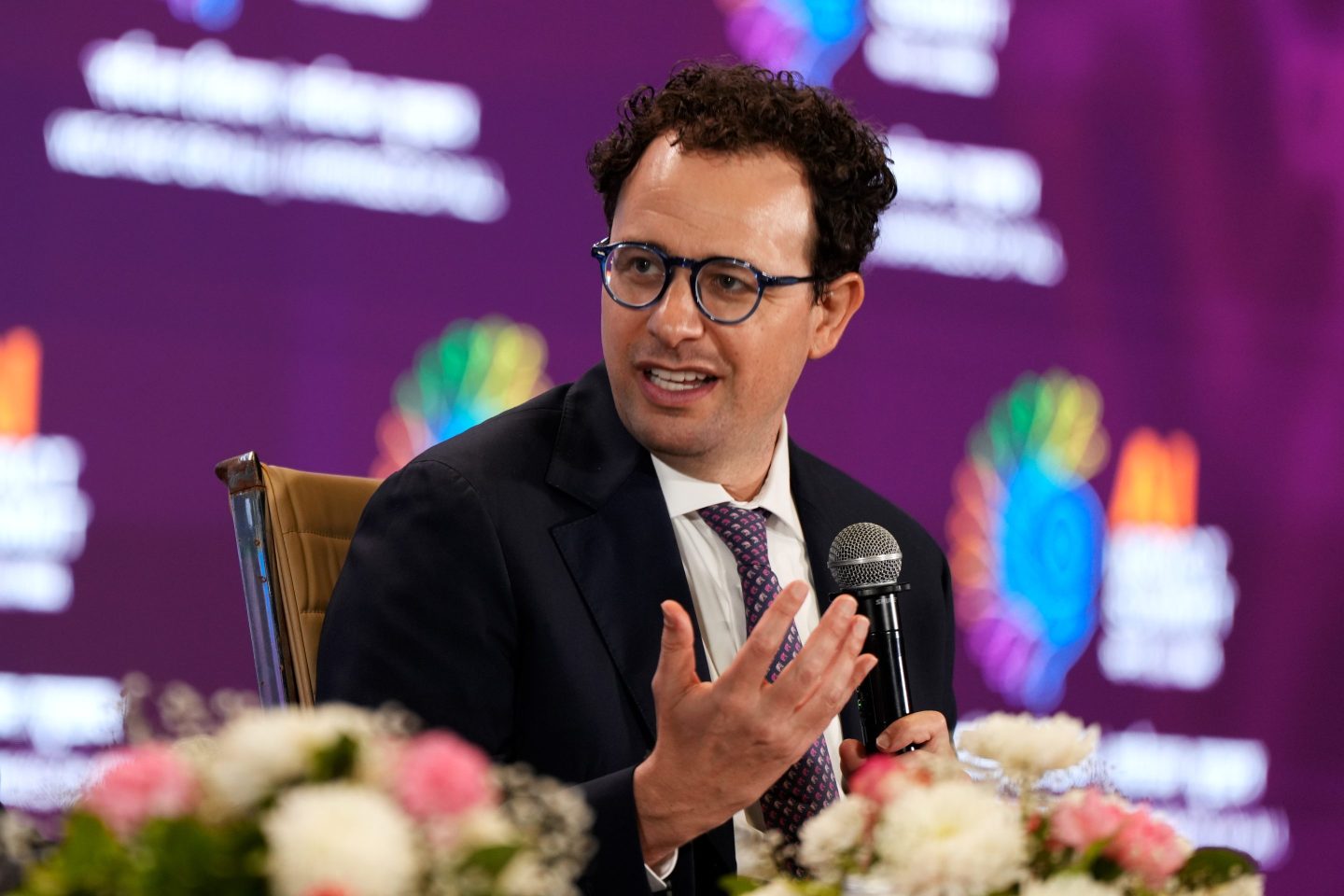
Meet Semil Shah, founder and partner at Haystack and venture partner at Lightspeed, who is known for making some precocious seed-stage bets. Of his first eight checks from Haystack, three ended up becoming unicorns: Doordash, Hashicorp, and Instacart.
“It was just extremely fortunate,” he says. “Basically two things happened: I loved the work, and I got very lucky in the selection.”’
Shah also had an unusual path into the world of venture capital. He didn’t spend two years as a bank analyst nor was he a product manager at Google or PayPal (though he worked at Concept.io, a company that was later acquired by Apple). Instead, Shah thought early on that he would be a cook.
Here’s our conversation, edited for clarity, about his modus operandi. He also shares what seed-stage investing—an arena that relies on relationships—will pan out in the middle of social distancing.
You had an interesting path into venture capital. Tell me about it.
When I graduated college, I read Anthony Bourdain’s Kitchen Confidential—which was extremely raw and inspiring—and I think that was a main motivating piece for getting into the restaurant industry. I ended up working as a cook and as a bartender.
I found that it was a very brutal task where you have to make a ton of sacrifices in relationships and in free time. All your nights and weekends are gone. You don’t see the sun. You’re drinking almost every night when you’re young.
I didn’t know my head from my ass basically, about what I wanted to do. I later started getting involved in startups and writing about it online. A lot of people happened to read [my writing] and it kind of turned into a thing where a lot of prominent people were sharing it. That led to meeting a lot of firms that became friends. I thought these firms would hire me, but none of them did.
I literally started [Haystack] through individual venture capitalists helping me and putting in small checks—because I couldn’t get a job, and I tried to make one investment a month based on products and people I knew. So In March, May, and October of 2013, I invested in Doordash, Hashicorp, and Instacart.
There’s effectively no financial information at seed-stage companies. So how do you evaluate companies?
At the seed stage, you’re essentially underwriting a person or a group of cofounders. So I spend a lot of time just interviewing people around them to get to know their behaviors, and looking for certain patterns of entrepreneurialism.
I try to spend three to five hours with an entrepreneur to ensure that I can have a relationship with them—and I want to make sure I understand their work ethic, what adversities they’ve overcome in their lives, and how they think about relationships with close friends and family. One of the lines I use is: What are you doing on the weekend? If I’m emailing you on the weekend, I’m expecting that you’re also thinking about work too—perhaps not all weekend—but that you’re not, say, camping every other weekend.
Are there red flags for behavior that make you say “no” to an investment?
It’s not hard and fast. But, for example, someone who is looking for funding before they build something. In most cases, I want the person to already be tinkering with a problem.
Philosophically, I don’t think you can just become entrepreneurial. I don’t think you can just turn that switch on. Maybe you sold candy at school, or you started a consulting business in college, or you did something else that shows work ethic or entrepreneurial behavior.
I get it wrong sometimes, but my job is to make a call on what that could be.
What are your biggest misses?
What I’m going to share are deals where the entrepreneur was asking me to put money in, and I said no. GitLab—whose CEO I still email. Rappi, Coinbase…I mean, so many. So many. It’s sort of what happens to everybody, I think. For GitLab, I thought the founder was raising at a price that was too high, which in retrospect is pretty dumb. We just didn’t see it.
Seed-stage investing has been under pressure, with larger funds now also investing in the space. How is that trend impacted during coronavirus?
The trend has been going on for a good 12 to 18 months. Now the trend will be slowed down a bit because most of the larger funds are dealing with triaging larger portfolio companies in the pandemic. Maybe prices come down a bit and there are fewer deals. But I don’t think that changes the overall dynamic—though it may take a while [for larger, multi-stage funds] to come back into seed.
But if you’re a really hotshot entrepreneur coming out of Stripe, you’ve proven that you can ship products at scale, you have a unique idea, and you’re connected—yeah, you can raise your $2 million.
Investors in venture capital firms—the limited partners—are under pressure right now. Venture capitalists think the younger venture capital with emerging managers will be the first to be hit. What is your take?
It is so hard to spend time building relationships, and it takes so long to prove a track record. So it was easy to start these funds—but a lot of people have not been able to put together the track record to become established. Now in a pandemic world, I think that is just going to be intensified, and it’s going to be extremely difficult for newer managers to get to the institutional level. Just think about the largest investors in the venture capital asset class—nonprofits, foundations, and university endowments—they are under layers of stress they’ve never encountered before. We’re talking about students not enrolling in the fall potentially, furloughs or firing university staff. So I think fundraising is going to be significantly harder.
***
In other (crypto) news: Andreessen Horowitz is doubling down on crypto. The firm has raised a second $515 million fund focused on cryptocurrencies and blockchain, two years after the firm raised $300 million for its first investment fund devoted to Bitcoin and other related projects. My colleague Robert Hackett has more.
VENTURE DEALS
- Procore Technologies, a construction software company that filed for an IPO in February, postponed those plans and raised $150 million, per Bloomberg citing sources. The firm is now valued at roughly $5 billion. Investors included D1 Capital Partners. Read more.
- ASAPP, a New York-based firm using artificial intelligence in customer service, raised $185 million in a Series B funding. John Doerr, John Chambers, and Dave Strohm were among the investors. The company is now worth north of $800 million, per a source.
- Dascena, Inc., an Oakland, Calif.-based diagnostic algorithm company that is targeting early disease intervention, raised $50 million in Series B funding. Frazier Healthcare Partners led the round, and was joined by investors including Longitude Capital, and existing investor Euclidean Capital.
- Figma, a San Francisco cloud-based design tool, raised $50 million in Series D funding. Andreessen Horowitz led the round, and was joined by investors including Henry Ellenbogen of Durable Capital and existing investors Index, Greylock, KPCB, Sequoia, and Founders Fund. Read more.
- Robocath, a French developer of robotic systems treating cardiovascular diseases, raised €40 million ($44 million) in Series C funding. MicroPort Scientific Corporation led the round, and was joined by investors including Zhejiang Silk Road Fund, Luxembourg CLIIF, CS Group and Anaxago. Read more.
- Material Bank, a New York-based technology and logistics company, raised $28 million in Series B funding. Bain Capital Ventures led the round, and was joined by investors including Raine Ventures and Barry Sternlicht, co-founder, chairman and CEO of Starwood Capital Group.
- Flagstone, a London-based cash deposit marketplace, raised $15 million in funding. OMERS Ventures led the round, and was joined by investors including Kindred Capital and Moneysupermarket Group.
- Ontic, an Austin, Texas-based maker of protective intelligence software aimed to help businesses address physical security, raised $12 million in Series A funding. Felicis Ventures led the round.
- Josh.ai, A Denver-based maker of high-end smart home systems, raised $11 million Series A funding. The investors were not named. Read more.
- Finom, an Amsterdam-based fintech service for entrepreneurs and small businesses, raised €6.5 million ($7.1 million) in seed funding. Target Global led the round, and was joined by investors including General Catalyst.
- Lifebit Biotech, a London-based platform for medical research, raised $7.5 million in Series A funding. Idinvest Partners led the round, and was joined by investors including Pentech Ventures, Beacon Capital, and Connect Ventures.
- TransFICC, a London-based e-trading API maker, raised £5.8 million ($7.3 million) in Series A funding. AlbionVC led the round, and was joined by investors including NG Ventures and HSBC. Read more.
- Guilded, a San Francisco-based chat platform for gaming communities, raised $7 million in funding. Matrix Partners led the round, and was joined by investors including Initialized Capital, Susa Ventures, and Sterling.VC.
- Plantible, a San Diego-based maker of plant-based proteins, raised $4.6 million in seed funding. Vectr Ventures and Lerer Hippeau co-led the round, and were joined by investors including eighteen94 Capital and FTW Ventures. Read more.
- Vizetto, a Toronto-based maker of presentation software for remote teams, raised $3 million in seed funding. Florida Funders led the round, and was joined by investors including OW Toad and Hudson Valley Equity Group. In addition, a variety of family offices and strategic corporate investment funds also participated in the round
- Resistant AI, a Prague-based anti-fraud and security startup, raised $2.8 million in seed funding. Index Ventures and Credo Ventures led the round, and were joined by investors including Seedcamp, UiPath CEO Daniel Dines, and Avast CTO Michal Pechoucek. Read more.
PRIVATE EQUITY
- KPS Capital Partners agreed to acquire Lufkin, a Missouri City, Texas-based maker of rod lift products, from Baker Hughes (NYSE: BKR). Financial terms weren't disclosed.
- Ocean Link, Warburg Pincus, and General Atlantic, have offered to buy 58.com, a Chinese classified ads marketplace, for roughly $8.2 billion.
OTHERS
- Exencial Wealth Advisors agreed to acquire Willingdon Wealth Management, a North Carolina-based registered investment advisor (RIA) with $800 million in assets. Financial terms weren't disclosed.
- Unilever, L'Oreal, and Estee Lauder Companies are among the firms seeking to acquire Charlotte Tilbury Beauty, a London-based cosmetics firm, for £1 billion ($1.24 billion), per Bloomberg, citing sources. Read more.
- J. Crew Group, a New York-based fashion retailer, is preparing for a bankruptcy filing, per CNBC citing sources. Read more.
- Continental postponed plans to spin off Vitesco Technologies, the German company’s powertrain unit, citing ongoing economic uncertainty. Read more.
- Siemens Gamesa acquired Ria Blades, S.A., a Vagos, Portugal-based operator of an onshore wind turbine blade production plant from Senvion. Financial terms weren't disclosed. Read more.
- Molina Healthcare will acquire Magellan Complete Care, a unit that provides managed-care health plans, for about $820 million from Magellan Health Inc.
IPOs
- Vontier, a Raleigh, N.C.-based infrastructure tech company spinning out from Fortive, withdrew its $100 million IPO. The company posted sales of $2.8 billion in 2019 and net earnings of $437 million. It planned to list on the NYSE as “VNT.” Read more.
- Lyra Therapeutics, a Watertown, Mass.-based biotech developing drug and delivery solutions for ear, nose, and throat diseases, filed on Friday for an $58 million IPO. It has yet to post a revenue and posted losses of $16.3 million in 2019. Perceptive Advisors (32.4% pre-offering) and North Bridge Venture Partners (17.3%) back the firm. It plans to list on the Nasdaq as “LYRA.” Read more.
F+FS
- Kickstart Seed Fund raised a $110 million for its fifth fund. Read more.
- TheFund raised $9 million in funding. Read more.
PEOPLE
- Accordion hired Allen Schaar and Sanjay Purohit as Managing Directors for its Performance Improvement & Restructuring Solutions practice.
- Ridge Ventures hired Kamil Saeid as a Principal. Saeid previously invested at Aspect Ventures and Bain & Company.