Subscribe to Fortune’s Outbreak newsletter for a daily roundup of stories on the coronavirus and its impact on global business.
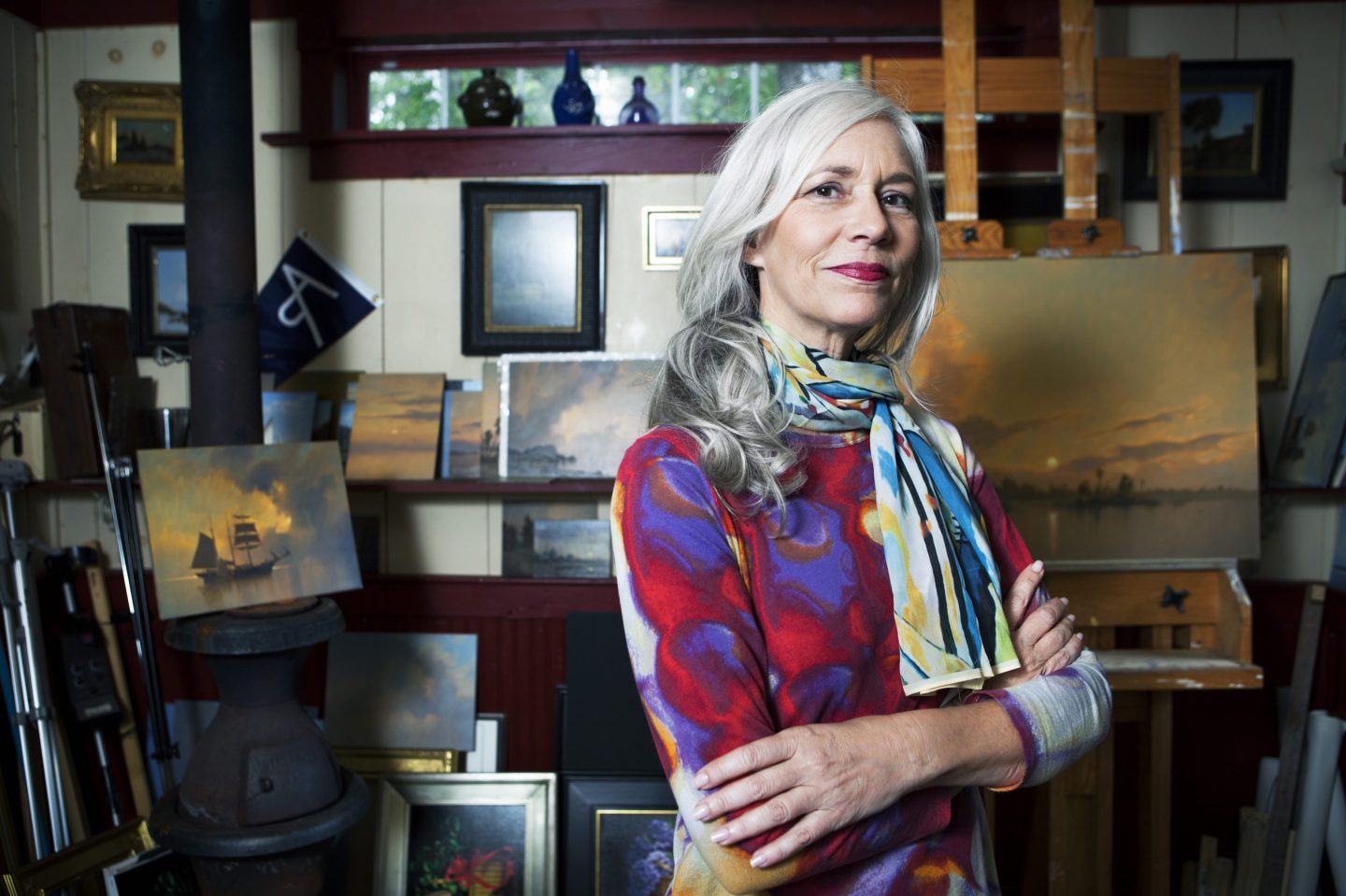
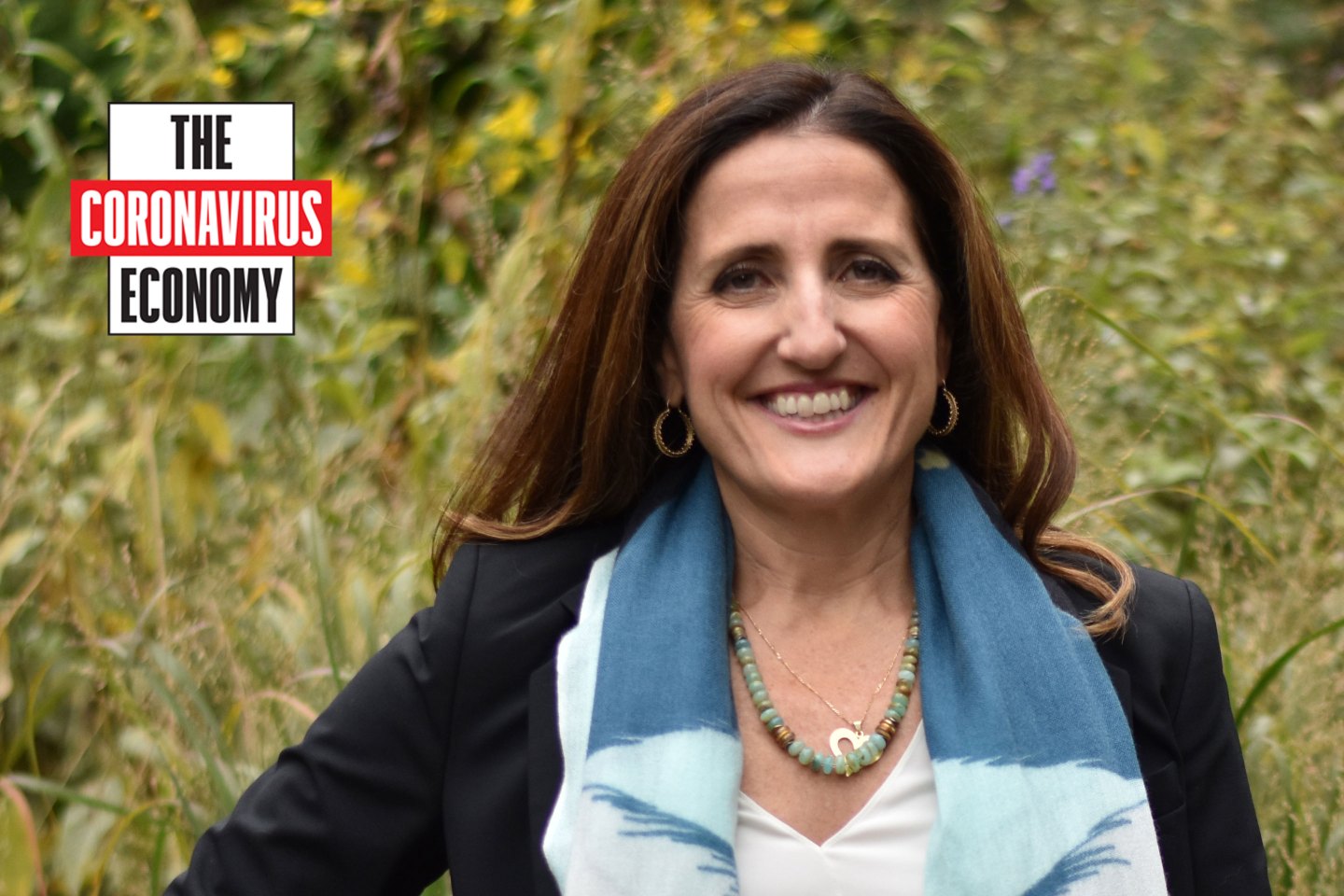
Carolyn Cannuscio began her career as an undergraduate at Brown University, studying epidemiology during the early days of HIV/AIDS, which inspired her to pursue a doctorate in public health at Harvard. The social epidemiologist is an associate professor of family medicine and community health at the University of Pennsylvania’s Perelman School of Medicine, where she studies prior epidemics and currently teaches a class on epidemics, emergencies, and environmental threats.
Since the outbreak of the coronavirus earlier this year, Cannuscio has spent time urging communities in Philadelphia and beyond to implement social distancing measures in an attempt to slow the spread of the disease.
Fortune spoke with Cannuscio for a new series, The Coronavirus Economy, to ask about how the outbreak of COVID-19 has affected her life, including how she’s teaching her students, what homeschooling (and breakfast) looks like for her own children, and the advice she has for everyone trying to get through an unprecedented time.
Fortune: What did your day-to-day life look like before the outbreak?
Cannuscio: I have often said that I have the best job in the world. It’s a great combination of solo thinking, teaching, and outreach in the community. I also have a lab. We do community-engaged research projects, often in conjunction with public libraries, to address important community health issues. Just days before the outbreak in Italy, my team was submitting a grant to the National Institutes of Health to build a network of libraries across the country to work on improving overdose-reversal capacity at libraries. We had put in this huge grant, the biggest grant I’ve ever put in, and that involves a lot of hunkering down and working together with the team.
Typically, I’m in the office—our team at Penn cooks lunch together everyday. We have an Instant Pot and we have an induction cook plate, so on our good days, we’re making things like red lentil soup, curry, or a stir fry. We make delicious food, and we take time to sit and eat together, and we’ve been doing that everyday for two years. When we really have a lot of writing to do, we might go hole up someplace quiet, with just a few of us, to get the writing done without the distraction of the office.
I’ve done lots of different public health work over the years, especially on vulnerable populations and urban health disparities, but my teaching has really focused on an introduction to epidemiology, which is the basic science of public health. I also teach a course on epidemics, emergencies, and environmental threats, so my interest there is really in trying to carry forward lessons from prior crises so that we can do better.
So perfectly relevant to current events.
Yes, we do a lot of tabletop exercises in the class where we practice what kinds of decisions would be made in simulated crises. Just a few weeks ago, we were doing an exercise about an outbreak of pandemic flu on Penn’s campus. How should Penn handle housing for the students? Feeding students? What should Penn do about rescheduling exams, and about medical students who had their Step exams? Lo and behold, now our medical students are no longer in school, and their Step 1 exam was canceled, and students have been asked to move out of the dorms.
We do these simulations to try to get people to think holistically about all the groups that are affected in an epidemic, and to think about the different strategies that could be used to manage risks to human health, that could be used to intervene to reduce the economic toll, and that could be used to better communicate with the public, and reduce stigma and panic. We talk about strategies that could be used to try to help families cope, political fallout from epidemics or emergencies, and impact on hospital systems and all members of the health care team. We really think about all of these issues, and right now, all of my students are recognizing that it is important to go through that kind of planning so that we know we’re attending to all the major issues when a crisis like this happens.
What does your job look like now?
In the past few weeks, I’ve been focused on communicating to the public and to the press about the urgent need for social distancing measures, and for policies that would enable social distancing to happen. I put a lot of my energy into communicating to the public and local organizations that might not have the capacity or connections to public health that they would need.
One of the major disruptions is that my students are scattered to the wind. We’re connecting with Zoom meetings, and we are having our three-hour classes over Zoom. That’s a very new experiment—we’ll see how it goes. Of course, it’s preferable to be able to be with people together in the same room, and it’s easier for me to read the room when I’m with people, so that I can see who looks confused.
With schools closed in Philadelphia, how has life changed at home?
I have four children, they are 16, 14, eight, and five. Because I’m an epidemiologist, they have heard me talking about the coronavirus. Since January, I’ve been preparing them for the concept that there might come a time when we would have to stay at home all the time, and that we might have to do school at home. So my kids might have had some advantage in terms of their mental preparation for this day.
I’m actually extremely busy right now on the telephone with colleagues, with friends and family who need help, with journalists, and so I’m on the phone or on Zoom a lot. So my children are often fending for themselves. Of course, the older kids are doing well with that, and their school is also doing a very good job at ramping up online education for them. For the younger children, there’s much less programming. They are doing a lot of screen time, interspersed with some virtual homeschool with my mom. And my aunt, who’s an educator, is prepping some art projects that she’s going to do remotely with them. She’s in Santa Fe, we’re in Philadelphia, and we’re going to do that with my brother’s family in London. I’m trying not to have very high expectations for how much actual instruction they’ll get. I’m trying to believe that a little bit of high-quality interaction will help, and that children are very resilient, and they’ll pick up where they left off when school resumes.
Our house looks a little bit messy right now, and the laundry is piled high. And I came downstairs for a meeting this morning, and one child was eating an ice cream sandwich for breakfast, and one child was eating an ice cream cone, and I just have to say, I really don’t care. Put it in perspective. All I care about right now is keeping the greatest number of people healthy and alive here in my own households, and in our community and in our world.
What do you say to people who want to know how long this will last?
People have lots of concerns about the future. I just want them to know that at some time in the future, we will get back to a sense of equilibrium. For now, it’s better to just focus on today rather than trying to anticipate two weeks from now or two months from now. Circumstances will change, and decisions that feel very difficult to make now—should I go to my cousin’s wedding in June?—may be made for us in June. Don’t think about June right now. Just keep yourself in March. Think about what you have to do right now.
What advice can you share during such an unprecedented time?
I encourage every other human being to try to be as forgiving and flexible with themselves as they possibly can be. Because we’ve only just begun, and it’s not an easy time for anyone. I have low expectations for productivity right now, for myself and for others. Right now, care for the people you love, and that means staying at home as much as possible. We really can save lives by staying at home. It’s one of the things we can control, so we should control the hell out of it. Stay home.
More coronavirus coverage from Fortune:
—This famed economist doesn’t think we’re headed for another Great Recession
—South Korea has the most comprehensive coronavirus data. What it’s taught us so far
—10 questions about the 2020 election during the coronavirus pandemic, answered
—6 steps to sustainably flatten the coronavirus curve
—How hackers are exploiting the coronavirus—and how to protect yourself
—Hong Kong launches a surveillance operation to track suspected coronavirus patients
—Listen to Leadership Next, a Fortune podcast examining the evolving role of CEOs
—WATCH: The race is on to create a coronavirus antiviral drug and vaccine
Subscribe to Fortune’s Outbreak newsletter for a daily roundup of stories on the coronavirus and its impact on global business.