This is the web version of Business x Design, a newsletter on the power of design. Sign up here to get it in your inbox.
Among the often disparate fields of design, engineering, and manufacturing, old rivalries are being put aside and replaced by a spirit of collaboration in the fight against the coronavirus.
In the United Kingdom, 14 companies—including Airbus, BAE systems, Ford, McLaren, GKN, Siemens, and Rolls Royce—have formed a consortium called Ventilator Challenge UK, to produce mechanical ventilators for the National Health Service. Beyond lending factory floor space and logistical know-how, the companies have redeployed some of their most skilled engineers to work on the ventilator effort. The group has received orders for more than 10,000 machines and is ready to start production pending regulatory approval.
This follows last week’s news that Dyson (in collaboration with The Technology Partnership in Cambridge) signed a formal contract for an order of 10,000 of its CoVent—a ventilator recently designed from scratch.
The CoVent needs to secure final regulatory approval, and may not reach production for some weeks. Ventilator Challenge UK’s plans are further along, thanks to the use of two existing designs. Project Oyster, understood as the medical community’s first choice, involves slight tweaks to an existing design by a little-known Oxfordshire firm called Penlon. A parallel effort by the same consortium, nicknamed Project Penguin, will scale up production of a model made by medical equipment firm Smiths Medical at its factory in Luton.
In another example of lightning-fast innovation, designers and engineers at University College London have teamed up with clinicians and the Mercedes Formula One team to create a breathing aid (similar to ones used by sleep apnea patients) that can help keep Coronavirus patients out of intensive care. Continuous Positive Airway Pressure (or CPAP) devices push air and oxygen into the mouth and nose without the need for a ventilator, keeping the lungs open and making it easier to breath. Crucially, unlike when using a mechanical ventilator, the patient doesn’t need to be sedated. In Italy, around half of the patients treated with CPAP devices avoided needing intensive care.
The designs are being evaluated at University College London Hospital; if trials succeed, they will go into mass production, with Mercedes F1 saying it can produce up to 1,000 a day for distribution throughout the NHS.
As mentioned in last week’s newsletter, the Montreal General Hospital Foundation has collaborated with the Research Institute of the McGill University Health Centre on the Code Life Ventilator Challenge, which asks designers to develop inexpensive, easy-to-build ventilators. Applications close at midnight tonight, with the top three designs announced on April 15.
And there’s more: Richard Branson’s rocket-launch company Virgin Orbit is working with the Bridge Ventilator Consortium in an effort led by the Universities of California and Texas. Starting next month, they hope to build a simple type of medical ventilator at a rate of several hundred a week. In the U.S., manufacturers such as Ford and General Electric are teaming up to build tens of thousands of ventilators, while General Motors is acting in a similar vein and retooling its Kokomo, Indiana plant and partnering with Ventec Life Systems.
All this positive, can-do attitude is heartening, but a sober word of caution came from the Financial Times this week: For all their expertise and clout, it’s unclear whether manufacturers inexperienced in this specific field can overcome the logistical, technical, and regulatory hurdles in time to deliver machines in the enormous numbers that will be required. Here’s hoping that the creative collaborations we’re witnessing will help overcome such hurdles.
More design news below.
Tony Chambers
NEWS BY DESIGN
This edition of Business By Design was curated by Margaret Rhodes.
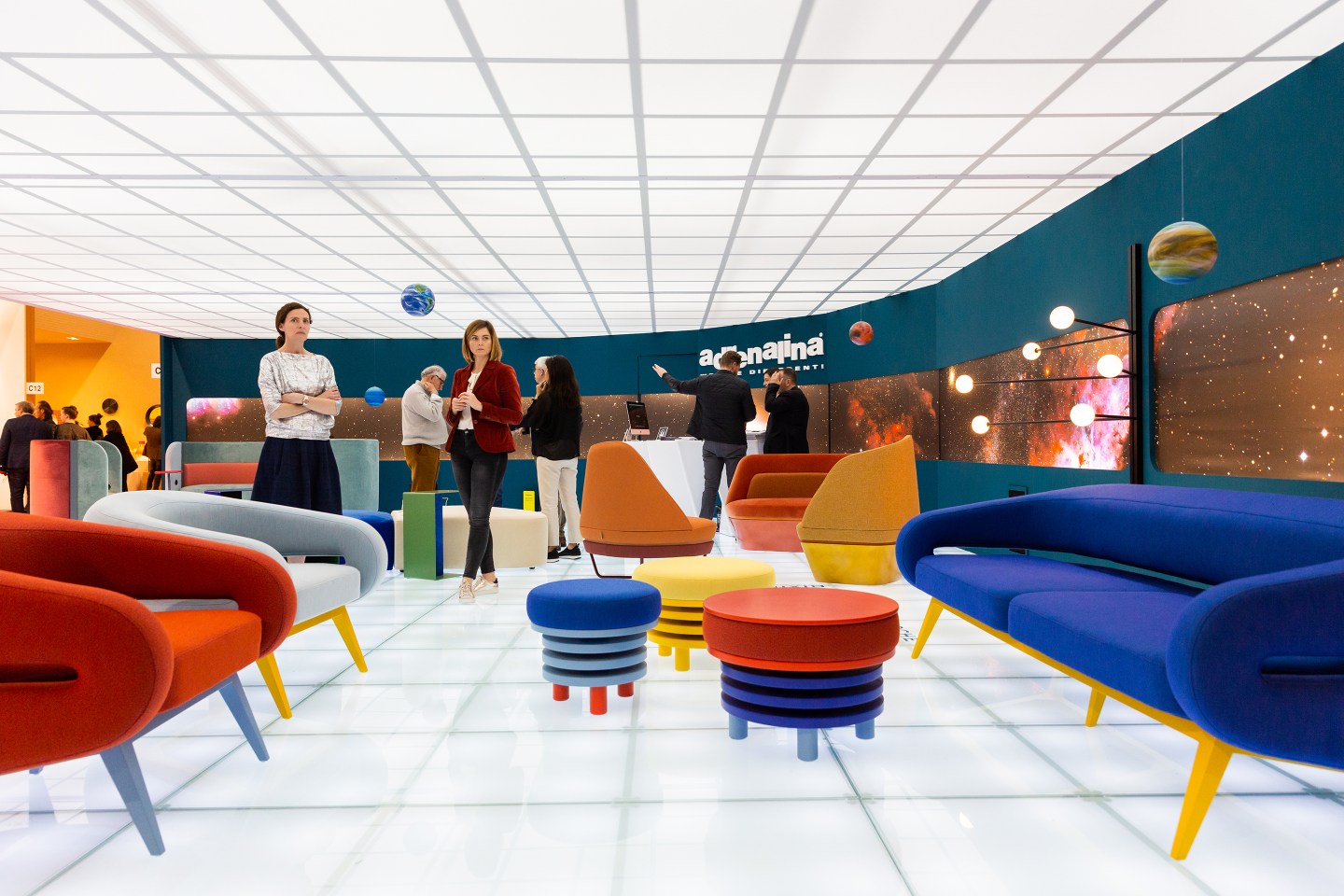
Best-laid plans. Initially postponed, Salone del Mobile has officially announced that this year’s much-anticipated furniture fair is canceled due to the pandemic. Organizers have rescheduled the Milan event for April 2021.
PSAs for COVID-19. In a brief to the global creative community, the United Nations is asking designers to help with coronavirus-related PSAs. The brief covers six key points, ranging from personal hygiene to donations, and calls on designers to reach as many disperse audiences as possible.
Ventilator shortage. For years, public health officials have tried to design new, cheap ventilators. And for years, consolidation and acquisitions among medical device companies have stalled those efforts.
Adaptive reuse. The American Institute of Architects has formed a task force to advise local and federal governments on how to adapt buildings into emergency healthcare facilities for coronavirus patients.
Environmental bugs. Scientists have discovered a bacteria that feeds on toxic plastic such as non-recyclable polyurethane. Microbiologists will study the genetic code of the bug to assess whether it could help break down plastic waste.
A better mask. Researchers are racing to design a new surgical mask that not only shields its wearer from airborne germs, but also filters and kills viruses. So far, crystal salt and nano-diamonds offer the most promise for anti-viral coating material.
Looting. A Vincent van Gogh painting titled “The Parsonage Garden at Nuenen in Spring” was stolen from a small Dutch museum that closed down during the coronavirus pandemic. The heist took place on what would have been van Gogh’s 167th birthday.
EXECUTIVE SUMMARY
John Maeda delayed the release of his annual Design in Tech report—now called the CX Report—until May, but released an appendix on his findings concerning the state of customer and computational experience.
In it, Maeda looks at the meaning of remote work and current notions of “place,” which he says have changed: “The definition of ‘same place’ was once limited to only a few means of connecting, but now we’re faced with many options—especially with modern technologies.”
The meaning of place, Maeda says, exists along a spectrum. On one end, you have a literal shared, physical space in which people work at the same time. On the other end, you have “asynchronous” space, in which people share a headspace but not a room or timezone. Businesses with a nimble understanding of this shifting reality will weather the coming months better than those that don’t. As Maeda says in his report, “creating a sense of place is the starting point for work to happen.”
BRAINSTORM SESSION
The fashion industry joins the coronavirus fight by making masks, but it’s a mixed message.
As the coronavirus pandemic worsens, apparel companies like Brooks Brothers and Reformation—both of which have U.S. factories—will break from making suits and slinky dresses, respectively, to manufacturing masks for healthcare workers instead. Project Runway co-host Christian Siriano also said he would put his company’s resources towards making masks too. The parallels to World War II, when nylon manufacturers like DuPont started using the material to make parachutes instead of hosiery, are striking.
But masks are a convoluted and political issue. For months, officials asked the general public (read: non-medical workers) not to wear them. Now, experts are calling upon everyone to wear a mask while out in public. And this new advisory still doesn’t elucidate the differences between protective masks, surgical masks, and N95 respirators, of which there’s a dangerous shortage that a new gray market is trying to replenish.
Without access to certain medical-grade fabrics, fashion companies cannot make the kinds of facemasks that the CDC deems safe for healthcare professionals. But until the White House enacts the Domestic Production Act, which would allow companies to produce masks on the government’s orders, designers are relying on industry connections and social media to get a hold of such fabrics. And without more formalized guidance in place, some companies—even those with the best intentions—are sending mixed messages, qualifying their masks as nonsurgical while still donating them only to medical personnel.
The upshot is that a surplus of DIY cotton masks could still help the general public to flatten the curve—as long as apparel companies are willing to sell them to civilians.
QUOTED BY DESIGN
Architecture as an agent of change
“The social side of architecture has been disastrously slighted for many years. Things are now beginning to change for the better, as social issues slip into architecture under the cover of environmentalism. If the moniker we use to recuperate ideas of equity and fairness is ‘environmental justice,’ so be it … the future of the city lies not in the superposition of the next great idea but in the careful articulation and expression of many fresh and familiar differences.”
— Architecture critic Michael Sorkin, speaking with Artforum in 2009. Sorkin died of the coronavirus last week. He was 71.