Subscribe to Fortune’s Outbreak newsletter for a daily roundup of stories on the coronavirus outbreak and its impact on global business.
It’s hard to think of a more qualified expert than Nobel laureate Robert Shiller to address the question baffling America’s CEOs, consumers, and investors amid the coronavirus pandemic: Is 2020 a repeat of the long-running, near depression starting in 2008, or a relatively short-lived panic recalling the sharp selloff in 1987?
I reached Shiller, a Yale professor, at his home in New Haven, where he’s hunkered down for the duration, venturing out mainly to stock up every few days for routine shopping. As usual, Shiller’s views on the coronavirus crash were highly original, and he noted that “narratives” that capture our emotions are just as powerful as forecasts based on economic data, including the famed CAPE ratio, that he displays on his home page.
Here’s a sampling of Shiller’s observations.
The coronavirus selloff is worldwide, and that’s a signal
The gigantic drop in stock prices, he points out, is a global phenomenon. Hence, its cause probably isn’t big weaknesses specific to the U.S. economy, such as the mid-2000s housing bubble. “It’s happening everywhere,” he notes. “It’s happening in markets that were expensive like the U.S., and ones that are inexpensive.”
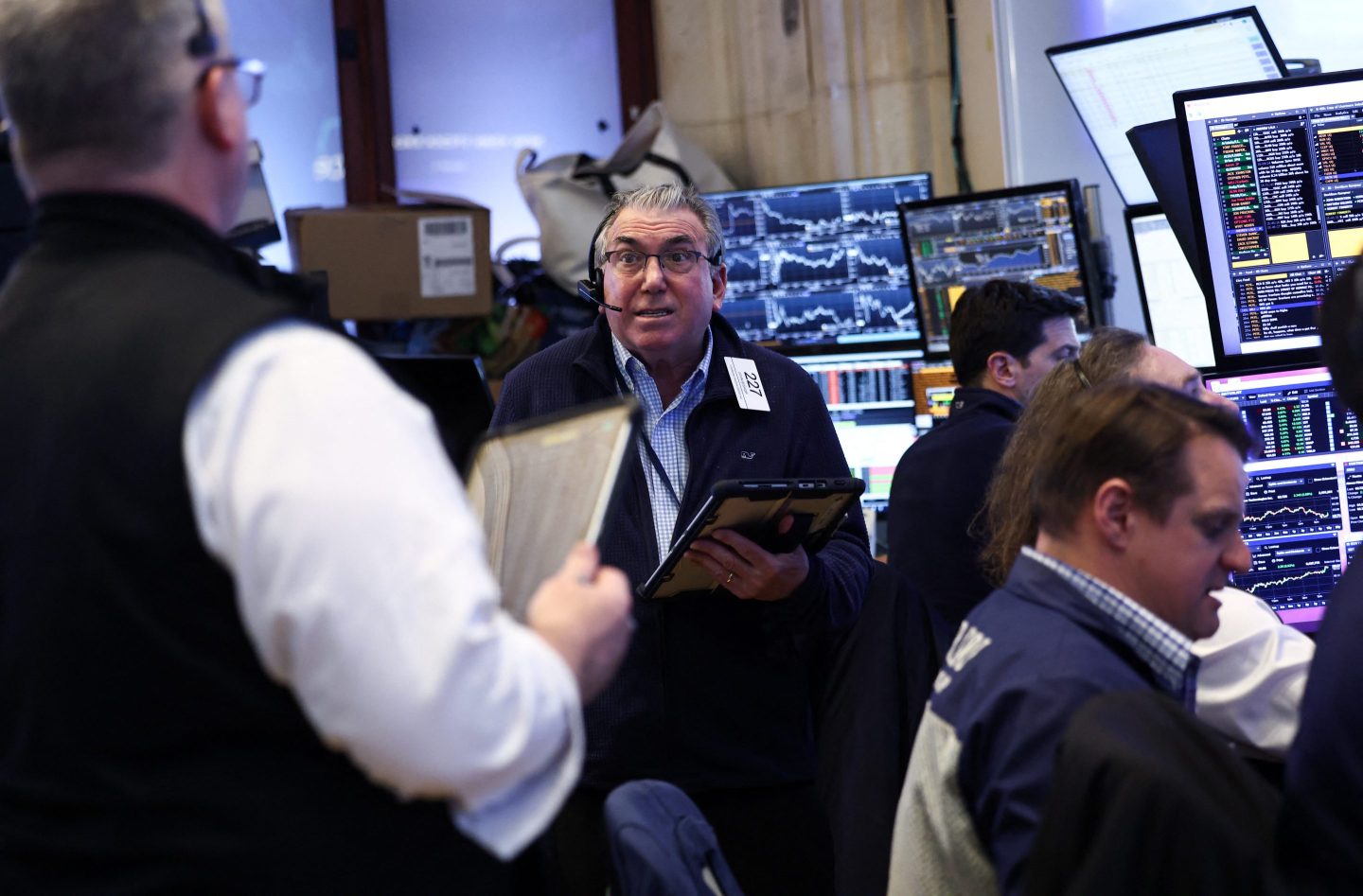
He says that drop is far bigger than is probably justified by the economic fundamentals, even though they’re deteriorating. “I haven’t been prepared for this from the standpoint of efficient markets,” he says. “Based on what we’re seeing so far, the stock market shouldn’t go down this much,” he says. More likely, the depth of the selloff is an overreaction to the severity of the crisis. “People are getting the idea that this virus will get the market to crash,” he says. “People go to the supermarket and see the empty shelves, and they panic.” Those signs of desperation from daily life darken their view of the economy’s future and undermine their confidence in the stock market.
This probably isn’t the Great Recession 2.0
Shiller acknowledges that the rapidity and scale of the stock market’s 30% retreat since mid-February point more to another Great Depression or Great Recession than a shock triggered by a passing crisis. “This doesn’t seem to be another 1929 or 2008,” he observed. “The story isn’t the same. This time the bad news comes from something outside the economy. This time it’s a virus story that turned into a stock market story.” He notes that the current crisis resembles the Spanish flu epidemic of 1919 far more than the vanishing credit that caused the Great Depression.
The selloff isn’t a vindication of the CAPE
Shiller’s cyclically adjusted price-earnings ratio, or CAPE, adjusts the reported P/E by smoothing peaks and valleys in earnings. Its methodology can give a more accurate snapshot of whether prices are rich or slim, since valuations can appear low when profits are unsustainably high, and inflated when earnings are poised to rebound. At the market’s all-time high in mid-February, the CAPE stood at a level only exceeded prior to the meltdowns in 1929 and 2000.
Shiller says that the high CAPE “did make the markets more vulnerable to a selloff.” But surprisingly, he asserts that sudden fear of gravity-defying prices didn’t cause the drop. “If prices fell by roughly the same degree in other markets where the CAPE isn’t high, then it wasn’t the high prices relative to earnings in the U.S. that trigger the fall,” he says. “It was the worldwide epidemic.” He instructed me to look at the Barclays data that calculates the CAPE for 26 countries. Shiller’s assessment was correct. According to Barclays, the CAPE in the U.S., the world’s most expensive major market, has dropped from the February peak of 31 to 26. But Japan at 22, Germany at 20, and the U.K. at 18, all started with CAPEs much lower than the U.S., and all suffered comparable drops in equities.
The coronavirus crisis could be a reversal of the Trump narrative
America, says Shiller, has had what he labels a “triumphant narrative” under President Trump. “Trump got the U.S. thinking it’s a capitalist country, and isn’t ashamed of it,” notes Shiller. “So the stock market sets records.” But for Shiller, the stunning retreat has rewritten the heroic plot line: “In 2008, it was a housing story, not a stock market story like today, and people were getting accused of all kinds of bad behavior. This narrative is something different, but it’s also a Trump narrative. He’s getting his own vicious attacks, this time for not believing the scientists about coronavirus. That narrative is very big now.”
Shiller professes to be mystified by the Trump phenomenon. “I don’t know what drives his thinking,” Shiller allows. “It might have worked without the coronavirus. It looked like he was trying to wish it away.” For Shiller, a student of great economic narratives, Americans believed in the scenario of good times ahead until they didn’t believe. The great unknown in the tale to come is how deep their doubt will grow, and the time it will take them to believe again.
More must-read stories from Fortune:
—How to prepare your personal finances for a coronavirus recession
—The Fed made a bold move to calm shaky markets. But is it enough?
—Why return CEOs are usually bad news for a company’s stock
—Dormant PayPal Credit accounts are coming back to hurt credit scores
—Listen to Leadership Next, a Fortune podcast examining the evolving role of CEO
—WATCH: What’s causing the looming recession
Subscribe to Fortune’s Bull Sheet for no-nonsense finance news and analysis daily.