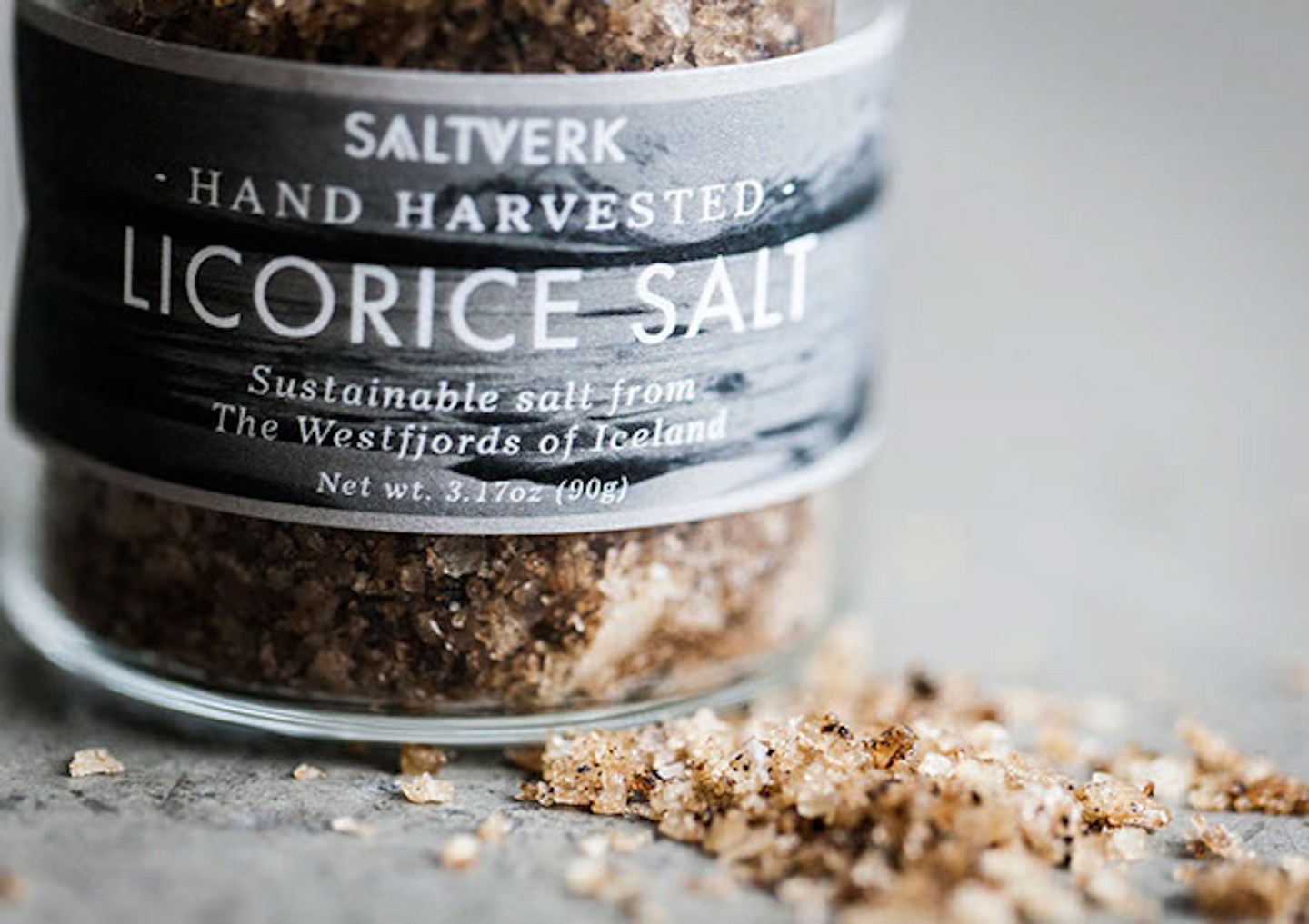
In the late 18th century—long before it became a top international travel destination best known for dramatic volcanic vistas, thundering waterfalls, and one Instagram-friendly Blue Lagoon—a Danish king pioneered salt production in Reykjanes, situated in Iceland’s remote Westfjords. The hand-harvested salt was used for preserving fish and meat for both consumption and trade.
But a few decades later, the practice ended. For the next two centuries, Iceland was left importing its salt. Until 2011, that is, when Björn Steinar Jónsson revived a centuries-old tradition of saltmaking in the country and founded Saltverk.
The native Icelander spent a decade in Copenhagen, where he studied and began his career in engineering. Jónsson had dreamed of returning to Iceland, though, and starting a company centered on sustainability. “The idea came about while discussing different options of utilizing the geothermal energy in Iceland to build a sustainable business based on the use of renewable energy,” he says. His time in Copenhagen coincided with the rise of the Nordic food movement—led by chef Rene Redzepi of the globally lauded restaurant Noma—and an appreciation for the city’s food scene inspired him to focus on salt.

Only after researching a suitable place to set up the salt production did he learn that more than 200 years earlier, a salt production operation led by a Danish king was based in those remote Westfjords, “built on the very same foundations that our business is today,” Jónsson notes.
The combination of geothermal energy and pristine seawater was a draw for both Jónsson and his predecessor. In the centuries between, salt went from a distinctive, small-batch-made commodity exemplifying the location from which it came to a homogenized product that was largely the same on tables from middle America to Iceland and beyond.
In recent decades, though, there’s been a rediscovery. Discerning cooks and diners are paying closer attention to the ubiquitous seasoning, and they are embracing its reflection of place as much as they do on products such as wine and coffee beans.
In this faraway stretch of Iceland, surrounded by mountains and staggering natural beauty, the saltmaking process starts with one ingredient: water at 206 degrees Fahrenheit, sourced from hot geysers on the peninsula’s springs. It’s pumped into pans where it’s boiled until white crystals materialize on the surface, before becoming big and heavy and falling to the bottom. The salt is then hand-harvested, dried, and packaged. Jónsson and his team learned the process by researching historic techniques and using trial and error, and the resulting mineral-rich salt is clean, flaky little pyramids that embody the essence of the Nordic region.
As the process uses 100% geothermal energy—just like the Danish king in the 18th century—there’s zero carbon footprint in making the salt. Unlike the business 200 years ago, though, transporting the product does. To offset that, Saltverk is planting trees through a local fund. The eco-friendly ethos is integral to the business, Jónsson says: “It’s the foundation and reason why we started the company, and it derives from our personal values, so it means everything to us.”
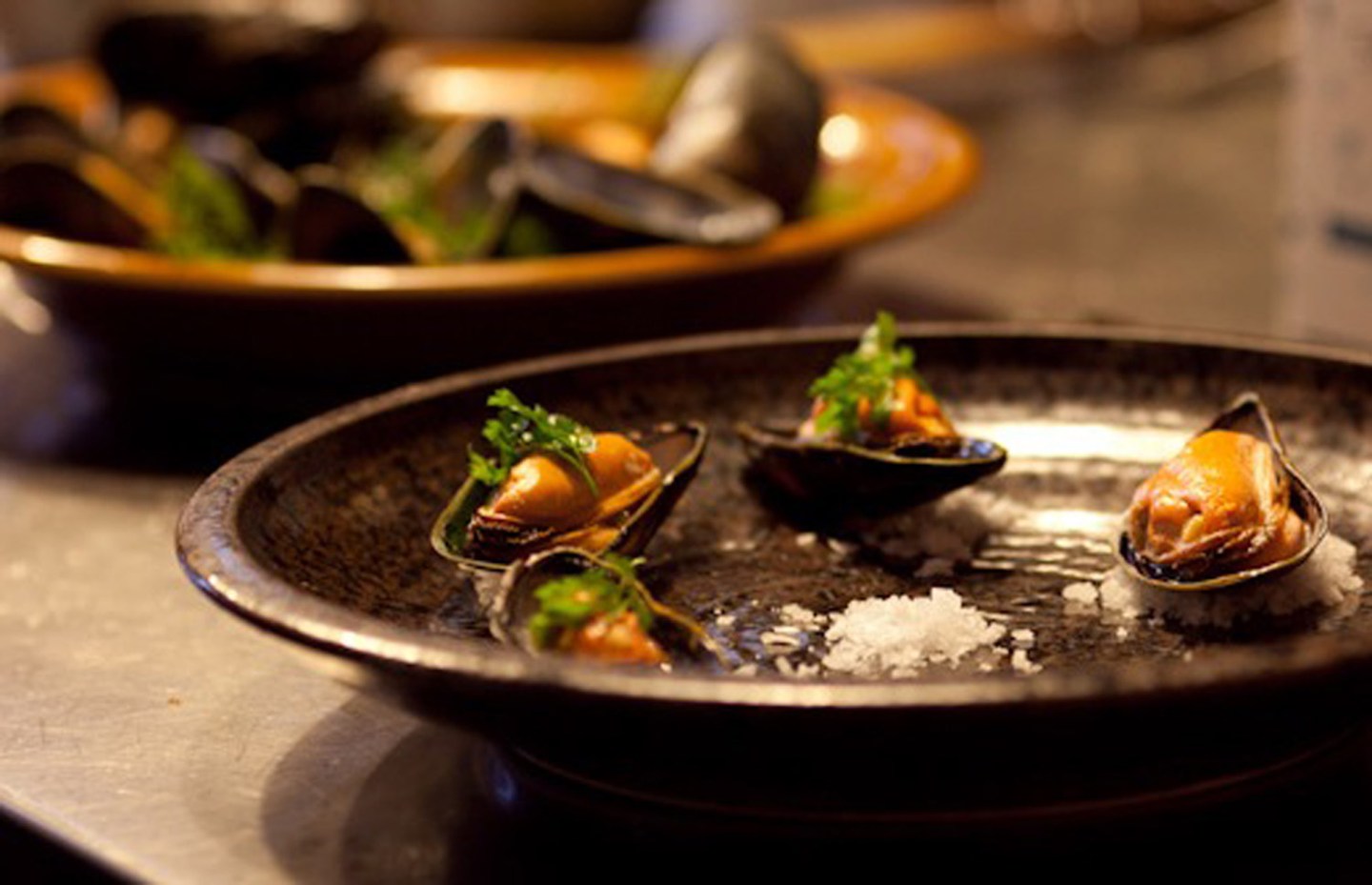
Saltverk currently sells six different flavors, all of which are inspired by Iceland. “We wanted to take something that reflects our culture and natural surroundings,” notes the saltmaker. Arctic thyme, for example, is a volcanic flower that grows in the country during the summer. Other flavors include birch-smoked salt, seaweed, lava, and the classic flaky sea salt. Jónsson recommends using the latter for cooking, and all can be used to add vibrant flavor to dishes like vegetables, meat, and, in the case of the licorice—a beloved Nordic flavor—chocolate and other sweets.
Nine years after founding the company, Jónsson says they’re selling all the salt they can make, and some of the world’s most notable chefs are using it, including Noma’s head of fermentation, David Zilber; as well as Matt Orlando and Christian Puglisi, both formerly of Noma and now helming Copenhagen’s BÆST and Amass, respectively. Richard Hart, a baker who spent time at San Francisco’s Tartine before returning to Denmark to open Hart Bageri, is also a fan. And Saltverk can be found in eateries like Dill, Iceland’s first Michelin-starred restaurant. After years of selling Saltverk in Iceland and Europe, the products recently became available to be shipped to the United States, offering more people a taste of Iceland. “You get a pure, sustainably made product that is hand-harvested and unique from harvest to harvest,” Jónsson says. “It isn’t perfect everyday in its form, but it’s always one of the best-tasting salts there is to find.”
More must-read stories from Fortune:
—The Philly bakery that makes Beyoncé’s birthday cakes
—Why Petit St. Vincent is the ultimate winter getaway this year
—The 2019 food trends we hope carry over to 2020
—This unique wine is the newest collector’s item in Asia
—The best travel destinations for every season of 2020
Follow Fortune on Flipboard to stay up-to-date on the latest news and analysis.