As the big wireless companies roll out super-fast 5G technology, they’re facing a significant crunch in airwave spectrum to cover the whole country. There’s a possible swath of airwaves that they’re eying to solve the problem, but other communications industry players don’t want to surrender the space easily.
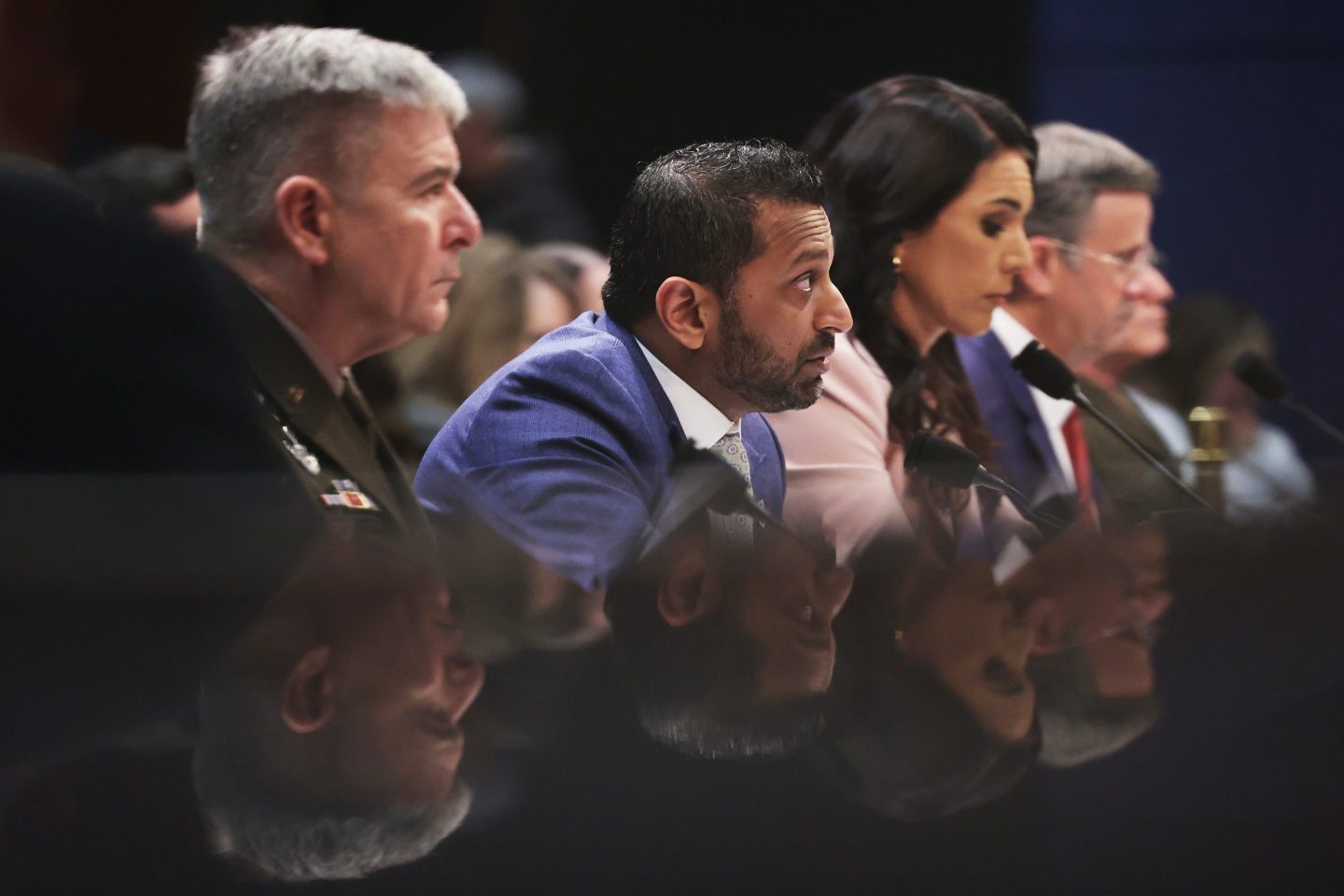
The years-long battle, which is now playing out at the Federal Communications Commission, pits some of the most powerful players in Washington, D.C. on opposite sides. And it’s coming to a head with a final decision due in the next few months. But some fireworks will ignite on Thursday, when a big ally of the wireless industry, Louisiana Sen. John Kennedy, brings in FCC chair Ajit Pai for an oversight hearing on the spectrum crunch. Pai, who has said he’s “optimistic” about finding a solution, has yet to signal which way precisely he’s leaning.
The fight is over a segment of airwaves from 3.7 GHz to 4.2 GHz known as the C-band, which seems perfect for 5G usage. The frequency is low enough to travel long distances and penetrate buildings but also offers enough bandwidth for super-speedy downloads. Analysts say the major wireless companies would pay $30 billion to $50 billion for the rights to use a significant part of the C-band for 5G.
There’s only one problem—and it’s a big one. The C-Band is already in use by TV and radio stations, plus the cable industry. Satellite transmissions are the most cost-effective way to distribute programming, and the broadcast industry says it depends on the C-Band for video and radio programming that goes to 120 million households.
There’s a lot riding on the outcome, says New Street Research analyst and former FCC official Blair Levin. “How soon will 5G roll-out, how competitive that market will be, what will the cost and quality of 5G be,” Levin says, ticking off the stakes. And there’s one more consideration, he adds: “Tens of billions of dollars.”
Some of the satellite companies that currently hold the C-Band licenses have come up with a compromise, but it’s expensive and controversial. They have offered to sell about 40% of the band to the wireless industry through a private sale. The government would get only a small chunk of the money. Satellite companies would keep the lion’s share, using some of the funds to modernize their satellite fleets and broadcasters’ equipment on the ground to operate in the remaining spectrum, without causing interference with 5G phone traffic. The private sale could make some airwaves available within 18 months and the rest within 3 years, they say.
“A private auction from the consortium of satellite operators could occur in 2020 while a public auction may result in a longer timeline to deployment,” noted UBS analyst Navin Killa in a Sept. 27 report.
But wireless carriers like Verizon and T-Mobile say they need more of the airwaves, and they favor a government-run auction to ensure a fair price. In a purely government-run auction, the carriers bid against each other, sometimes with FCC-set minimum bids. In a private auction, however, they could face higher demands from the current license holders.
That’s what happened in 2017 when the FCC undertook a similar effort to reallocate 600 MHz spectrum from TV broadcast channels to the wireless industry. Each TV station got to set a minimum price, and couldn’t be forced to sell for less. More than 1,000 stations offered to sell their licenses for a total of $84 billion. In the end, only 175 licenses sold for $20 billion, with half of the money going to the stations and half to the government.
For the C-Band, Sen. Kennedy has already made his position clear on multiple occasions. He thinks money from the sale of airwave rights granted by the government belongs to the government, as has happened in most prior airwave auctions. That the satellite companies pitching to keep most of the sale proceeds aren’t American companies doesn’t sit well with Kennedy, either. Intelsat and SES are legally based in Luxembourg, and Telesat is Canadian. Eutelsat Communications, based in France, dropped out of the plan last month.
“I take my responsibility of protecting taxpayers very seriously,” he wrote to several colleagues in a letter last month. “By allowing for a public auction—something the FCC has done numerous times before—it will ensure that taxpayers continue to reap the benefits of a spectrum sale rather than foreign owned satellite companies.”
Meanwhile at the FCC, Pai is holding his cards close to the vest. “I’m optimistic that later this fall we’ll be voting on an order to make a significant amount of spectrum in the C-Band available for 5G,” he said at the commission’s meeting on Sept. 26, without specifying his position on the issues.
Some of Pai’s colleagues have said they’re leaning towards the satellite industry’s plan because it would get the spectrum in the hands of wireless carriers for 5G more quickly. “In the grand scheme of things, if it is a contest between speed and government trying to extract a significant piece of the transaction through a lengthy process, I’ll take the speedy resolution,” FCC commissioner Michael O’Rielly said in a speech last month.
The commission has already released the agenda for its upcoming Oct. 25 meeting, and it didn’t include the C-Band issue. That leaves only only two more meetings, Nov. 19 or Dec. 12, to meet Pai’s timeline. Meanwhile, the entire wireless, satellite, and broadcast industries will be waiting to see which way the FCC goes.
More must-read stories from Fortune:
—How to claim a cash settlement of up to $358 for Yahoo’s data breaches
—Apple Card’s newest benefit: relief for natural disaster victims
—Now hiring: people who can translate data into stories and actions
—Is A.I. a trillion-dollar growth engine or a jobs-killer? There’s reason for optimism
—The gaming addiction center in the U.K. is a sign of the future
Catch up with Data Sheet, Fortune’s daily digest on the business of tech.