If you’re a regular reader of global media coverage of China’s technology sector, you’ve probably come across some variation of the following boilerplate: “Chinese culture generally doesn’t place the same value on privacy that Western culture does.”
I’m as guilty of making that blithe assertion as anyone. In fact, the sentence quoted above comes from my recent profile of Ping An Insurance Group.
After extolling the giant insurer’s ability to collect and analyze data, I wondered: “Should customers be pleased that a company that sells health insurance can calculate their body fat percentage with a face scan? Does it bother consumers that the Good Driver app—which constantly relays where they go, how fast they drive, and how smoothly they change lanes—is increasingly a mandatory download for someone buying auto insurance? And what if the company selling them that policy also knows their occupation, net worth, and health history?”
I duly noted that Ping An says it has “developed elaborate systems to safeguard the privacy of client data, and that data is fully anonymized before being used in modeling.” But, like many other Western tech scribes (and, for that matter, Chinese tech executives), I suggested Chinese consumers are far more willing than U.S. or European counterparts to trade privacy for convenience.
By and large, that statement’s true. But this recent piece in Hong Kong’s South China Morning Post offers a reminder that in China, as in the West, attitudes about privacy are complicated—and changing fast. The Post quotes frustrated young Shenzhen residents who are rejecting digital services that require them to disclose too much personal information. Asked one: “Why do I have to share my phone number and ID just to buy a film ticket?”
A recent article in Slate argued that “Chinese companies are increasingly finding that the days of collecting data without public scrutiny are over—and Chinese consumers are vocally standing up for their own privacy in ways not seen before.” The Financial Times noted last October that Chinese consumers are paying more attention to privacy, and that “the Chinese government has been keen to publicize the issue” as a “useful tool to pressure the country’s tech giants into ceding more control of data.” The Economist spotted the trend in this piece published last January.
One reason for rising privacy awareness in China: an explosion of financial scams exploiting leaked consumer data. The Post cites a survey from the China Consumers Association that found 85% of people in China had suffered a data leak, such as their phone number and email address being sold to spammers. The shift may also be a reaction to the sheer ubiquity of surveillance in everyday Chinese life.
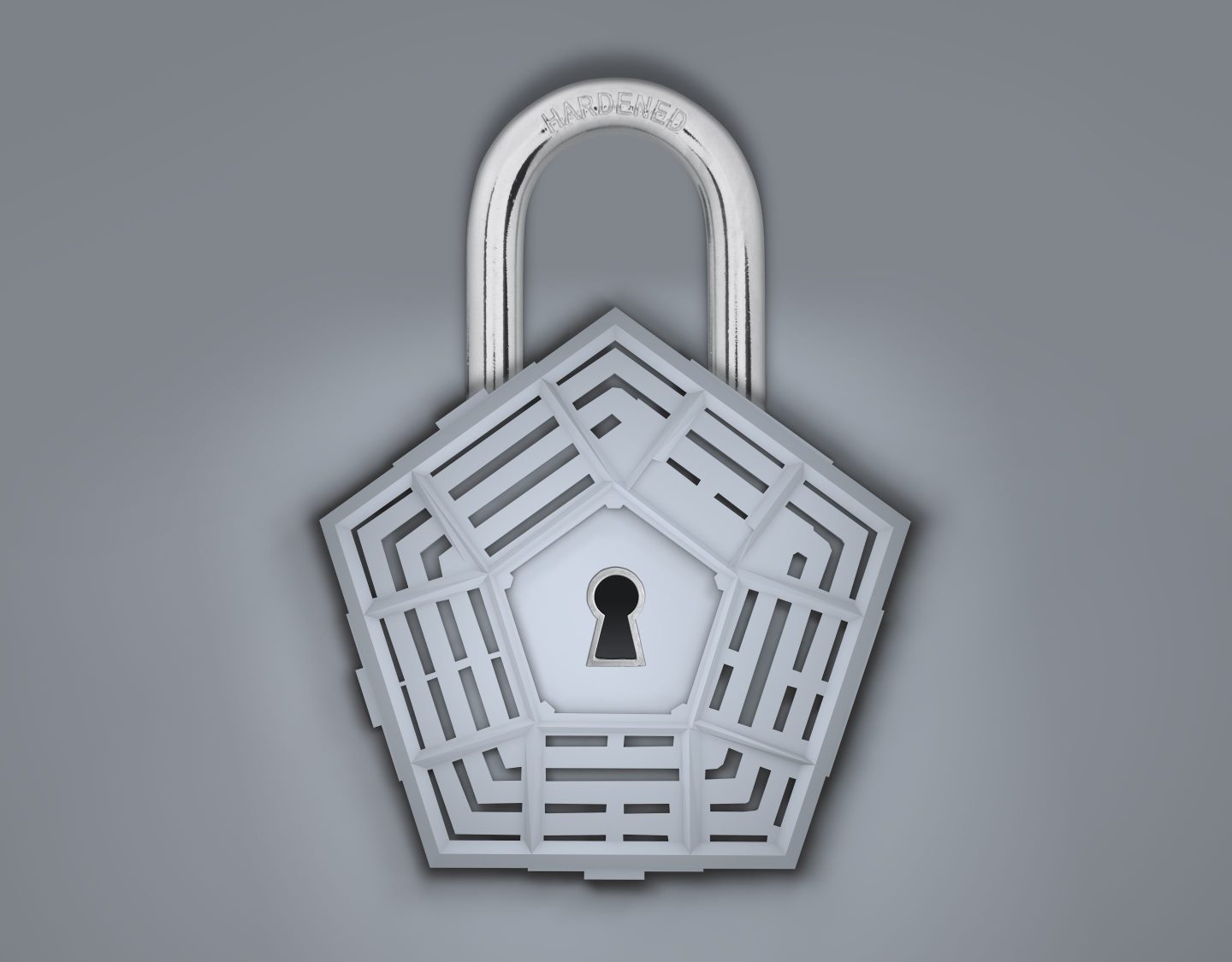
China, with the world’s largest population of Internet users, has no law protecting online privacy. But in May, Beijing introduced a new, non-binding standard called the Personal Information Security Specification. And as TechNode reports, the nation’s top legislative body is in the process of drafting legislation modeled on the European Union’s General Data Protection Regulation, which is generally considered the world’s toughest Internet privacy framework. How those new rules will be implemented and enforced remains to be seen.
Clay Chandler
On Twitter: @claychandler
Email: clay.chandler@fortune.com
NEWSWORTHY
Learning to Forget (Sort Of). Facebook on Tuesday debuted “Clear History,” a feature that lets users see the data that Facebook collects about them and then sends to third parties. Well, as critics point out, "clear" isn’t exactly the right word, since the new tool won’t actually delete any data. Instead, it merely disconnects the data from users' Facebook profiles.
How Do You Like Them? Apple’s new credit card, Apple Card, is now available to all U.S. iPhone owners. The card, which is notable for its lack of fines and fees, provides 3% cash back for both Apple products that users buy and Uber rides (but subpar rewards otherwise). Users’ spending data will be hidden from Apple and won’t be used for sales by issuer Goldman Sachs, reinforcing Apple’s pro-privacy standing.
Learning to Write (Sort of). Artificial intelligence research group OpenAI has released technology that can generate a passable paragraph or two about a topic after being fed a snippet of text. The artificial intelligence has an impressive range, including creating fake news stories and, as BoingBoing found out, aping well-known author Cormac McCarthy.
Tiny Robots Make Me Happy. Delivery startup Starship Technologies has raised $40 million in additional Series A funding to expand its fleet of six-wheeled, knee-high, mop-bucket-shaped robots. Funding was led by Morpheus Ventures. Starship is focused on deploying the robots to college campuses.
What Is This Thing You Call . . . News? Facebook will hire honest-to-god journalists to curate news stories for a new feature called News Tab. Like Clear History, it’s part of Facebook’s effort to grapple with deceptive content amid continuing scandals.
Yet More Facebook. Separately, Facebook released the results of an 'audit’ commissioned in response to complaints by conservatives that the social network deletes or downplays their posts. However, the Leadership Conference on Civil and Human Rights has slammed the project as “a make-believe solution in search of a phantom problem,” saying that Facebook should focus on “white supremacist propaganda overrunning its platform.”
FOOD FOR THOUGHT
Everybody Knows This is No Way to Listen to Music. Amid a broader reconsideration of the risks and benefits of digitization, musician Neil Young revisits his crusade for higher-fidelity music in a lengthy New York Times article. He points out that streaming music services save bandwidth by cutting out subtler frequencies, leaving listeners with “5 percent of the original music for your listening enjoyment.” That may be true enough, but profiler David Samuels has a broader diagnosis.
Neil Young is trapped in a cycle of second- and third- and fourth-guessing, which is an affliction that is not unique to his brain . . . When he looks back, which is something he did often during our conversations, it is toward the specificity of what some younger version of Neil Young did in a particular moment when he really nailed it . . . What he is after is not some ideal sound but the sound of what happened. The missed notes and off-kilter sounds are part of his art, which is the promise of the real, but also, even mainly, of imperfection.
IN CASE YOU MISSED IT
Sometimes You Don’t Need Deep Learning: Eye on A.I. - By Jonathan Vanian
In Tesla-Crazy Norway, the Electric Vehicle Revolution is Already Here - By Katherine Dunn
Wal-Mart CEO: VR Training Helped Save Lives in El Paso Shooting - By Aric Jenkins
Can Apple Afford to Make its Streaming Video Service Free? Can it Afford Not To? - By Don Reisinger
BEFORE YOU GO
A remarkably effective viral hoax has resurfaced on Instagram this month. A block of text warns users that "tomorrow starts the new Instagram rule that they can use your photos." It then throws in some legalese stating in part that "I do not give Instagram . . . permission to use my pictures, information, messages or posts." The same message previously spread on Facebook and other social networks.
Users, including many celebrities, have been posting the image or variations of its message, apparently under the impression it protects their content. But there is no policy change—Instagram's terms of service have always given the site certain rights to users' content, and the message itself seems unlikely to change that. Among those roped in were actress Taraji P. Henson, Vice co-founder Shane Smith . . . and U.S. Energy Sec. Rick Perry.
This edition of Data Sheet was curated by David Z. Morris. Find past issues, and sign up for other Fortune newsletters.