• Home
  • Latest
  • Fortune 500
  • Finance
  • Tech
  • Leadership
  • Lifestyle
  • Rankings
  • Multimedia

Trendingnow

1

As Big Tech showers employees with perks to win the talent war, Nvidia built a nearly $5 trillion company by making people pay for their own lunch

2

Mark Zuckerberg feeds his cows macadamia nuts and beer to create the 'highest-quality beef in the world' on his $300 million estate in Hawaii

3

Current price of oil as of July 2, 2026

1

As Big Tech showers employees with perks to win the talent war, Nvidia built a nearly $5 trillion company by making people pay for their own lunch

2

Mark Zuckerberg feeds his cows macadamia nuts and beer to create the 'highest-quality beef in the world' on his $300 million estate in Hawaii

3

Current price of oil as of July 2, 2026
FinanceEconomy

The Global Collapse in Interest Rates May be Setting Investors Up for a Crash

By
Larry Light
Larry Light
Down Arrow Button Icon
By
Larry Light
Larry Light
Down Arrow Button Icon
August 9, 2019, 10:52 AM ET
Add Fortune on Google for similar content.

“Lower for longer” has been the adage to describe interest rates since the Federal Reserve and other central banks took short rates to near-zero as a remedy during the 2008-09 financial crisis. These past few days confirm beyond doubt that it’s going to be lower a lot longer.

While that’s good news for consumers with credit card balances and auto loans, perpetually low rates have major downsides. Two of them: Low rates distort the yield curve, which could hasten a recession. And they encourage excessive corporate borrowing.

Easy money tends to blind people to very real perils, in the view of the Jerome Levy Forecasting Center. The research group’s most recent report warns that “economic stress will spoil the illusion of safety in global credit well before 2020.”

Such admonitions haven’t deterred central banks, which are on a rate-slicing kick. The Federal Reserve last week lowered its benchmark federal funds rate by a quarter percentage point to a target band of 2% to 2.25%. A clamor to keep reducing it is coming from some influential Wall Street figures, not to mention President Donald Trump. The Fed’s move, according to Joachim Fels, global economic advisor at bond house Pimco, may be “the beginning of the next major Fed easing cycle.”

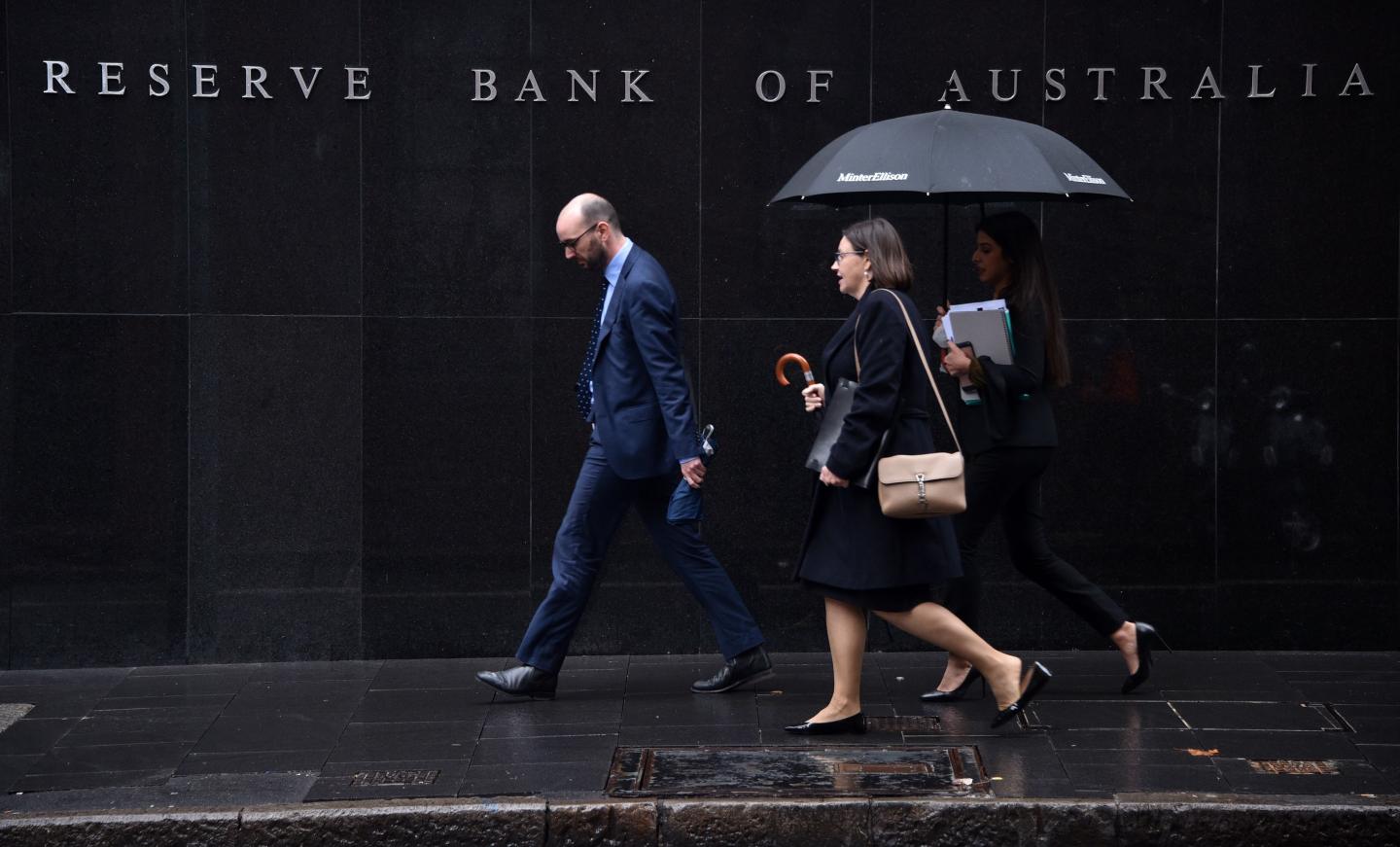
On Wednesday, the central banks of Thailand, New Zealand and India cut their rates, and Australia is expected to follow soon. Meanwhile, the European Central Bank and the Bank of Japan are eyeing further rate decreases. Indeed, both Europe and Japan have negative interest rates, where businesses and consumers must pay to deposit cash. Pimco’s Fels argued that the U.S. might end up with negative rates, too.

All these rate reductions are meant as stimulus, and indeed much of the world is facing slowing growth, with the ongoing U.S.-China trade war making matters worse. In the U.S., whose economy still seems to be in good shape (although economic growth dipped to 2.1% in the second quarter, from 3.1% in the prior period), the July cut is billed as insurance against a possible downturn.

Of course, broad macro forces are pushing rates below their historical levels. Low inflation is the root cause, the consequence of globalization and automation. And quiet inflation has changed the landscape for rate increases. Fed Chairman Jerome Powell has found that out the hard way, as little appetite exists for higher rates.

He had been gradually pumping up rates until this year, in hopes of returning them to more normal levels. In a sign of the times, though, even that target was lower than average, which had been around 5%. Until its about-face last month, the Fed was looking at around 3% or so as an end point.

Low rates mean the Fed has less room to cut, as a recession-fighting tool. What’s more, low rates bring the economy much closer to deflation, should a brutal recession blow in. And deflation, a nemesis in the Great Depression, makes recovery very difficult.

Yield curve inversion

As many market-watchers have noted, the distorted yield curve (when short term bond yields exceed long term yields) is cause for concern. The yield curve inverted in May, with the three-month Treasury bill higher than the 10-year Treasury note.

The reason this matters is an inverted curve is the financial equivalent of the tell-tale red-ringed skin lesion of the Black Plague in the Middle Ages: It’s a sure-fire sign of doom. The inversion augurs a coming recession. To Joseph Lavorgna, Nataxis’ chief economist for the Americas, it can be a self-fulfilling prophecy. An inverted curve, he said, “is both a predictor and creator of recessions.”

Unfortunately, fixed-income dynamics have shifted these days, and some believe the yield curve’s predictive abilities are off kilter. Short rates have trended lower, but long-term bond yields are suppressed by enormous demand, especially from foreign investors, seeking the safety of Treasury paper and, as their domestic rates are even lower than in America, relatively fatter interest payments. The large demand increases bond prices, and yields move down.

To see how this works, let’s plot the rate of decreases. At the year’s start, the three-month yielded 2.42% and the 10-year was 2.66%. Now, the three-year is 2.05% and the 10-year is 1.73%. In other words, the short-term Treasury slid 0.41 percentage point, and the long bond a much more sizable 0.93 point.

Excessive borrowing

Corporate America has been on a borrowing binge. In some cases, the objective was to fund stock buybacks, which support share prices. In others, to underwrite acquisitions. And also to pay for capital spending. Borrowing, aptly nicknamed leverage, is a time-honored way to buy big and important things, necessary for building businesses and creating earnings.

Some argue, with justice, that low rates have taken leverage too far. In the Levy Forecasting Center’s estimation, “companies in dubious financial positions have been able to roll over loans, fill holes in their cash flow and postpone cutbacks.”

As of this year’s first quarter, corporate nonfinancial debt of U.S. companies had surged to a record $9 trillion. And that is higher than before the Great Recession, consultancy Deloitte found. Although earnings growth in recent years has been robust, the second quarter likely will be much more anemic when all the results are tallied.

The low cost of funding is the big catalyst for this mounting debt load. For speculative bonds, a.k.a. junk, the spread to comparable Treasuries has been below four percentage points and only recently ticked up to just under five. Still, the historical average is almost double that.

At some point, when the inevitable recession arrives, so will the pain for investors.

More must-read stories from Fortune:

—Does the stock market have a say in the presidential election?

—The bond market has a message for the Fed: You’re not in charge anymore

—Wall Street banks see increasing odds of recession after trade war escalation

—Debit cards for kids? Here’s what you need to know about the newest offerings

—Amid trade tumult, Goldman Sachs now sees two more interest rate cuts this year

Don’t miss the daily Term Sheet, Fortune‘s newsletter on deals and dealmakers.

About the Author
By Larry Light
See full bioRight Arrow Button Icon
Add Fortune on Google for similar content.

Latest in Finance

Finance
Lorem ipsum dolor sit amet, consectetur adipiscing elit, sed do eiusmod tempor incididunt ut labore et dolore magna aliqua. Ut enim ad minim veniam
By Fortune Editors
October 20, 2025
Finance
Lorem ipsum dolor sit amet, consectetur adipiscing elit, sed do eiusmod tempor incididunt ut labore et dolore magna aliqua. Ut enim ad minim veniam
By Fortune Editors
October 20, 2025
Finance
Lorem ipsum dolor sit amet, consectetur adipiscing elit, sed do eiusmod tempor incididunt ut labore et dolore magna aliqua. Ut enim ad minim veniam
By Fortune Editors
October 20, 2025
Finance
Lorem ipsum dolor sit amet, consectetur adipiscing elit, sed do eiusmod tempor incididunt ut labore et dolore magna aliqua. Ut enim ad minim veniam
By Fortune Editors
October 20, 2025
Finance
Lorem ipsum dolor sit amet, consectetur adipiscing elit, sed do eiusmod tempor incididunt ut labore et dolore magna aliqua. Ut enim ad minim veniam
By Fortune Editors
October 20, 2025
Finance
Lorem ipsum dolor sit amet, consectetur adipiscing elit, sed do eiusmod tempor incididunt ut labore et dolore magna aliqua. Ut enim ad minim veniam
By Fortune Editors
October 20, 2025

Most Popular

Finance
Lorem ipsum dolor sit amet, consectetur adipiscing elit, sed do eiusmod tempor incididunt ut labore et dolore magna aliqua. Ut enim ad minim veniam
By Fortune Editors
October 20, 2025
Finance
Lorem ipsum dolor sit amet, consectetur adipiscing elit, sed do eiusmod tempor incididunt ut labore et dolore magna aliqua. Ut enim ad minim veniam
By Fortune Editors
October 20, 2025
Finance
Lorem ipsum dolor sit amet, consectetur adipiscing elit, sed do eiusmod tempor incididunt ut labore et dolore magna aliqua. Ut enim ad minim veniam
By Fortune Editors
October 20, 2025
Finance
Lorem ipsum dolor sit amet, consectetur adipiscing elit, sed do eiusmod tempor incididunt ut labore et dolore magna aliqua. Ut enim ad minim veniam
By Fortune Editors
October 20, 2025
Finance
Lorem ipsum dolor sit amet, consectetur adipiscing elit, sed do eiusmod tempor incididunt ut labore et dolore magna aliqua. Ut enim ad minim veniam
By Fortune Editors
October 20, 2025
Finance
Lorem ipsum dolor sit amet, consectetur adipiscing elit, sed do eiusmod tempor incididunt ut labore et dolore magna aliqua. Ut enim ad minim veniam
By Fortune Editors
October 20, 2025
Fortune Secondary Logo
Rankings
  • 100 Best Companies
  • Fortune 500
  • Global 500
  • Fortune 500 Europe
  • Most Powerful Women
  • World's Most Admired Companies
  • See All Rankings
  • Lists Calendar
Sections
  • Finance
  • Fortune Crypto
  • Features
  • Leadership
  • Health
  • Commentary
  • Success
  • Retail
  • Mpw
  • Tech
  • Lifestyle
  • CEO Initiative
  • Asia
  • Politics
  • Conferences
  • Europe
  • Newsletters
  • Personal Finance
  • Environment
  • Magazine
  • Education
Customer Support
  • Frequently Asked Questions
  • Customer Service Portal
  • Privacy Policy
  • Terms Of Use
  • Single Issues For Purchase
  • International Print
Commercial Services
  • Advertising
  • Fortune Brand Studio
  • Fortune Analytics
  • Fortune Conferences
  • Business Development
  • Group Subscriptions
About Us
  • About Us
  • Press Center
  • Work At Fortune
  • Terms And Conditions
  • Site Map
  • About Us
  • Press Center
  • Work At Fortune
  • Terms And Conditions
  • Site Map
  • Facebook icon
  • Twitter icon
  • LinkedIn icon
  • Instagram icon
  • Pinterest icon

Latest in Finance

Man in a black hat and jacket
InvestingSpace Exploration
Elon Musk can’t sell a single SpaceX share for a year—and then all the locks crack open at once
By Amanda GerutJuly 3, 2026
1 hour ago
Top CD rates today, July 3, 2026: Lock in up to up to 4.40%
Personal FinanceCertificates of Deposit (CDs)
Top CD rates today, July 3, 2026: Lock in up to up to 4.40%
By Glen Luke FlanaganJuly 3, 2026
1 hour ago
The top high-yield savings rates: Up to 4.50% on July 3, 2026
Personal FinanceSavings accounts
The top high-yield savings rates: Up to 4.50% on July 3, 2026
By Glen Luke FlanaganJuly 3, 2026
1 hour ago
t
CryptoWhite House
‘We are in a new era’: Trump’s bombshell $2.2 billion income haul, the ‘Big Player Theory’ and what happens when the president becomes the bubble
By Nick LichtenbergJuly 3, 2026
1 hour ago
Woman sitting in front of her house
SuccessWorld Cup
Airbnb offered $750 to Americans to open up their homes during the World Cup—mostly women took it up and now they’re earning thousands
By Emma BurleighJuly 3, 2026
2 hours ago
Photo: Russian President Vladimir Putin Attends ASEAN-Russia Summit
Energyputin
Russians live with fuel shortages and rationing as Putin insists the war against Ukraine will go on
By The Associated PressJuly 3, 2026
2 hours ago

Most Popular

As Big Tech showers employees with perks to win the talent war, Nvidia built a nearly $5 trillion company by making people pay for their own lunch
Big Tech
As Big Tech showers employees with perks to win the talent war, Nvidia built a nearly $5 trillion company by making people pay for their own lunch
By Marco Quiroz-GutierrezJuly 1, 2026
2 days ago
Mark Zuckerberg feeds his cows macadamia nuts and beer to create the 'highest-quality beef in the world' on his $300 million estate in Hawaii
Success
Mark Zuckerberg feeds his cows macadamia nuts and beer to create the 'highest-quality beef in the world' on his $300 million estate in Hawaii
By Sasha RogelbergJuly 2, 2026
18 hours ago
Current price of oil as of July 2, 2026
Personal Finance
Current price of oil as of July 2, 2026
By Joseph HostetlerJuly 2, 2026
21 hours ago
Americans are escaping the U.S. for New Zealand where house prices have hit a new low—but only wealthy Americans with $3 million spare can invest
Success
Americans are escaping the U.S. for New Zealand where house prices have hit a new low—but only wealthy Americans with $3 million spare can invest
By Emma BurleighJuly 2, 2026
20 hours ago
Today, Emily Blunt is worth $80 million thanks to her Hollywood career—but she actually wanted to be a UN Spanish translator on $80K
Success
Today, Emily Blunt is worth $80 million thanks to her Hollywood career—but she actually wanted to be a UN Spanish translator on $80K
By Orianna Rosa RoyleJuly 2, 2026
1 day ago
Egg companies made $1.22 billion in profit off a $6 carton — now they’re buying their way out of a price-fixing case with 53 million donated eggs
Law
Egg companies made $1.22 billion in profit off a $6 carton — now they’re buying their way out of a price-fixing case with 53 million donated eggs
By Wyatte Grantham-Philips and The Associated PressJuly 2, 2026
17 hours ago

© 2026 Fortune Media IP Limited. All Rights Reserved. Use of this site constitutes acceptance of our Terms of Use and Privacy Policy | CA Notice at Collection and Privacy Notice | Do Not Sell/Share My Personal Information
FORTUNE is a trademark of Fortune Media IP Limited, registered in the U.S. and other countries. FORTUNE may receive compensation for some links to products and services on this website. Offers may be subject to change without notice.