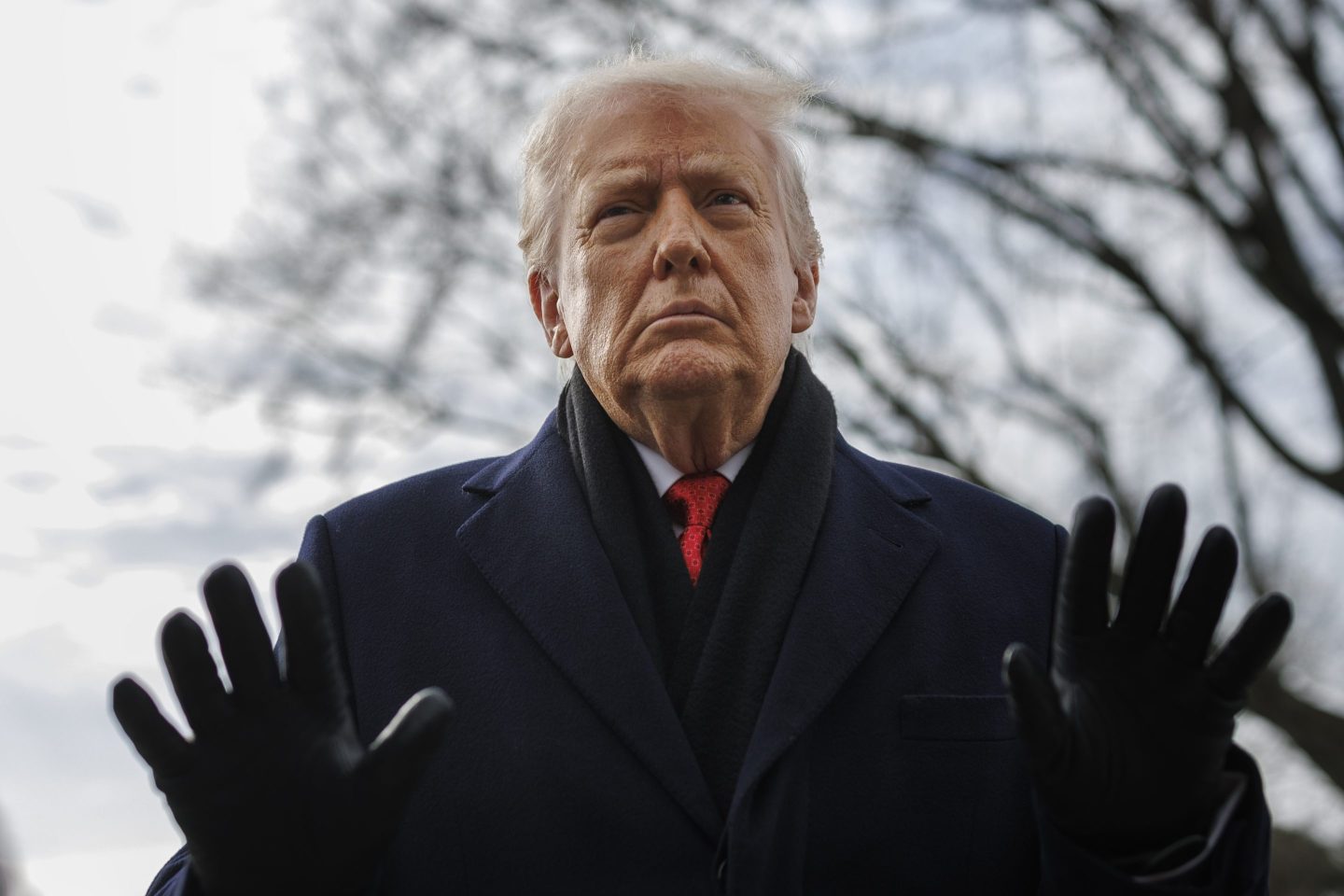
Senator Elizabeth Warren presents herself as the antithesis of President Donald Trump, yet they share a populist economic vision as they seek to channel the grievances of working-class Americans who have been left behind by globalization.
The Democrat and the Republican have called for wielding the power of the state to protect American industries from foreign competition with actions like tariffs against trading partners and interventions to curb the value of the dollar.
Trump rode his rhetoric to the White House in 2016. Warren, a Massachusetts senator who has been an advocate for protectionist measures in Congress, is betting that a similar message will help her capture her party’s nomination and win back the industrial Midwestern states that handed Trump the presidency.
Although their policy prescriptions in many areas are polar opposites, their shared populist views allow them to stand apart from the Democratic front-runner, former Vice President Joe Biden, who is associated with the free-trade policies of the Obama administration.
Diagnosis of decline
Warren labels her approach “economic patriotism” and Trump uses the slogan “America First.” They share a belief that failed policies — not just the inexorable march of automation and globalization — are responsible for the decline of U.S. manufacturing and the loss of blue-collar jobs, a trend they believe is reversible.
Most recently, they have both criticized what they consider to be an overvalued dollar against other major currencies, which they say hurts the U.S. in global markets. Last week, Warren called for “actively managing” the dollar’s strength to bolster American exports. This week, Trump bemoaned the “very strong dollar,” relative to other currencies, saying that it puts “the U.S. at a big disadvantage.”
A forced devaluation of the dollar would break with a longstanding bipartisan consensus among American presidents about the virtues of free trade. Yet after decades of flat wages that haven’t kept up with health care costs or college tuition, the appetite to act to protect domestic workers and companies has grown in both parties.
The idea of such protectionist measures is anathema to prominent economists of past administrations such as Larry Summers, who served as Treasury secretary under President Bill Clinton and was a top economic adviser to President Barack Obama.
“No country can devalue its way to prosperity,” Summers said in an interview. “I am hopeful that these ideas will be rejected.”
Populists on the left and right “have tended to oppose trade agreements,” he said. “The rhetoric of class warfare is divisive and unlikely to bring economic benefit.”
Warren and the president she’s seeking to challenge both support using tariffs to reorient trade policy, though she has criticized Trump’s “dart-throwing” approach on Mexico.
The two have called out U.S. multinational companies for moving jobs overseas where labor is cheaper. Last November, Trump said he was “very disappointed with General Motors” for announcing that it would close plants in Maryland, Michigan and Ohio.
In her “Plan for Economic Patriotism” released last week, Warren assailed “giant ‘American’ corporations who control our economy” yet “have no loyalty or allegiance to America.” She cited General Electric Co.’s decision to shut down a factory in Wisconsin last year.
Trump and Warren have both condemned past trade accords including the North American Free Trade Agreement and the Trans-Pacific Partnership. They’re united in a belief that U.S. policies are responsible for the decline of the once-vibrant manufacturing sector. And both have called for ending wars and other foreign interventions to refocus resources on the U.S.
This rhetoric resonates with many Americans in both parties, said former Congressman Brad Miller, a North Carolina Democrat who is economically liberal and culturally moderate.
“What’s being called economic populism is wildly popular,” Miller said. “The overwhelming majority of Americans, including those who voted for Trump, are for stronger economic reform, for protections of people on the short end of the power imbalance when they deal with business.”
Warren has risen in the Democratic race as voters take note of her policy focus. An Economist/YouGov survey released Wednesday found her in second place with 16%, overtaking another populist, Senator Bernie Sanders of Vermont, and behind Biden, who had 27%.
In an illustration of the left-right populist convergence, Warren’s economic platform earned striking praise from conservative Fox News anchor Tucker Carlson, who has built an audience by picking fights with the left on cultural issues like immigration.
“Many of Warren’s policy prescriptions make obvious sense,” Carlson said on his program last week, hailing her plan to require the government to buy American products and to bolster workplace apprenticeships. “She sounds like Donald Trump at his best.”
Still, there are major differences.
Warren wants to tax wealthy Americans and strengthen rules on businesses, while Trump has cut taxes on top earners and boasted about slashing corporate regulations. Warren calls for expanding the safety net, Trump decries such moves as “socialism” and wants to shrink government aid. Warren has also distanced herself from Trump’s updated Nafta agreement, saying it doesn’t do enough to protect workers or the environment.
“President Trump showered tax giveaways on giant multinational corporations that ship jobs overseas and negotiated a weak Nafta 2.0 that won’t stop outsourcing or create jobs,” said Chris Hayden, a Warren spokesman. “Unlike this president who caters to the wealthy and the well-connected, Elizabeth will actually stand with American workers and aggressively use all the tools of government to defend and create good American jobs.”
Trump campaign spokeswoman Erin Perrine said: “President Trump’s policies and goals have always been clear — hire American, buy American. No one has fought harder for the American worker than President Trump.”
The appeal of economic populism in the Democratic Party was evident in Sanders’ unexpectedly strong challenge in 2016 to eventual nominee Hillary Clinton. Running again in 2020, Sanders is touching on the same themes of rejecting trade deals and cracking down on corporations that move jobs overseas. Sanders campaign manager Faiz Shakir said Trump won in 2016 by running as “fake Bernie Sanders.”
In the GOP, economic populism had long been confined to the fringes. Trump’s 2016 victory and overwhelming support among his party’s voters has elevated those sentiments into the mainstream, disappointing pro-trade conservatives.
“Populism is rooted in opportunist politics and because of that makes little sense as coherent economic policy. Most Republicans are still not populists, but it’s sure on the rise,” said Brendan Buck, who served as counselor to former U.S. House Speaker Paul Ryan and is now a partner at the consulting firm Seven Letter.
“I can only hope that Warren’s embrace of protectionism will make us rethink the direction we’re headed,” he said. “We need more defenders of capitalism, not fewer.”
More must-read stories from Fortune:
—Democrats hold out on USMCA as Trump walks back Mexico tariffs
—The story behind the Baby Trump balloon
—FCC takes major steps toward limiting robocalls and scammers
—Michael Bloomberg pledges $500 million to combat climate change
—Listen to our new audio briefing, Fortune 500 Daily
Get up to speed on your morning commute with Fortune’s CEO Daily newsletter.