• Home
  • News
  • Fortune 500
  • Tech
  • Finance
  • Leadership
  • Lifestyle
  • Rankings
  • Multimedia
MagazineAI

Keep Your A.I. Buzzwords Straight

By
Jonathan Vanian
Jonathan Vanian
Down Arrow Button Icon
By
Jonathan Vanian
Jonathan Vanian
Down Arrow Button Icon
May 28, 2019, 6:30 AM ET
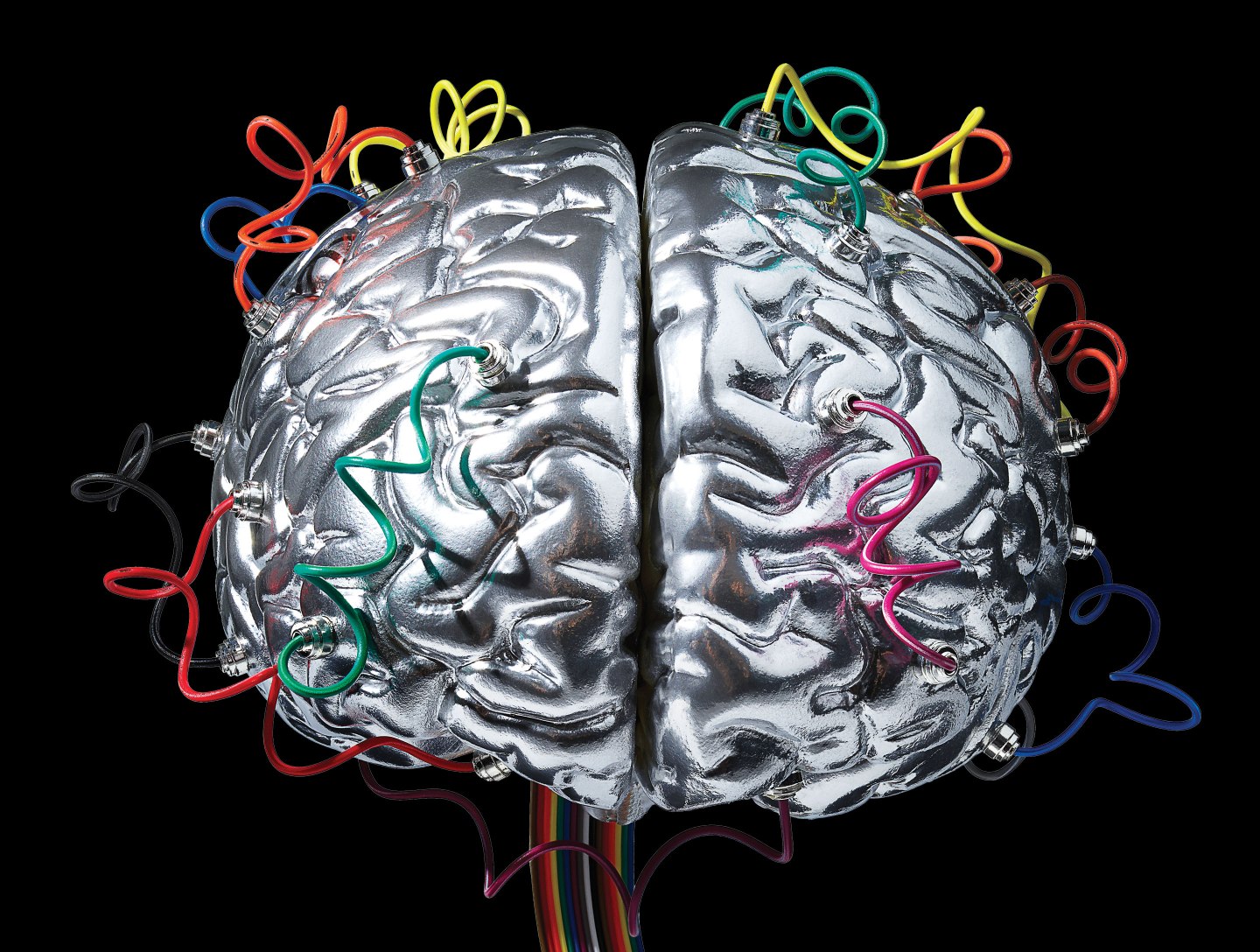
ART06.19.brain-black
Photograph by The Voorhes for FortunePhotograph by The Voorhes for Fortune

Artificial intelligence is having its moment. Business leaders can’t stop talking about it. New tech products invariably include it. And news headlines incessantly chronicle the buzz around it. But for many people, artificial intelligence remains a mystery.

To help, we’ve created a guide that explains some of the key terms associated with the technology, an increasingly useful tool for businesses that improves as it crunches more data.

Read more, from 2016: Why Deep Learning Is Suddenly Changing Your Life

Reinforcement Learning

This A.I. technique is like training a dog with treats. The software learns by successfully executing a task and, on the flip side, from failure. This fusion of reinforcement learning with deep learning has led to tremendous breakthroughs, like computers beating humans at complicated video and board games. ­Example: Facebook’s ­targeted notifications.

Neural Networks

A.I.’s rise can be traced to software developed decades ago that was intended to approximate how the human brain learns. Inside a neural network are layers of interconnected nodes where calculations take place that help computers sift though data in minute detail. By doing so, the software can learn to recognize patterns that even the most intelligent humans may overlook. Example: Baidu search.

Deep Learning

Mixing neural networks with machine learning makes for deep learning, a powerful technology that can crunch enormous amounts of data, like vast archives of audio clips. A.I.’s biggest breakthroughs—such as recognizing snow leopards in photos—can be traced to the technology. ­Example: Nvidia’s 3D A.I.-generated faces.

Machine Learning

You can thank machine learning for recommending how to respond to your boss when she emails asking whether an important document is in order (“Looks good to me”) or whether you can meet at noon (“Let’s do it!”). This is just a taste of how algorithms help computers “learn.” The chief attraction: Companies don’t need humans to program the technology for each specific task it handles. Example: Google Gmail.

Computer Vision

Devices using computer vision are able to see and understand their surroundings almost like a human. Think of facial-recognition technology that can automatically unlock your iPhone or the systems that help navigate self-driving cars without crashing them into trees. The problem seems easy to solve. But in reality, it’s very ­difficult. Example: Waymo’s ­autonomous vehicles.

Natural Language Processing

This technology makes it possible for ­computers to understand and react to human speech and language. Voice-controlled digital ­assistants, which take dictation or power Internet-­connected home speakers, would be impossible without it. The technology is still imperfect, but it’s improving quickly. Example: Amazon Alexa digital assistant.

A version of this article appears in the June 2019 issue of Fortune with the headline “Artificial Intelligence 101.”

More must-read stories from Fortune:

—The 2019 Fortune 500 list demonstrates the prize of size

—‘A.I., captain’: the robotic Navy ship of the future

—How artificial intelligence is finding new cures in old drugs

—Your next couch, sweater, or set of golf clubs could be designed by A.I.

—These businesses are making bets on a quantum leap

Get Fortune’s Eye on A.I. newsletter, where artificial intelligence meets industry
About the Author
By Jonathan Vanian
LinkedIn iconTwitter icon

Jonathan Vanian is a former Fortune reporter. He covered business technology, cybersecurity, artificial intelligence, data privacy, and other topics.

See full bioRight Arrow Button Icon

Latest from the Magazine

MagazineMarkets
Why an AI bubble could mean chaos for stock markets—and how smart investors are protecting their portfolios
By Alyson ShontellDecember 3, 2025
2 days ago
MagazineMedia
CoComelon started as a YouTube show for toddlers. It’s now a $3 billion empire that even Disney can’t ignore
By Natalie JarveyDecember 3, 2025
2 days ago
MagazineFood and drink
A Chinese ice cream chain, powered by super-cheap cones, now has more outlets than McDonald’s
By Theodora YuDecember 3, 2025
2 days ago
AITikTok
China’s ByteDance could be forced to sell TikTok U.S., but its quiet lead in AI will help it survive—and maybe even thrive
By Nicholas GordonDecember 2, 2025
3 days ago
MagazineAnthropic
Anthropic is all in on ‘AI safety’—and that’s helping the $183 billion startup win over big business
By Jeremy KahnDecember 2, 2025
3 days ago
MagazineDoorDash
How DoorDash became an $85 billion behemoth and won the delivery wars
By Jason Del ReyDecember 1, 2025
4 days ago

Most Popular

placeholder alt text
Economy
Two months into the new fiscal year and the U.S. government is already spending more than $10 billion a week servicing national debt
By Eleanor PringleDecember 4, 2025
22 hours ago
placeholder alt text
Success
‘Godfather of AI’ says Bill Gates and Elon Musk are right about the future of work—but he predicts mass unemployment is on its way
By Preston ForeDecember 4, 2025
17 hours ago
placeholder alt text
Success
Nvidia CEO Jensen Huang admits he works 7 days a week, including holidays, in a constant 'state of anxiety' out of fear of going bankrupt
By Jessica CoacciDecember 4, 2025
17 hours ago
placeholder alt text
Success
Nearly 4 million new manufacturing jobs are coming to America as boomers retire—but it's the one trade job Gen Z doesn't want
By Emma BurleighDecember 4, 2025
18 hours ago
placeholder alt text
North America
Jeff Bezos and Lauren Sánchez Bezos commit $102.5 million to organizations combating homelessness across the U.S.: ‘This is just the beginning’
By Sydney LakeDecember 2, 2025
3 days ago
placeholder alt text
Health
Bill Gates decries ‘significant reversal in child deaths’ as nearly 5 million kids will die before they turn 5 this year
By Nick LichtenbergDecember 4, 2025
1 day ago
Rankings
  • 100 Best Companies
  • Fortune 500
  • Global 500
  • Fortune 500 Europe
  • Most Powerful Women
  • Future 50
  • World’s Most Admired Companies
  • See All Rankings
Sections
  • Finance
  • Leadership
  • Success
  • Tech
  • Asia
  • Europe
  • Environment
  • Fortune Crypto
  • Health
  • Retail
  • Lifestyle
  • Politics
  • Newsletters
  • Magazine
  • Features
  • Commentary
  • Mpw
  • CEO Initiative
  • Conferences
  • Personal Finance
  • Education
Customer Support
  • Frequently Asked Questions
  • Customer Service Portal
  • Privacy Policy
  • Terms Of Use
  • Single Issues For Purchase
  • International Print
Commercial Services
  • Advertising
  • Fortune Brand Studio
  • Fortune Analytics
  • Fortune Conferences
  • Business Development
About Us
  • About Us
  • Editorial Calendar
  • Press Center
  • Work At Fortune
  • Diversity And Inclusion
  • Terms And Conditions
  • Site Map

© 2025 Fortune Media IP Limited. All Rights Reserved. Use of this site constitutes acceptance of our Terms of Use and Privacy Policy | CA Notice at Collection and Privacy Notice | Do Not Sell/Share My Personal Information
FORTUNE is a trademark of Fortune Media IP Limited, registered in the U.S. and other countries. FORTUNE may receive compensation for some links to products and services on this website. Offers may be subject to change without notice.