• Home
  • Latest
  • Fortune 500
  • Finance
  • Tech
  • Leadership
  • Lifestyle
  • Rankings
  • Multimedia

Trendingnow

1

The millennial generation is split in 2: an older crowd with boomer-style comfort, a younger set going 'back to the early 1900s'

2

Trump pulls back after Iran crosses his red line as U.S. military breaks two-week streak of airstrikes amid talks for potential Hormuz deal

3

'The demographic dividend of the last 40 years is ending': J.P. Morgan says the world is running out of the two things that kept interest rates down

1

The millennial generation is split in 2: an older crowd with boomer-style comfort, a younger set going 'back to the early 1900s'

2

Trump pulls back after Iran crosses his red line as U.S. military breaks two-week streak of airstrikes amid talks for potential Hormuz deal

3

'The demographic dividend of the last 40 years is ending': J.P. Morgan says the world is running out of the two things that kept interest rates down
Commentary

The Hidden Price of Cashless Retail

By
Charlie Thaxton
Charlie Thaxton
Down Arrow Button Icon
By
Charlie Thaxton
Charlie Thaxton
Down Arrow Button Icon
April 3, 2019, 3:19 PM ET
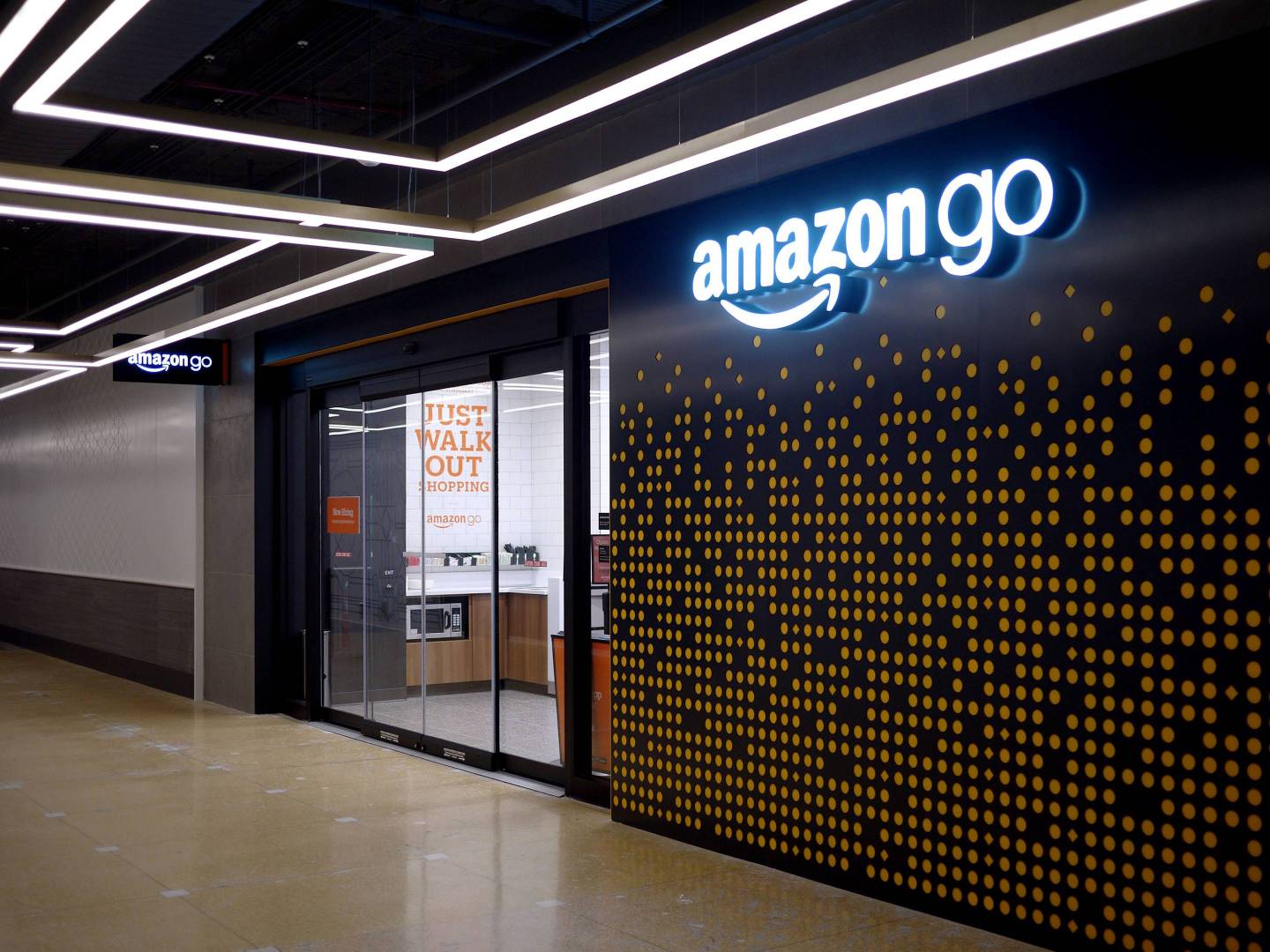
An Amazon Go store in Chicago.
View of the entrance and sign for the Amazon Go store in Chicago, Illinois, October 9, 2018. The store is located on 144 South Clark Street in the Chicago Loop neighborhood. (Photo by Interim Archives/Getty Images)Interim Archives/Getty Images
Add Fortune on Google for similar content.

Your money’s no good here. At least, that’s true at a growing number of stores and restaurants that are ditching cash and switching entirely to credit and debit cards. Cashless retail is still relatively uncommon, but it’s on the rise and has begun to concern some lawmakers. New Jersey recently banned cashless retail. Philadelphia has done the same. Other cities may soon follow.

So far, the debates leading up to these laws have mostly centered on how cash-free establishments impact the many low-income people who lack bank accounts and credit cards. But there’s another major problem with going cashless. Cashless retail—and credit cards in general—allow a handful of giant banks and credit card monopolies to siphon more and more revenue from the productive economy, at the expense of consumers and businesses.

Retailers are essentially locked into a “partnership” with financial services monopolies. To get a sense of how inflated our rates truly are, the EU has capped rates at one-seventh of ours and, believe it or not, credit cards are still a profitable and growing business in the European economy.

We need to do the same. Unless the U.S. follows suit, banks and card networks will continue to extract a kind of monopoly rent across a growing share of consumer spending, skimming money from both consumers and businesses, and dampening real, equitable economic growth.

Cards are big business. Over half of all credit cards are issued by the Big Four banks: JPMorgan Chase, Citigroup, Wells Fargo, and Bank of America. Interchange fees alone—the “swipe fee” retailers pay to the banks in order to process cards—netted these and other card issuers $64 billion in 2018, more than doubling the revenue of 2012. Processing associated with those fees made the card network market’s uncontested duopoly, Visa and Mastercard, about $15 billion last year.

Those numbers are so elevated because the U.S. has the highest swipe fees in the world, between 1.5% and 2%—and oftentimes nearly 3%—of a transaction, depending on the type of purchase. And the market is highly concentrated: Visa is a credit card titan, controlling 60% of the credit and debit card market last year. Mastercard had a full 25% of the market and American Express captured 13%, which left Discover to clean up the dust, with just a 2% share.

This market dominance allows the networks to largely dictate card fees to merchants. Retailers and restaurants cannot feasibly refuse Visa and Mastercard, ensuring there is no true competition in the market. Card network technology has only become more efficient over time—yet, fees keep rising, forcing merchants to pay more for the same service year after year.

While big retailers like Walmart and Amazon have some leverage to negotiate down fees, small independent businesses do not. This all but ensures that the increasing use of cards favors big business, and shifts the largest cost burden to those who have the least ability to negotiate. Small businesses are forced to both accept the fees and pay a higher relative price than the chains do. In other words, concentration in the card market is helping to propel growing concentration in retail.

This is further exacerbated by Amazon’s new fleet of “Go” stores, for which cashless (and cashier-less) retail is central to the business model.

Such stores will lead to death by a thousand cuts for the American economy. The cashless trend puts more power and control in the hands of billion-dollar credit card companies and trillion-dollar banks—who play an inconsequential role in the doings of your local restaurant, bookstore, or independent retailer. Yet, these giants profit handsomely from inserting themselves between you and your neighborhood businesses. And their gain comes at a real cost: Local retailers are stuck paying tribute to monopolists far removed from the operation of their businesses, instead of offering better wages, adding new services, or lowering prices.

Ultimately, the high cost of cards is passed down to consumers in the form of higher prices. Whether they use a card or not, consumers are effectively paying a premium to subsidize the banks and card companies. Federal Reserve data shows strong credit card issue and spending growth year over year, which means consumers are not only using their cards more, they’re paying more—millions more—in hidden interchange fees every year to do so.

No consequence, legal or economic, stands in the way of card companies hiking their rates. And that’s exactly what they plan to do in April.

So what’s the solution? In 2015, the EU took charge and set a strict cap on interchange fees at 0.2% for debit and 0.3% for credit card transactions, keeping more money in small businesses’ hands. Visa and Mastercard make a little less, but millions of businesses and consumers make a lot more. People still use credit cards all the time in Europe.

In the meantime, legislation to ban cashless on the local and state level is a good starting point. Cities like San Francisco, Chicago, Washington, D.C., and New York are all considering cashless bans. None of these proposed laws forbid the use of credit cards, they merely require businesses to honor their customer’s cash. That protects consumer choice, and allows those unbanked Americans to participate in the economy.

Cash, for all of its contingencies, is a much more anonymous, resilient, and democratic system. Cities and states are right to insist that it continue to be an option for consumers. But with card transactions almost certain to become more expensive, we also need to cap these hidden fees so that giant financial interests cannot continue to use their monopoly position to drain more revenue from the economy.

Charlie Thaxton is a researcher with the Institute for Local Self-Reliance’s Community-Scaled Economy program.

About the Author
By Charlie Thaxton
See full bioRight Arrow Button Icon
Add Fortune on Google for similar content.

Latest in Commentary

Finance
Lorem ipsum dolor sit amet, consectetur adipiscing elit, sed do eiusmod tempor incididunt ut labore et dolore magna aliqua. Ut enim ad minim veniam
By Fortune Editors
October 20, 2025
Finance
Lorem ipsum dolor sit amet, consectetur adipiscing elit, sed do eiusmod tempor incididunt ut labore et dolore magna aliqua. Ut enim ad minim veniam
By Fortune Editors
October 20, 2025
Finance
Lorem ipsum dolor sit amet, consectetur adipiscing elit, sed do eiusmod tempor incididunt ut labore et dolore magna aliqua. Ut enim ad minim veniam
By Fortune Editors
October 20, 2025
Finance
Lorem ipsum dolor sit amet, consectetur adipiscing elit, sed do eiusmod tempor incididunt ut labore et dolore magna aliqua. Ut enim ad minim veniam
By Fortune Editors
October 20, 2025
Finance
Lorem ipsum dolor sit amet, consectetur adipiscing elit, sed do eiusmod tempor incididunt ut labore et dolore magna aliqua. Ut enim ad minim veniam
By Fortune Editors
October 20, 2025
Finance
Lorem ipsum dolor sit amet, consectetur adipiscing elit, sed do eiusmod tempor incididunt ut labore et dolore magna aliqua. Ut enim ad minim veniam
By Fortune Editors
October 20, 2025

Most Popular

Finance
Lorem ipsum dolor sit amet, consectetur adipiscing elit, sed do eiusmod tempor incididunt ut labore et dolore magna aliqua. Ut enim ad minim veniam
By Fortune Editors
October 20, 2025
Finance
Lorem ipsum dolor sit amet, consectetur adipiscing elit, sed do eiusmod tempor incididunt ut labore et dolore magna aliqua. Ut enim ad minim veniam
By Fortune Editors
October 20, 2025
Finance
Lorem ipsum dolor sit amet, consectetur adipiscing elit, sed do eiusmod tempor incididunt ut labore et dolore magna aliqua. Ut enim ad minim veniam
By Fortune Editors
October 20, 2025
Finance
Lorem ipsum dolor sit amet, consectetur adipiscing elit, sed do eiusmod tempor incididunt ut labore et dolore magna aliqua. Ut enim ad minim veniam
By Fortune Editors
October 20, 2025
Finance
Lorem ipsum dolor sit amet, consectetur adipiscing elit, sed do eiusmod tempor incididunt ut labore et dolore magna aliqua. Ut enim ad minim veniam
By Fortune Editors
October 20, 2025
Finance
Lorem ipsum dolor sit amet, consectetur adipiscing elit, sed do eiusmod tempor incididunt ut labore et dolore magna aliqua. Ut enim ad minim veniam
By Fortune Editors
October 20, 2025
Fortune Secondary Logo
Rankings
  • 100 Best Companies
  • Fortune 500
  • Global 500
  • Fortune 500 Europe
  • Most Powerful Women
  • World's Most Admired Companies
  • See All Rankings
  • Lists Calendar
Sections
  • Finance
  • Fortune Crypto
  • Features
  • Leadership
  • Health
  • Commentary
  • Success
  • Retail
  • Mpw
  • Tech
  • Lifestyle
  • CEO Initiative
  • Asia
  • Politics
  • Conferences
  • Europe
  • Newsletters
  • Personal Finance
  • Environment
  • Magazine
  • Education
Customer Support
  • Frequently Asked Questions
  • Customer Service Portal
  • Privacy Policy
  • Terms Of Use
  • Single Issues For Purchase
  • International Print
Commercial Services
  • Advertising
  • Fortune Brand Studio
  • Fortune Analytics
  • Fortune Conferences
  • Business Development
  • Group Subscriptions
About Us
  • About Us
  • Press Center
  • Work At Fortune
  • Terms And Conditions
  • Site Map
  • About Us
  • Press Center
  • Work At Fortune
  • Terms And Conditions
  • Site Map
  • Facebook icon
  • Twitter icon
  • LinkedIn icon
  • Instagram icon
  • TikTok icon
  • YouTube icon

Latest in Commentary

Roderick Wong, MD is Managing Partner and Chief Investment Officer of RTW Investments
Commentary250 Years of Innovation
When 10,000 doctors stood up and cheered for a cancer drug — America’s innovation machine made it possible
By Roderick WongJuly 25, 2026
22 hours ago
t
CommentaryCommunity
Ronald Reagan center director: How to talk politics with family, friends and neighbors, without losing them
By Frederick J. Ryan, Jr.July 25, 2026
22 hours ago
m
Commentarydisruption
The Messi Test and how the Spaniards messed with it: what the World Cup final taught me about the jobs AI can’t touch
By Bhaskar ChakravortiJuly 25, 2026
22 hours ago
alex
CommentaryEntrepreneurship
I sold my startup for millions without a single dollar in revenue. Here’s why that’s the point
By Alexander Kardos-NyheimJuly 25, 2026
1 day ago
craig
CommentaryPharmaceutical Industry
Big pharma’s patent cliff meets a new biotech Cold War: We need to outrun China, not outlaw it
By Craig GarthwaiteJuly 24, 2026
2 days ago
tim
Commentarysmartphones and mobile devices
NYU Stern pricing expert: There’s a hidden ‘AI tax’ hitting Apple, Dell — and your next phone
By Srikanth JagabathulaJuly 24, 2026
2 days ago

Most Popular

The millennial generation is split in 2: an older crowd with boomer-style comfort, a younger set going 'back to the early 1900s'
Real Estate
The millennial generation is split in 2: an older crowd with boomer-style comfort, a younger set going 'back to the early 1900s'
By Nick LichtenbergJuly 25, 2026
22 hours ago
Trump pulls back after Iran crosses his red line as U.S. military breaks two-week streak of airstrikes amid talks for potential Hormuz deal
Middle East
Trump pulls back after Iran crosses his red line as U.S. military breaks two-week streak of airstrikes amid talks for potential Hormuz deal
By Jason MaJuly 25, 2026
13 hours ago
'The demographic dividend of the last 40 years is ending': J.P. Morgan says the world is running out of the two things that kept interest rates down
Economy
'The demographic dividend of the last 40 years is ending': J.P. Morgan says the world is running out of the two things that kept interest rates down
By Eleanor PringleJuly 24, 2026
2 days ago
An 11-year-old is cleaning his neighbors' trash cans for $10 each—he now has 100K followers as teens face the worst summer job market since 1948
Success
An 11-year-old is cleaning his neighbors' trash cans for $10 each—he now has 100K followers as teens face the worst summer job market since 1948
By Orianna Rosa RoyleJuly 25, 2026
24 hours ago
Jensen Huang made his $172 billion fortune on AI chips. His family's $75 million gift to Vanderbilt argues art decides what technology is for
Big Tech
Jensen Huang made his $172 billion fortune on AI chips. His family's $75 million gift to Vanderbilt argues art decides what technology is for
By Sydney LakeJuly 23, 2026
3 days ago
A Hims cofounder fired his entire marketing team for AI. Now his 24/7 online vet service is growing 20% a month
Success
A Hims cofounder fired his entire marketing team for AI. Now his 24/7 online vet service is growing 20% a month
By Sydney LakeJuly 25, 2026
20 hours ago

© 2026 Fortune Media IP Limited. All Rights Reserved. Use of this site constitutes acceptance of our Terms of Use and Privacy Policy | CA Notice at Collection and Privacy Notice | Do Not Sell/Share My Personal Information
FORTUNE is a trademark of Fortune Media IP Limited, registered in the U.S. and other countries. FORTUNE may receive compensation for some links to products and services on this website. Offers may be subject to change without notice.