• Home
  • Latest
  • Fortune 500
  • Finance
  • Tech
  • Leadership
  • Lifestyle
  • Rankings
  • Multimedia
Brainstorm Design

IDEO CEO Tim Brown: For Design, ‘Empathy Is Not the End, It’s the Means’

Andrew Nusca
By
Andrew Nusca
Andrew Nusca
Editorial Director, Brainstorm and author of Fortune Tech
Down Arrow Button Icon
Andrew Nusca
By
Andrew Nusca
Andrew Nusca
Editorial Director, Brainstorm and author of Fortune Tech
Down Arrow Button Icon
March 5, 2019, 4:16 AM ET

Apple has long been credited with being a company that could see the future, and IDEO, the California design consultancy famous for developing the Apple Mouse in 1980, helped the Silicon Valley company realize it to great success.

So it may have come as a surprise to the attendees of Fortune’s Brainstorm Design conference in Singapore that IDEO’s president and chief executive, Tim Brown, conceded that he didn’t foresee the key role that design would play in the business world in 2019.

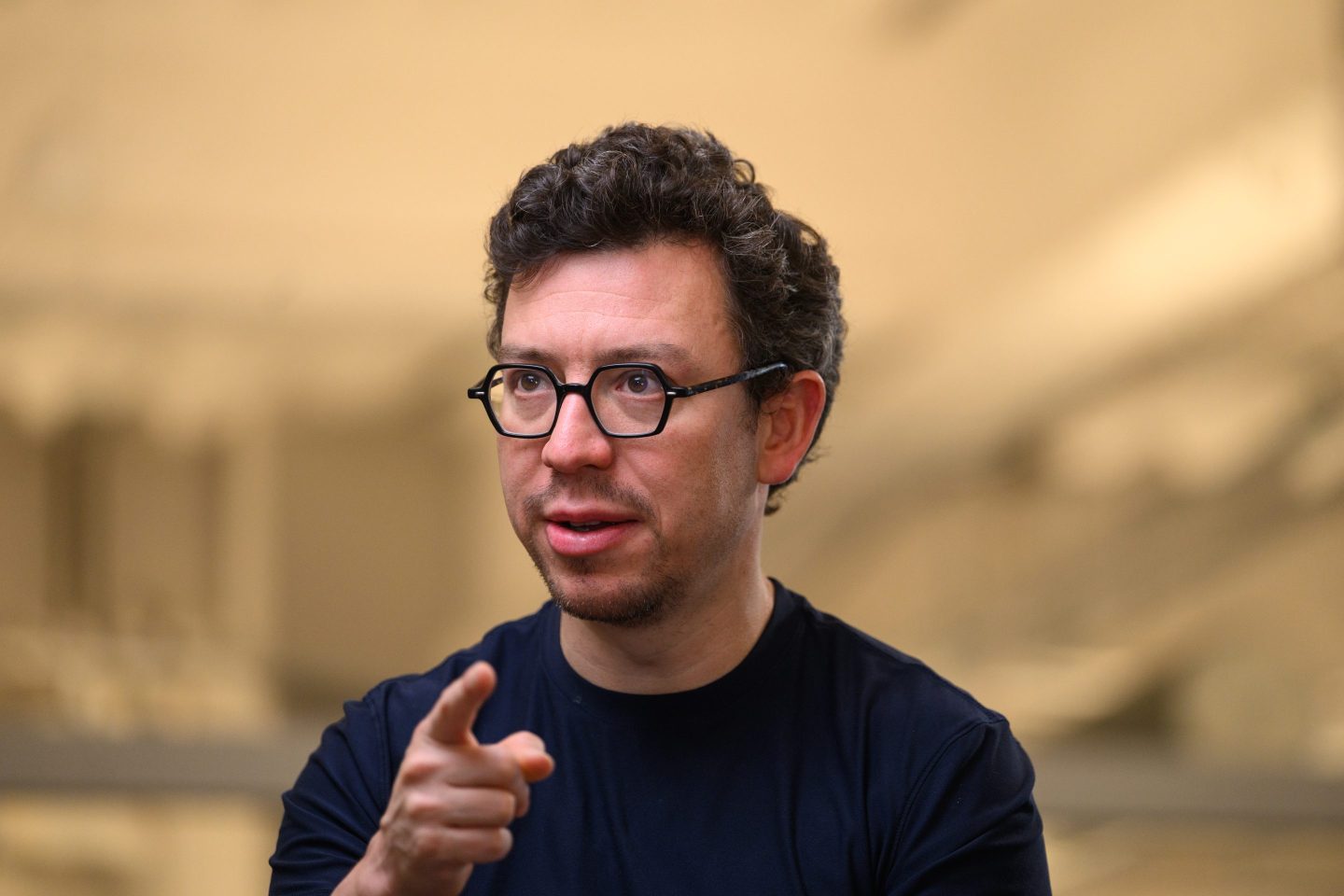
“Who knew that organizations trying to make changes happen at scale…would be looking to have human-centered design?” Brown asked, gazing through his two-tone Coke-bottle glasses. In no way, he said, could he have predicted that businesses and organizations “would see the potential in design.”

But it’s been a decade since Brown published his book Change by Design, a seminal oeuvre among the professional design community, and he surely had a role in helping change minds. Indeed, “a decade and a half ago, there was absolutely no discussion of design or design thinking in business schools,” Brown told interviewer and Fortune Asia editor Clay Chandler. Today, Brown can’t name a business school that doesn’t teach design case studies to MBA students.

Still, there’s more work to be done. At the very top of organizations, Brown said, it takes leaders who are insightful and see the potential and help unlock it. “There are very few CEOs of large-scale companies who really get it,” he said. “But there are going to be many, many more over the next decades.”

Besides, he added: “We’re at a moment where there’s almost no societal system that doesn’t require a redesign.”

Machine learning and artificial intelligence “are having a fundamental effect on the way everything works,” Brown said. Systems designed for the first or second industrial revolution “are no longer fit for purpose” as the world embraces a fourth. We’re now designing for a “circular economy,” rather than a linear one, in which materials are reused. And digital transformation efforts abound.

“We can launch new products more quickly and learn from them,” Brown said. But, the executive warned: That’s not always enough on its own. When it comes to taking digital products to scale, “It doesn’t happen overnight,” he added. “Many of these organizations that are looking to IPO this year have been around awhile. They got going six or seven years ago.”

The learning process is accelerating. Look no further than China’s CEOs, some of whom are dedicating serious time to hit the books about design leadership. “I’m very impressed,” Brown said. “These CEOs are learning fast and going to be competing in new ways.” And they’ve got scale built into their home market—”exactly the same thing American companies had 100 years ago,” he said.

But the future will be best embraced by those who go back to the basics.

“For me as a designer, empathy is not the end, it’s the means,” Brown said. “I don’t want to be designing things just for me. I want to be designing things for people who are different from me.”

He added: “We’ve got a duty to do better.”

For more coverage of Fortune’s Brainstorm Design conference, click here.
About the Author
Andrew Nusca
By Andrew NuscaEditorial Director, Brainstorm and author of Fortune Tech
Instagram iconLinkedIn iconTwitter icon

Andrew Nusca is the editorial director of Brainstorm, Fortune's innovation-obsessed community and event series. He also authors Fortune Tech, Fortune’s flagship tech newsletter.

See full bioRight Arrow Button Icon

Latest in

Asiathe future of work
The CEO of one of Asia’s largest co-working space providers says his business has more in common with hotels
By Angelica AngDecember 12, 2025
19 minutes ago
EconomyFederal Reserve
Trump names Warsh, Hassett as top Fed contenders, WSJ says
By Jennifer A. Dlouhy and BloombergDecember 12, 2025
3 hours ago
PoliticsMilitary
Trump says ‘starting’ land strikes over drugs in latest warning
By Justin Sink and BloombergDecember 12, 2025
3 hours ago
EconomyFederal Reserve
The Fed just ‘Trump-proofed’ itself with a unanimous move to preempt a potential leadership shake-up
By Jason MaDecember 12, 2025
6 hours ago
Healthmeal delivery
Factor Meals Review 2025: Tester Approved
By Christina SnyderDecember 12, 2025
6 hours ago
robots
InnovationRobots
‘The question is really just how long it will take’: Over 2,000 gather at Humanoids Summit to meet the robots who may take their jobs someday
By Matt O'Brien and The Associated PressDecember 12, 2025
7 hours ago

Most Popular

placeholder alt text
Economy
Tariffs are taxes and they were used to finance the federal government until the 1913 income tax. A top economist breaks it down
By Kent JonesDecember 12, 2025
16 hours ago
placeholder alt text
Success
At 18, doctors gave him three hours to live. He played video games from his hospital bed—and now, he’s built a $10 million-a-year video game studio
By Preston ForeDecember 10, 2025
3 days ago
placeholder alt text
Success
Palantir cofounder calls elite college undergrads a ‘loser generation’ as data reveals rise in students seeking support for disabilities, like ADHD
By Preston ForeDecember 11, 2025
1 day ago
placeholder alt text
Arts & Entertainment
'We're not just going to want to be fed AI slop for 16 hours a day': Analyst sees Disney/OpenAI deal as a dividing line in entertainment history
By Nick LichtenbergDecember 11, 2025
1 day ago
placeholder alt text
Success
40% of Stanford undergrads receive disability accommodations—but it’s become a college-wide phenomenon as Gen Z try to succeed in the current climate
By Preston ForeDecember 12, 2025
12 hours ago
placeholder alt text
Success
Apple cofounder Ronald Wayne sold his 10% stake for $800 in 1976—today it’d be worth up to $400 billion
By Preston ForeDecember 12, 2025
12 hours ago
Rankings
  • 100 Best Companies
  • Fortune 500
  • Global 500
  • Fortune 500 Europe
  • Most Powerful Women
  • Future 50
  • World’s Most Admired Companies
  • See All Rankings
Sections
  • Finance
  • Leadership
  • Success
  • Tech
  • Asia
  • Europe
  • Environment
  • Fortune Crypto
  • Health
  • Retail
  • Lifestyle
  • Politics
  • Newsletters
  • Magazine
  • Features
  • Commentary
  • Mpw
  • CEO Initiative
  • Conferences
  • Personal Finance
  • Education
Customer Support
  • Frequently Asked Questions
  • Customer Service Portal
  • Privacy Policy
  • Terms Of Use
  • Single Issues For Purchase
  • International Print
Commercial Services
  • Advertising
  • Fortune Brand Studio
  • Fortune Analytics
  • Fortune Conferences
  • Business Development
About Us
  • About Us
  • Editorial Calendar
  • Press Center
  • Work At Fortune
  • Diversity And Inclusion
  • Terms And Conditions
  • Site Map

© 2025 Fortune Media IP Limited. All Rights Reserved. Use of this site constitutes acceptance of our Terms of Use and Privacy Policy | CA Notice at Collection and Privacy Notice | Do Not Sell/Share My Personal Information
FORTUNE is a trademark of Fortune Media IP Limited, registered in the U.S. and other countries. FORTUNE may receive compensation for some links to products and services on this website. Offers may be subject to change without notice.