• Home
  • Latest
  • Fortune 500
  • Finance
  • Tech
  • Leadership
  • Lifestyle
  • Rankings
  • Multimedia
CommentaryChina

China’s Year of the Big—Big Brother, That Is

By
Clay Chandler
Clay Chandler
Executive Editor, Asia
Down Arrow Button Icon
By
Clay Chandler
Clay Chandler
Executive Editor, Asia
Down Arrow Button Icon
February 6, 2019, 12:10 PM ET
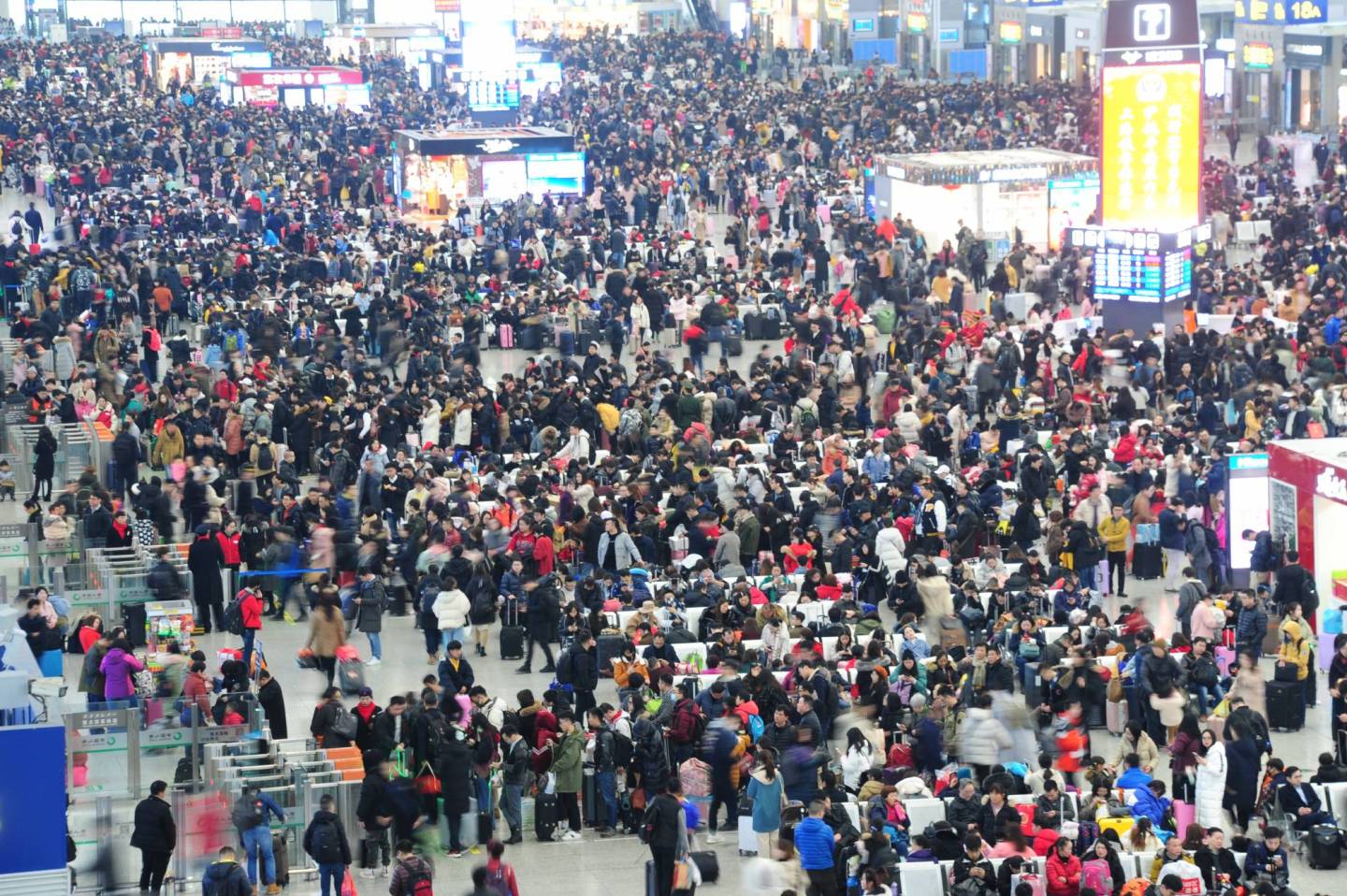
Peak Of Returning Home During Spring Festival In Shanghai, China
Hongqiao railway station welcomes the peak of returning home before the Spring Festival in Shanghai, China, feb 2, 2019.PHOTOGRAPH BY Costfoto / Barcroft Images (Photo credit should read Costfoto / Barcroft Images / Barcroft Media via Getty Images)Costfoto/Barcroft Media via Getty Images

This article first appeared in Data Sheet, Fortune’s daily newsletter on the top tech news. To get it delivered daily to your in-box, sign up here.

Happy Year of the Pig. Here in Hong Kong, neighbors in the beachside village where I live welcome the new lunar year with fireworks, drum-banging, and exuberant lion dancing. However boisterous our local festivities, they pale in comparison to the chaos and clamor endured by anyone who takes to China’s roads, railways, or airports during this period. The advent of the new year, and with it the Chinese Spring Festival holiday, sets in motion the world’s largest annual human migration. This year, it is expected that Chinese travelers returning to celebrate with friends and families in their hometowns will log nearly 3 billion trips—an all-time record.

In recent years, new infrastructure and technology have helped to ease the tumult of spring festival travel. China’s high-speed railway network added 2,500 miles of track in 2018, bringing the nation’s total high-speed railway mileage to 15,500. That gives China about two-thirds the high-speed railway track in the entire world; Beijing plans to add another 4,225 miles in 2019. China now boasts more than 230 airports, and plans to build another 30 by 2020—including the $12 billion, seven-runway Beijing Daxing International Airport, designed by Zaha Hadid and scheduled to open later this year. And as Fortune‘s own Eamon Barrett explained earlier this week, the emergence of sophisticated online travel agencies like Shanghai-based Ctrip have eased the pain for Chinese travelers of booking and buying tickets.

But as travel in China becomes more convenient, it is also becoming more intrusive. As Kristy Needham reports in the Sydney Morning Herald, railway stations in Beijing and other major cities this year are rolling out new, more sophisticated surveillance systems featuring cameras capable of capturing faces for inclusion in vast government databases to be mined by artificial intelligence algorithms. As Needham observes: “The high-speed rail network that so many Chinese rely on to travel long distances for business or holidays has become the fulcrum of the Chinese state’s experiment in harnessing digital technology to not only watch its citizens, but also to shape their behavior.”

On the train from Beijing to Shanghai, passengers are warned via public announcement to behave lest rule-breaking damage their “personal credit” score. Needham reports that, by late last year, more than 5 million people had been put on government blacklists banning them from buying high-speed rail tickets while 17 million were stopped from buying air tickets.

There’s great debate among China hands about whether China’s social credit scoring system is menace or myth. At Davos last month, George Soros warned of the “mortal danger” posed by China’s social credit system “if it became operational.” The Washington Post‘s Simon Denyer paints a dystopian view of China’s “all-seeing surveillance state” in this video. You’ll find the case for skepticism in these reports in Foreign Policy and Kaiser Kuo’s Sinicia Podcast, and an “it’s complicated” straddle in Wired. Still, anyone who travels frequently on the mainland can’t help notice the pattern. In China, these days, convenience seems always to come with cameras.


About the Author
By Clay ChandlerExecutive Editor, Asia

Clay Chandler is executive editor, Asia, at Fortune.

See full bioRight Arrow Button Icon

Latest in Commentary

Julian Braithwaite is the Director General of the International Alliance for Responsible Drinking
CommentaryProductivity
Gen Z is drinking 20% less than Millennials. Productivity is rising. Coincidence? Not quite
By Julian BraithwaiteDecember 13, 2025
9 hours ago
carbon
Commentaryclimate change
Banking on carbon markets 2.0: why financial institutions should engage with carbon credits
By Usha Rao-MonariDecember 13, 2025
10 hours ago
Dr. Javier Cárdenas is the director of the Rockefeller Neuroscience Institute NeuroPerformance Innovation Center.
Commentaryconcussions
Fists, not football: There is no concussion protocol for domestic violence survivors
By Javier CárdenasDecember 12, 2025
1 day ago
Gary Locke is the former U.S. ambassador to China, U.S. secretary of commerce, and governor of Washington.
CommentaryChina
China is winning the biotech race. Patent reform is how we catch up
By Gary LockeDecember 12, 2025
1 day ago
millennial
CommentaryConsumer Spending
Meet the 2025 holiday white whale: the millennial dad spending $500+ per kid
By Phillip GoerickeDecember 12, 2025
1 day ago
Sarandos
CommentaryAntitrust
Netflix, Warner, Paramount and antitrust: Entertainment megadeal’s outcome must follow the evidence, not politics or fear of integration
By Satya MararDecember 12, 2025
1 day ago

Most Popular

placeholder alt text
Economy
Tariffs are taxes and they were used to finance the federal government until the 1913 income tax. A top economist breaks it down
By Kent JonesDecember 12, 2025
2 days ago
placeholder alt text
Success
Apple cofounder Ronald Wayne sold his 10% stake for $800 in 1976—today it’d be worth up to $400 billion
By Preston ForeDecember 12, 2025
1 day ago
placeholder alt text
Success
40% of Stanford undergrads receive disability accommodations—but it’s become a college-wide phenomenon as Gen Z try to succeed in the current climate
By Preston ForeDecember 12, 2025
1 day ago
placeholder alt text
Economy
The Fed just ‘Trump-proofed’ itself with a unanimous move to preempt a potential leadership shake-up
By Jason MaDecember 12, 2025
1 day ago
placeholder alt text
Economy
For the first time since Trump’s tariff rollout, import tax revenue has fallen, threatening his lofty plans to slash the $38 trillion national debt
By Sasha RogelbergDecember 12, 2025
1 day ago
placeholder alt text
Success
Apple CEO Tim Cook out-earns the average American’s salary in just 7 hours—to put that into context, he could buy a new $439,000 home in just 2 days
By Emma BurleighDecember 12, 2025
1 day ago
Rankings
  • 100 Best Companies
  • Fortune 500
  • Global 500
  • Fortune 500 Europe
  • Most Powerful Women
  • Future 50
  • World’s Most Admired Companies
  • See All Rankings
Sections
  • Finance
  • Leadership
  • Success
  • Tech
  • Asia
  • Europe
  • Environment
  • Fortune Crypto
  • Health
  • Retail
  • Lifestyle
  • Politics
  • Newsletters
  • Magazine
  • Features
  • Commentary
  • Mpw
  • CEO Initiative
  • Conferences
  • Personal Finance
  • Education
Customer Support
  • Frequently Asked Questions
  • Customer Service Portal
  • Privacy Policy
  • Terms Of Use
  • Single Issues For Purchase
  • International Print
Commercial Services
  • Advertising
  • Fortune Brand Studio
  • Fortune Analytics
  • Fortune Conferences
  • Business Development
About Us
  • About Us
  • Editorial Calendar
  • Press Center
  • Work At Fortune
  • Diversity And Inclusion
  • Terms And Conditions
  • Site Map

© 2025 Fortune Media IP Limited. All Rights Reserved. Use of this site constitutes acceptance of our Terms of Use and Privacy Policy | CA Notice at Collection and Privacy Notice | Do Not Sell/Share My Personal Information
FORTUNE is a trademark of Fortune Media IP Limited, registered in the U.S. and other countries. FORTUNE may receive compensation for some links to products and services on this website. Offers may be subject to change without notice.