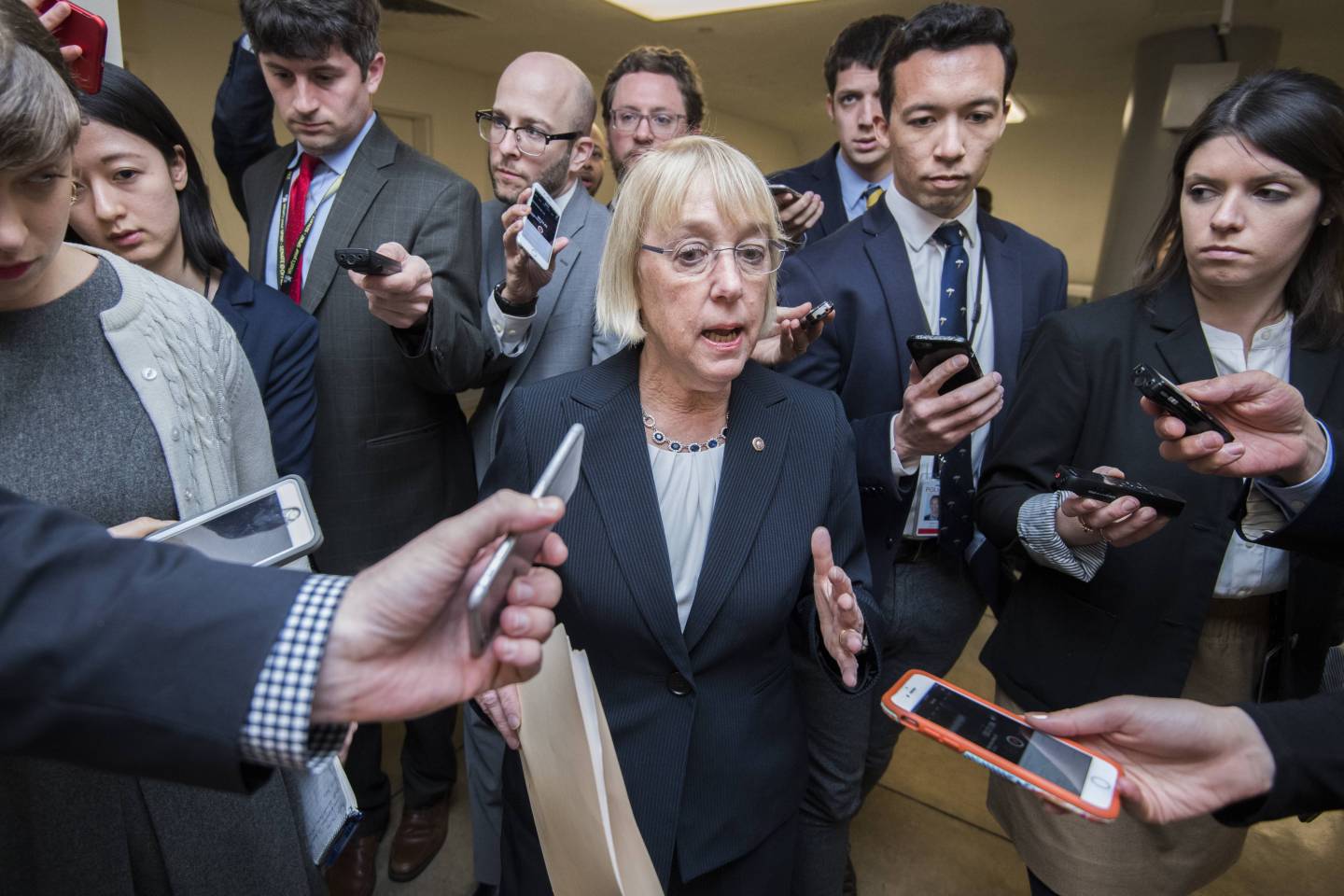
Sen. Patty Murray (D-Wash.) first ran for the Senate in 1992, motivated—like many of her contemporaries—by the anger she felt at how Anita Hill was treated when she described being sexual harassed by Supreme Court nominee Clarence Thomas in front of an all-male, all-white Senate Judiciary Committee in 1991.
Murray, a Washington state senator before she ran for the U.S. Senate, won her ’92 race and became part of the biggest leap in women’s Congressional representation the U.S. had ever experienced, with 28 new congresswomen sworn in in a single year.
For our project “2018 Is the Second ‘Year of the Woman:’ An Oral History of the Women Who Gave Rise to the First,” Fortune spoke to a dozen women who were part of that wave, some whom, like Murray, ended up serving in Congress for more than two decades, and others who lost their bid for federal office.
Like the women who are part of a historic wave of candidates running this year’s midterm elections Nov. 6, 1992’s candidates turned their anger and frustration into action. Below is Murray’s full interview with Fortune about her run for office and what has and hasn’t changed since.
Fortune: Why did you decide to run for office in 1992?
Sen. Patty Murray: In 1992 I decided to run for the Senate because I was sitting with my daughter on a Saturday morning watching the Clarence Thomas-Anita Hill hearings, and I was so offended by what I saw as an all-male Senate grilling her, treating her badly, not taking her seriously. They were just tone-deaf about how they should proceed and what they should say. I went to a party that night with some friends of mine and I just said, “I’m going to have to run for the U.S. Senate.” And now I’m here.
Do any instances of sexism or bias on the campaign trail at the time stand out?
Oh my gosh, yes. Where do I start? I had people tell me I should not run as Patty because people should know I was a woman—I should run as Pat. Obviously I didn’t go with that. I had people say, “Well what are you going to do with your kids?” No one ever asks a man that, I assure you. I had people say, “What are you doing with your kids while you campaign?” Women work every day, what we do with our kids, we all struggle with that. No issues of harassment, but certainly questioning whether a woman could do even a campaign, much less this job.
Did you see 1992 as a true tipping point? Did the progress of women in Congress after that cycle meet or disappoint your expectations?
It’s called the Year of the Woman, and we became six women out of 100 in the Senate—but it was groundbreaking. There’d only been two before. For us to be able to come— I know the men in the Senate were like, “Oh my gosh, how do we deal with these women?”—and one of the things we wanted to show was that we were just like them. We had constituents we cared about, issues we cared about, we were passionate, and we were going to participate fully as United States senators. I see that happening all the time with the women that are running.
What did you think of the name Year of the Woman at the time?
It was almost laughable. It’s hard to tell people that six [female senators] is huge. But it was a very important first step. The difference between then and now, when I first came here, is that every committee I serve on, on the Democratic side, has women. The Judiciary Committee today clearly doesn’t have any women on the Republican side. But every committee hearing I’m in, there are other women. If you bring out a point of view that women might have seen that men didn’t, you have someone down the committee line who also has felt that and will reiterate it. Support for each other, bringing out issues that are important has grown incredibly since I started in 1992.
Do you see parallels between you and your contemporaries’ run for office at the time and women running for the first time in the 2018 midterms?
Absolutely. I ran because I got mad. I got mad at how women were being treated and disrespected. I felt that if the United States wants to have policies that work for all of us, women have to be a part of that process and that decision-making. I have watched from the demonstrations right after the inauguration, all the way until today. Women coming out to speak about healthcare, fighting today on issues of choice, throughout all of that, women have felt incredibly responsible for making sure they don’t sit at home and gripe about it, but they get out and get involved. And that’s what brought me to the United States Senate, it’s what will bring other women to the United States Senate this year.
What advice would you offer to women running this cycle?
Believe in yourself. Go out and speak about what you’re passionate about because you will find that other people feel the same. Oftentimes women might think they don’t know the issue enough or that they’re out on a limb by themselves, and that is just so not true. What you’re saying is echoed by many other women and they want to hear that voice. And by the way, so do a lot of men.
This interview has been edited and condensed for clarity.