This article originally ran in Term Sheet, Fortune’s newsletter about deals and dealmakers. Sign up here.
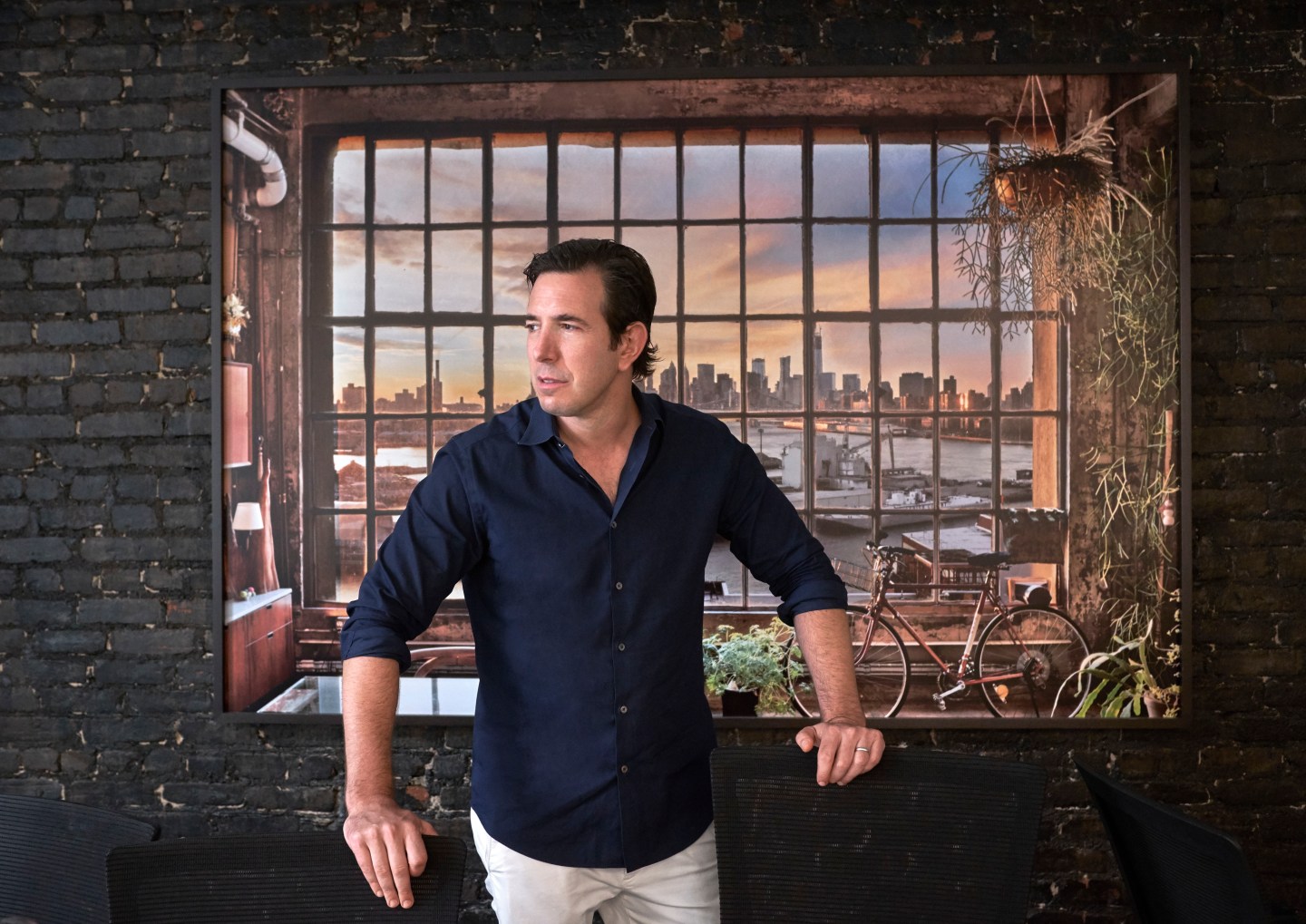
Bradley Tusk is the founder of Tusk Ventures, a political consultancy and venture firm that works with startups facing regulatory hurdles. He was one of the earliest investors in tech behemoth Uber.
But before Tusk was a VC, he worked in politics as ex-Mayor Michael Bloomberg’s campaign manager and Sen. Chuck Schumer’s communication director. He also served as the deputy governor of Illinois, working for the now-incarcerated former governor Rod Blagojevich.
You may remember Tusk from Term Sheet’s ‘5 Qs With a Dealmaker’ series. Now, Tusk has a new book called, The Fixer: My Adventures Saving Startups from Death by Politics. After reading the book, I took the opportunity to catch up with Tusk about leaving politics, Uber’s future, and the next regulatory battle in tech.
TERM SHEET: You testified at Rod Blagojevich’s federal corruption trials. I assume that you also got some heat for being his deputy. Did your reputation take a hit as a result of that?
TUSK: It’s hard to know why someone doesn’t give you an allocation on a deal, doesn’t invest in your fund, or doesn’t hire you for a project. They don’t usually say it’s because of this thing — they just make up some unrelated excuse. I was never really able to tell.
I went from Blagojevich to my next job at Lehman Brothers, which ended when they filed for bankruptcy. And the third job was running Bloomberg’s campaign in 2009, which everyone assumed was a lay-up, but in reality was a really hard campaign. I remember thinking, “Holy shit, if I lose this election after Lehman and Blagojevich, my career is over.”
The reality is that I personally didn’t mind switching jobs, but nonetheless, you can be painted as working for this guy who went to jail and working for this company that took down the global economy. I was like, “God, maybe it’s me, you know?”
Why did you decide to transition from politics to venture capital?
TUSK: They’re very similar businesses in some ways. There’s a ton of energy, and it’s very mission-driven. In politics, you have election day, in tech, you have the exit. In both cases, you’re trying to do something you believe is different and disruptive and helpful to the world. The mentality was really similar. Because I had worked in local government, state government, federal government, the legislative branch, and the executive branch, I just had a different perspective in how startups could deal with politics.
It took a while until startups started to realize they had to take politics seriously because they faced severe risk if they didn’t. Most of them weren’t interested in working with me. I would go to sit with a founder, and tell him I’d be happy to help him in exchange for equity — without really knowing what equity I should or shouldn’t take at the time. They would say, in this pitying voice, “You don’t get it. I went to Stanford. I was in YCombinator. John Doerr’s on my board. And when those stupid regulators see how smart I am, I can do whatever I want.”
Coming from politics, I knew that wasn’t true. But it only started to change a couple of years ago when the Uber, FanDuel, and Airbnb fights became so public that founders started realizing they need to take this stuff seriously.
You were one of the earliest investors in Uber. In the book, you refer to something called “Travis’s Law.” Can you explain what that is and how it came about?
TUSK: People generally know about the question of asking for permission or begging for forgiveness. Every startup that’s regulated has that question at some point. There’s not a rule where you should always ask for permission or beg for forgiveness.
In the book, I describe a situation in which begging for forgiveness was necessary for Uber. We were fighting a really rough and really dirty taxi cartel that we wouldn’t be able to win over with rational thought, so our best asset were our customers because they would advocate for us. But the only way to get customers to advocate was to get them in the cars. And the only way to get them in the cars was to launch. So there are people who ask me, “Don’t you wish you were a little more kinder and gentler during Uber because now the reputation would be better?” I say, “Yes, but we wouldn’t exist. What’s the point of having everyone like you if you don’t exist in the first place?” It was the only way to get ride-sharing off the ground.
And of course, that’s not true of every sector. Take fantasy sports, for example. There are scenarios where we believe that the law allows for daily fantasy sports to be done through a game of skill, so we just launched. But now, when we’re trying to get sports betting licenses, you have to get that license through the state. You can’t just go out there and start taking bets without the ability to do so granted by the state.
If I’m the founder of a company dealing with regulators, how do I decide when to ask for permission and when to beg for forgiveness?
TUSK: There are campaigns where you’re doing both in different markets at the same time because it’s logical in one place to go through the process and not logical in another. It’s very, very context-driven, and you have to understand the tech dynamic, the market dynamic, the legal dynamic, and the media dynamic to make the best choice.
You have to ask yourself — What jurisdiction am I in? What are the laws on the books? What are the penalties if I get in trouble here? How powerful is the system I’m disrupting? What are the regulators I’m dealing with like? If you can rationally think through all those things, your chance of getting it right goes way up.

In the book, you refer to ex-Uber CEO Travis Kalanick as driving, competitive, brilliant, visionary and ruthless — all things that made him successful but also things that led to his downfall. What exactly do you think went wrong in his journey at Uber?
TUSK: His personality type was really well-suited to take a concept out of nowhere, turn it into a business, scale it really quickly, take on a vicious cartel, break that cartel, and build something. But that skill set was probably less suited to running a $70 billion bureaucracy. So going from zero to one or maybe even one to three, he’s really good, but when you get him to arranging the deck chairs on the ship, I think that’s less applicable for his skill set.
In August, the New York City Council capped the total number of Uber and Lyft drivers allowed on the road. What do you make of this given that you fought (and at the time, won) the same battle in 2015 that made the city pull the bill proposing a cap on drivers?
TUSK: It really worries me. The part of the challenge is that when the board brought Dara [Khosrowshahi] to run the company, I think there was a very clear mandate of “calm things down” — no fighting and no confrontation — which he’s done a great job at.
He’s done some very good things, but it’s very hard to be the person everyone loves and be the same person who can win a bare-knuckles fight with the cartel. What DiBlasio saw was that there was an opening — Uber is more vulnerable than it used to be — and he took it and won. I think the real risk is it’s hard to see why this won’t happen all over the world.
Do you think it means other jurisdictions will follow New York’s lead?
TUSK: I think they’ll certainly take it on and Uber will have to decide — Are you willing to go back to the Travis Kalanick days where you’re getting bloodied up in order to win a fight? And that’s a very hard choice Dara is going to have to make.
*TS NOTE: Tusk has not met nor spoken with Khosrowshahi.
What do you foresee is the tech world’s next big regulatory battle?
TUSK: The one I’m really into is blockchain voting. Think about this example — You’re a Republican congressman from Florida, and you know an assault weapon ban is the right thing to do, and yet 12% of people vote in your primary. Your district is gerrymandered, so whatever happens in the primary is the general election, effectively, and half of that 12% are NRA members.
From a political standpoint, even if you know what the right thing to do is, you can’t do it because you’re not willing to sacrifice your career over it and you recognize that the people who voted in your primary care about it. Now, take turnout from 12% to 50% because people can vote on their phones. The NRA members will go from 50% of the vote to 10% of the vote, and the politics flip completely. What made no political sense before makes total political sense now. My assumption is that politicians will respond to whatever inputs they’re given because staying in the job matters more to them than anything else. You’ve got to change the inputs, and the only way to do that is to radically increase turnout.
I don’t care how many Rock the Vote concerts you hold or what Beyoncé and Jay-Z do, people just do not show up to the polls. But what I’ve found through these campaigns we’ve done for Uber, FanDuel, and Bird, is that if you give people a compelling reason to advocate from their phones, they will.
Blockchain seems to be the best technology to do it in a safe and secure way. We’re starting really small. We did a pilot with the city in West Virginia where deployed military service members are able to vote on their phones through blockchain. The idea is to try different jurisdictions and constituencies over the next few years and hopefully roll out in a much bigger way.