• Home
  • Latest
  • Fortune 500
  • Finance
  • Tech
  • Leadership
  • Lifestyle
  • Rankings
  • Multimedia
TechT-Mobile

What the T-Mobile and Sprint Deal Means for Customers

By
Aaron Pressman
Aaron Pressman
Down Arrow Button Icon
By
Aaron Pressman
Aaron Pressman
Down Arrow Button Icon
April 30, 2018, 1:44 PM ET

T-Mobile and Sprint on Sunday announced a merger agreement that would combine the two smallest national wireless carriers into one behemoth that would rival market leaders Verizon and AT&T. But the $26.5 billion all-stock deal has a ways to go before being completed.

Analysts say antitrust regulators may decide to block the combination, which would reduce the number of national carriers from four to three, as they have with similar deals in the past few years. And even once the deal is approved, the companies will face a complicated task to combine their mobile networks, customer support and billing operations, and executive leadership teams. So what does it all mean for ordinary wireless customers?

Does anything change right away?

The status quo typically tends to stick around for a while in a telecommunications merger like this one, which could take a year or more to be considered by regulators. But in the current deal, a lot of Sprint customers get an immediate benefit. That’s because Sprint (S) struck a roaming agreement with T-Mobile (TMUS) that will allow its customers to start connecting via T-Mobile’s network as they move around the country. It’s a four-year agreement that takes effect immediately and stays in place even if the merger is blocked. Right now, the two carriers run on different wireless standards—CDMA for Sprint and GSM for T-Mobile—but about 20 million phones used by Sprint customers can work on both kinds of networks. That includes recent iPhones and Samsung Galaxy phones. Other customers would have to upgrade their phones to take advantage of the new roaming deal.

Get Data Sheet, Fortune’s technology newsletter.

What happens to the networks once the deal is completed?

Once regulators sign off and the merger is complete, the new company will move as quickly as it can to consolidate the two wireless networks down into one, because that’s where it can achieve a great deal of cost savings. T-Mobile will be in control, so it’s likely that millions of Sprint customers will have to get new phones. But the same was true when T-Mobile acquired MetroPCS in 2014 and the carrier managed the transition without much pain for customers. At the same time, combining the spectrum rights of Sprint and T-Mobile should give current customers of either carrier more dependable and faster connections over a broader geographic area. The companies also say that merging will allow them to deploy more quickly a much faster 5G-based network.

Will prices go up?

That’s the multi-billion dollar question in this deal. The carriers are promising that they won’t raise prices and that they’ll be just as aggressive competing against AT&T and Verizon as they are today. Sprint CEO Marcelo Claure makes the point that the merger will lower their network costs, so they’ll be able to offer even cheaper service.

But some consumer groups and antitrust experts worry that a market with three major competitors simply won’t incentivize the carriers to continue to compete as strongly. They note that the U.S. market was considerably less competitive before four carriers emerged on the national scene. And competition certainly picked up after regulators blocked AT&T’s (T) bid to buy T-Mobile in 2011.

What about my free Netflix/Hulu/etc?

The carriers haven’t said anything yet about which offers and specials will survive the merger, likely because they haven’t decided yet. So it’s not yet known if all customers would get access to T-Mobile’s freeNetflix deal, Sprint’s free Hulu, T-Mobile’s weekly rewards giveaways, or Sprint’s Tidal trial membership. It’s even possible customers will get to choose which deal they prefer.


About the Author
By Aaron Pressman
See full bioRight Arrow Button Icon

Latest in Tech

InnovationRobots
Even in Silicon Valley, skepticism looms over robots, while ‘China has certainly a lot more momentum on humanoids’
By Matt O'Brien and The Associated PressDecember 13, 2025
1 hour ago
Sarandos
Arts & EntertainmentM&A
It’s a sequel, it’s a remake, it’s a reboot: Lawyers grow wistful for old corporate rumbles as Paramount, Netflix fight for Warner
By Nick LichtenbergDecember 13, 2025
6 hours ago
Oracle chairman of the board and chief technology officer Larry Ellison delivers a keynote address during the 2019 Oracle OpenWorld on September 16, 2019 in San Francisco, California.
AIOracle
Oracle’s collapsing stock shows the AI boom is running into two hard limits: physics and debt markets
By Eva RoytburgDecember 13, 2025
7 hours ago
robots
InnovationRobots
‘The question is really just how long it will take’: Over 2,000 gather at Humanoids Summit to meet the robots who may take their jobs someday
By Matt O'Brien and The Associated PressDecember 12, 2025
20 hours ago
Man about to go into police vehicle
CryptoCryptocurrency
Judge tells notorious crypto scammer ‘you have been bitten by the crypto bug’ in handing down 15 year sentence 
By Carlos GarciaDecember 12, 2025
21 hours ago
three men in suits, one gesturing
AIBrainstorm AI
The fastest athletes in the world can botch a baton pass if trust isn’t there—and the same is true of AI, Blackbaud exec says
By Amanda GerutDecember 12, 2025
21 hours ago

Most Popular

placeholder alt text
Economy
Tariffs are taxes and they were used to finance the federal government until the 1913 income tax. A top economist breaks it down
By Kent JonesDecember 12, 2025
1 day ago
placeholder alt text
Success
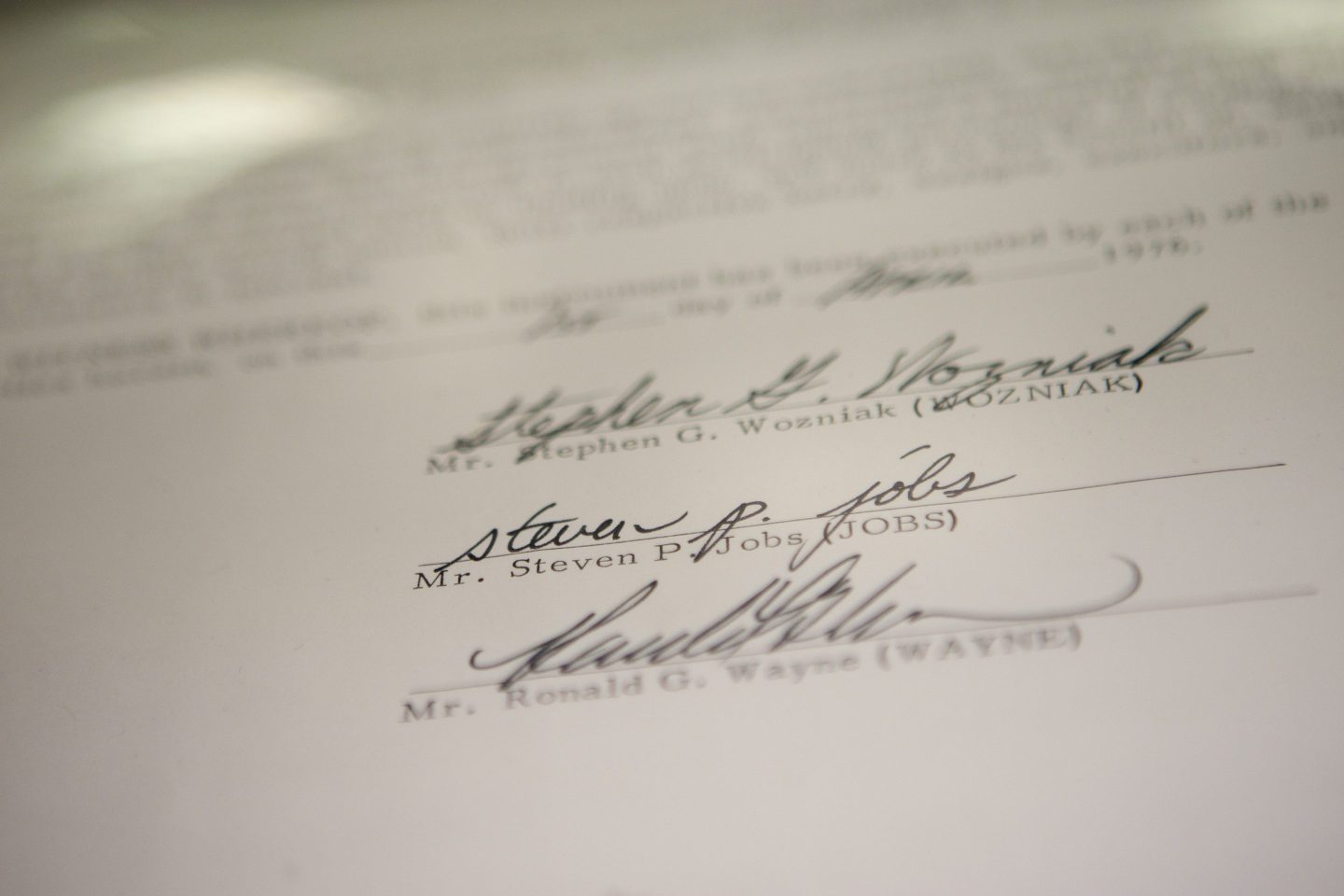
Apple cofounder Ronald Wayne sold his 10% stake for $800 in 1976—today it’d be worth up to $400 billion
By Preston ForeDecember 12, 2025
1 day ago
placeholder alt text
Success
40% of Stanford undergrads receive disability accommodations—but it’s become a college-wide phenomenon as Gen Z try to succeed in the current climate
By Preston ForeDecember 12, 2025
1 day ago
placeholder alt text
Economy
For the first time since Trump’s tariff rollout, import tax revenue has fallen, threatening his lofty plans to slash the $38 trillion national debt
By Sasha RogelbergDecember 12, 2025
21 hours ago
placeholder alt text
Economy
The Fed just ‘Trump-proofed’ itself with a unanimous move to preempt a potential leadership shake-up
By Jason MaDecember 12, 2025
19 hours ago
placeholder alt text
Success
At 18, doctors gave him three hours to live. He played video games from his hospital bed—and now, he’s built a $10 million-a-year video game studio
By Preston ForeDecember 10, 2025
3 days ago
Rankings
  • 100 Best Companies
  • Fortune 500
  • Global 500
  • Fortune 500 Europe
  • Most Powerful Women
  • Future 50
  • World’s Most Admired Companies
  • See All Rankings
Sections
  • Finance
  • Leadership
  • Success
  • Tech
  • Asia
  • Europe
  • Environment
  • Fortune Crypto
  • Health
  • Retail
  • Lifestyle
  • Politics
  • Newsletters
  • Magazine
  • Features
  • Commentary
  • Mpw
  • CEO Initiative
  • Conferences
  • Personal Finance
  • Education
Customer Support
  • Frequently Asked Questions
  • Customer Service Portal
  • Privacy Policy
  • Terms Of Use
  • Single Issues For Purchase
  • International Print
Commercial Services
  • Advertising
  • Fortune Brand Studio
  • Fortune Analytics
  • Fortune Conferences
  • Business Development
About Us
  • About Us
  • Editorial Calendar
  • Press Center
  • Work At Fortune
  • Diversity And Inclusion
  • Terms And Conditions
  • Site Map

© 2025 Fortune Media IP Limited. All Rights Reserved. Use of this site constitutes acceptance of our Terms of Use and Privacy Policy | CA Notice at Collection and Privacy Notice | Do Not Sell/Share My Personal Information
FORTUNE is a trademark of Fortune Media IP Limited, registered in the U.S. and other countries. FORTUNE may receive compensation for some links to products and services on this website. Offers may be subject to change without notice.