• Home
  • News
  • Fortune 500
  • Tech
  • Finance
  • Leadership
  • Lifestyle
  • Rankings
  • Multimedia
CommentaryCTE

Commentary: We Can’t Blame CTE for Aaron Hernandez’s Demise

By
Munro Cullum
Munro Cullum
Down Arrow Button Icon
By
Munro Cullum
Munro Cullum
Down Arrow Button Icon
November 15, 2017, 3:56 PM ET

The tragic case of Aaron Hernandez is but the latest of the controversies surrounding chronic traumatic encephalopathy (CTE) and professional sports. After the former New England Patriots tight end was posthumously diagnosed with the brain condition, speculation has arisen as to whether the violent behavior that led to his imprisonment can be blamed on CTE.

In cases such as that of Hernandez or other acts of violence in the news, we would like to know what could have possibly motivated the perpetrator or what factors and circumstances led to their behavior. The neuropsychology of the human brain and behavior is exceedingly complex, however, and we cannot infer that microscopic findings in a brain at autopsy prompted someone to commit a specific act such as murder several years earlier.

This case provides an opportunity for us to put into context the facts and fiction of CTE. The condition has been recognized for decades but gained tremendous media attention in recent years. These rare cases have generated a great deal of public, political, and scientific interest. CTE has become a buzzword that stirs attention and fear, yet we must make sure that the pendulum of awareness and concern does not swing too far in either direction, particularly since so little is known about the condition.

Many factors complicate our understanding of CTE. First, CTE is defined primarily by the accumulation of the tau protein in a certain pattern within the brain. But tau is found in many other neurological conditions, and other pathologies are often found in brains with CTE.

Second, the clinical symptoms retrospectively reported in cases of CTE overlap with other conditions like depression and various types of dementia, currently making a diagnosis of CTE during life a matter of conjecture. We do not understand the relationships between the pathological findings and behavioral changes reported in CTE, and there are currently no accepted diagnostic criteria for CTE during life.

At present, we are left examining brains suspected of dysfunction that are donated for research, and thus do not have the larger population-based view of CTE needed to learn about its prevalence, causes, course, or related symptoms. It should be kept in mind that while the presence of tau in certain quantities and locations in the brain may be necessary for CTE, it is not sufficient for explaining behavior.

I understand the speculation that football concussions may be responsible for the sad mental demise of Hernandez and others with CTE. But we as a society should become better consumers of science and not fall prey to media or scientific hype, and should not draw premature conclusions in the absence of rigorous research and scientific evidence.

Most people who get concussions do not develop CTE. We need to understand how common CTE really is, who is at risk, and why. To do this we will need to carefully study over the course of their lives large samples of people who have sustained various brain injuries (including those with and without particular symptoms) and who have other neurological conditions.

It may be comforting to infer a “cause” of behavior in tragic situations, as it helps us understand the unknown. However, the complexities of human behavior and the brain from which it derives often defy our attempts to comprehend. We must realize that at this point, the science on CTE doesn’t support many of the fears that have fueled its ongoing controversy.

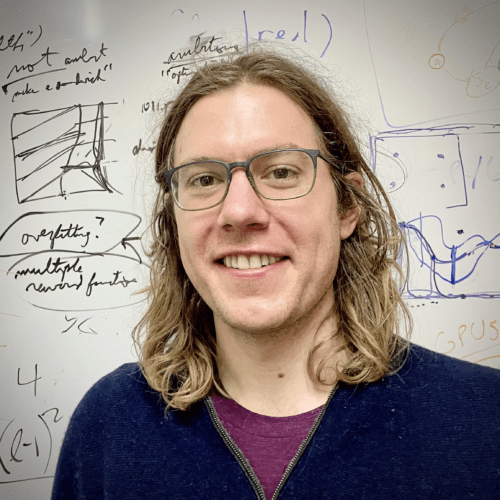
Munro Cullum is a neuropsychologist and professor of psychiatry, neurology, and neurosurgery with the O’Donnell Brain Institute at UT Southwestern Medical Center.

About the Author
By Munro Cullum
See full bioRight Arrow Button Icon

Latest in Commentary

Alex Amouyel is the President and CEO of Newman’s Own Foundation
Commentaryphilanthropy
Following in Paul Newman and Yvon Chouinard’s footsteps: There are more ways for leaders to give it away in ‘the Great Boomer Fire Sale’ than ever
By Alex AmouyelDecember 7, 2025
19 hours ago
Amit Walia
CommentaryM&A
Why the timing was right for Salesforce’s $8 billion acquisition of Informatica — and for the opportunities ahead
By Amit WaliaDecember 6, 2025
2 days ago
Steve Milton is the CEO of Chain, a culinary-led pop-culture experience company founded by B.J. Novak and backed by Studio Ramsay Global.
CommentaryFood and drink
Affordability isn’t enough. Fast-casual restaurants need a fandom-first approach
By Steve MiltonDecember 5, 2025
3 days ago
Paul Atkins
CommentaryCorporate Governance
Turning public companies into private companies: the SEC’s retreat from transparency and accountability
By Andrew BeharDecember 5, 2025
3 days ago
Matt Rogers
CommentaryInfrastructure
I built the first iPhone with Steve Jobs. The AI industry is at risk of repeating an early smartphone mistake
By Matt RogersDecember 4, 2025
4 days ago
Jerome Powell
CommentaryFederal Reserve
Fed officials like the mystique of being seen as financial technocrats, but it’s time to demystify the central bank
By Alexander William SalterDecember 4, 2025
4 days ago

Most Popular

placeholder alt text
Real Estate
The 'Great Housing Reset' is coming: Income growth will outpace home-price growth in 2026, Redfin forecasts
By Nino PaoliDecember 6, 2025
2 days ago
placeholder alt text
AI
Nvidia CEO says data centers take about 3 years to construct in the U.S., while in China 'they can build a hospital in a weekend'
By Nino PaoliDecember 6, 2025
2 days ago
placeholder alt text
Economy
The most likely solution to the U.S. debt crisis is severe austerity triggered by a fiscal calamity, former White House economic adviser says
By Jason MaDecember 6, 2025
1 day ago
placeholder alt text
Economy
JPMorgan CEO Jamie Dimon says Europe has a 'real problem’
By Katherine Chiglinsky and BloombergDecember 6, 2025
1 day ago
placeholder alt text
Big Tech
Mark Zuckerberg rebranded Facebook for the metaverse. Four years and $70 billion in losses later, he’s moving on
By Eva RoytburgDecember 5, 2025
3 days ago
placeholder alt text
Politics
Supreme Court to reconsider a 90-year-old unanimous ruling that limits presidential power on removing heads of independent agencies
By Mark Sherman and The Associated PressDecember 7, 2025
17 hours ago
Rankings
  • 100 Best Companies
  • Fortune 500
  • Global 500
  • Fortune 500 Europe
  • Most Powerful Women
  • Future 50
  • World’s Most Admired Companies
  • See All Rankings
Sections
  • Finance
  • Leadership
  • Success
  • Tech
  • Asia
  • Europe
  • Environment
  • Fortune Crypto
  • Health
  • Retail
  • Lifestyle
  • Politics
  • Newsletters
  • Magazine
  • Features
  • Commentary
  • Mpw
  • CEO Initiative
  • Conferences
  • Personal Finance
  • Education
Customer Support
  • Frequently Asked Questions
  • Customer Service Portal
  • Privacy Policy
  • Terms Of Use
  • Single Issues For Purchase
  • International Print
Commercial Services
  • Advertising
  • Fortune Brand Studio
  • Fortune Analytics
  • Fortune Conferences
  • Business Development
About Us
  • About Us
  • Editorial Calendar
  • Press Center
  • Work At Fortune
  • Diversity And Inclusion
  • Terms And Conditions
  • Site Map

© 2025 Fortune Media IP Limited. All Rights Reserved. Use of this site constitutes acceptance of our Terms of Use and Privacy Policy | CA Notice at Collection and Privacy Notice | Do Not Sell/Share My Personal Information
FORTUNE is a trademark of Fortune Media IP Limited, registered in the U.S. and other countries. FORTUNE may receive compensation for some links to products and services on this website. Offers may be subject to change without notice.