• Home
  • News
  • Fortune 500
  • Tech
  • Finance
  • Leadership
  • Lifestyle
  • Rankings
  • Multimedia
HealthCRISPR

Scientists Are Making Pigs Less Fatty for a Very Important Reason

By
Sy Mukherjee
Sy Mukherjee
Down Arrow Button Icon
By
Sy Mukherjee
Sy Mukherjee
Down Arrow Button Icon
October 25, 2017, 4:46 PM ET
CHINA-ECONOMY-ENVIRONMENT-AGRICULTURE-PORK
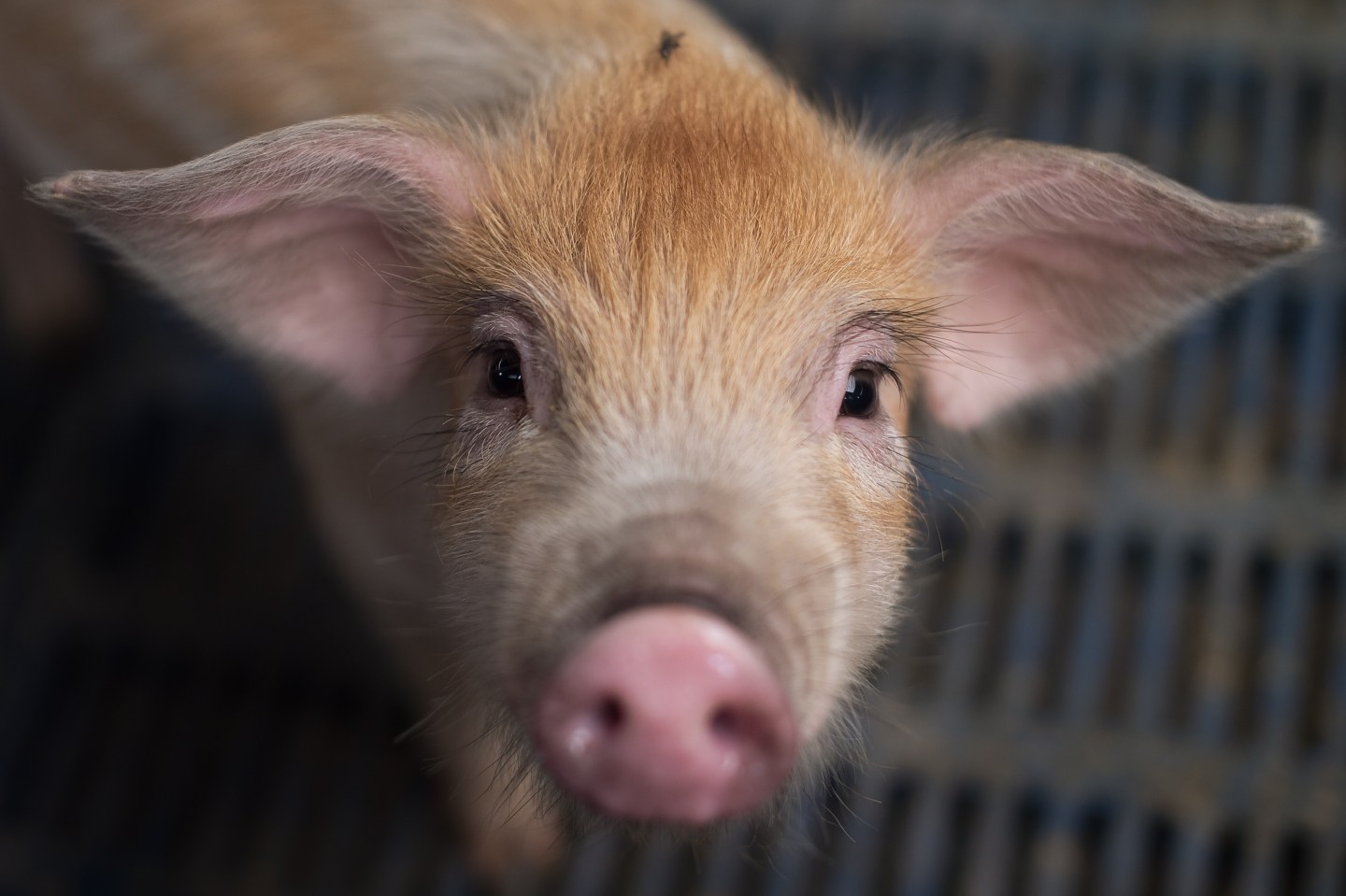
In this picture taken on June 5, 2017 a piglet is seen at a pig farm on the outskirts of Beijing. Millions of backyard pig farmers in China are being forced out of the industry as the government cracks down on pollution and encourages producers to expand their operations with the aim of modernizing the industry and smoothing out fluctuations in prices and supply. / AFP PHOTO / NICOLAS ASFOURI / TO GO WITH: China-agriculture-economy-pork, FOCUS by Allison JACKSON (Photo credit should read NICOLAS ASFOURI/AFP/Getty Images)NICOLAS ASFOURI AFP/Getty Images

There’s been a one-two punch of significant developments in the brave new world of CRISPR gene editing this week—and one of them potentially includes the saddening/encouraging prospect of less fatty bacon and pork products sometime in the future (depending on whether you’re deferring to your taste buds or your arteries, respectively).

Let’s get the bacon-centric news out of the way first. All right, so technically, this particular milestone isn’t about bacon. In fact, it’s about giving newborn and young piglets a better chance of surviving by making it easier for them to withstand shock from cold (something they are not particularly good at doing because of a genetic quirk). Scientists at the University of Chinese Academy of Sciences in Beijing were able to leverage the gene editing technique known as CRISPR Cas-9—in essence, molecular shears that can be targeted to slice and dice certain DNA segments and let them be replaced by other genetic sequences—to restore a gene called uncoupling protein 1 (UCP1) in pigs. This gene, which allows for a more efficient way to turn fat into energy and heat, was replicated from mice and put into pig embryos.

The result? Piglets with a 20 percent lower fat to weight ratio and a better ability to generate heat in cold temperatures. So it’s actually for a good cause—giving piglets, which have a higher tendency of dying from cold shock, a better shot at life. And if you’re worried about a future filled with skinny, less scrumptious pork segments, just remember: Food from engineered animals is such a controversial topic in America that it literally took the Food and Drug Administration (FDA) decades before approving the first genetically modified animal in 2015.

That brings us to the second development, which could have significantly more far-reaching scientific and medical repercussions down the line. Cas9 is just one type of enzyme that can be used in the CRISPR gene-editing process; but there are other ways to approach CRISPR gene modification—including one called “base editing” that’s described in two papers published in Natureand Scienceby researchers from the Broad Institute of MIT and Harvard on Wednesday.

As the MIT Technology Review notes, this system could almost be thought of as CRISPR 2.0. The scientists were able to actually change existing, individual DNA components (the base pairs of the human genome are A-T and C-G, representing the four molecular building blocks which make up life and determine everything from how we look to whether we carry certain devastating illnesses) into other ones. They transformed an “A” (which stands for adenine) into something that resembled a “G” (or guanine).

The net result of this chemical impostor’s presence? The original “T” (or thymine) paired with the now-transformed “A” also changed so that the molecular pair transformed into a cytosine-guanine (C-G) base pair. That’s a very different kind of milestone compared to CRISPR, which is more of a molecular set of shears to cut out and replace entire base pairs. Instead, this kind of base editing tool could be used to very precisely target individual, or “point,” mutations at the root of many genetic diseases.


About the Author
By Sy Mukherjee
See full bioRight Arrow Button Icon

Latest in Health

HealthHealth
These toxic wild mushrooms have caused a deadly outbreak of poisoning in California
By The Associated PressDecember 7, 2025
14 hours ago
Schumer
Politicsnational debt
‘This is a bad idea made worse’: Senate Dems’ plan to fix Obamacare premiums adds nearly $300 billion to deficit, CRFB says
By Nick LichtenbergDecember 5, 2025
2 days ago
Best vegan meal delivery
Healthmeal delivery
Best Vegan Meal Delivery Services of 2025: Tasted and Reviewed
By Christina SnyderDecember 5, 2025
2 days ago
Retailmeal delivery
Best Prepared Meal Delivery Services of 2025: RD Approved
By Christina SnyderDecember 5, 2025
2 days ago
Gen Z
EconomyGen Z
America, meet your alienated youth: ‘Gold standard’ Harvard survey reveals Gen Z’s anxiety and distrust, defined by economic insecurity
By Nick LichtenbergDecember 4, 2025
3 days ago
Jensen Huang
SuccessBillionaires
Nvidia CEO Jensen Huang admits he works 7 days a week, including holidays, in a constant ‘state of anxiety’ out of fear of going bankrupt
By Jessica CoacciDecember 4, 2025
4 days ago

Most Popular

placeholder alt text
Real Estate
The 'Great Housing Reset' is coming: Income growth will outpace home-price growth in 2026, Redfin forecasts
By Nino PaoliDecember 6, 2025
2 days ago
placeholder alt text
AI
Nvidia CEO says data centers take about 3 years to construct in the U.S., while in China 'they can build a hospital in a weekend'
By Nino PaoliDecember 6, 2025
2 days ago
placeholder alt text
Economy
The most likely solution to the U.S. debt crisis is severe austerity triggered by a fiscal calamity, former White House economic adviser says
By Jason MaDecember 6, 2025
1 day ago
placeholder alt text
Economy
JPMorgan CEO Jamie Dimon says Europe has a 'real problem’
By Katherine Chiglinsky and BloombergDecember 6, 2025
1 day ago
placeholder alt text
Big Tech
Mark Zuckerberg rebranded Facebook for the metaverse. Four years and $70 billion in losses later, he’s moving on
By Eva RoytburgDecember 5, 2025
3 days ago
placeholder alt text
Uncategorized
Transforming customer support through intelligent AI operations
By Lauren ChomiukNovember 26, 2025
11 days ago
Rankings
  • 100 Best Companies
  • Fortune 500
  • Global 500
  • Fortune 500 Europe
  • Most Powerful Women
  • Future 50
  • World’s Most Admired Companies
  • See All Rankings
Sections
  • Finance
  • Leadership
  • Success
  • Tech
  • Asia
  • Europe
  • Environment
  • Fortune Crypto
  • Health
  • Retail
  • Lifestyle
  • Politics
  • Newsletters
  • Magazine
  • Features
  • Commentary
  • Mpw
  • CEO Initiative
  • Conferences
  • Personal Finance
  • Education
Customer Support
  • Frequently Asked Questions
  • Customer Service Portal
  • Privacy Policy
  • Terms Of Use
  • Single Issues For Purchase
  • International Print
Commercial Services
  • Advertising
  • Fortune Brand Studio
  • Fortune Analytics
  • Fortune Conferences
  • Business Development
About Us
  • About Us
  • Editorial Calendar
  • Press Center
  • Work At Fortune
  • Diversity And Inclusion
  • Terms And Conditions
  • Site Map

© 2025 Fortune Media IP Limited. All Rights Reserved. Use of this site constitutes acceptance of our Terms of Use and Privacy Policy | CA Notice at Collection and Privacy Notice | Do Not Sell/Share My Personal Information
FORTUNE is a trademark of Fortune Media IP Limited, registered in the U.S. and other countries. FORTUNE may receive compensation for some links to products and services on this website. Offers may be subject to change without notice.