• Home
  • News
  • Fortune 500
  • Tech
  • Finance
  • Leadership
  • Lifestyle
  • Rankings
  • Multimedia
Tech

Health Care Tech Promises Better Brains and Balance Sheets

Ellen McGirt
By
Ellen McGirt
Ellen McGirt
Down Arrow Button Icon
Ellen McGirt
By
Ellen McGirt
Ellen McGirt
Down Arrow Button Icon
July 18, 2017, 6:26 PM ET
Fortune Brainstorm Tech 2017May 2-3, 2017: San Diego, CAAt our inaugural Brainstorm HEALTH conference, we focused on the best and brightest ideas in the digital health care revolution. In May, we’ll tackle how to speed up this disruption and seize t
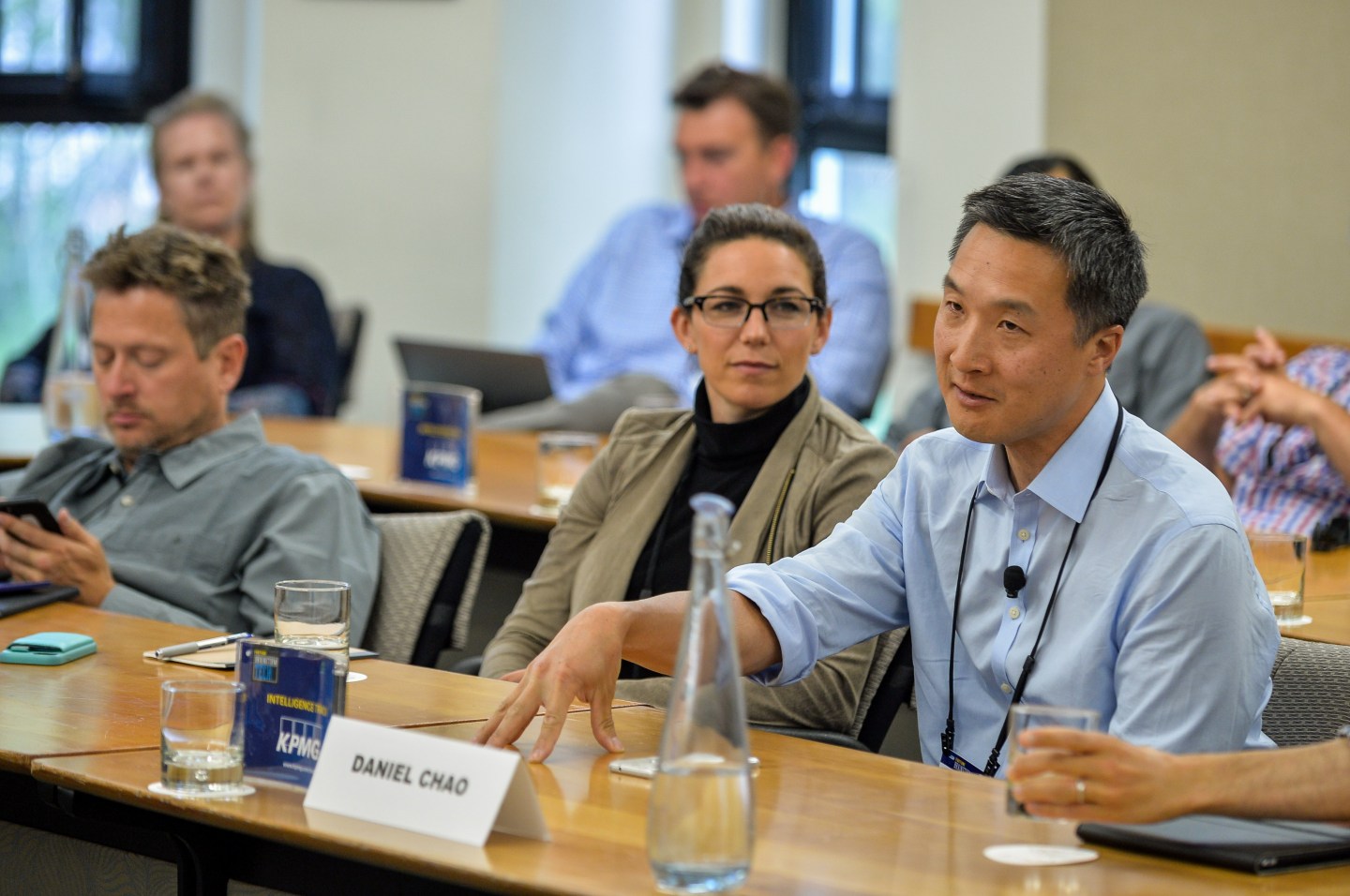
034 TUESDAY, JULY 18, 2017 Fortune Brainstorm Tech 2017 Aspen, CO, USA 1:45 PM AFTERNOON ROUNDTABLES GLOBAL HEALTH: BETTER, FASTER, STRONGER Intelligence Track hosted by KPMG Money is pouring into the health care and life sciences industries as regulations shift, technologies improve, and founders set their sights on solving world-changing global problems. But with things like digestible sensors, electronic pharmaceuticals, patient management systems, wearables, 3D printed biological materials, optogenetics, and more, technology is more important than ever. Hear from executives, entrepreneurs, and investors share. Adrian Aoun, CEO, Forward Daniel Chao, CEO, Halo Neuroscience Arun Gupta, Quartet CEO Lisa Maki, CEO, PokitDok Photograph by Fortune Brainstorm TechStuart Isett for Fortune Brainstorm Tech

“The brain is an electrical organ,” says Dr. Daniel Chao, founder and CEO of Halo Neuroscience. “Why don’t we speak its language to treat disease?”

Chao was one of many entrepreneurs and investors in attendance at the afternoon roundtable called Global Health: Better, Faster, Stronger at Fortune’s Brainstorm Tech, underway now in Aspen, Colo.

With investor cash pouring into the health care and life sciences fields, entrepreneurs are finding myriad ways to build innovative businesses in a sprawling industry known more for its regulations and resistance to change than Valley-style optimism.

Adrian Aoun, a former Googler who is now the CEO of Forward, a monthly membership service that connects subscribers with doctors who use technology to create individualized wellness plans, says that the romantic notion of the family doctor belies a business model that doesn’t work for either provider or patient. “In a labor based business, which is what medical services have always been, rates go up when people want to make more money,” said Aoun.

Forward plans to use better and emerging tech to replace many “labor-based” costs of health care. “If I go to my engineers and say ‘build me the website,’ I hand them a laptop,” he says. “Why would I go up to a doctor and say, ‘save my life,’ and hand them a stethoscope?”

Where Aoun has done an end-run around frustratingly slow insurance and reimbursement systems by simply charging the consumer directly, Lisa Maki, the founding CEO of PokitDok, wants to improve the health care system at its financial core.

Get Data Sheet, Fortune’s technology newsletter.

PokitDok is a cloud-based platform that lets computers in doctor’s offices, hospitals, and pharmacies share patient data for better management and claims processing. While acknowledging that the adoption of electronic medical records have brought about neither better health outcomes nor health care breakthroughs, Maki still thinks technology can solve the logjams. “EMR [companies] are for profit entities, and it’s not in their best interest to share data,” she said.

But a new, secure, blockchain product PokitDok offers with Intel (INTC) is improving the health care experience, while inspiring other companies like Amazon (AMZN) and Capital One (COF) to enter the health care field in some capacity, she says. Promising almost instantaneous claims processing, “Dokchain” ensures patient privacy and has broad implications for medical supplies management. “It’s a way to invite innovators into the industry,” says Maki.

But sometimes, tech is just about saving an actual life. In an earlier project, Chao had helped to create brain implants to treat epilepsy. “The vast majority of people improved dramatically,” he said. “Drugs don’t work on the brain but electricity does.”

Chou describes a new world of wearables that not only treat disease but can revive a flagging brain. “People actually get better,” he says. “It’s incredibly satisfying.”


About the Author
Ellen McGirt
By Ellen McGirt
See full bioRight Arrow Button Icon

Latest in Tech

Big TechStreaming
Trump warns Netflix-Warner deal may pose antitrust ‘problem’
By Hadriana Lowenkron, Se Young Lee and BloombergDecember 7, 2025
7 hours ago
Big TechOpenAI
OpenAI goes from stock market savior to burden as AI risks mount
By Ryan Vlastelica and BloombergDecember 7, 2025
7 hours ago
AIData centers
HP’s chief commercial officer predicts the future will include AI-powered PCs that don’t share data in the cloud
By Nicholas GordonDecember 7, 2025
9 hours ago
Future of WorkJamie Dimon
Jamie Dimon says even though AI will eliminate some jobs ‘maybe one day we’ll be working less hard but having wonderful lives’
By Jason MaDecember 7, 2025
13 hours ago
CryptoCryptocurrency
So much of crypto is not even real—but that’s starting to change
By Pete Najarian and Joe BruzzesiDecember 7, 2025
18 hours ago
Elon Musk
Big TechSpaceX
SpaceX to offer insider shares at record-setting $800 billion valuation
By Edward Ludlow, Loren Grush, Lizette Chapman, Eric Johnson and BloombergDecember 6, 2025
1 day ago

Most Popular

placeholder alt text
Real Estate
The 'Great Housing Reset' is coming: Income growth will outpace home-price growth in 2026, Redfin forecasts
By Nino PaoliDecember 6, 2025
2 days ago
placeholder alt text
AI
Nvidia CEO says data centers take about 3 years to construct in the U.S., while in China 'they can build a hospital in a weekend'
By Nino PaoliDecember 6, 2025
2 days ago
placeholder alt text
Economy
The most likely solution to the U.S. debt crisis is severe austerity triggered by a fiscal calamity, former White House economic adviser says
By Jason MaDecember 6, 2025
1 day ago
placeholder alt text
Economy
JPMorgan CEO Jamie Dimon says Europe has a 'real problem’
By Katherine Chiglinsky and BloombergDecember 6, 2025
1 day ago
placeholder alt text
Big Tech
Mark Zuckerberg rebranded Facebook for the metaverse. Four years and $70 billion in losses later, he’s moving on
By Eva RoytburgDecember 5, 2025
3 days ago
placeholder alt text
Politics
Supreme Court to reconsider a 90-year-old unanimous ruling that limits presidential power on removing heads of independent agencies
By Mark Sherman and The Associated PressDecember 7, 2025
15 hours ago
Rankings
  • 100 Best Companies
  • Fortune 500
  • Global 500
  • Fortune 500 Europe
  • Most Powerful Women
  • Future 50
  • World’s Most Admired Companies
  • See All Rankings
Sections
  • Finance
  • Leadership
  • Success
  • Tech
  • Asia
  • Europe
  • Environment
  • Fortune Crypto
  • Health
  • Retail
  • Lifestyle
  • Politics
  • Newsletters
  • Magazine
  • Features
  • Commentary
  • Mpw
  • CEO Initiative
  • Conferences
  • Personal Finance
  • Education
Customer Support
  • Frequently Asked Questions
  • Customer Service Portal
  • Privacy Policy
  • Terms Of Use
  • Single Issues For Purchase
  • International Print
Commercial Services
  • Advertising
  • Fortune Brand Studio
  • Fortune Analytics
  • Fortune Conferences
  • Business Development
About Us
  • About Us
  • Editorial Calendar
  • Press Center
  • Work At Fortune
  • Diversity And Inclusion
  • Terms And Conditions
  • Site Map

© 2025 Fortune Media IP Limited. All Rights Reserved. Use of this site constitutes acceptance of our Terms of Use and Privacy Policy | CA Notice at Collection and Privacy Notice | Do Not Sell/Share My Personal Information
FORTUNE is a trademark of Fortune Media IP Limited, registered in the U.S. and other countries. FORTUNE may receive compensation for some links to products and services on this website. Offers may be subject to change without notice.