• Home
  • News
  • Fortune 500
  • Tech
  • Finance
  • Leadership
  • Lifestyle
  • Rankings
  • Multimedia
CommentaryEducation

What the Newark Riots Can Teach Us About Education

By
Domingo Morel
Domingo Morel
and
Bethany Cianciolo
Bethany Cianciolo
Down Arrow Button Icon
By
Domingo Morel
Domingo Morel
and
Bethany Cianciolo
Bethany Cianciolo
Down Arrow Button Icon
July 13, 2017, 4:38 PM ET
Newark Riots 50th Anniversary
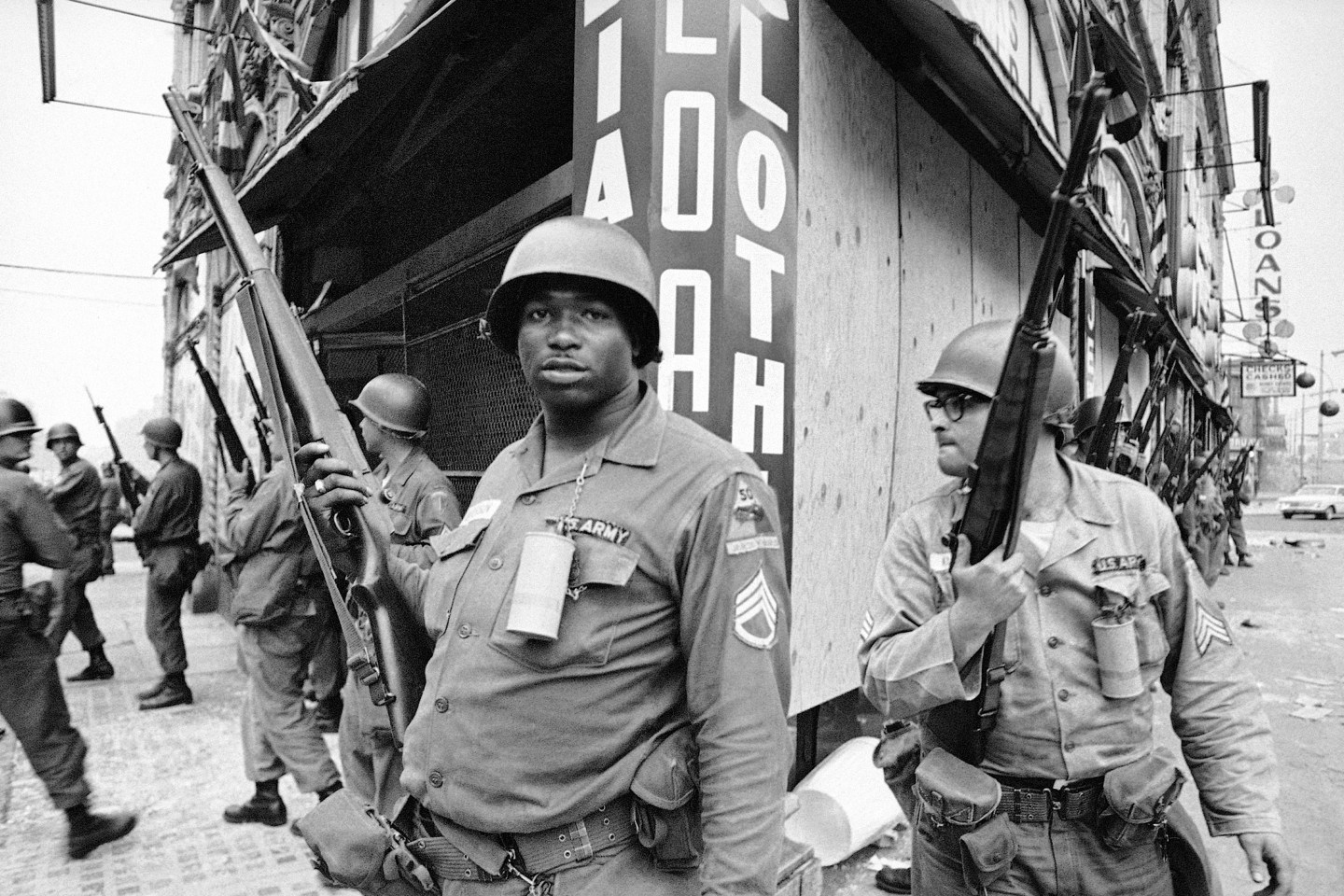
FILE - In this July 14, 1967 file photo, National Guardsmen stand at the corner of Springfield Avenue and Mercer Street in Newark, N.J., where four days of deadly violence and looting came to be known as the Newark riots. (AP Photo/Marty Lederhandler, File)Marty Lederhandler—AP

This summer marks the 50th anniversary of the “long, hot summer.” In 1967, there were over 160 uprisings in cities throughout the U.S. The largest and deadliest uprisings occurred in Newark, N.J. and Detroit in July of that year. In Newark, the rebellion—the term used by local residents—lasted from July 12 to July 17. In the end, 26 people had died; 23 of the casualties were African American.

Many point to police brutality, discrimination, joblessness, and inadequate housing to be major causes of the unrest. But one of the biggest factors, particularly in Newark, was education.

Although the Newark rebellion was sparked by white police officers beating John Smith, a black taxi driver, the governor, Richard Hughes, created a Commission on Civil Disorder to study what else might have led to the “riot.” The commission cited the absence of black political power in Newark, and more specifically, the absence of political power in the schools as a major contributing factor. By 1967, blacks and Latinos represented the majority of the student population in Newark schools, but the school board had only one black school board member.

The report also cited the “state of educational crisis” in the Newark public schools. According to the report, in 1967, Newark third graders were reading at two grade levels below the “national norm,” and the dropout rate was at 32%. The report also cited dilapidated buildings and shortage of teaching personnel as factors contributing to the education “crisis.” Equally as troubling, the report showed that by the mid-1960s, the Newark public schools did not have the physical space to educate every Newark student.

Thus, by the late 1960s, the black community in Newark was politically marginalized despite constituting the majority of the population. Moreover, the black community had a school system that was ill-equipped to educate its children. The response was the rebellion, and by the mid-1970s, the city had a black mayor, a majority-black school board, and increased numbers of black city council members. In addition to increasing their representation in city government, the black community in Newark and other urban centers in New Jersey mobilized to gain more resources for their schools. In 1973, and then again in 1985, New Jersey courts ruled that the state’s funding system was unconstitutional because it failed to provide students from poorer districts a “thorough and efficient” education.

The rebellion, which was a political response to the lack of access to political institutions, had begun to yield results for the black community in Newark. Between the mid-1970s and mid-1980s, the black community in Newark had made the most significant strides in the history of the city to improve education for students. The school district still had significant issues from decades of neglect, but there was reason for promise. However, in 1986, New Jersey passed the first law in the U.S. to allow state governments to take over underperforming school districts. In 1989, the state took over the Jersey City schools and Newark was notified that it was the target of a takeover as well. In 1995, ironically, on the same day that the rebellion began 28 years earlier, July 12, the state took over the Newark schools.

As of July 2017, as the city of Newark commemorates the 50th anniversary of the rebellion, the Newark schools are still under state control. Hundreds of residents attend the Newark school board meetings every month to protest the state’s policies, which have included severe budget cuts and school closures without the input of the community. In May of 2015, thousands of Newark students walked out of school to protest the district’s school reforms.

Fifty years after the rebellion, Newark is still rebelling. Because it has to. The state’s refusal to accept Newarkers’ rights to have a say in their children’s education is as prevalent today as it was in 1967 when black citizens rebelled.

Domingo Morel is an assistant professor of political science Rutgers University – Newark. He is the author of the forthcoming book,Takeover: Race, Education, and American Democracy.

About the Authors
By Domingo Morel
See full bioRight Arrow Button Icon
By Bethany Cianciolo
See full bioRight Arrow Button Icon

Latest in Commentary

Matt Rogers
CommentaryInfrastructure
I built the first iPhone with Steve Jobs. The AI industry is at risk of repeating an early smartphone mistake
By Matt RogersDecember 4, 2025
23 hours ago
Jerome Powell
CommentaryFederal Reserve
Fed officials like the mystique of being seen as financial technocrats, but it’s time to demystify the central bank
By Alexander William SalterDecember 4, 2025
23 hours ago
Rakesh Kumar
CommentarySemiconductors
China does not need Nvidia chips in the AI war — export controls only pushed it to build its own AI machine
By Rakesh KumarDecember 3, 2025
2 days ago
Rochelle Witharana is Chief Financial and Investment Officer for The California Wellness Foundation
Commentarydiversity and inclusion
Fund managers from diverse backgrounds are delivering standout returns and the smart money is slowly starting to pay attention
By Rochelle WitharanaDecember 3, 2025
2 days ago
Ayesha and Stephen Curry (L) and Arndrea Waters King and Martin Luther King III (R), who are behind Eat.Play.Learn and Realize the Dream, respectively.
Commentaryphilanthropy
Why time is becoming the new currency of giving
By Arndrea Waters King and Ayesha CurryDecember 2, 2025
3 days ago
Trump
CommentaryTariffs and trade
The trade war was never going to fix our deficit
By Daniel BunnDecember 2, 2025
3 days ago

Most Popular

placeholder alt text
Economy
Two months into the new fiscal year and the U.S. government is already spending more than $10 billion a week servicing national debt
By Eleanor PringleDecember 4, 2025
1 day ago
placeholder alt text
Success
‘Godfather of AI’ says Bill Gates and Elon Musk are right about the future of work—but he predicts mass unemployment is on its way
By Preston ForeDecember 4, 2025
21 hours ago
placeholder alt text
Success
Nearly 4 million new manufacturing jobs are coming to America as boomers retire—but it's the one trade job Gen Z doesn't want
By Emma BurleighDecember 4, 2025
22 hours ago
placeholder alt text
Success
Nvidia CEO Jensen Huang admits he works 7 days a week, including holidays, in a constant 'state of anxiety' out of fear of going bankrupt
By Jessica CoacciDecember 4, 2025
20 hours ago
placeholder alt text
North America
Jeff Bezos and Lauren Sánchez Bezos commit $102.5 million to organizations combating homelessness across the U.S.: ‘This is just the beginning’
By Sydney LakeDecember 2, 2025
3 days ago
placeholder alt text
Economy
Tariffs and the $38 trillion national debt: Kevin Hassett sees ’big reductions’ in deficit while Scott Bessent sees a ‘shrinking ice cube’
By Nick LichtenbergDecember 4, 2025
20 hours ago
Rankings
  • 100 Best Companies
  • Fortune 500
  • Global 500
  • Fortune 500 Europe
  • Most Powerful Women
  • Future 50
  • World’s Most Admired Companies
  • See All Rankings
Sections
  • Finance
  • Leadership
  • Success
  • Tech
  • Asia
  • Europe
  • Environment
  • Fortune Crypto
  • Health
  • Retail
  • Lifestyle
  • Politics
  • Newsletters
  • Magazine
  • Features
  • Commentary
  • Mpw
  • CEO Initiative
  • Conferences
  • Personal Finance
  • Education
Customer Support
  • Frequently Asked Questions
  • Customer Service Portal
  • Privacy Policy
  • Terms Of Use
  • Single Issues For Purchase
  • International Print
Commercial Services
  • Advertising
  • Fortune Brand Studio
  • Fortune Analytics
  • Fortune Conferences
  • Business Development
About Us
  • About Us
  • Editorial Calendar
  • Press Center
  • Work At Fortune
  • Diversity And Inclusion
  • Terms And Conditions
  • Site Map

© 2025 Fortune Media IP Limited. All Rights Reserved. Use of this site constitutes acceptance of our Terms of Use and Privacy Policy | CA Notice at Collection and Privacy Notice | Do Not Sell/Share My Personal Information
FORTUNE is a trademark of Fortune Media IP Limited, registered in the U.S. and other countries. FORTUNE may receive compensation for some links to products and services on this website. Offers may be subject to change without notice.