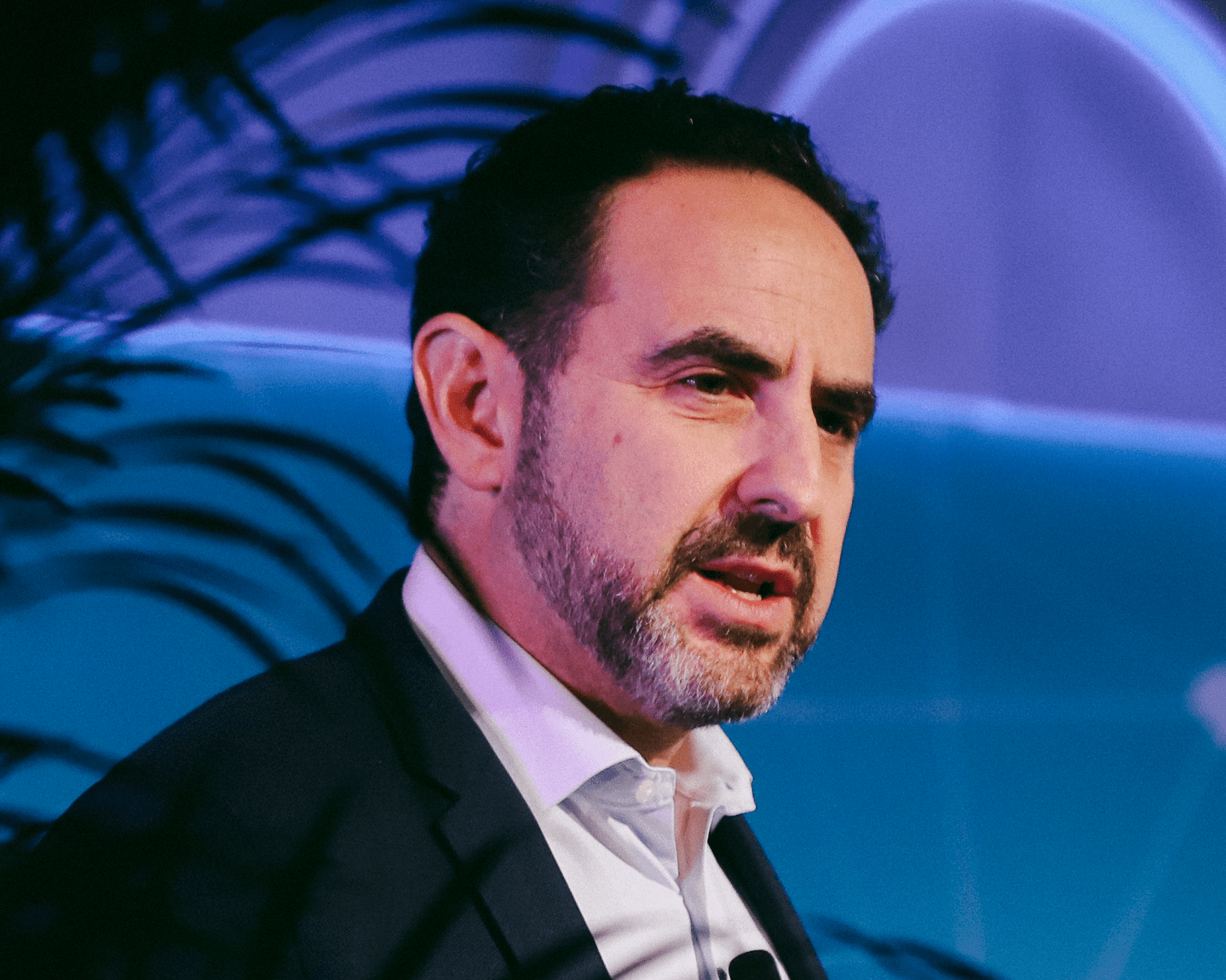
Gregory Bryant, Intel’s new head of desktop and laptop processors, picked a good time to take over the volatile and long-challenged business unit.
Personal computer shipments industrywide showed small signs of growth in the first quarter—rising 0.6% according to market tracker International Data Corp. But no matter the size of the uptick, it was the first growth in five years. Intel’s own PC chip unit saw revenue shoot up 6%, as sales of higher-priced CPUs aimed at gamers and content creators more than made up for slipping sales at the low end. And after years of delays and disappointments, Intel’s CPU roadmap for 2017 and 2018 looks strong and on schedule.
“I can say that we’re kind of in a little bit of a renaissance,” Bryant tells Fortune in his first interview since taking the new post a few weeks ago, formally the head of Intel’s $33 billion client computing group, or CCG. Bryant reports to group president Murthy Renduchintala, the former Qualcomm (QCOM) executive brought in at the end of 2015 to stabilize Intel’s PC and mobile businesses.
Promoted from running strategy and product development for the connected home products unit at Intel (INTC), Bryant points to the rash of new applications requiring higher performance computing, from virtual reality to e-sports video gaming, that have lately been driving sales higher and enticing new manufacturers, like Chinese phone giants Xiaomi and Huawei, to make PCs for the first time.
“There’s just a lot of kinds of new innovation that’s happening in the industry and then we’re even seeing some new entrants,” the 25-year Intel veteran says. “It’s a good indication of some of the return to innovation and health in the business.”
Get Data Sheet, Fortune’s technology newsletter.
Intel offered a host of its own innovations at the Computex trade show in Taiwan this week. Bryant unveiled the chip giant’s newest line of CPUs, dubbed the Core X series, led by a monster chip called the Core i9 Extreme Edition, which will have 18 cores and cost about $2,000. The high-end processor, suited for 4K video editing or rendering complex virtual reality game environments, can hit a performance benchmark once reserved for supercomputers: the teraflop, or one million million floating point operations per second.
“It’s hard to get your head around if you’ve been in the industry for a long time like I have,” Bryant says. “But just imagining that in terms of raw compute that we essentially have a teraflop CPU in a desktop PC form factor is kind of amazing.”
Intel famously built the first supercomputer capable of a teraflop. Known as ASCI Red, the behemoth was made for the U.S. government to simulate the decline of weapons in the country’s nuclear arsenal after the end of live explosive tests. Put into operation almost exactly 20 years ago, ASCI Red was the fastest supercomputer in the world for three years running and wasn’t retired until 2006.
If it’s humility that you’re expecting, Bryant isn’t offering any. Intel completely missed the smartphone revolution and has zero market share in phone processors, which have been dominated by chips based on ARM Holdings designs and made by Apple (AAPL), Samsung and Qualcomm. In corporate and cloud data centers, Intel is doing well but has no graphics chip-based products, a rapidly growing niche dominated by rival Nvidia (NVDA).
But there don’t seem to be any holes in Intel’s product line according to Bryant. “We really believe we’re a leading company and really the only company that can power every segment of this emerging smart connected world all the way from the cloud through the network to the edge devices and kind of everything in between,” he says.
Despite the confidence and the improving market conditions, Bryant and Intel face a renewed competitive threat in 2017 from Advanced Micro Devices (AMD), the only other chipmaker compatible with Intel’s own x86 architecture.
AMD’s new Ryzen line includes CPUs that can match the performance of much more expensive Intel chips. And AMD announced its own monster chip, perhaps anticipating the Core i9 announcement, dubbed the Ryzen Threadripper and including 16 cores. At the Computex show, AMD disclosed that the Threadripper chip will have considerably more bandwidth to connect to graphics cards, disk storage and other peripherals than any of Intel’s newest chips. It likely will be months before reviewers and analysts can benchmark real world systems pitting the two monster chips against each other, however.
Towards the end of the year, Intel will counter again, introducing systems with its 8th generation CPU design. Bryant wouldn’t say much, except to note that the new chips are performing much better than Intel initially expected. The chipmaker had said it was expecting a 15% gain from the new line compared to the current 7th generation Kaby Lake line. But Bryant now says that the gain looks to be about 30%. That will come in handy as AMD pushes its Ryzen architecture further and faster over the next few years as well.
“We really recognized the opportunity in the enthusiast space and we really stepped on the gas, we really stepped on the accelerator in this space, a while back,” Bryant says. “And I think you’re seeing that play through now.”