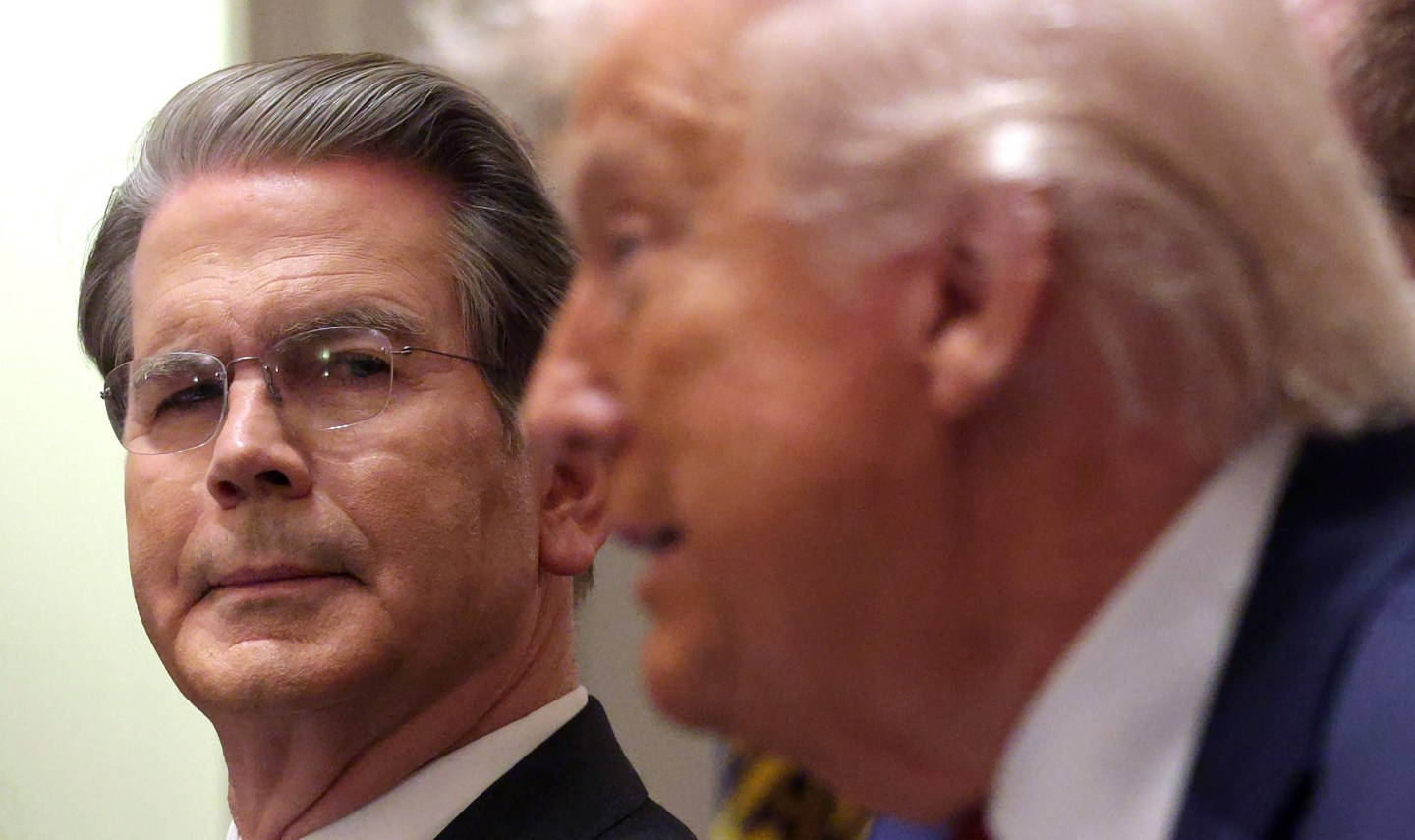
When Egyptian President Abdel-Fattah el-Sisi met with U.S. President Donald Trump in Washington on Monday, I couldn’t help thinking about how Trump’s presidency increasingly resembles a Middle East autocracy. That was further reinforced when Trump said of Sisi, “We agree on so many things.”
On a recent work trip to the Middle East doing research for a book, I was sitting on a couch waiting to interview a top government official on his country’s bilateral ties with America. Unexpectedly, the official’s brother walked in, introduced himself, and informed me he’d be joining the meeting.
And I thought immediately: This is what it’s probably like at the Trump White House. Random family members pop in to join meetings and discuss policy.
Ivanka Trump’s recent move to follow in her husband Jared Kushner’s footsteps and become an official federal government employee is just the latest sign that the Trump administration is moving toward a model and style of governing I’ve become accustomed to in more than two decades of traveling and working across the Middle East.
Many of Trump’s moves look like they’ve been copied directly from the checklist used by Middle East dictators and monarchs:
Install your family in government
Appoint family members to official government positions, and ensure that the formal lines of authority for other government officials—both career and political appointees—is never really clear. For decades, Iraq’s Saddam Hussein leaned heavily on his sons Uday and Qusay. Former Syrian President Hafez al-Assad also relied on his sons, one of whom is now the country’s president.
Who could have given Trump the idea of putting his son-in-law in charge of reforming how the U.S. government works, serving as a Middle East envoy, and setting up the backchannel discussions with China—despite possessing no relevant experience in any of these areas? Maybe it was Saudi Arabia’s King Salman, who appointed his son, Deputy Crown Prince Mohammed bin Salman, to serve as defense minister and lead a historic economic reform effort designed to fundamentally rewrite the kingdom’s social contract.
Trump is not the first U.S. president to rely on family members. John F. Kennedy, for instance, appointed his brother Robert as attorney general, and Bill Clinton put his wife Hillary in charge of health care reform. But what makes Trump stand out is the broad scope and informal nature of the authority he has given to family members who lack qualifications for their positions.
Blur the lines of authority
Make it widely understood that appointed family members are the gatekeepers and hold major sway on the most important issues. After all, blurry lines of authority running between family members gives you maximum leverage when dealing with the large bureaucracies responsible for implementing your orders. The bureaucracy is never sure if the person nominally in charge in their line of authority has as much power as the family member does—and so will listen more diligently to the family member in the inner circle.
This focus on what the president and his family members think about a particular issue has come to dominate discussions within the U.S. government. And the guessing game is shared among the foreign diplomats who are asked to interpret the Trump administration’s policy.
Another part of the dictator playbook is to send these family members on important missions overseas with senior officials. This is exactly what Trump has done in sending Kushner to Iraq this week with America’s top military commander and making his son-in-law the point person for Trump’s meeting with China’s leader later this week.
Keep your family business going
Keep some family outside of the government and instead inside private businesses. The notion of leader using government power to enrich his family’s bottom line is not a foreign one in many parts of the Middle East. Hosni Mubarak, Egypt’s president for nearly 30 years until he was ousted in 2011, had two sons in private business who were ultimately convicted for embezzling state funds and investigated for insider trading.
Since Trump took office, his sons Eric and Donald Jr. have kept the family business running, expanding Trump properties and seeking new opportunities around the world. Yes, the Trump family has said that it has worked out arrangements for disclosures to prevent conflicts of interest, but these measures haven’t answered some major concerns about ethics. Trump can still draw money from the companies run by his sons, and his daughter and son-in-law continue to financially benefit from their real estate holdings—including the Trump hotel in Washington DC leased from the federal government.
Hate on the media
Browbeat the press with aggressive spokespeople who yell a lot—and do it yourself from time to time. Telling bold-faced lies with gusto can help advance your agenda, even if only with fleeting success. Remember “Baghdad Bob,” Saddam Hussein’s information minister? During the 2003 Iraq invasion, Muhammad Saeed al-Sahaf’s performance denying that U.S. troops were in Baghdad had some striking similarities to what we see today from White House Press Secretary Sean Spicer’s aggressive daily performances or senior advisor Kellyanne Conway’s “alternative facts.” Trump, of course, gets into the act all the time in beating up the media over Twitter and in press conferences.
Fill your government with generals
Appoint a bunch of military generals across key agencies of government, even where military experience isn’t relevant to the particular department or area they lead. In the late 1980s and early 1990s, Tunisian leader Zine al-Abidine Ben Ali appointed military generals across many ministries. In Egypt, the military has taken charge of key sectors of the economy, like breadmaking, manufacturing, and construction.
Having generals across the government gives the appearance that you have tight command and control over the country, even if the reality is more chaotic inside your administration. Trump has appointed three generals to his cabinet, heading the National Security Council, Department of Homeland Security, and Pentagon.
But there is some good news: America is not the Middle East—not even close.
Over the past two months, we’ve seen U.S. courts block—at least temporarily—reckless Trump administration moves on immigration and refugee policy. The congressional majority’s failure to come up with an alternative to former President Barack Obama’s health care law shows that even amid gridlock and incompetence, our system of checks and balances prevents the president from imposing his will on the passage of legislation. And most importantly, ordinary Americans remain politically energized and able to openly speak their minds—something that some of my dear friends in the Middle East still don’t have after all of these years.
While Trump can use Middle East dictators’ tactics to try to intimidate critics and his opponents, he’s quickly learning that America’s political system is resilient and not about to sink into the turmoil that has plagued the Middle East for decades.
Brian Katulis is a senior fellow at the Center for American Progress.