• Home
  • Latest
  • Fortune 500
  • Finance
  • Tech
  • Leadership
  • Lifestyle
  • Rankings
  • Multimedia
FinanceTaxes

It’s Americans, Not Mexicans, Who Will Pay the Border Tax

Shawn Tully
By
Shawn Tully
Shawn Tully
Senior Editor-at-Large
Down Arrow Button Icon
Shawn Tully
By
Shawn Tully
Shawn Tully
Senior Editor-at-Large
Down Arrow Button Icon
February 27, 2017, 7:00 AM ET
APTOPIX Mexico Trump
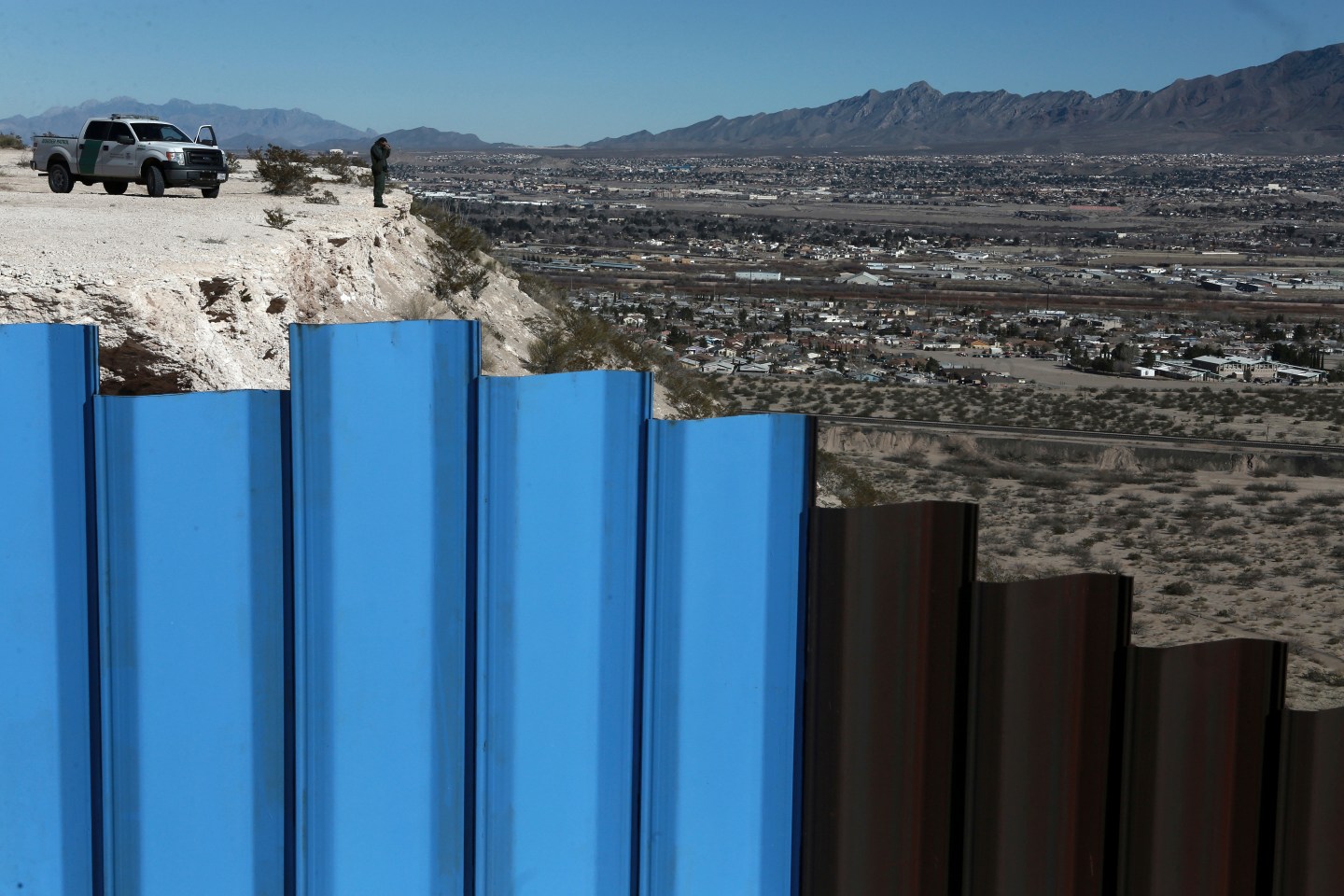
An agent of the border patrol, observes near the Mexico-US border fence, on the Mexican side, separating the towns of Anapra, Mexico and Sunland Park, New Mexico, Wednesday, Jan. 25, 2017. U.S. President Donald Trump says his administration will be working in partnership in Mexico to improve safety and economic opportunity for both countries and will have "close coordination" with Mexico to address drug smuggling. It will set in motion the construction of his proposed border wall, a key promise from his 2016 campaign. (AP Photo/Christian Torres)Photograph by Christian Torres—AP

To hear its champions praise it, the border adjustment tax (BAT) is that one, miraculous levy that nobody really pays for. House Speaker Paul Ryan is promoting the BAT as the ticket to slashing corporate and personal taxes. Conservative think tanks love it. And even White House spokesman Sean Spicer has touted a tariff on Mexican imports, something that sounds a lot like the BAT, that would pay for President Trump’s signature wall barricading our southern border.

The BAT would penalize imports by imposing the U.S. corporate income tax not just on profits, but on all revenues collected by companies selling their foreign-made goods stateside. That penalty would raise their costs around 20%. It would reward exporters by substituting today’s taxes on profits with a rich rebate. Hence, you’d think that the BAT would raise prices on imported clothes and cars to U.S. consumers.

But its supporters–including noted economists–swear that the tax would cause the dollar to appreciate over 20% against foreign currencies, precisely offsetting the new levy, effectively keeping both the import prices, and the volumes sold, unchanged. The robust dollar wouldn’t hurt exports either, since the rich subsidies to American goods makers would lower costs the same amount as the rise in the greenback. Best of all, the BAT would raise as much as $1.2 trillion over the next decade, helping pay for a steep, historic reduction in corporate rates that would greatly enhance the competitiveness of U.S. companies on the global stage.

It all sounds great. The cheap jeans and appliances from China and Mexico stay just as cheap, U.S. exporters don’t miss a beat, and the Treasury raises tons of money, paying for long-overdue tax reform without touching programs prized by Congress. Let’s assume for the moment that U.S. retailers’ fears of higher costs are misplaced because, as theory dictates, the cost of their imported products are destined to remain flat. So what’s not to like?

Don’t be fooled. The tonic of lower corporate taxes may outweigh the BAT’s drawbacks, but it still imposes a stiff burden on America’s investors and consumers. “You don’t get something for nothing,” says Alan Auerbach, economics professor at Berkeley.

After all, the BAT is a tax, and a big one. But it isn’t paid through payroll deductions, or added to your tab at McDonald’s or Target. Its penalties are indirect, but real. Here’s how the would BAT hit Americans’ wealth and incomes. The U.S. has been running huge trade deficits for decades. The extra dollars that Mexico or China amass by selling a lot more to us than we sell to them get invested in Treasuries, U.S. equities, corporate acquisitions and new plants. If the BAT forces a 25% rise in the dollar, the interest and profits from those investments will be worth that much more in pesos and yuan. Hence, citizens of our creditor nations will get richer relative to our own citizens. “Foreign investors will get a major windfall from the BAT,” says Alan Viard of the American Enterprise Institute.

That simply means they’re doing better than before, not necessarily that we’re doing worse. But all other things remaining equal, we will be doing worse. U.S. companies and individuals, generally via investment funds, own trillions of dollars’ worth of investments in other countries. These range from U.S. companies’ ownership of vast manufacturing and research facilities abroad, investors’ holdings in overseas companies that book their earnings in yen or euros, and real estate funds’ portfolios of office buildings in Paris or Tokyo.

The projected rise in the dollar will reduce the value of dividends, interest and rent from all those investments, once translated into dollars, by double-digits. Since their future income (measured in dollars) will fall sharply, so will their market value in greenbacks, making Americans a lot less wealthy. It’s likely that the hit to foreign income and wealth will equal the $120 billion a year the U.S. would collect from the BAT. That penalty is the equivalent of a reduction in GDP of around 0.5%.

Not to say the BAT isn’t a good idea. Lowering corporate taxes to 15% or 20%, from their current 35%, would be an overwhelming positive that could swamp the drag from lower foreign income. So all other things could get a lot better. Thankfully, the BAT is likely to be coupled with substantially lower rates, since it’s the engine for paying for those reductions. But if somehow the BAT is enacted, and tax reform is weakened, America may be worse off. The BAT may be the cost of tax reform, but make no mistake–it’s a cost, and a big one.


About the Author
Shawn Tully
By Shawn TullySenior Editor-at-Large

Shawn Tully is a senior editor-at-large at Fortune, covering the biggest trends in business, aviation, politics, and leadership.

See full bioRight Arrow Button Icon

Latest in Finance

US Federal Reserve Board Chairman Jerome Powell speaks during a news conference following a Federal Open Market Committee (FOMC) meeting in Washington, DC, on December 10, 2025.
Bankingjerome powell
Top economist Diane Swonk: Jerome Powell risks losing the Fed’s credibility on a gamble over AI and immigration
By Eva RoytburgDecember 10, 2025
3 hours ago
Jerome Powell, chairman of the US Federal Reserve, during a news conference following a Federal Open Market Committee (FOMC) meeting in Washington, DC, US, on Wednesday, Dec. 10, 2025. Federal Reserve officials delivered a third consecutive interest-rate reduction and maintained their outlook for just one cut in 2026.
EconomyFederal Reserve
Powell warns of a ‘very unusual’ economy as tariffs keep goods inflation high amid a weakening labor market
By Eva RoytburgDecember 10, 2025
3 hours ago
FBI
LawCrime
TV producer behind ‘I Married a Murderer’ makes FBI Most Wanted list on claim she got a $14.7 million bank loan as a fake heiress
By The Associated PressDecember 10, 2025
4 hours ago
Larry Ellison
Big TechMarkets
Oracle earnings may not be enough to assuage debt, AI deal fears
By Carmen Reinicke and BloombergDecember 10, 2025
4 hours ago
Federal Reserve Bank Chair Jerome Powell speaks during the George P. Shultz Memorial Lecture Series at Stanford University on December 01, 2025 in Stanford, California.
EconomyFederal Reserve
The Fed delivers a rare ‘hawkish cut’ as Powell tries to steady a softening job market
By Eva RoytburgDecember 10, 2025
6 hours ago
Jerome Powell, chairman of the US Federal Reserve, during the Hoover Institution's George P. Shultz Memorial Lecture Series in Stanford, California, US, on Monday, Dec. 1, 2025. The Federal Reserve said it was monitoring community and regional banks' commercial real estate loan portfolios amid concerns over "elevated interest rates, tighter underwriting standards, and lower commercial property values." Photographer: Jason Henry/Bloomberg via Getty Images
EconomyFederal Reserve
‘Be careful what you wish for’: Top economist warns any additional interest rate cuts after today would signal the economy is slipping into danger
By Eva RoytburgDecember 10, 2025
7 hours ago

Most Popular

placeholder alt text
Politics
Exclusive: U.S. businesses are getting throttled by the drop in tourism from Canada: ‘I can count the number of Canadian visitors on one hand’
By Dave SmithDecember 10, 2025
13 hours ago
placeholder alt text
Economy
‘Fodder for a recession’: Top economist Mark Zandi warns about so many Americans ‘already living on the financial edge’ in a K-shaped economy 
By Eva RoytburgDecember 9, 2025
1 day ago
placeholder alt text
Success
At 18, doctors gave him three hours to live. He played video games from his hospital bed—and now, he’s built a $10 million-a-year video game studio
By Preston ForeDecember 10, 2025
15 hours ago
placeholder alt text
Economy
‘Be careful what you wish for’: Top economist warns any additional interest rate cuts after today would signal the economy is slipping into danger
By Eva RoytburgDecember 10, 2025
7 hours ago
placeholder alt text
Uncategorized
Transforming customer support through intelligent AI operations
By Lauren ChomiukNovember 26, 2025
14 days ago
placeholder alt text
Economy
The 'forever layoffs' era hits a recession trigger as corporates sack 1.1 million workers through November
By Nick Lichtenberg and Eva RoytburgDecember 9, 2025
1 day ago
Rankings
  • 100 Best Companies
  • Fortune 500
  • Global 500
  • Fortune 500 Europe
  • Most Powerful Women
  • Future 50
  • World’s Most Admired Companies
  • See All Rankings
Sections
  • Finance
  • Leadership
  • Success
  • Tech
  • Asia
  • Europe
  • Environment
  • Fortune Crypto
  • Health
  • Retail
  • Lifestyle
  • Politics
  • Newsletters
  • Magazine
  • Features
  • Commentary
  • Mpw
  • CEO Initiative
  • Conferences
  • Personal Finance
  • Education
Customer Support
  • Frequently Asked Questions
  • Customer Service Portal
  • Privacy Policy
  • Terms Of Use
  • Single Issues For Purchase
  • International Print
Commercial Services
  • Advertising
  • Fortune Brand Studio
  • Fortune Analytics
  • Fortune Conferences
  • Business Development
About Us
  • About Us
  • Editorial Calendar
  • Press Center
  • Work At Fortune
  • Diversity And Inclusion
  • Terms And Conditions
  • Site Map

© 2025 Fortune Media IP Limited. All Rights Reserved. Use of this site constitutes acceptance of our Terms of Use and Privacy Policy | CA Notice at Collection and Privacy Notice | Do Not Sell/Share My Personal Information
FORTUNE is a trademark of Fortune Media IP Limited, registered in the U.S. and other countries. FORTUNE may receive compensation for some links to products and services on this website. Offers may be subject to change without notice.