We’ve been trained to think that technology is behind every positive and negative factor affecting business. Digital transformation creates mega-cap businesses in decaying industries (Facebook in publishing) and zaps even established technology players that move too slowly (see Apple vs. Nokia, BlackBerry, Motorola, etc.)
And so when I started reading Phil Wahba’s important feature in the upcoming issue of Fortune, “Everything Must Go,” about the demise of the department store, I assumed the storyline would be about the damage Amazon has inflicted on retail behemoths. Spoiler alert: What Amazon has wrought is old news. The department stores—Macy’s, Sears, Kohl’s, J.C. Penney, and others—are doing a rather brisk business in e-commerce. No, their true problems, writes Wahba, go far deeper. These include excessive discounting; a phenomenon retailers call “an ocean of sameness” in product offerings; an overreliance on apparel at the expense of novelty items; and even a revolt by their own vendors, panicked that pushing their wares in dying emporiums will drag them down too.
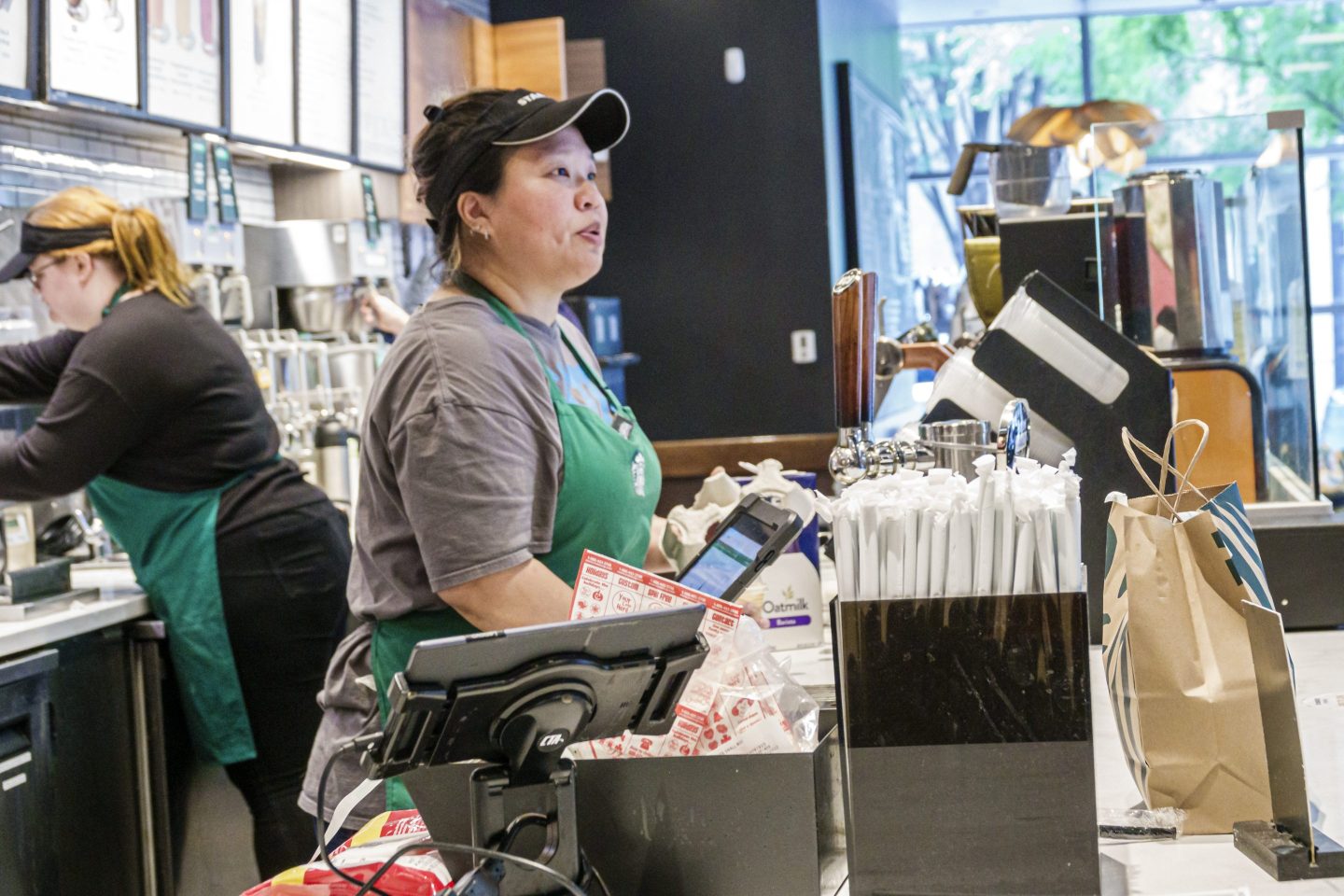
It’s not a new problem, by the way. Wahba notes that department stores have been “dying” since the 1930s. Retail experts suggest that one way to revive the stores is to focus on experiences, to give shoppers a reason to visit, like events or interesting displays or unusual merchandise. This is amusing for two reasons. First, it’s what department stores were really good at in their prime. I’ll never forget visiting the flagship Marshall Field’s store in downtown Chicago for its wondrous old-world charm—and not just at Christmastime. This also resonates because one of the great retailers of our time, Apple, understands perfectly well the value of a magical experience in its stores. Indeed, though Apple is selling technology, it has done it in an exceedingly personal way.
Technology is neither the solution to all problems nor the ogre that will eat all businesses. Sometimes the human element is what matters most.
| Adam Lashinsky | |
| @adamlashinsky | |
| adam_lashinsky@fortune.com |
BITS AND BYTES
Snap hits the road. As the company behind the Snapchat messaging makes its case directly to investors, it's becoming clearer that making money on the stock—that is, if you're not an executive or employee—will be difficult. The latest revelation raising eyebrows: big stock grants that will dilute share values over time. (Fortune, Reuters, Wall Street Journal)
Intel is fighting to keep up with Qualcomm in mobile chips. One of its new products introduced Tuesday is capable of supporting gigabit-per-second speeds on current 4G LTE networks, matching a technology that Qualcomm introduced last year. (For perspective, that's as fast as the fastest home Internet connections.) Both companies are promising faster speeds on existing services ahead of the next generation of wireless, called 5G. (Fortune, Fortune)
Google is getting a video ad audit. The company's YouTube service will allow independent agencies to double check metrics such as viewing times. The revelation comes two weeks after Facebook agreed to undergo similar scrutiny. More digital advertisers are growing skeptical that reporting data is flawed. (Wall Street Journal, Wired)
More rumors are flying about an iPad launch next month. According to this latest report, Apple is preparing to relaunch the high-end version of its line with more powerful processors and another, middle-of-the-road screen size. (Fortune)
Don't expect Microsoft to update HoloLens in the near future. It looks like the tech giant is delaying a less expensive version of its augmented reality headset until 2019. Sources suggest that it would rather focus on a more extensive upgrade because it isn't feeling significant pressures from rivals. (Fortune)
UPS is testing a new twist on drone deliveries. The delivery and logistics giant has outfitted a custom electric van with a recharging station for battery-powered drones. Once a driver reaches a neighborhood, packages can be distributed accordingly. The approach solves two concerns: keeping drones powered throughout the day and preserving a role for human drivers. (Fortune, Reuters, Wired)
THE DOWNLOAD
Why Verizon decided to stick with Yahoo. The two companies announced an agreement on Tuesday to cut the original price of their $4.8 billion deal by $350 million. They'll share the costs of any future legal ramifications of the breaches, which have yet to be determined—although Yahoo will bear the main legal burden with investors and the Securities and Exchange Commission. But the deal is going ahead.
The bottom line is that Verizon doesn't really have a choice. If it wants to build a mobile-first digital advertising business that can go head-to-head with Facebook and Google—and it very much wants to do that because its core telecom business is in decline—Yahoo is just about the only option. Here's the take from Fortune's Mathew Ingram.
IN CASE YOU MISSED IT
Women's Representation at Uber is Bad—Even By Tech Industry Standards, by Claire Zillman
Mobileye Clinches Deal With Another Major Carmaker, by Geoffrey Smith
Lyft Partners With Insurer to Lift Ridership Among Car Owners, by Kirsten Korosec
Tech Groups Warn of Social Media Collection at the Border, by Jeff John Roberts
Google Discontinues Site Search Product, by Barb Darrow
ONE MORE THING
Talk to me, Alexa, or is that Alex? The Wall Street Journal's gadget columnist Joanna Stern opines on why humans like robots and tech voices to have a gender, and why it's usually female. Plus, get ready to greet Amazon Alexa in a new location—several companies are experimenting with ways "it" can be used to automate data centers. (Wall Street Journal, Fortune)
This edition of Data Sheet was curated by Heather Clancy.
Find past issues. Sign up for other Fortune newsletters.