• Home
  • Latest
  • Fortune 500
  • Finance
  • Tech
  • Leadership
  • Lifestyle
  • Rankings
  • Multimedia

Trendingnow

1

Mark Cuban says he has the solution to growing income inequality, and it's to reward every employee—from CEO to janitor—with company stock

2

‘I want to die broke’: Billionaire philanthropist Denny Sanford dies after giving away $4 billion

3

OpenAI says its AI models secretly broke out of a secure test environment and hacked into AI company Hugging Face in order to cheat on an evaluation

1

Mark Cuban says he has the solution to growing income inequality, and it's to reward every employee—from CEO to janitor—with company stock

2

‘I want to die broke’: Billionaire philanthropist Denny Sanford dies after giving away $4 billion

3

OpenAI says its AI models secretly broke out of a secure test environment and hacked into AI company Hugging Face in order to cheat on an evaluation
Commentary

Uber’s Travis Kalanick Will Regret Quitting Donald Trump’s Advisory Council

By
Arun Sundararajan
Arun Sundararajan
and
Bethany Cianciolo
Bethany Cianciolo
Down Arrow Button Icon
By
Arun Sundararajan
Arun Sundararajan
and
Bethany Cianciolo
Bethany Cianciolo
Down Arrow Button Icon
February 8, 2017, 5:00 PM ET
Key Speakers at WEF Annual Meeting of the New Champions
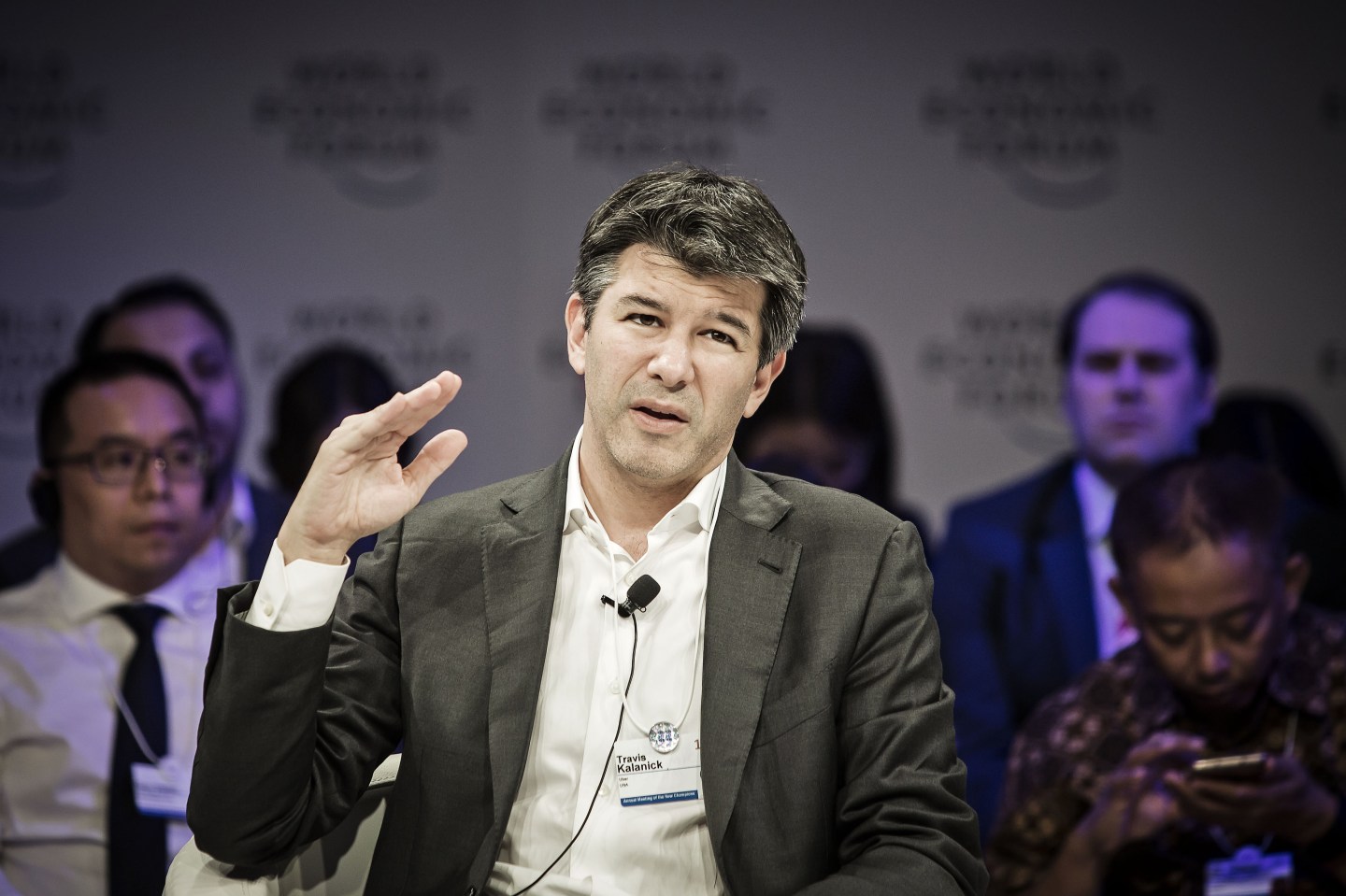
Billionaire Travis Kalanick, chief executive officer of Uber Technologies Inc., speaks during a session at the World Economic Forum (WEF) Annual Meeting of the New Champions in Tianjin, China, on Monday, June 27, 2016. The meeting runs through June 28. Photographer: Qilai Shen/Bloomberg via Getty ImagesPhotograph by Qilai Shen — Bloomberg via Getty Images
Add Fortune on Google for similar content.

There is no question that the recent #DeleteUber campaign highlights the nuance and delicacy with which global corporations must approach their relationship with consumers. Social media gives consumer activist messages unprecedented power and reach, and digital platforms like Uber are especially susceptible to the fallout from this kind of call for a corporate boycott. But Uber CEO Travis Kalanick’s recent move away from the Trump administration’s business advisory council could have consequences for years to come.

Late last month, when the New York Taxi Workers Alliance called a strike at JFK airport, Uber’s seemingly innocuous choice to stay on the sidelines triggered a massive backlash against the platform. The Taxi Alliance’s hour-long action at 6 p.m. on Jan. 28 aimed to show solidarity with an ongoing protest at JFK Airport against the recent immigration ban. Uber chose to continue picking up JFK passengers during this time, even suppressing surge pricing a little later in the evening.

https://twitter.com/Uber_NYC/status/825502908926066688


Perhaps the intent was to help arriving passengers and avoid being accused of price gouging during a labor action, but these choices were instead interpreted as an attempt at “strike-breaking” on Uber’s part.

I'm a Lyft guy now. Lyft baby!!!!! #deleteuber pic.twitter.com/585D46XYSe

— Olive Rae Brinker (@olivebrinker) January 29, 2017


A blistering response on social media called for users to delete their Uber apps that evening. By Saturday night, #DeleteUber was the top-trending topic on Twitter, and had gone viral by Sunday morning, even as Uber’s key competitor Lyft deftly aligned itself in opposition to the ban with a $1 million donation to the ACLU. As thousands of users cancelled their Uber accounts, the platform had inadvertently placed itself center stage in the highly charged discussion about the immigration ban.

Efforts to manage this public relations crisis proved futile over the next few days. Despite announcing a $3 million legal fund for drivers and signing a letter of solidarity with NYC’s tech leaders, Kalanick’s company continued to bleed users. Meanwhile, downloads of the Lyft app skyrocketed, exceeding Uber’s for the first time on the iPhone app store, and smaller competitors like Juno also enjoyed modest gains from the droves of Uber deserters.

Even as its competitors’ actions fanned the flames of the #DeleteUber campaign, Uber’s losses may well have ended up being temporary: By the following week, the app was back up to No. 12 in the iPhone App Store, and Lyft’s was down to 30. The loss of 200,000 users may end up being a drop in the bucket of over 50 million Uber users.

Was Kalanick’s move an overreaction? Perhaps not. As The New Yorker’s James Surowiecki pointed out last month in an oddly prescient article, the United States has entered an era of heightened “political consumerism” under which corporations are increasingly held responsible for their “real or imagined political messages.” This responsibility is particularly onerous for the digital platforms like Google (GOOG), Facebook (FB), Apple (AAPL), and Uber that are increasingly interwoven into our everyday lives. Compared to other corporate giants like Walmart (WMT) or Exxon Mobil (XOM), interaction with these platforms feels closer and more direct, requiring a deeper level of faith as we entrust them, without hesitation, with information about our intentions, what’s on our minds, our friendships, and our daily movements.

And with this higher level of intimacy comes higher consumer expectations. A perceived breach of trust feels personal, leading to a backlash that is more vociferous and emotional. And Uber’s brash and confrontational image may make it especially susceptible to this kind of blowback.

Kalanick’s decision to distance himself from Trump now aligns him more closely with his Silicon Valley brethren who have collectively filed a motion opposing the immigration ban in the ongoing court battle between the Justice Department and a number of state attorney generals. But his departure from the Trump administration may have adverse longer-term consequences for his company. In the coming years, advances in artificial intelligence and robotics will threaten a number of jobs in the U.S. With the imminent arrival of fully autonomous vehicles, car and truck-driving jobs are among the most vulnerable. A narrative of opposing job displacement caused by technological progress will play well with Trump’s core political base. This looming wave of automation may therefore foreshadow a political battle that will pit the president against corporations in the transportation industry (like Uber) whose future business interests are tied to accelerating the pace of arrival of self-driving cars and trucks.


Granted, Mary Barra, CEO of General Motors (GM) (a company that owns 20% of Lyft), and Tesla’s (TSLA) Elon Musk, both proponents of automotive autonomy, remain on the council. But no other company’s future fortunes are tied as closely to the rapid emergence of self-driving technologies as Uber’s, whose aggressive pilots of these technologies have attracted widespread attention, and whose long-term expansion prospects rest heavily on getting fully autonomous cars on the road rapidly enough to expand meaningfully beyond densely populated cities. To justify and grow its current valuation, the company needs to make significant inroads into shifting suburban consumer spending away from purchasing automobiles and toward the platform’s on-demand mobility services. This is a business whose unit economics work far better with self-driving cars.

Had Uber been more thoughtful and deliberate in its reaction to the recent immigration ban, it may well have been able to state its opposition convincingly enough (like Tesla’s Musk has attempted to do) while allowing its CEO to remain at the president’s table. After all, when one examines its composition more closely, Trump’s business council is not without its share of Trump critics. For example, council member and Pepsico (PEP) CEO Indra Nooyi, a first-generation immigrant herself, was a visible Hillary Clinton supporter who, when asked in November how she was feeling about the election outcome, inquired, “Is there a box of tissues here?”

There is little doubt that, ideologically, stepping down from the council aligns Kalanick more closely with both his employees and with the broader tech industry. But down the road, when viewed through a more pragmatic business lens, it may end up being a move he looks back on with regret.

Arun Sundararajan is author of The Sharing Economy. He is also a professor and the Robert L. and Dale Atkins Rosen faculty fellow at New York University’s Stern School of Business.

About the Authors
By Arun Sundararajan
See full bioRight Arrow Button Icon
By Bethany Cianciolo
See full bioRight Arrow Button Icon
Add Fortune on Google for similar content.

Latest in Commentary

Finance
Lorem ipsum dolor sit amet, consectetur adipiscing elit, sed do eiusmod tempor incididunt ut labore et dolore magna aliqua. Ut enim ad minim veniam
By Fortune Editors
October 20, 2025
Finance
Lorem ipsum dolor sit amet, consectetur adipiscing elit, sed do eiusmod tempor incididunt ut labore et dolore magna aliqua. Ut enim ad minim veniam
By Fortune Editors
October 20, 2025
Finance
Lorem ipsum dolor sit amet, consectetur adipiscing elit, sed do eiusmod tempor incididunt ut labore et dolore magna aliqua. Ut enim ad minim veniam
By Fortune Editors
October 20, 2025
Finance
Lorem ipsum dolor sit amet, consectetur adipiscing elit, sed do eiusmod tempor incididunt ut labore et dolore magna aliqua. Ut enim ad minim veniam
By Fortune Editors
October 20, 2025
Finance
Lorem ipsum dolor sit amet, consectetur adipiscing elit, sed do eiusmod tempor incididunt ut labore et dolore magna aliqua. Ut enim ad minim veniam
By Fortune Editors
October 20, 2025
Finance
Lorem ipsum dolor sit amet, consectetur adipiscing elit, sed do eiusmod tempor incididunt ut labore et dolore magna aliqua. Ut enim ad minim veniam
By Fortune Editors
October 20, 2025

Most Popular

Finance
Lorem ipsum dolor sit amet, consectetur adipiscing elit, sed do eiusmod tempor incididunt ut labore et dolore magna aliqua. Ut enim ad minim veniam
By Fortune Editors
October 20, 2025
Finance
Lorem ipsum dolor sit amet, consectetur adipiscing elit, sed do eiusmod tempor incididunt ut labore et dolore magna aliqua. Ut enim ad minim veniam
By Fortune Editors
October 20, 2025
Finance
Lorem ipsum dolor sit amet, consectetur adipiscing elit, sed do eiusmod tempor incididunt ut labore et dolore magna aliqua. Ut enim ad minim veniam
By Fortune Editors
October 20, 2025
Finance
Lorem ipsum dolor sit amet, consectetur adipiscing elit, sed do eiusmod tempor incididunt ut labore et dolore magna aliqua. Ut enim ad minim veniam
By Fortune Editors
October 20, 2025
Finance
Lorem ipsum dolor sit amet, consectetur adipiscing elit, sed do eiusmod tempor incididunt ut labore et dolore magna aliqua. Ut enim ad minim veniam
By Fortune Editors
October 20, 2025
Finance
Lorem ipsum dolor sit amet, consectetur adipiscing elit, sed do eiusmod tempor incididunt ut labore et dolore magna aliqua. Ut enim ad minim veniam
By Fortune Editors
October 20, 2025
Fortune Secondary Logo
Rankings
  • 100 Best Companies
  • Fortune 500
  • Global 500
  • Fortune 500 Europe
  • Most Powerful Women
  • World's Most Admired Companies
  • See All Rankings
  • Lists Calendar
Sections
  • Finance
  • Fortune Crypto
  • Features
  • Leadership
  • Health
  • Commentary
  • Success
  • Retail
  • Mpw
  • Tech
  • Lifestyle
  • CEO Initiative
  • Asia
  • Politics
  • Conferences
  • Europe
  • Newsletters
  • Personal Finance
  • Environment
  • Magazine
  • Education
Customer Support
  • Frequently Asked Questions
  • Customer Service Portal
  • Privacy Policy
  • Terms Of Use
  • Single Issues For Purchase
  • International Print
Commercial Services
  • Advertising
  • Fortune Brand Studio
  • Fortune Analytics
  • Fortune Conferences
  • Business Development
  • Group Subscriptions
About Us
  • About Us
  • Press Center
  • Work At Fortune
  • Terms And Conditions
  • Site Map
  • About Us
  • Press Center
  • Work At Fortune
  • Terms And Conditions
  • Site Map
  • Facebook icon
  • Twitter icon
  • LinkedIn icon
  • Instagram icon
  • TikTok icon
  • YouTube icon

Latest in Commentary

k
Commentarypower
What I keep hearing from Fortune 500 CEOs: ‘We have no idea what we’re actually paying for power’
By Kiran BhatrajuJuly 21, 2026
15 hours ago
Bolt CEO Ryan Breslow
CommentaryHuman resources
The CEO who fired HR was right. About the wrong thing.
By KeyAnna SchmiedlJuly 21, 2026
15 hours ago
ford
Commentary250 Years of Innovation
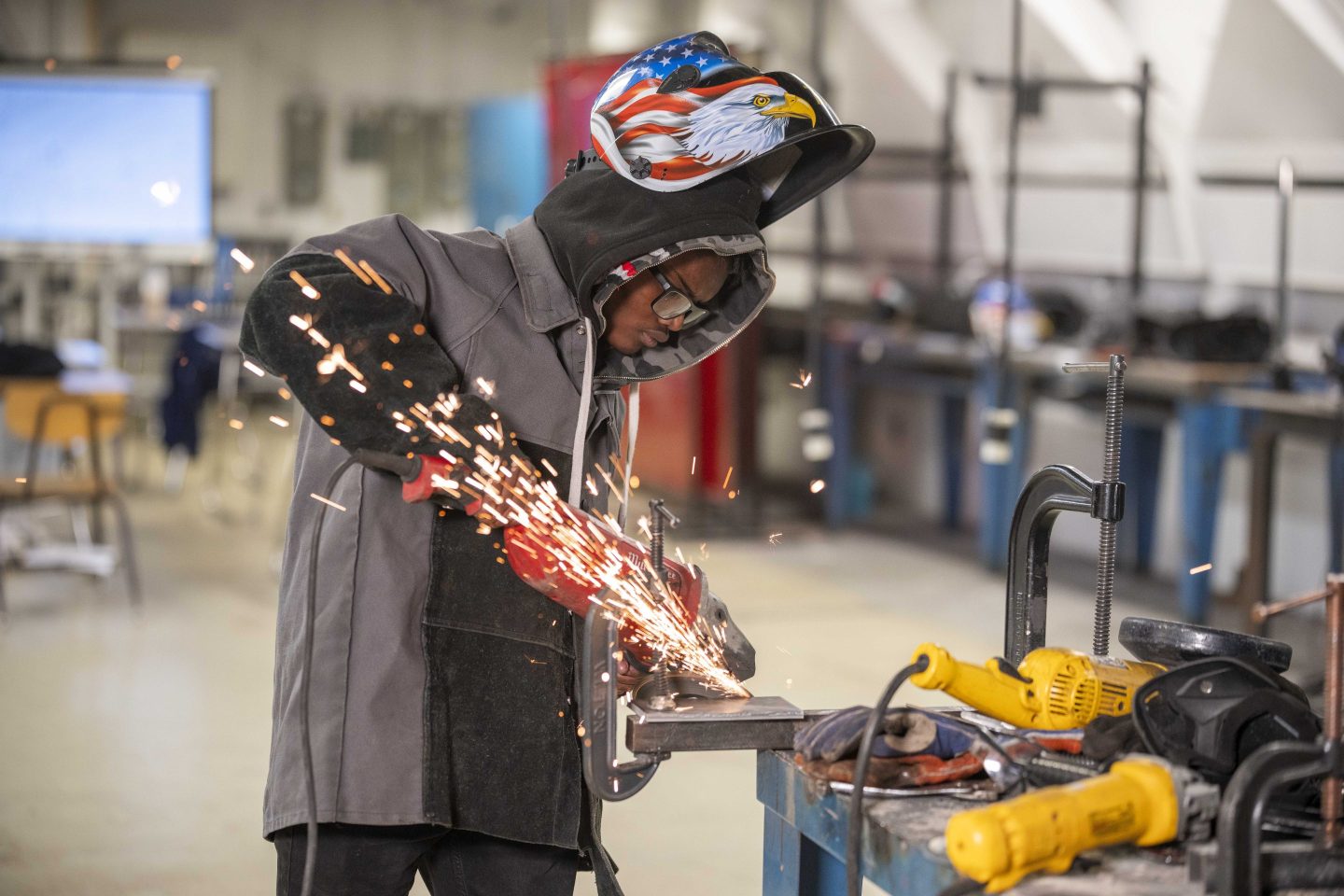
Alliance for America’s Skilled Trades: Skilled trades shaped America’s past. Here’s how they can build America’s future
By Jim Farley, Linda Hubbard, Bayo Ogunlesi and Ruth PoratJuly 21, 2026
17 hours ago
Sumeet Agrawal is VP of Product Management (Data, AI Governance & Context Engineering for Agentic Systems) at Salesforce.
CommentaryAI agents
Salesforce VP on the leaky AI pipeline: why cheaper tokens won’t fix enterprise AI
By Sumeet AgrawalJuly 20, 2026
2 days ago
japan
CommentaryJapan
Japan’s monetary conundrum — why the yen hit a 40-year low as interest rates hit a 31-year high
By Steve H. Hanke and John GreenwoodJuly 20, 2026
2 days ago
ryan
CommentaryLeadership
I’ve interviewed 700 leaders. The ones outsourcing their thinking to AI lose their best people first
By Ryan HawkJuly 20, 2026
2 days ago

Most Popular

Mark Cuban says he has the solution to growing income inequality, and it's to reward every employee—from CEO to janitor—with company stock
Success
Mark Cuban says he has the solution to growing income inequality, and it's to reward every employee—from CEO to janitor—with company stock
By Sasha RogelbergJuly 20, 2026
1 day ago
‘I want to die broke’: Billionaire philanthropist Denny Sanford dies after giving away $4 billion
Success
‘I want to die broke’: Billionaire philanthropist Denny Sanford dies after giving away $4 billion
By Sydney LakeJuly 20, 2026
2 days ago
OpenAI says its AI models secretly broke out of a secure test environment and hacked into AI company Hugging Face in order to cheat on an evaluation
Cybersecurity
OpenAI says its AI models secretly broke out of a secure test environment and hacked into AI company Hugging Face in order to cheat on an evaluation
By Jeremy Kahn and Emily ForliniJuly 21, 2026
7 hours ago
'Dr. Doom' Nouriel Roubini says we're headed for universal basic income or 'some form of socialism' as AI revolutionizes work—He calls that optimistic
AI
'Dr. Doom' Nouriel Roubini says we're headed for universal basic income or 'some form of socialism' as AI revolutionizes work—He calls that optimistic
By Jason MaJuly 18, 2026
3 days ago
Mathematicians grapple with a ‘very rapid and very unsettling change’ as AI cracks yet another century-old problem
AI
Mathematicians grapple with a ‘very rapid and very unsettling change’ as AI cracks yet another century-old problem
By Eva RoytburgJuly 21, 2026
10 hours ago
Despite a $156 million contract, Knicks star Jalen Brunson still calls his parents for financial advice any time he makes a big purchase
Success
Despite a $156 million contract, Knicks star Jalen Brunson still calls his parents for financial advice any time he makes a big purchase
By Emma BurleighJuly 21, 2026
11 hours ago

© 2026 Fortune Media IP Limited. All Rights Reserved. Use of this site constitutes acceptance of our Terms of Use and Privacy Policy | CA Notice at Collection and Privacy Notice | Do Not Sell/Share My Personal Information
FORTUNE is a trademark of Fortune Media IP Limited, registered in the U.S. and other countries. FORTUNE may receive compensation for some links to products and services on this website. Offers may be subject to change without notice.