• Home
  • Latest
  • Fortune 500
  • Finance
  • Tech
  • Leadership
  • Lifestyle
  • Rankings
  • Multimedia
Commentary

What Will Stop Trump From Starting a Trade War With China

By
Robert Howse
Down Arrow Button Icon
By
Robert Howse
Down Arrow Button Icon
December 21, 2016, 1:00 AM ET
Donald Trump, Xi Jinping
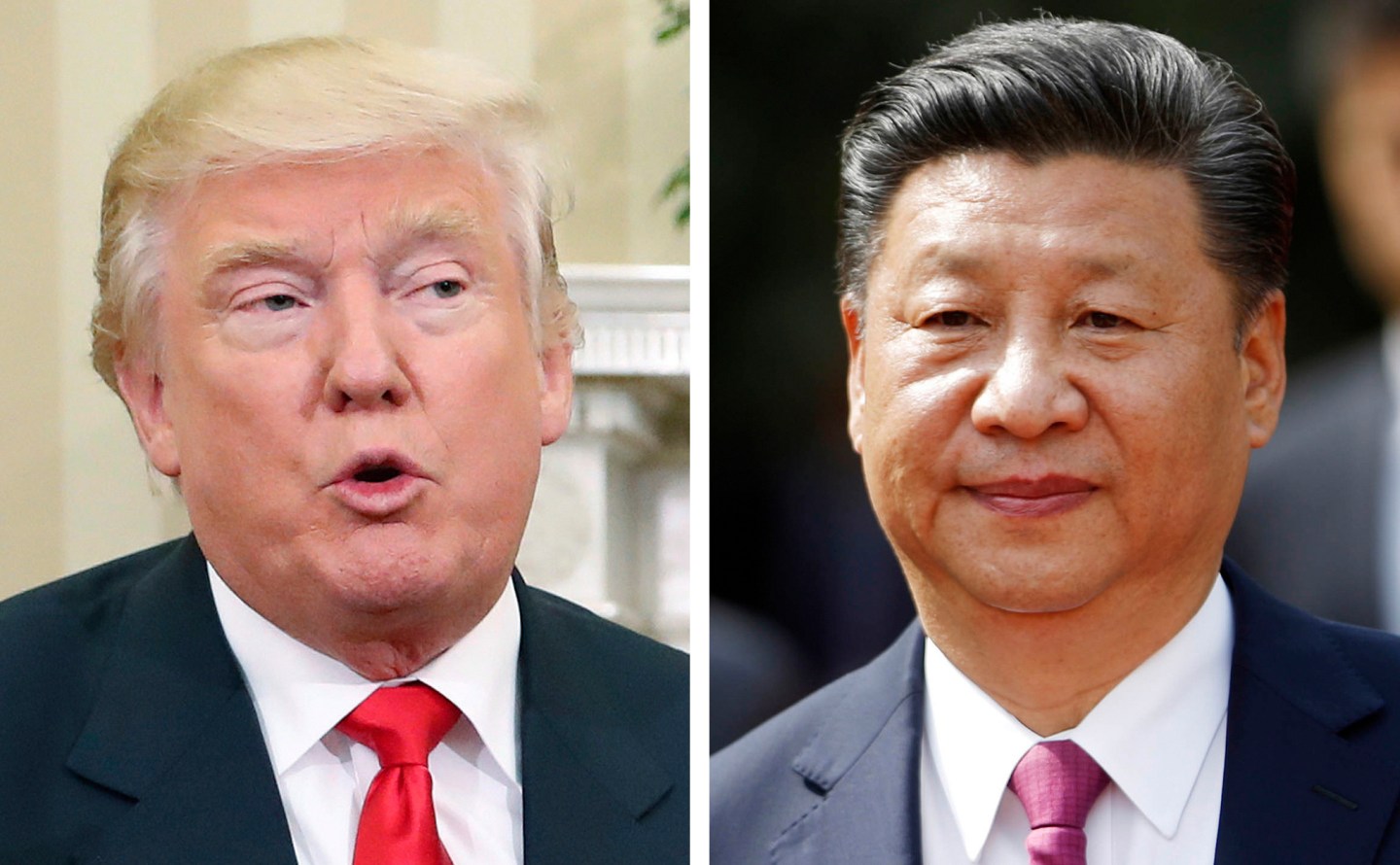
FILE - This combination of two 2016 file photos shows, U.S. President-elect Donald Trump, left, talking with President Barack Obama at White House in Washington, U.S.A. on Nov. 10, and China's President Xi Jinping arriving at La Moneda presidential palace in Santiago, Chile, on Nov. 22. Chinese leaders are meeting to set economic goals for 2017 amid pressure from Trump and European governments over trade and market access. The Economic Work Conference, attended by Xi and other Communist Party leaders, which began Wednesday, Dec. 14, is a throwback to China’s era of central planning but still plays a key role in directing economic development. (AP Photo/Pablo Martinez Monsivais, Luis Hidalgo, Files)Photographs by Pablo Martinez Monsivais & Luis Hidalgo—AP

If we are to believe President-elect Donald Trump’s Twitter feed, the trade war with China has already started. Trump has laid down the gauntlet about Beijing’s currency manipulation and “unfair” taxation. But beyond the social media front, Trump’s battle plan is hard to discern. His campaign proposals on trade, like slapping 45% tariffs on Chinese imports, have been asserted one day, avoided the next.

So what can the new president actually do in the year ahead?

The nuclear option—withdrawing from the World Trade Organization (WTO), an institution that Trump has called a “disaster”—would allow him free reign to attack China with high tariffs and other restrictions at the border. Not only is this option unlikely to find favor with Trump’s own advisers, especially seasoned businesspeople like his picks for secretaries of commerce, treasury, and state, it will also face fierce opposition in Congress, including among Republicans. Even if Trump has the legal authority to give notice to the WTO of U.S. intent to withdraw, the WTO treaties have already been implemented into U.S. law through legislation in Congress. In practical terms, ceasing to operate within WTO legal disciplines would require that this legislation be repealed.

A much less problematic start would be officially labeling China a currency manipulator—which Trump has already done at every opportunity. (Though Treasury officials in previous administrations have raised questions about China’s exchange rate policies, they have stopped short of using the “m” word.) Under current U.S. trade rules, the main consequence would be to trigger consultations with China about currency practices; if these talks failed, eventually some penalties might be imposed, such as excluding Chinese firms from U.S. government procurement contracts. But slapping duties on Chinese goods is not among the sanctions currently available under law. On the other hand, in fairness to Trump, the timing may be auspicious for talks with Beijing on revaluing the renminbi; China itself is now trying to shore up the currency in the face of capital flight.

Another option would be to impose tariffs based on the Trade Act of 1974, in which Section 301 allows for sanctions against trade practices of other countries that are illegal under current international law or otherwise unreasonable or unfair. To settle a previous WTO dispute, the U.S. made a declaration that it would not use Section 301 in a manner inconsistent with WTO rules. The law also contains a number of procedural hurdles, including requiring consultations with the target countries to attempt to resolve the issue and a thorough investigation, before duties may be imposed.

Some analysts say that Trump might find an easier route to attacking China using obscure legislation about trading with the enemy in a time of war, for example. Abusing this kind of authority is likely to result in pushback from the courts, and possibly Congress as well. On the other hand, the administration could file a range of anti-dumping or countervailing duty (another term for retaliation against unfair subsidies) actions against China, on steel for instance; imposing these kinds of measures would be little more than an intensification of Obama administration strategy—hardly a new trade war.

Even if Trump were to impose punitive duties on China, it is far from clear that Beijing would be eager for battle. Unless framed as a legally justified response to dumping or unfair subsidies, the U.S. duties would almost certainly violate WTO rules on tariffs; but so would any knee-jerk Chinese retaliation in the same form. Heavily dependent on market access for its exports around the world, China cannot afford to threaten the WTO by fighting a trade war outside the rulebook. By contrast, Beijing may well shift the battleground to Geneva by suing the U.S. in the WTO Dispute Settlement Body (DSB). In turn, the Trump administration might be expected to launch a range of complaints there against China, particularly on subsidies. Given the litigation timetable at the DSB, which can involve several stages of proceedings, a clear answer from the trade court in Geneva is unlikely until the end of Trump’s first term in office.


Especially if Beijing takes the high road of litigation before retaliation, Trump is likely to find himself without allies in pursuing a bellicose stance. Japan and Europe may have their own concerns about China’s trade practices (and some of Trump’s own are legitimate). But Trump pulled the rug out from under Japan’s government by assailing the Trans-Pacific Partnership, and his climate denial policy may lead Europe to respond with carbon taxes on U.S. imports, a whole other trade battlefield.

The incoming administration’s trade team may see starting a trade war merely as a means of bringing China to the negotiating table on favorable terms. In fairness, using threats of punitive tariffs to spur trade talks is a longstanding U.S. tradition, and is sometimes successful. But to succeed, commercial negotiations require trust. Much more disturbing than his threats about customs duties is Trump’s blackmail that unless he gets what he wants from China on trade, the U.S. may back off from the “One China” policy on Taiwan. In effect, the president-elect has announced a new foreign policy doctrine: U.S. geopolitical influence is something to be bought and sold, presumably to the highest bidder. If this indeed is the Trump Doctrine, then no U.S. ally or trading partner can feel secure. That’s quite an atmosphere in which to try and practice the art of the deal.

Robert Howse is the Lloyd C. Nelson professor of international law at the New York University School of Law.

About the Author
By Robert Howse
See full bioRight Arrow Button Icon

Latest in Commentary

Finance
Lorem ipsum dolor sit amet, consectetur adipiscing elit, sed do eiusmod tempor incididunt ut labore et dolore magna aliqua. Ut enim ad minim veniam
By Fortune Editors
October 20, 2025
Finance
Lorem ipsum dolor sit amet, consectetur adipiscing elit, sed do eiusmod tempor incididunt ut labore et dolore magna aliqua. Ut enim ad minim veniam
By Fortune Editors
October 20, 2025
Finance
Lorem ipsum dolor sit amet, consectetur adipiscing elit, sed do eiusmod tempor incididunt ut labore et dolore magna aliqua. Ut enim ad minim veniam
By Fortune Editors
October 20, 2025
Finance
Lorem ipsum dolor sit amet, consectetur adipiscing elit, sed do eiusmod tempor incididunt ut labore et dolore magna aliqua. Ut enim ad minim veniam
By Fortune Editors
October 20, 2025
Finance
Lorem ipsum dolor sit amet, consectetur adipiscing elit, sed do eiusmod tempor incididunt ut labore et dolore magna aliqua. Ut enim ad minim veniam
By Fortune Editors
October 20, 2025
Finance
Lorem ipsum dolor sit amet, consectetur adipiscing elit, sed do eiusmod tempor incididunt ut labore et dolore magna aliqua. Ut enim ad minim veniam
By Fortune Editors
October 20, 2025

Most Popular

Finance
Lorem ipsum dolor sit amet, consectetur adipiscing elit, sed do eiusmod tempor incididunt ut labore et dolore magna aliqua. Ut enim ad minim veniam
By Fortune Editors
October 20, 2025
Finance
Lorem ipsum dolor sit amet, consectetur adipiscing elit, sed do eiusmod tempor incididunt ut labore et dolore magna aliqua. Ut enim ad minim veniam
By Fortune Editors
October 20, 2025
Finance
Lorem ipsum dolor sit amet, consectetur adipiscing elit, sed do eiusmod tempor incididunt ut labore et dolore magna aliqua. Ut enim ad minim veniam
By Fortune Editors
October 20, 2025
Finance
Lorem ipsum dolor sit amet, consectetur adipiscing elit, sed do eiusmod tempor incididunt ut labore et dolore magna aliqua. Ut enim ad minim veniam
By Fortune Editors
October 20, 2025
Finance
Lorem ipsum dolor sit amet, consectetur adipiscing elit, sed do eiusmod tempor incididunt ut labore et dolore magna aliqua. Ut enim ad minim veniam
By Fortune Editors
October 20, 2025
Finance
Lorem ipsum dolor sit amet, consectetur adipiscing elit, sed do eiusmod tempor incididunt ut labore et dolore magna aliqua. Ut enim ad minim veniam
By Fortune Editors
October 20, 2025
Rankings
  • 100 Best Companies
  • Fortune 500
  • Global 500
  • Fortune 500 Europe
  • Most Powerful Women
  • Future 50
  • World’s Most Admired Companies
  • See All Rankings
Sections
  • Finance
  • Leadership
  • Success
  • Tech
  • Asia
  • Europe
  • Environment
  • Fortune Crypto
  • Health
  • Retail
  • Lifestyle
  • Politics
  • Newsletters
  • Magazine
  • Features
  • Commentary
  • Mpw
  • CEO Initiative
  • Conferences
  • Personal Finance
  • Education
Customer Support
  • Frequently Asked Questions
  • Customer Service Portal
  • Privacy Policy
  • Terms Of Use
  • Single Issues For Purchase
  • International Print
Commercial Services
  • Advertising
  • Fortune Brand Studio
  • Fortune Analytics
  • Fortune Conferences
  • Business Development
About Us
  • About Us
  • Editorial Calendar
  • Press Center
  • Work At Fortune
  • Diversity And Inclusion
  • Terms And Conditions
  • Site Map

© 2025 Fortune Media IP Limited. All Rights Reserved. Use of this site constitutes acceptance of our Terms of Use and Privacy Policy | CA Notice at Collection and Privacy Notice | Do Not Sell/Share My Personal Information
FORTUNE is a trademark of Fortune Media IP Limited, registered in the U.S. and other countries. FORTUNE may receive compensation for some links to products and services on this website. Offers may be subject to change without notice.


Latest in Commentary

Butch Meily
Commentaryempathy
The global empathy crisis that confronts us this Christmas
By Butch MeilyDecember 25, 2025
5 hours ago
economy
CommentaryGDP
Why 4.3% GDP growth proves the ‘vibecession’ theory is historically wrong
By Brian HamiltonDecember 24, 2025
1 day ago
students
CommentaryEducation
Why restricting graduate loans will bankrupt America’s talent supply chain
By Katica RoyDecember 23, 2025
2 days ago
Arnault
CommentaryLuxury
The secrets of what Arnault knows: How Bernard Arnault built the impossible, and his timeless, transferable lessons of leadership 
By Jeffrey Sonnenfeld and Steven TianDecember 23, 2025
2 days ago
beer
CommentaryFood and drink
Supporting moderation: beer’s structural advantage in the no-alcohol space
By Justin KissingerDecember 23, 2025
2 days ago
Chris Nicholas
CommentaryLeadership
I’m the Sam’s Club CEO and I’ve got an AI leadership reality check: let purpose, not promise, guide investment
By Chris NicholasDecember 22, 2025
3 days ago

Most Popular

placeholder alt text
Personal Finance
Trump turns government into giant debt collector with threat to garnish wages on millions of Americans in default on student loans
By Annie Ma and The Associated PressDecember 24, 2025
1 day ago
placeholder alt text
Retail
Trump just declared Christmas Eve a national holiday. Here’s what’s open and closed
By Dave SmithDecember 24, 2025
1 day ago
placeholder alt text
Success
Chinese billionaire who has fathered more than 100 children hopes to have dozens of U.S.-born boys to one day take over his business
By Emma BurleighDecember 25, 2025
4 hours ago
placeholder alt text
Economy
Obama's former top economic advisor says he feels 'a tiny bit bad' for Trump because gas prices are low, but consumer confidence is still plummeting 
By Sasha RogelbergDecember 24, 2025
22 hours ago
placeholder alt text
Real Estate
Mark Zuckerberg gifted noise-canceling headphones to his Palo Alto neighbors because of the nonstop construction around his 11 homes
By Dave SmithDecember 25, 2025
3 hours ago
placeholder alt text
Success
Billionaire philanthropy's growing divide: Mark Zuckerberg stops funding immigration reform as MacKenzie Scott doubles down on DEI
By Ashley LutzDecember 22, 2025
3 days ago