At the start of 2016, we made 10 healthcare predictions for the year ahead. Overall, we were 50% right, which is either a failing grade in high school or a great average in baseball.
In the win column, we predicted that the Federal Trade Commission (FTC) would block a major hospital merger, and they did just that with Advocate and NorthShore health systems in Chicago. We predicted that the technology-enabled insurance startup craze would be a bust, and Oscar promptly lost a ton of money. Finally, we were correct that employers would become more engaged in healthcare cost management with many adding “frozen carrots,” or financial incentives to drive usage of services that lower healthcare costs.
Our biggest bust was on the PCSK9’s—we predicted these new cholesterol drugs would be blockbusters. Thus far, they have been a total flop. We were also wrong when we predicted wearables would become medically useful treatments. And, to our surprise, there were more setbacks than breakthroughs in continuous biosensors, devices such as glucose monitors for diabetics.
We’re hoping to bat above .500 this coming year. Here are our 10 healthcare industry predictions for 2017:
Obamacare will change less than Republican rhetoric suggests
While “repeal” has been the mantra of Republicans for the past five years, a desire to keep popular provisions of the law—such as the requirement that people cannot be denied access to coverage based on their medical condition—and to avoid extreme angst from 20 million American voters by disrupting their existing coverage, will make “repeal” symbolic and not substantive.
Instead, changes will focus on items like loosening insurance market regulations to enable selling across state lines, greater cost sharing, larger age-based variations of premiums, and fewer essential required covered services like maternity care. Various unpopular provisions like the Independent Payment Advisory Board, the medical device tax, and the Cadillac tax will be eliminated to great fanfare.
Drug prices continue to rise uncontrolled
Despite the public shaming of Valeant and Mylan, little is done by Congress to curtail or rollback price increases that far outpace inflation. While Congress may occasionally hold hearings to put pressure on drug makers, it will not be enough to prevent collusion of the entire drug delivery ecosystem to improve their bottom lines at the expense of the commercial employers funding healthcare.
Emblematic of the entire care delivery ecosystem being stacked against employers, when drug prices go up, everyone who touches the drug, including the drug makers, pharmacy benefit managers, pharmacies, and in some cases, providers, all make more money. Additionally, patients continue to be desensitized to super expensive drugs through copay coupons and out of pocket maximums well below the price of their drugs. And we can’t imagine any new legislation being passed to allow re-importation of drugs from countries with lower prices or to enable Medicare to negotiate prices.
Accountable care organizations finally start to drive meaningful savings
Driven by an influx of doctors motivated by new Medicare Access and CHIP Reauthorization Act incentivizing participation in new Medicare payment models, accountable care organizations (ACOs, which are physician organizations that agree to participate in payment models that reward cost savings) shift from early adopters to mainstream. And after two years of learning, ACOs really begin saving money by decreasing hospitalizations and redirecting specialty referrals to lower-cost specialists. This puts pressure on hospitals’ main source of income: patients in beds.
Hospital bed days will fall
The success of new payment models like ACOs; benefit design changes by employers and health plans; and the rise of capitated primary care groups—which accept budgets for each patient and manage risk if costs exceed budgets—in Medicare Advantage will take a toll on hospitals by offering viable alternatives. This will result in better access to same-day appointments (like the Cleveland Clinic’s track record of over 95% same-day appointments) and home care for patients, which are far cheaper, and often as effective, as a night in a hospital. These delivery system changes will fully offset the 10,000 new retirees per day and their ever-increasing healthcare needs.
Insurance premiums will spike
Regulatory uncertainty, coupled with little interest by Congress to deal with hospital market power or rein in drug prices, will lead to double-digit commercial insurance premium increases. Hospital prices will be the biggest driver, as they try to offset falling bed days and grapple with ACA changes that may disrupt more patients’ health coverage and leave them unable to afford medical care.
Single cell genomics goes mainstream
Medical breakthroughs make it possible for researchers to sequence and analyze thousands of individual cells at a time, rather than the average of a large population. This will result (over time, but not in 2017) in far more accurate diagnoses and more effective treatments.
Gene therapy cures a common disease
After decades of promise and glimmers from its use treating a few super rare diseases, gene therapy will show proof of concept in clinical trials as a viable cure for more common diseases like sickle cell anemia.
Point solutions begin to consolidate
Employers will cry uncle at the disjointed, complex array of point solution companies tackling narrow aspects of total healthcare costs, with each trying to make employees healthier and lower expenditures. Companies will demand that point solutions be integrated into a few platforms. This will lead to M&A by a few winners and better services for customers.
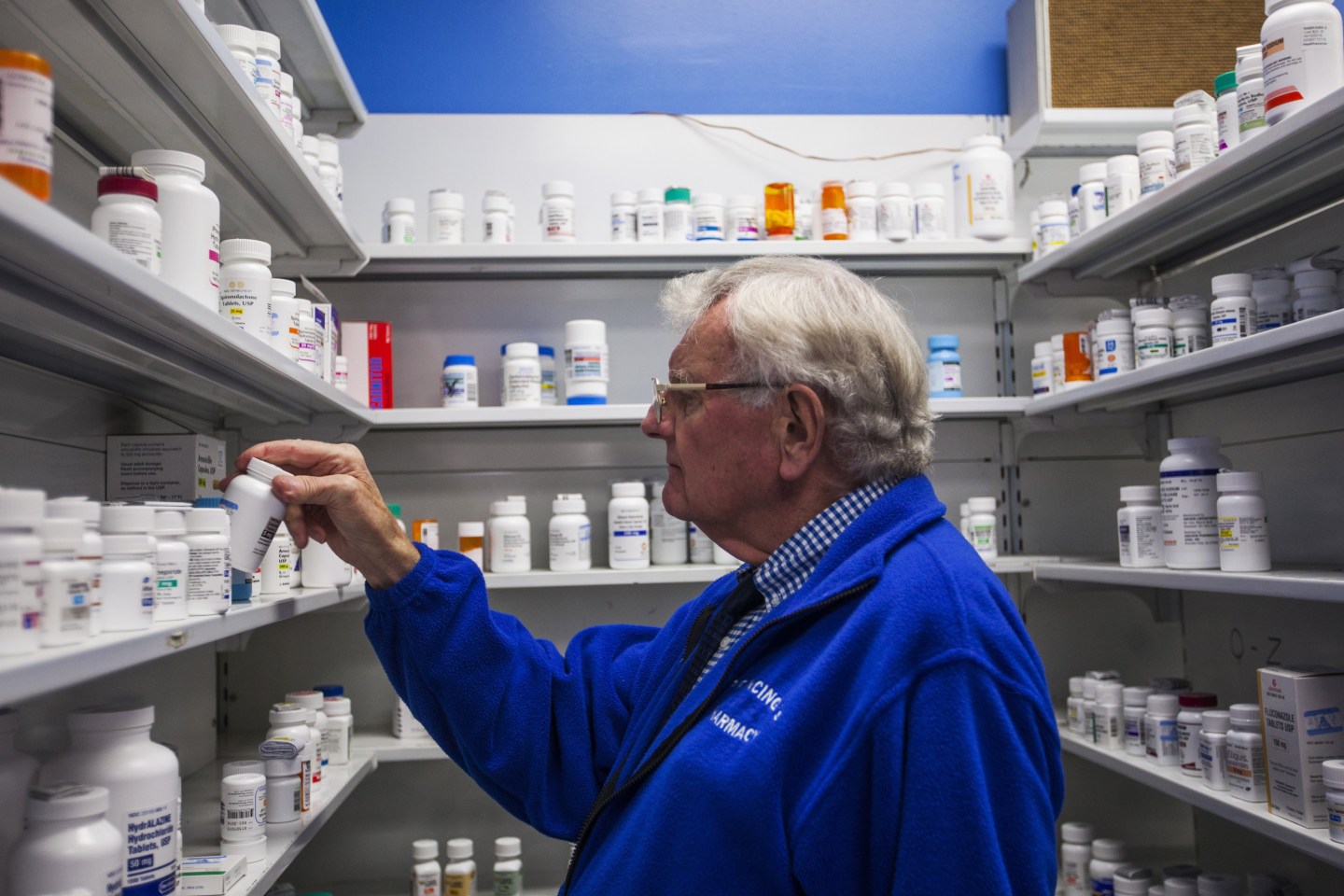
More retail pharmacies will close than open
As with other brick-and-mortar companies, retail pharmacies will take it on the nose from online retailers and stop opening stores on every corner or every strip mall. We predict that more retail pharmacies will close than open in 2017, driven by the massive shift toward online shopping.
Carbohydrates will become scarier than cholesterol
Americans will discover that they can lose weight, have more energy, and feel less hungry by eating more protein and fat. This will lead to a resurgence of Atkins-like diets.
Bob Kocher and Bryan Roberts are partners with venture capital firm Venrock.
An earlier version of this article missated that Oscar pivoted sharply from the individual market in New York. It did not. The insurance provider withdrew from Dallas-Fort Worth and New Jersey. The article has been updated to reflect the correction.