• Home
  • Latest
  • Fortune 500
  • Finance
  • Tech
  • Leadership
  • Lifestyle
  • Rankings
  • Multimedia
Commentary

Trump’s Carrier Deal Is Not a Victory for U.S. Manufacturing

By
Robert Z. Lawrence
Robert Z. Lawrence
Down Arrow Button Icon
By
Robert Z. Lawrence
Robert Z. Lawrence
Down Arrow Button Icon
December 5, 2016, 3:58 PM ET
Trump Scores Win As Carrier Plans To Keep 1,000 Jobs In Indiana
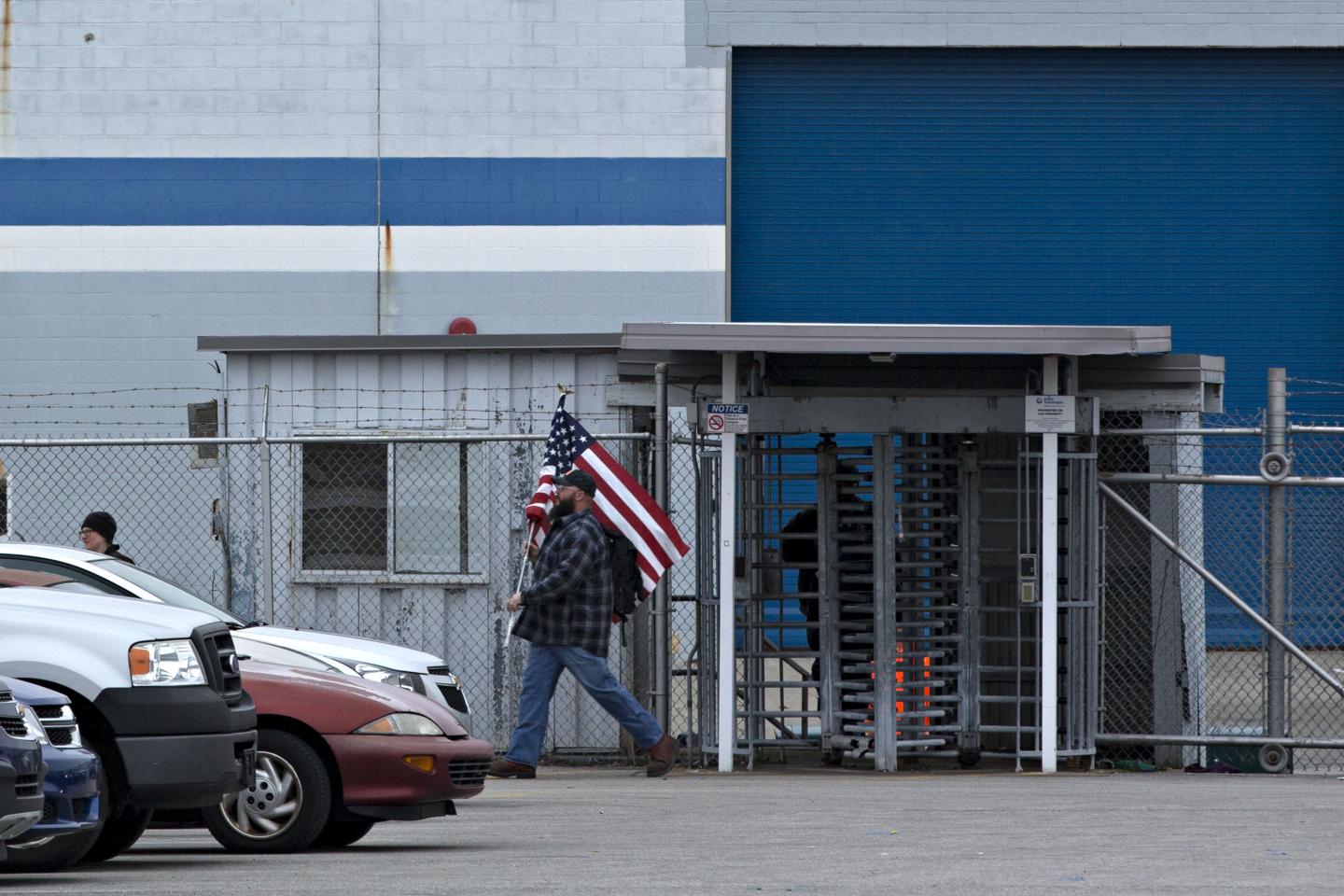
A man carries an American flag while leaving an employee entrance outside a Carrier Corp. facility in Indianapolis, Indiana, U.S., on Thursday, Dec. 1, 2016. President-elect Donald Trump, who spoke at the plant today, said he called the top executive of United Technologies Corp., shortly after his election and told him not to close a Carrier factory in Indianapolis that became a symbol of the Republican's outsider campaign for the White House. Photographer: Daniel Acker/Bloomberg via Getty ImagesDaniel Acker—Bloomberg via Getty Images

With great fanfare, Donald Trump announced last week that Carrier Corp. will no longer move 1,000 jobs from Indiana to Mexico. The decision has been ascribed to some combination of the persuasive powers of the president-elect, about $7 million in tax breaks from the state of Indiana, and implicit threats to the valuable business Carrier’s parent company United Technologies, a major military contractor, conducts with the federal government. And now, Trump plans to apply similar pressure to other companies looking to outsource such as Rexnord Corp., which has announced its intention to move its industrial bearings production from Indiana to Mexico as well.

From a political standpoint, this sounds like a remarkable success story. Even before taking office, Trump has fulfilled his campaign promise to save U.S. manufacturing jobs. But if this case sets a precedent for how Trump’s economic policies are going to work, it heralds a dangerous shift from an economic system based on rules toward an economic system based on deals. Trump may well have mastered the art of the deal when it comes to business, but applied to the economy as a whole, the approach would not only undermine the foundations of our economic system but actually do little to reverse the declines in the opportunities for U.S. manufacturing workers.

The basis for the U.S. economic system is private enterprise, because the government has neither the knowledge nor the incentives to make business decisions that in the long run will achieve economic efficiency and growth. To be sure, there is a role for the government in setting the laws, rules, and regulations that broadly steer the economy in the right direction. But as long as private firms follow these rules, they should be left to make their own decisions, reaping the rewards of success and the costs of failure. However, when the government oversteps these bounds and threatens or bribes private firms to do its bidding, there is bound to be trouble, as the distinction between what is public and what is private becomes blurred.

None of the actions that have induced Carrier to remain in the U.S. are good policy. First, simply because the president-elect does not like United Technologies’ business decisions does not justify his issuing of veiled threats to blackball the company for actions that are perfectly legal, and this constitutes an unwarranted exercise of government power. Second, giving special tax breaks to a company when it threatens to leave the U.S. will hold the government hostage to other companies who make similar threats. And third, if Carrier makes decisions that lead to financial distress as a result of acting on Trump’s advice, the federal government will inevitably face pressures to provide Carrier with additional assistance.

Another fundamental principle of our economic system is that policies should apply equally to all. Aside from the fact that Carrier’s plans were made during the presidential campaign and its parent company is vulnerable to political pressures, what exactly makes Carrier worthy of being treated differently from the other multinational firms that employ 23 million Americans?

One possible answer is that Carrier is just the first example. Trump promised Thursday that from now on, “Companies are not going to leave the U.S. anymore without consequences.” In particular, he has threatened to place punitive tariffs on the imported products that result from relocating production. But applying such policies would be impractical and illegal.

To be sure, there are cases of plant relocation that are clear-cut: For example, if a firm relocates lock, stock, and barrel from the U.S. to another country. But most multinational companies can accomplish the same result more subtly by reducing employment in the U.S. and at the same time expanding abroad. Alternatively, they could simply liquidate a company in the U.S. and invest in a different company in Mexico. Would the president really spend his precious time embroiled in the specific business decisions of individual U.S. companies?

Moreover, threatening retaliation with tariffs on products originating from particular companies in foreign countries is illegal under trade agreements to which the U.S. is bound. Under World Trade Organization (WTO) rules, tariffs on the same product from all WTO members cannot be discriminatory. And in addition, U.S. tariffs, which are generally low, cannot be raised above the maximum rates to which the U.S. has agreed with the trade organization. Were the U.S to raise tariffs, foreigners would be entitled under WTO rules to retaliate by refusing to import an equivalent amount of U.S. products. Should the U.S. withdraw from the WTO, as Trump threatened to do during the presidential campaign, there would be no limit on the level of tariffs other countries could impose on American products.


The Carrier case has political resonance because there is no question that U.S. manufacturing employment has been devastated since 1999. Indeed, between that year and 2013, the manufacturing sector lost 5.3 million jobs. But Trump’s claim is false that offshoring to Mexico by U.S. manufacturing firms has been a significant reason for that loss. Plant closures are very painful for communities and workers who lose their jobs, and it is not hard to come up with examples of firms that have moved, but Mexican offshoring’s contribution to the loss of U.S. manufacturing jobs has been relatively small. According to the Bureau of Economic Analysis, employment in the Mexican manufacturing plants owned by U.S. firms only increased from 520,000 in 1999 to 572,000 in 2013.

Suppose, though, that Trump is somehow spectacularly successful in his dealmaking and eliminates the U.S. trade deficit in manufactured goods through better trade deals and forcing firms to remain in the country. Data developed by the Organisation for Economic Co-operation and Development (OECD) indicates that the share of Americans working in manufacturing would only rise from roughly 9% to 10%. This is because trade and offshoring are not the major reasons for the erosion in manufacturing employment growth. Rapid technological advances in manufacturing now require fewer and more skilled workers to produce them. And while improved technology has reduced goods prices, the response of Americans has been to spend the money they save on cheaper goods and by spending more on services.

President Theodore Roosevelt spoke of the White House as offering a bully pulpit that could be used by the president to persuade the people. Trump is using the presidency as a bully pulpit in a different and more threatening sense, which will not only be damaging to our economic system, but unlikely to produce the results that many of his supporters appear to expect.

Robert Z. Lawrence is the Albert L. Williams professor of international trade and investment at the Harvard Kennedy School and a non-resident senior fellow at the Peterson Institute of International Economics.

About the Author
By Robert Z. Lawrence
See full bioRight Arrow Button Icon

Latest in Commentary

Finance
Lorem ipsum dolor sit amet, consectetur adipiscing elit, sed do eiusmod tempor incididunt ut labore et dolore magna aliqua. Ut enim ad minim veniam
By Fortune Editors
October 20, 2025
Finance
Lorem ipsum dolor sit amet, consectetur adipiscing elit, sed do eiusmod tempor incididunt ut labore et dolore magna aliqua. Ut enim ad minim veniam
By Fortune Editors
October 20, 2025
Finance
Lorem ipsum dolor sit amet, consectetur adipiscing elit, sed do eiusmod tempor incididunt ut labore et dolore magna aliqua. Ut enim ad minim veniam
By Fortune Editors
October 20, 2025
Finance
Lorem ipsum dolor sit amet, consectetur adipiscing elit, sed do eiusmod tempor incididunt ut labore et dolore magna aliqua. Ut enim ad minim veniam
By Fortune Editors
October 20, 2025
Finance
Lorem ipsum dolor sit amet, consectetur adipiscing elit, sed do eiusmod tempor incididunt ut labore et dolore magna aliqua. Ut enim ad minim veniam
By Fortune Editors
October 20, 2025
Finance
Lorem ipsum dolor sit amet, consectetur adipiscing elit, sed do eiusmod tempor incididunt ut labore et dolore magna aliqua. Ut enim ad minim veniam
By Fortune Editors
October 20, 2025

Most Popular

Finance
Lorem ipsum dolor sit amet, consectetur adipiscing elit, sed do eiusmod tempor incididunt ut labore et dolore magna aliqua. Ut enim ad minim veniam
By Fortune Editors
October 20, 2025
Finance
Lorem ipsum dolor sit amet, consectetur adipiscing elit, sed do eiusmod tempor incididunt ut labore et dolore magna aliqua. Ut enim ad minim veniam
By Fortune Editors
October 20, 2025
Finance
Lorem ipsum dolor sit amet, consectetur adipiscing elit, sed do eiusmod tempor incididunt ut labore et dolore magna aliqua. Ut enim ad minim veniam
By Fortune Editors
October 20, 2025
Finance
Lorem ipsum dolor sit amet, consectetur adipiscing elit, sed do eiusmod tempor incididunt ut labore et dolore magna aliqua. Ut enim ad minim veniam
By Fortune Editors
October 20, 2025
Finance
Lorem ipsum dolor sit amet, consectetur adipiscing elit, sed do eiusmod tempor incididunt ut labore et dolore magna aliqua. Ut enim ad minim veniam
By Fortune Editors
October 20, 2025
Finance
Lorem ipsum dolor sit amet, consectetur adipiscing elit, sed do eiusmod tempor incididunt ut labore et dolore magna aliqua. Ut enim ad minim veniam
By Fortune Editors
October 20, 2025
Fortune Secondary Logo
Rankings
  • 100 Best Companies
  • Fortune 500
  • Global 500
  • Fortune 500 Europe
  • Most Powerful Women
  • World's Most Admired Companies
  • See All Rankings
  • Lists Calendar
Sections
  • Finance
  • Fortune Crypto
  • Features
  • Leadership
  • Health
  • Commentary
  • Success
  • Retail
  • Mpw
  • Tech
  • Lifestyle
  • CEO Initiative
  • Asia
  • Politics
  • Conferences
  • Europe
  • Newsletters
  • Personal Finance
  • Environment
  • Magazine
  • Education
Customer Support
  • Frequently Asked Questions
  • Customer Service Portal
  • Privacy Policy
  • Terms Of Use
  • Single Issues For Purchase
  • International Print
Commercial Services
  • Advertising
  • Fortune Brand Studio
  • Fortune Analytics
  • Fortune Conferences
  • Business Development
  • Group Subscriptions
About Us
  • About Us
  • Lists Calendar
  • Press Center
  • Work At Fortune
  • Terms And Conditions
  • Site Map
  • About Us
  • Lists Calendar
  • Press Center
  • Work At Fortune
  • Terms And Conditions
  • Site Map
  • Facebook icon
  • Twitter icon
  • LinkedIn icon
  • Instagram icon
  • Pinterest icon

Latest in Commentary

frank
CommentaryVisa
Visa CMO: AI agents are your new customers — here’s how to sell to them
By Frank Cooper IIIApril 22, 2026
12 hours ago
shlomit
Commentarycyber
The Mythos meeting focused on the wrong AI risk to banks. Here’s the one nobody is talking about
By Shlomit WagmanApril 22, 2026
14 hours ago
one piece
CommentaryPersonal Finance
Gen Z is doing (almost) everything right with money—and still getting burned
By Beth KoblinerApril 22, 2026
19 hours ago
beard
CommentaryEducation
Yale asked the right question. Now the rest of higher education owes an answer
By Steve BeardApril 22, 2026
20 hours ago
trump
Commentarynational debt
America’s national debt is heading to 175% of GDP. Here’s why no president—including Trump—has the will to stop it
By Steve H. Hanke and David M. WalkerApril 22, 2026
20 hours ago
edelman
CommentaryHealth
70% of people believe at least one divisive health claim. Science needs a new playbook
By Richard EdelmanApril 22, 2026
21 hours ago

Most Popular

‘Something sinister’: What we know about the FBI probe into dead and missing scientists linked to space and military industries
Economy
‘Something sinister’: What we know about the FBI probe into dead and missing scientists linked to space and military industries
By Jim EdwardsApril 22, 2026
21 hours ago
The tables have turned: Florida and Texas are the biggest losers in the housing market as Ohio emerges a surprise winner
Real Estate
The tables have turned: Florida and Texas are the biggest losers in the housing market as Ohio emerges a surprise winner
By Sydney LakeApril 21, 2026
2 days ago
'Something sinister could be happening': FBI looks into dead or missing nuclear and space defense scientists tied to NASA, Blue Origin, and SpaceX
Politics
'Something sinister could be happening': FBI looks into dead or missing nuclear and space defense scientists tied to NASA, Blue Origin, and SpaceX
By Catherina GioinoApril 21, 2026
2 days ago
John Ternus, the man stepping into Tim Cook and Steve Jobs' shoes, is a 25-year Apple veteran with zero LinkedIn posts
C-Suite
John Ternus, the man stepping into Tim Cook and Steve Jobs' shoes, is a 25-year Apple veteran with zero LinkedIn posts
By Kelvin Chan and The Associated PressApril 21, 2026
2 days ago
Palantir published a mini manifesto calling some cultures ‘harmful’ and ‘middling’ and said Silicon Valley has ‘a moral debt’ to the U.S.
AI
Palantir published a mini manifesto calling some cultures ‘harmful’ and ‘middling’ and said Silicon Valley has ‘a moral debt’ to the U.S.
By Marco Quiroz-GutierrezApril 22, 2026
24 hours ago
$166 billion in tariff refunds just became available, but small businesses may already be at a disadvantage
Law
$166 billion in tariff refunds just became available, but small businesses may already be at a disadvantage
By Sasha RogelbergApril 20, 2026
2 days ago

© 2026 Fortune Media IP Limited. All Rights Reserved. Use of this site constitutes acceptance of our Terms of Use and Privacy Policy | CA Notice at Collection and Privacy Notice | Do Not Sell/Share My Personal Information
FORTUNE is a trademark of Fortune Media IP Limited, registered in the U.S. and other countries. FORTUNE may receive compensation for some links to products and services on this website. Offers may be subject to change without notice.