• Home
  • Latest
  • Fortune 500
  • Finance
  • Tech
  • Leadership
  • Lifestyle
  • Rankings
  • Multimedia
MagazineWarren Buffett

Surprise! Warren Buffett turns out to be more prescient about stocks than politics

By
Carol J. Loomis
Carol J. Loomis
Down Arrow Button Icon
By
Carol J. Loomis
Carol J. Loomis
Down Arrow Button Icon
November 22, 2016, 6:30 AM ET
Fortune Most Powerful Women Summit 2015
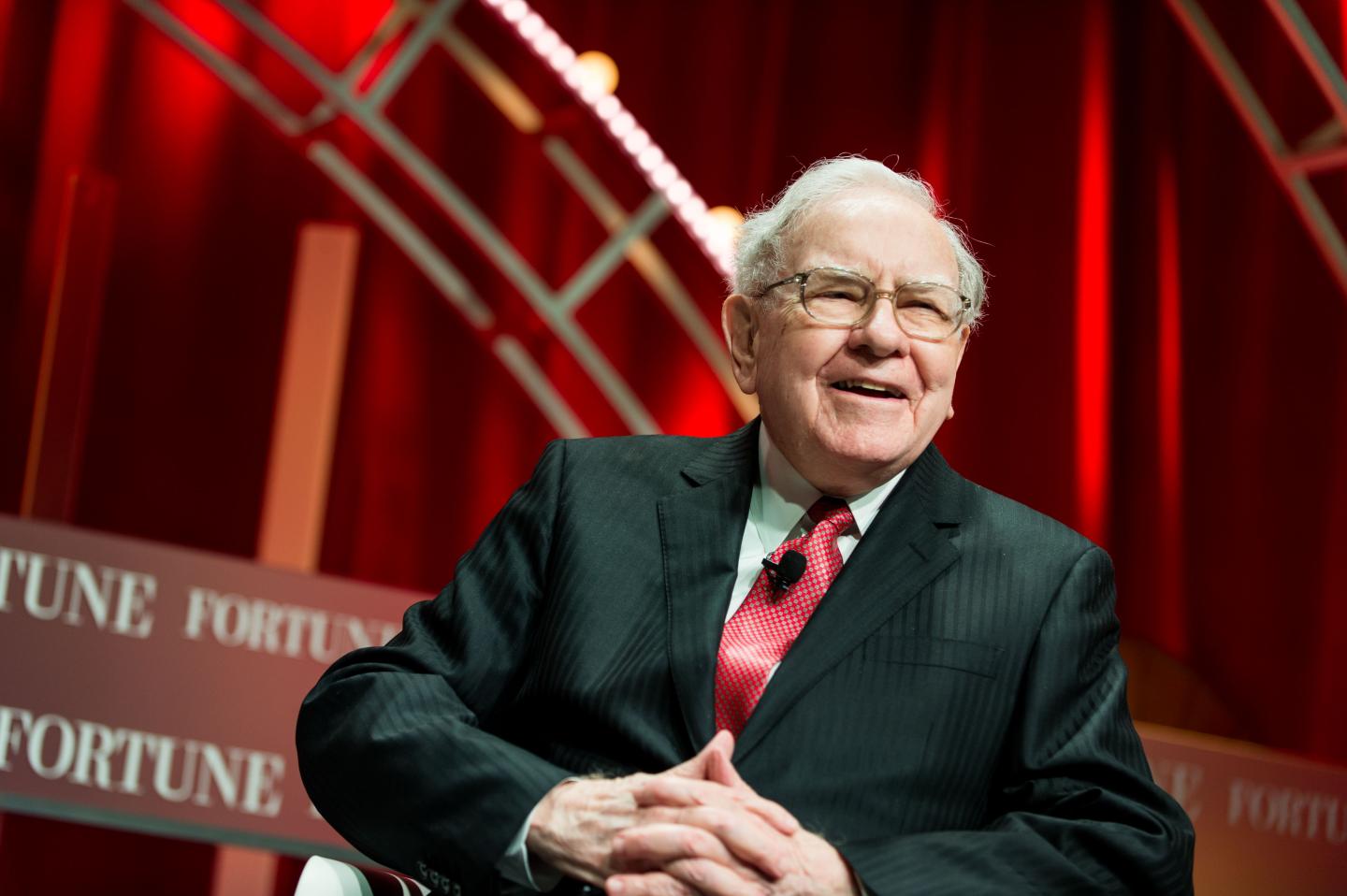
Warren Buffett at a Fortune conference in 2015.Stuart Isett—Fortune Most Powerful Women

As many millions of people have been reminded recently, Warren Buffett, CEO of Berkshire Hathaway, doesn’t always call them right. He predicted two years ago that Hillary Clinton would both run for the presidency and win, and he never lost faith in that prospect until Election Night.

Recommended Video

On this day two weeks later, nonetheless, it is the right time to look at a widely-noted stock market prediction that Buffett made 17 years ago, in 1999, and that is just reaching its terminal point. Here, Buffett was definitely on the correct side of the bet.

Buffett’s prediction concerned what magnitude of total returns—stock appreciation plus reinvested dividends—U.S. investors would reap in the 17 years that began as 1999 was moving to its close. Buffett made the prediction originally in July of that year in a speech he gave at an Allen & Co. conference; repeated it in several speeches over the next few months; and worked with this writer to turn the speeches into a Fortune article, “Mr. Buffett on the Stock Market,” that ran in our Nov. 22, 1999 issue. You will notice that today is precisely 17 years later.

Why this oddball 17-year span of time? It got Buffett’s attention because in 1999 the U.S. stock market has just finished two wildly different—and aberrant—17-year periods that Buffett realized could be the framework for a speech. He wanted as well to build on to the framework, adding a prediction for the 17 years that began as 1999 moved to a close.

The initial 17-year period that Buffett had in his frame of reference ran from 1964 to 1981, when stock market returns were traumatically bad: The Dow Jones Industrial Average ended 1964 at 874 and 1981 at 875. “Now I’m known as a long-term investor and a patient guy,” said a Buffett quote in Fortune’s article, “but that is not my idea of a big move.”

The simplified explanation for this aberrant investing disaster was a dramatic rise in interest rates during the period: Rates on long-term government bonds went from 4% at year-end 1964 to more than 15% in 1981. Inevitably, as Buffett spelled out in Fortune, rising interest rates exert a drag on equity prices. In this particular 17-year period, the drag was strong enough to overwhelm an almost-quintupling of the nation’s GDP, an economic indicator that normally would have been accompanied by roaring gains for the stock market.

There then arrived the second 17-year period, beginning at the end of 1981 and extending through 1998. In those years, Federal Reserve Chairman Paul Volcker hammered down both interest rates and inflation rates. In response, equities rose strongly. And so, in time, did corporate profits—“not steadily,” Buffett said, “but nonetheless with real power. “ The Dow, in that 17-year period, rose more than ten-fold, going from 875 to a stunning 9,181.

By then, unsurprisingly, most investors weren’t thinking about outliers. They were instead sure beyond a doubt that they were both brilliant at stock-picking and entitled to the riches they were accumulating. A Paine Webber and Gallup Organization survey released in July, 1999, when the Dow had added another 2000 points, found that the least experienced investors—those who had invested for less than five years—expected annual returns over the next 10 years of 22.6%. Those who had invested for more than 20 years expected 12.9%.

The Fortune Archives newsletter unearths the Fortune stories that have had a lasting impact on business and culture between 1930 and today. Subscribe to receive it for free in your inbox every Sunday morning.

Well, noted Buffett, as he summed up his opinions in the second half of 1999, returns of that magnitude just weren’t going to happen. Instead, he foresaw (without using these words) a sort of reverting to the mean, in which the investing world, going forward, would be locked into the fate of the normal suspects, interest rates and corporate profits.

And here he saw a middling result. Net of the trading and management costs that investors incur, he said—implying that these costs could strip investors of a percentage point in their return—he predicted they might realize annual returns in the 17-year period from late 1999 to late 2016 that would be a so-so 6%.

Today, with the 17 years having passed, what is the answer?

First of all, be reminded that the stock market—as it is presented by the Dow and Standard & Poor’s indices, for example—does not deal in “net” returns. What you monitor on your computer screens are gross returns, before any trading and management costs are deducted.

But the record shows that the period’s gross returns are anemic enough to confirm Buffett’s general accuracy. From mid-November, 1999, to last Friday’s trading day, the annualized total return to investors from the Dow Industrials was 5.9%.

Having proved his ability to handle crystal ball work, Buffett, 86, was asked by this writer—an 87-year-old friend of his—whether he might care to make a prediction about total returns over the 17 years starting now and ending late in 2033. He declined to name a rate of return, explaining “I have to be careful what I say because I have no doubt that you will be around then to write another follow-up report.”

Buffett did, nonetheless, proffer three thoughts about those coming 17 years.

First, he believes that an investor in a low-cost S&P index fund who reinvests all dividends will do better—very likely substantially better—than an investor who buys a 17-year government bond and reinvests all of his coupons in the same instrument.

Second, he suspects that amateur, “do-nothing” investors following the same index fund strategy will in aggregate end up with results superior to those realized by investors who choose to employ professionals charging high fees.

Third, he predicts that many professionals who fail their investors by underperforming the index funds will get very rich in the process of doing so.

Retired senior editor-at-large Carol Loomis is a longtime friend of Warren Buffett’s. She has also been a Berkshire Hathaway shareholder for many years.

Join us at the Fortune Workplace Innovation Summit May 19–20, 2026, in Atlanta. The next era of workplace innovation is here—and the old playbook is being rewritten. At this exclusive, high-energy event, the world’s most innovative leaders will convene to explore how AI, humanity, and strategy converge to redefine, again, the future of work. Register now.
About the Author
By Carol J. Loomis
See full bioRight Arrow Button Icon

Latest from the Magazine

Finance
Lorem ipsum dolor sit amet, consectetur adipiscing elit, sed do eiusmod tempor incididunt ut labore et dolore magna aliqua. Ut enim ad minim veniam
By Fortune Editors
October 20, 2025
Finance
Lorem ipsum dolor sit amet, consectetur adipiscing elit, sed do eiusmod tempor incididunt ut labore et dolore magna aliqua. Ut enim ad minim veniam
By Fortune Editors
October 20, 2025
Finance
Lorem ipsum dolor sit amet, consectetur adipiscing elit, sed do eiusmod tempor incididunt ut labore et dolore magna aliqua. Ut enim ad minim veniam
By Fortune Editors
October 20, 2025
Finance
Lorem ipsum dolor sit amet, consectetur adipiscing elit, sed do eiusmod tempor incididunt ut labore et dolore magna aliqua. Ut enim ad minim veniam
By Fortune Editors
October 20, 2025
Finance
Lorem ipsum dolor sit amet, consectetur adipiscing elit, sed do eiusmod tempor incididunt ut labore et dolore magna aliqua. Ut enim ad minim veniam
By Fortune Editors
October 20, 2025
Finance
Lorem ipsum dolor sit amet, consectetur adipiscing elit, sed do eiusmod tempor incididunt ut labore et dolore magna aliqua. Ut enim ad minim veniam
By Fortune Editors
October 20, 2025

Most Popular

Finance
Lorem ipsum dolor sit amet, consectetur adipiscing elit, sed do eiusmod tempor incididunt ut labore et dolore magna aliqua. Ut enim ad minim veniam
By Fortune Editors
October 20, 2025
Finance
Lorem ipsum dolor sit amet, consectetur adipiscing elit, sed do eiusmod tempor incididunt ut labore et dolore magna aliqua. Ut enim ad minim veniam
By Fortune Editors
October 20, 2025
Finance
Lorem ipsum dolor sit amet, consectetur adipiscing elit, sed do eiusmod tempor incididunt ut labore et dolore magna aliqua. Ut enim ad minim veniam
By Fortune Editors
October 20, 2025
Finance
Lorem ipsum dolor sit amet, consectetur adipiscing elit, sed do eiusmod tempor incididunt ut labore et dolore magna aliqua. Ut enim ad minim veniam
By Fortune Editors
October 20, 2025
Finance
Lorem ipsum dolor sit amet, consectetur adipiscing elit, sed do eiusmod tempor incididunt ut labore et dolore magna aliqua. Ut enim ad minim veniam
By Fortune Editors
October 20, 2025
Finance
Lorem ipsum dolor sit amet, consectetur adipiscing elit, sed do eiusmod tempor incididunt ut labore et dolore magna aliqua. Ut enim ad minim veniam
By Fortune Editors
October 20, 2025
Rankings
  • 100 Best Companies
  • Fortune 500
  • Global 500
  • Fortune 500 Europe
  • Most Powerful Women
  • Future 50
  • World’s Most Admired Companies
  • See All Rankings
Sections
  • Finance
  • Leadership
  • Success
  • Tech
  • Asia
  • Europe
  • Environment
  • Fortune Crypto
  • Health
  • Retail
  • Lifestyle
  • Politics
  • Newsletters
  • Magazine
  • Features
  • Commentary
  • Mpw
  • CEO Initiative
  • Conferences
  • Personal Finance
  • Education
Customer Support
  • Frequently Asked Questions
  • Customer Service Portal
  • Privacy Policy
  • Terms Of Use
  • Single Issues For Purchase
  • International Print
Commercial Services
  • Advertising
  • Fortune Brand Studio
  • Fortune Analytics
  • Fortune Conferences
  • Business Development
About Us
  • About Us
  • Editorial Calendar
  • Press Center
  • Work At Fortune
  • Diversity And Inclusion
  • Terms And Conditions
  • Site Map
  • Facebook icon
  • Twitter icon
  • LinkedIn icon
  • Instagram icon
  • Pinterest icon

Most Popular

placeholder alt text
AI
Thousands of CEOs just admitted AI had no impact on employment or productivity—and it has economists resurrecting a paradox from 40 years ago
By Sasha RogelbergFebruary 17, 2026
15 hours ago
placeholder alt text
Economy
$56 trillion national debt leading to a spiraling crisis: Budget watchdog warns the U.S. is walking a crumbling path
By Nick LichtenbergFebruary 17, 2026
16 hours ago
placeholder alt text
Personal Finance
Current price of silver as of Tuesday, February 17, 2026
By Joseph HostetlerFebruary 17, 2026
19 hours ago
placeholder alt text
Real Estate
A billionaire and an A-list actor found refuge in a 37-home Florida neighborhood with armed guards—proof that privacy is now the ultimate luxury
By Marco Quiroz-GutierrezFebruary 15, 2026
3 days ago
placeholder alt text
Economy
Trump crackdown drives 80% plunge in immigrant employment, reshaping labor market, Goldman says
By Nick LichtenbergFebruary 17, 2026
11 hours ago
placeholder alt text
Commentary
Something big is happening in AI — and most people will be blindsided
By Matt ShumerFebruary 11, 2026
7 days ago

© 2026 Fortune Media IP Limited. All Rights Reserved. Use of this site constitutes acceptance of our Terms of Use and Privacy Policy | CA Notice at Collection and Privacy Notice | Do Not Sell/Share My Personal Information
FORTUNE is a trademark of Fortune Media IP Limited, registered in the U.S. and other countries. FORTUNE may receive compensation for some links to products and services on this website. Offers may be subject to change without notice.


Latest from the Magazine

MagazineVictoria's Secret
How Victoria’s Secret got its sexy back
By Emma HinchliffeFebruary 4, 2026
14 days ago
MagazineLetter from London
Oracle billionaire Larry Ellison’s next big bet: Redefining how long–and how well–we live
By Kamal AhmedFebruary 3, 2026
15 days ago
MagazineSilicon Valley
AI is changing the CEO’s role—and could lead to a changing of the guard
By Phil WahbaFebruary 3, 2026
15 days ago
MagazineFedEx
How FedEx CEO Raj Subramaniam is adapting to the era of ‘re-globalization’
By Nicholas GordonFebruary 1, 2026
16 days ago
MagazineEducation
The 1966 cover of Fortune Magazine welcomed the Information age. Now the AI era beckons
By Indrani SenJanuary 30, 2026
19 days ago
MagazineBonds
Bonds 101: What investors need to know about the ‘shock absorber of the portfolio’
By Jeff John RobertsJanuary 29, 2026
20 days ago