• Home
  • Latest
  • Fortune 500
  • Finance
  • Tech
  • Leadership
  • Lifestyle
  • Rankings
  • Multimedia
Leadership

Why Did So Many White Women Vote for Donald Trump?

By
Laura Morgan Roberts
and
Robin J. Ely
Robin J. Ely
Down Arrow Button Icon
By
Laura Morgan Roberts
and
Robin J. Ely
Robin J. Ely
Down Arrow Button Icon
November 17, 2016, 8:00 PM ET
US-VOTE-ELECTION
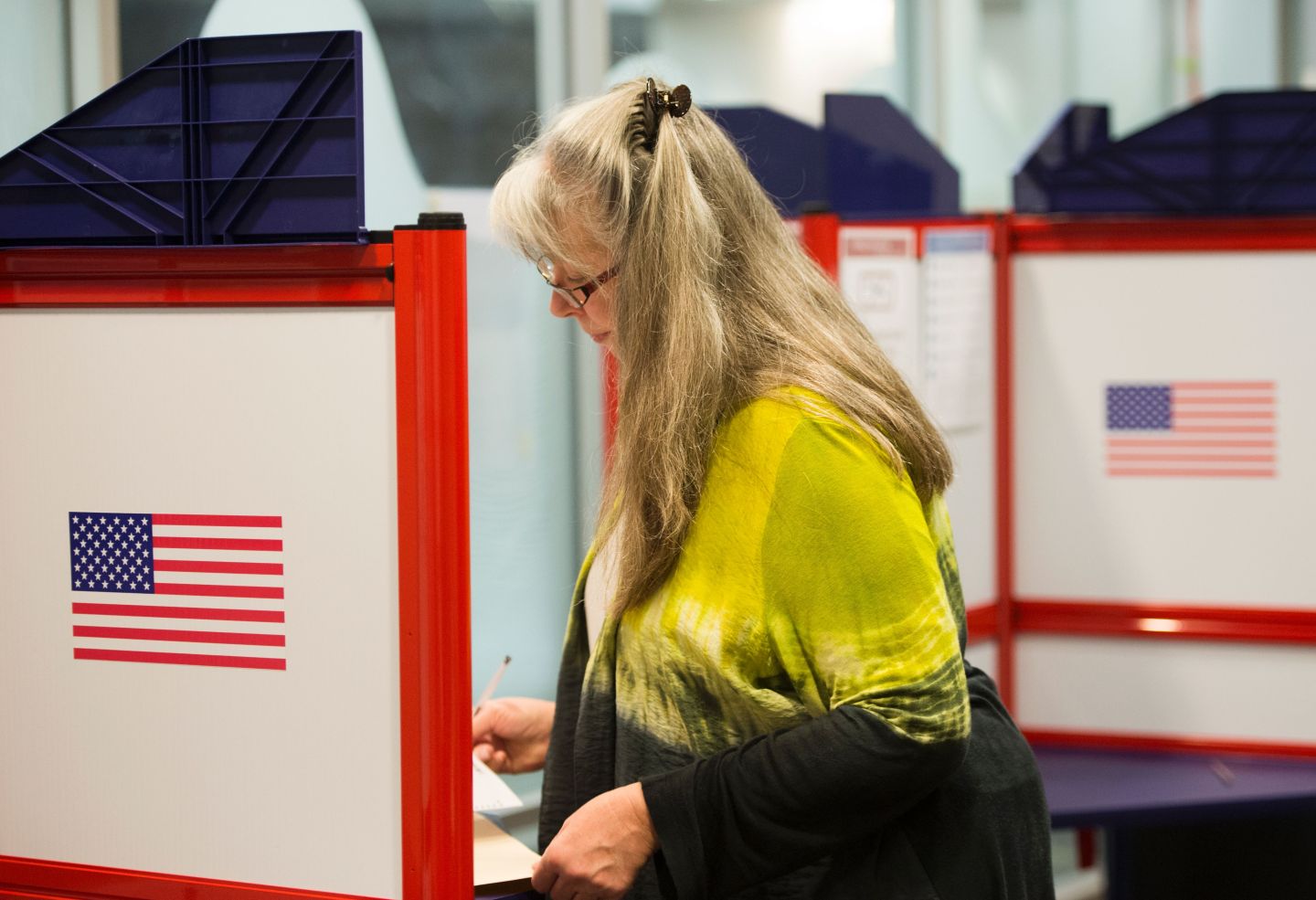
A woman votes at an absentee voting station in Arlington, Virginia on October 12, 2016. The US general election takes place November, 8, 2016. / AFP / ANDREW CABALLERO-REYNOLDS (Photo credit should read ANDREW CABALLERO-REYNOLDS/AFP/Getty Images)Andrew Caballero-Reynolds—AFP/Getty Images

Before last week’s election, polls and pundits suggested that Donald Trump’s presidential campaign was doomed to failure, because it could not attract enough votes from women, who saw him as a misogynist—and worse. Conventional wisdom crashed and burned, however, as 42 percent of women, most of them white, came out to support him.

Why did Donald Trump’s candidacy appeal to so many women voters? Although his election has been attributed primarily to disenfranchised citizens, the data suggest otherwise. Women from varying backgrounds cast their ballots for Trump for a number of reasons related to gender, economics, and perceptions of leadership.

Working class white women

He received the strongest support from white women without college degrees, 62 percent of whom voted for him. Although his supporters reported median household incomes of $70,000, the Trump campaign tapped into fears and frustrations among white working-class women about diminished possibilities for their husbands and sons to provide for their families. Many supporters’ families work in blue-collar occupations such as construction, transportation, and infrastructure; live in low mobility areas; and have little personal contact with immigrants. “Us vs. them” rhetoric framed diversity as an impediment to American greatness, and—consistent with historical racial and socioeconomic fractures—global trade and immigration, the increasing presence of white women and people of color in government, and “dangerous inner cities” emerged as threats.

White women with college degrees

The second largest contingent of women supporting Trump was white women with college degrees. Forty-five percent of them voted for him. While some were likely attracted to Trump’s fiscally conservative policies, research suggests an even more pervasive gender dynamic at play. Women and men have been socialized by family members, educators, and the media to associate leadership with a particular version of masculinity, an image Trump exemplified in his persona as the supremely successful businessman. He reinforced the masculine, leader-as-savior image with repeated claims that he alone could make America great again. Those drawn to this view, by extension, place a higher level of scrutiny on those who do not fit their image of success. Thus, Secretary Clinton’s handling of her emails was considered far more egregious than anything Trump had done, an assessment fueled by his systematic dismantling of Clinton in virtually every stump speech.

Many women (and men) who supported Trump bought into the false dichotomy that a woman leader can be either competent or likeable, but not both. What came into question was Clinton’s character—so much so that her competence became a moot point. In contrast, while almost 25 percent of Trump supporters said he was not qualified, they voted for him anyway.

For more on Donald Trump, watch this Fortune video:

In addition, although Clinton won the popular vote, exit polls suggested that more people cast their vote against her than against him. Those who found Trump unlikable but still voted for him numbered 20 percent of his supporters, while only 12 percent of those who said they disliked Clinton still voted for her. Seventy percent of white voters also described Clinton as dishonest or untrustworthy. This dynamic may also help explain why so many millennials who had supported Bernie Sanders didn’t vote this time around; they just couldn’t get over their dislike for Hillary.

One interesting departure from these trends emerged from the voting patterns of women of color—and of black women in particular. Only 26 percent of Latinas voted for Trump, but even fewer black women did. Just 4 percent voted for him—the lowest percentage of all groups—reflecting, perhaps, their concern about the treatment of blacks in the criminal justice system as well as their recognition of Clinton’s stronger support of minorities and her enthusiastic endorsements from the president and first lady.

So now what? The most troubling consequences of this election are not for those women in leadership positions who are pushing forward to break new ground, although it is clearly a disappointment for those of us who hope to see more women in places of power, including the Oval Office.

The most marginalized in our country will be harmed if the positions Trump has taken are translated into policy during his administration:

• Immigrant families, LGBTQ citizens, African Americans, Muslims and others are fearful that disparaging, even threatening, rhetoric about their communities will become normalized. In the days since the election, more than 400 hate crimes in local schools, communities, and businesses have been reported.
• Trump’s statements about sexually harassing women potentially give permission for a set of behaviors that undermine the safety and advancement of women in the workplace and in higher education.
• His stand on workplace deregulation raises concerns about continued protection of women’s (and men’s) human and civil rights.
• A reshaped Supreme Court could roll back protections to the rights of women, including the right to choose
• Changes to the Affordable Care Act could reduce access to birth control and health care.

Those of us striving to advance gender equity must continue to join with the leaders and thinkers working to advance the rights of other disadvantaged groups to forge a path for our society and our country that allows everyone to thrive. The future of this nation depends on it.

Laura Morgan Roberts is a visiting scholar at Harvard Business School’s Leadership Initiative and a professor of organization studies at Antioch University’s Graduate School of Leadership and Change.

Robin Ely is the Diane Doerge Wilson Professor of Business Administration at Harvard Business School and faculty chair of its Gender Initiative.

This article originally appeared on Harvard Business School Working Knowledge.
 

About the Authors
By Laura Morgan Roberts
See full bioRight Arrow Button Icon
By Robin J. Ely
See full bioRight Arrow Button Icon

Latest in Leadership

Finance
Lorem ipsum dolor sit amet, consectetur adipiscing elit, sed do eiusmod tempor incididunt ut labore et dolore magna aliqua. Ut enim ad minim veniam
By Fortune Editors
October 20, 2025
Finance
Lorem ipsum dolor sit amet, consectetur adipiscing elit, sed do eiusmod tempor incididunt ut labore et dolore magna aliqua. Ut enim ad minim veniam
By Fortune Editors
October 20, 2025
Finance
Lorem ipsum dolor sit amet, consectetur adipiscing elit, sed do eiusmod tempor incididunt ut labore et dolore magna aliqua. Ut enim ad minim veniam
By Fortune Editors
October 20, 2025
Finance
Lorem ipsum dolor sit amet, consectetur adipiscing elit, sed do eiusmod tempor incididunt ut labore et dolore magna aliqua. Ut enim ad minim veniam
By Fortune Editors
October 20, 2025
Finance
Lorem ipsum dolor sit amet, consectetur adipiscing elit, sed do eiusmod tempor incididunt ut labore et dolore magna aliqua. Ut enim ad minim veniam
By Fortune Editors
October 20, 2025
Finance
Lorem ipsum dolor sit amet, consectetur adipiscing elit, sed do eiusmod tempor incididunt ut labore et dolore magna aliqua. Ut enim ad minim veniam
By Fortune Editors
October 20, 2025

Most Popular

Finance
Lorem ipsum dolor sit amet, consectetur adipiscing elit, sed do eiusmod tempor incididunt ut labore et dolore magna aliqua. Ut enim ad minim veniam
By Fortune Editors
October 20, 2025
Finance
Lorem ipsum dolor sit amet, consectetur adipiscing elit, sed do eiusmod tempor incididunt ut labore et dolore magna aliqua. Ut enim ad minim veniam
By Fortune Editors
October 20, 2025
Finance
Lorem ipsum dolor sit amet, consectetur adipiscing elit, sed do eiusmod tempor incididunt ut labore et dolore magna aliqua. Ut enim ad minim veniam
By Fortune Editors
October 20, 2025
Finance
Lorem ipsum dolor sit amet, consectetur adipiscing elit, sed do eiusmod tempor incididunt ut labore et dolore magna aliqua. Ut enim ad minim veniam
By Fortune Editors
October 20, 2025
Finance
Lorem ipsum dolor sit amet, consectetur adipiscing elit, sed do eiusmod tempor incididunt ut labore et dolore magna aliqua. Ut enim ad minim veniam
By Fortune Editors
October 20, 2025
Finance
Lorem ipsum dolor sit amet, consectetur adipiscing elit, sed do eiusmod tempor incididunt ut labore et dolore magna aliqua. Ut enim ad minim veniam
By Fortune Editors
October 20, 2025
Rankings
  • 100 Best Companies
  • Fortune 500
  • Global 500
  • Fortune 500 Europe
  • Most Powerful Women
  • Future 50
  • World’s Most Admired Companies
  • See All Rankings
Sections
  • Finance
  • Leadership
  • Success
  • Tech
  • Asia
  • Europe
  • Environment
  • Fortune Crypto
  • Health
  • Retail
  • Lifestyle
  • Politics
  • Newsletters
  • Magazine
  • Features
  • Commentary
  • Mpw
  • CEO Initiative
  • Conferences
  • Personal Finance
  • Education
Customer Support
  • Frequently Asked Questions
  • Customer Service Portal
  • Privacy Policy
  • Terms Of Use
  • Single Issues For Purchase
  • International Print
Commercial Services
  • Advertising
  • Fortune Brand Studio
  • Fortune Analytics
  • Fortune Conferences
  • Business Development
About Us
  • About Us
  • Editorial Calendar
  • Press Center
  • Work At Fortune
  • Diversity And Inclusion
  • Terms And Conditions
  • Site Map
  • Facebook icon
  • Twitter icon
  • LinkedIn icon
  • Instagram icon
  • Pinterest icon

Most Popular

placeholder alt text
Success
Despite running $75 billion automaker General Motors, CEO Mary Barra still responds to ‘every single letter’ she gets by hand
By Preston ForeJanuary 26, 2026
1 day ago
placeholder alt text
Commentary
Yes, you're getting a bigger tax refund. Your kids won't thank you for the $3 trillion it's adding to the deficit
By Daniel BunnJanuary 26, 2026
1 day ago
placeholder alt text
Economy
An unusual Fed ‘rate check’ triggered a free fall in the U.S. dollar and investors are fleeing into gold
By Jim EdwardsJanuary 26, 2026
1 day ago
placeholder alt text
Personal Finance
Current price of silver as of Monday, January 26, 2026
By Joseph HostetlerJanuary 26, 2026
1 day ago
placeholder alt text
Success
'The Bermuda Triangle of Talent': 27-year-old Oxford grad turned down McKinsey and Morgan Stanley to find out why Gen Z’s smartest keep selling out
By Eva RoytburgJanuary 25, 2026
2 days ago
placeholder alt text
Personal Finance
Sweden abolished its wealth tax 20 years ago. Then it became a 'paradise for the super-rich'
By Miranda Sheild Johansson and The ConversationJanuary 22, 2026
5 days ago

© 2026 Fortune Media IP Limited. All Rights Reserved. Use of this site constitutes acceptance of our Terms of Use and Privacy Policy | CA Notice at Collection and Privacy Notice | Do Not Sell/Share My Personal Information
FORTUNE is a trademark of Fortune Media IP Limited, registered in the U.S. and other countries. FORTUNE may receive compensation for some links to products and services on this website. Offers may be subject to change without notice.


Latest in Leadership

People walk outside of a WeWork office building in London.
Future of WorkOffice Culture
Amazon and JPMorgan led the Fortune 500 in returning to the office 5 days a week. Now they’re leading a coworking comeback
By Jacqueline MunisJanuary 27, 2026
47 minutes ago
Anthropic CEO Dario Amodei
AIEye on AI
At Davos, CEOs said AI isn’t coming for jobs as fast as Anthropic CEO Dario Amodei thinks
By Jeremy KahnJanuary 27, 2026
54 minutes ago
Photo of Howard Buffett
C-Suitephilanthropy
Warren Buffett’s son signals a huge change for philanthropy as he prepares to give away $150 billion
By Jake AngeloJanuary 27, 2026
4 hours ago
Anthropic CEO Dario Amodei
AIDario Amodei
Anthropic CEO Dario Amodei’s 20,000-word essay on how AI ‘will test’ humanity is a must-read—but more for his remedies than his warnings
By Jeremy KahnJanuary 27, 2026
4 hours ago
AITech
‘Country of geniuses in a data center’: Every AI cluster will have the brainpower of 50 million Nobel Prize winners, Anthropic CEO says
By Marco Quiroz-GutierrezJanuary 27, 2026
5 hours ago
Photo of Dario Amodei
SuccessWealth
Anthropic’s billionaire cofounders are giving away 80% of their wealth: ‘The thing to worry about is a level of wealth concentration that will break society’
By Preston ForeJanuary 27, 2026
6 hours ago