• Home
  • Latest
  • Fortune 500
  • Finance
  • Tech
  • Leadership
  • Lifestyle
  • Rankings
  • Multimedia

Trendingnow

1

Pentagon accuses Alibaba, Baidu and BYD, three of China's biggest companies, of supporting the Chinese military

2

'We are rapidly running out of time': Watchdog sounds Social Security alarm after 22% cut confirmed for 2032

3

Costco CEO Ron Vachris rose from forklift driver to the C-suite without a college degree: ‘Don’t chase a title’ is the career advice that got him there

1

Pentagon accuses Alibaba, Baidu and BYD, three of China's biggest companies, of supporting the Chinese military

2

'We are rapidly running out of time': Watchdog sounds Social Security alarm after 22% cut confirmed for 2032

3

Costco CEO Ron Vachris rose from forklift driver to the C-suite without a college degree: ‘Don’t chase a title’ is the career advice that got him there
Leadership

Is Donald Trump’s Surprise Win a Failure of Big Data? Not Really

By
Aaron Timms
Aaron Timms
Down Arrow Button Icon
By
Aaron Timms
Aaron Timms
Down Arrow Button Icon
November 14, 2016, 6:00 AM ET
Donald Trump
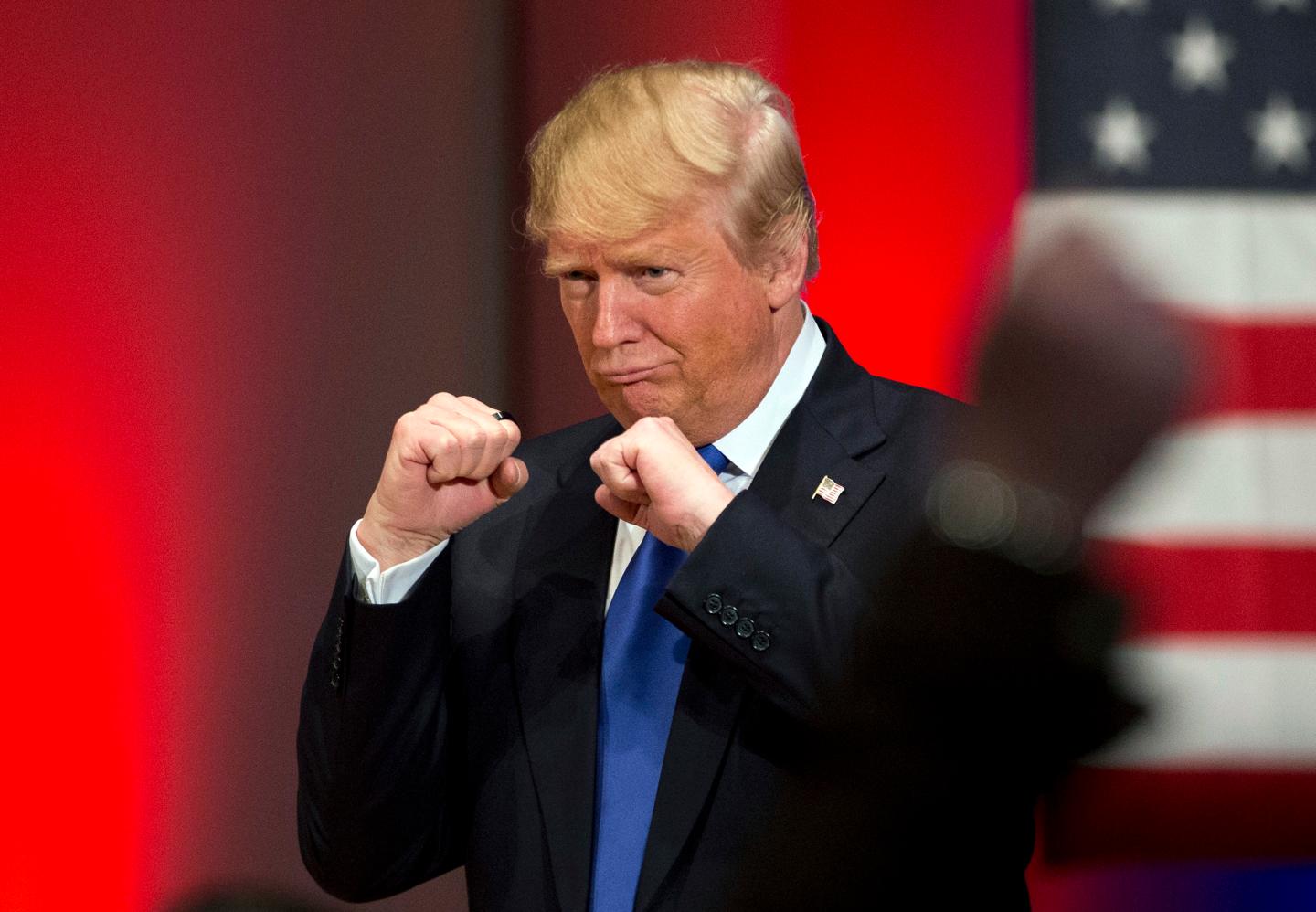
FILE - In this Jan. 28, 2016, file photo, Republican presidential candidate Donald Trump poses with a ring given to him by a group of veterans during a campaign event on the campus of Drake University in Des Moines, Iowa. (AP Photo/Jae C. Hong, File)Photograph by Jae C. Hong—AP

Hillary Clinton’s campaign for the presidency was famously, proudly, data-driven. For months, a trail of reporters chronicled the magic of the Clinton team’s “digital strategy” with dizzied wonderment. A data chief who scribbles on walls in erasable marker like Russell Crowe in A Beautiful Mind! Subtle but telling changes to landing page design! Something called “cost per flippable delegate!”

Now that Clinton has failed, the revenge against data has been swift: Since Tuesday’s surprise election, we’ve been told that Trump’s surprise victory undercuts the belief that analyzing reams of data can accurately predict events; that it explodes the received wisdom about the value of data-driven campaigning; that data doesn’t matter.

But Tuesday was not a failure of data; it was a failure of forecasting and analysis — by humans. The data was as good as it could be, but the analysis of it lacked depth. If anything, the forecasters’ spectacular and almost unanimous collective failure to see Trump’s win coming provides an opening for a more productive conversation between numbers and words, statisticians and analysts, data and message.

The Great Data Debate

Much of the Great Data Debate has focused on two things: the polls “got it wrong;” and polling data, no matter its quality, was powerless to grasp the hidden electoral momentum generated by Trump’s populist appeal to the bruised pride of working-class whites.

Yes, many polls underestimated the strength of Trump’s support. Yes, Tuesday was another blow for a polling industry already winded by several recent big misses and facing numerous structural obstacles. But polls were never designed to be forecasts. They are simply one basket of data points among many others.

The real problem is that we haven’t done enough work to look beyond the polls and find new data sets that can improve political analysis — an especially urgent task in an age of volatile electoral moods.

The data is out there. We just need to get more creative in looking for it.

The firm I work for, Predata, is engaged in this very search for alternative ways of understanding politics. For the election, working off the theory that political campaigning increasingly takes place online and voters are increasingly inaccessible to polling firms, we developed signals to capture shifts in the digital conversation around the race. To produce these signals, we gathered and analyzed hundreds of thousands of data points every day.

Humans failed, not Big Data

Having had some success with our Brexit forecast earlier in the year, on this occasion Predata— like practically everyone else — got the call wrong and predicted that Clinton would win. There was nothing fundamentally wrong with the data; the data was good. It’s just that the humans (well, human: me) curating and analyzing the data underperformed.

Influenced by the percussion of polls and punditry heavily suggestive of a Clinton win, I allowed myself to ignore signs in the data that Trump was ahead in both the battleground states overall and Florida. That was a mistake. But it was a fundamentally human mistake. The data was blameless.

All data sets and data-driven forecasting models — even those that claim to run off artificial intelligence — are, to some extent, a reflection of their creator’s own biases. There is a subjectivity embedded in every curatorial choice that goes into the creation of a poll, or a set of signals to monitor debate online, or a prediction model. The interpretation of data, too, is necessarily subjective. But one mistake does not mean we should forfeit the game. Gather data, crunch data, interpret data: there is nothing fundamentally unsound or stupid about this basic exercise. It’s still worth doing. But we need to get better at understanding what the data can tell us — its potential and limitations — and how it fits into a broader analytical picture.

Need to bridge the geek divide

There’s still a cultural divide that separates the geeks (the data scientists and statisticians) from the poets (the reporters, the color writers) in coverage of political campaigns. Neither has a monopoly on the truth, as Tuesday showed. And each can offer useful information in our ongoing quest to make sense of messy reality.

To get better at forecasting big political events, we need both better data and sharper reporting, a clearer read on the numbers and a more penetrating portrait of on-the-ground realities — and a more active exploration of the intersection between the two. That means more words informed by data, and more data worked on by words: the marriage of techies and fuzzies to which good technology always tends.

In our exploration of this blossoming new age of data, we’re still no better than Monsieur Hulot in his new kitchen. The epistemological blunders of the last few weeks shouldn’t impel us to give up on data. They’re an invitation to keep blundering on, keep making mistakes, and hopefully — with flexible minds and a better sense of the limits of what is possible — make data great again.

Aaron Timms is the Director of Content at Predata, a New York-based predictive analytics firm.

About the Author
By Aaron Timms
See full bioRight Arrow Button Icon

Latest in Leadership

Finance
Lorem ipsum dolor sit amet, consectetur adipiscing elit, sed do eiusmod tempor incididunt ut labore et dolore magna aliqua. Ut enim ad minim veniam
By Fortune Editors
October 20, 2025
Finance
Lorem ipsum dolor sit amet, consectetur adipiscing elit, sed do eiusmod tempor incididunt ut labore et dolore magna aliqua. Ut enim ad minim veniam
By Fortune Editors
October 20, 2025
Finance
Lorem ipsum dolor sit amet, consectetur adipiscing elit, sed do eiusmod tempor incididunt ut labore et dolore magna aliqua. Ut enim ad minim veniam
By Fortune Editors
October 20, 2025
Finance
Lorem ipsum dolor sit amet, consectetur adipiscing elit, sed do eiusmod tempor incididunt ut labore et dolore magna aliqua. Ut enim ad minim veniam
By Fortune Editors
October 20, 2025
Finance
Lorem ipsum dolor sit amet, consectetur adipiscing elit, sed do eiusmod tempor incididunt ut labore et dolore magna aliqua. Ut enim ad minim veniam
By Fortune Editors
October 20, 2025
Finance
Lorem ipsum dolor sit amet, consectetur adipiscing elit, sed do eiusmod tempor incididunt ut labore et dolore magna aliqua. Ut enim ad minim veniam
By Fortune Editors
October 20, 2025

Most Popular

Finance
Lorem ipsum dolor sit amet, consectetur adipiscing elit, sed do eiusmod tempor incididunt ut labore et dolore magna aliqua. Ut enim ad minim veniam
By Fortune Editors
October 20, 2025
Finance
Lorem ipsum dolor sit amet, consectetur adipiscing elit, sed do eiusmod tempor incididunt ut labore et dolore magna aliqua. Ut enim ad minim veniam
By Fortune Editors
October 20, 2025
Finance
Lorem ipsum dolor sit amet, consectetur adipiscing elit, sed do eiusmod tempor incididunt ut labore et dolore magna aliqua. Ut enim ad minim veniam
By Fortune Editors
October 20, 2025
Finance
Lorem ipsum dolor sit amet, consectetur adipiscing elit, sed do eiusmod tempor incididunt ut labore et dolore magna aliqua. Ut enim ad minim veniam
By Fortune Editors
October 20, 2025
Finance
Lorem ipsum dolor sit amet, consectetur adipiscing elit, sed do eiusmod tempor incididunt ut labore et dolore magna aliqua. Ut enim ad minim veniam
By Fortune Editors
October 20, 2025
Finance
Lorem ipsum dolor sit amet, consectetur adipiscing elit, sed do eiusmod tempor incididunt ut labore et dolore magna aliqua. Ut enim ad minim veniam
By Fortune Editors
October 20, 2025
Fortune Secondary Logo
Rankings
  • 100 Best Companies
  • Fortune 500
  • Global 500
  • Fortune 500 Europe
  • Most Powerful Women
  • World's Most Admired Companies
  • See All Rankings
  • Lists Calendar
Sections
  • Finance
  • Fortune Crypto
  • Features
  • Leadership
  • Health
  • Commentary
  • Success
  • Retail
  • Mpw
  • Tech
  • Lifestyle
  • CEO Initiative
  • Asia
  • Politics
  • Conferences
  • Europe
  • Newsletters
  • Personal Finance
  • Environment
  • Magazine
  • Education
Customer Support
  • Frequently Asked Questions
  • Customer Service Portal
  • Privacy Policy
  • Terms Of Use
  • Single Issues For Purchase
  • International Print
Commercial Services
  • Advertising
  • Fortune Brand Studio
  • Fortune Analytics
  • Fortune Conferences
  • Business Development
  • Group Subscriptions
About Us
  • About Us
  • Press Center
  • Work At Fortune
  • Terms And Conditions
  • Site Map
  • About Us
  • Press Center
  • Work At Fortune
  • Terms And Conditions
  • Site Map
  • Facebook icon
  • Twitter icon
  • LinkedIn icon
  • Instagram icon
  • Pinterest icon

Latest in Leadership

How the World Cup is a high-stakes stage for Big Tech’s AI push
NewslettersCIO Intelligence
How the World Cup is a high-stakes stage for Big Tech’s AI push
By John KellJune 10, 2026
2 hours ago
Anthropic accused of ‘secret sabotage’ as Claude Fable 5 silently limits capabilities for AI researchers and developers
AIAnthropic
Anthropic accused of ‘secret sabotage’ as Claude Fable 5 silently limits capabilities for AI researchers and developers
By Sharon GoldmanJune 10, 2026
3 hours ago
A 5-week course and a guaranteed job: Meta commits $115 million to solve the skilled-trades shortage stalling its AI buildout
Future of WorkMeta
A 5-week course and a guaranteed job: Meta commits $115 million to solve the skilled-trades shortage stalling its AI buildout
By Jacqueline MunisJune 10, 2026
3 hours ago
Xbox CEO Asha Sharma
SuccessCareers
Xbox’s CEO spent her early career taking out trash and selling coupon books—she says the secret to her rise was never obsessing over a dream career
By Preston ForeJune 10, 2026
6 hours ago
Boris Cherny, Head of Claude Code
SuccessHiring
The architect behind Claude Code reveals the three things Anthropic looks for in a good hire—and why people with low ego are a must
By Emma BurleighJune 10, 2026
6 hours ago
Meryl Streep says she was ‘ready to retire’ when the call for ‘Devil Wears Prada 2’ came—so she demanded they double her salary or nothing
SuccessThe Promotion Playbook
Meryl Streep says she was ‘ready to retire’ when the call for ‘Devil Wears Prada 2’ came—so she demanded they double her salary or nothing
By Orianna Rosa RoyleJune 10, 2026
6 hours ago

Most Popular

Pentagon accuses Alibaba, Baidu and BYD, three of China's biggest companies, of supporting the Chinese military
Asia
Pentagon accuses Alibaba, Baidu and BYD, three of China's biggest companies, of supporting the Chinese military
By Kate O'Keeffe and BloombergJune 8, 2026
2 days ago
'We are rapidly running out of time': Watchdog sounds Social Security alarm after 22% cut confirmed for 2032
Economy
'We are rapidly running out of time': Watchdog sounds Social Security alarm after 22% cut confirmed for 2032
By Nick LichtenbergJune 9, 2026
1 day ago
Costco CEO Ron Vachris rose from forklift driver to the C-suite without a college degree: ‘Don’t chase a title’ is the career advice that got him there
Success
Costco CEO Ron Vachris rose from forklift driver to the C-suite without a college degree: ‘Don’t chase a title’ is the career advice that got him there
By Preston ForeJune 8, 2026
2 days ago
Current price of oil as of June 9, 2026
Personal Finance
Current price of oil as of June 9, 2026
By Joseph HostetlerJune 9, 2026
1 day ago
Wall Street dumped nearly $1 trillion in tech stocks by midday—then clawed it back and bought peanut butter and paint
Investing
Wall Street dumped nearly $1 trillion in tech stocks by midday—then clawed it back and bought peanut butter and paint
By Eva RoytburgJune 9, 2026
23 hours ago
Current price of silver as of Tuesday, June 9, 2026
Personal Finance
Current price of silver as of Tuesday, June 9, 2026
By Joseph HostetlerJune 9, 2026
1 day ago

© 2026 Fortune Media IP Limited. All Rights Reserved. Use of this site constitutes acceptance of our Terms of Use and Privacy Policy | CA Notice at Collection and Privacy Notice | Do Not Sell/Share My Personal Information
FORTUNE is a trademark of Fortune Media IP Limited, registered in the U.S. and other countries. FORTUNE may receive compensation for some links to products and services on this website. Offers may be subject to change without notice.