• Home
  • News
  • Fortune 500
  • Tech
  • Finance
  • Leadership
  • Lifestyle
  • Rankings
  • Multimedia
TechMicrosoft

Microsoft Points to Russia-Linked Hackers Using Windows Vulnerability

Robert Hackett
By
Robert Hackett
Robert Hackett
Down Arrow Button Icon
Robert Hackett
By
Robert Hackett
Robert Hackett
Down Arrow Button Icon
November 1, 2016, 6:58 PM ET
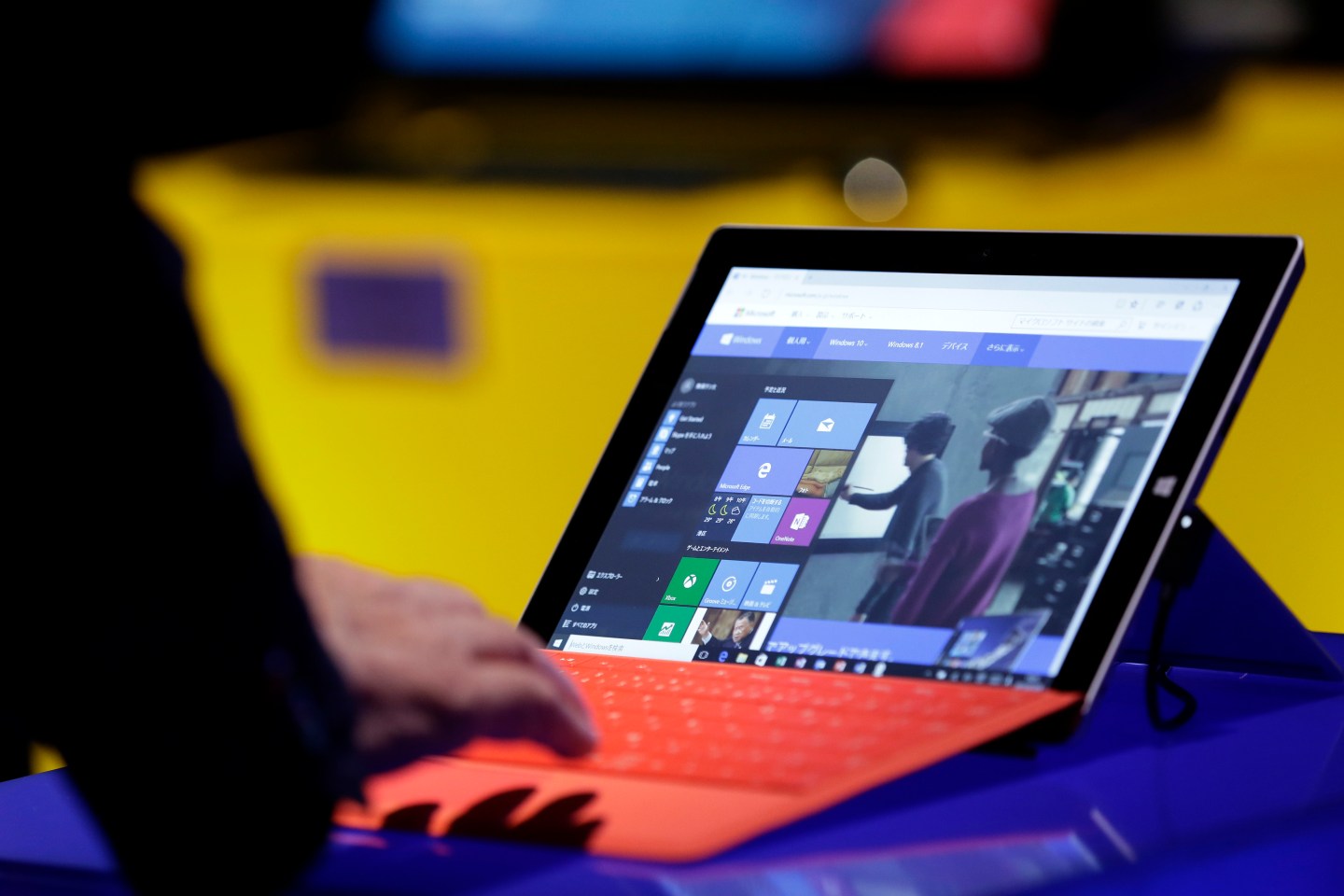
Microsoft Corp. Launches Windows 10 In Japan
A visitor tries out Microsoft Corp.'s Windows 10 operating system on the Surface 3 tablet device during a launch event in Tokyo, Japan, on Wednesday, July 29, 2015. The release of Microsoft's new Windows 10 operating system -- an event that in years past sparked a surge of computer buying -- will do little to ease the four-year sales slump that's been dogging the PC industry. Photographer: Kiyoshi Ota/Bloomberg via Getty ImagesKiyoshi Ota—Bloomberg via Getty Images

Microsoft (MSFT) said that a hacker group linked to Russia as well as recent breaches of U.S. political parties and campaigns is using a previously unknown flaw in Windows software to conduct computer network intrusions.

Google (GOOG) security engineers revealed the existence of the computer bug in a blog post on Monday after warning Microsoft (MSFT) of the finding, but before the company had issued a patch. Google said it had a responsibility “to protect users,” since the vulnerability was actively being used to compromise people’s systems.

Microsoft posted more details about the attacks the next day and said that it would release a patch on Nov. 8, its next software update day and election day in the U.S. Microsoft noted that the attackers using the flaw had been sending spear-phishing emails, or targeted messages intended to deceive recipients into disclosing personal information or into installing malware on their machines.

Get Data Sheet,Fortune’s technology newsletter.

Microsoft’s threat intelligence team called the attacker group “Strontium,” but many people know the group by other names, including “APT28,” “Sofacy,” or “Fancy Bear. Cybersecurity experts have previously linked this group to the Russian government and, more specifically, to its foreign intelligence agency the GRU.

The cybersecurity firm CrowdStrike made waves earlier this year when it attributed an attack on the Democratic National Committee to the same group—an attribution that has since been backed publicly by the U.S. intelligence community.

“This attack campaign, originally identified by Google’s Threat Analysis Group, used two zero-day vulnerabilities in Adobe Flash and the down-level Windows kernel to target a specific set of customers,” wrote Terry Myerson, executive vice president of Windows and devices at Microsoft, analyzing the attacks. He added that group tended to leapfrog from one compromised email account to the next, ensnaring victims by sending booby-trapped messages to their contacts.

Myerson added that Microsoft “has attributed more 0-day exploits to STRONTIUM than any other tracked group in 2016.”

For more on cyberespionage, watch:

Here’s how the Russia-linked hacker group worked. First, the team would gain a foothold in victims’ machines by commandeering their web browsers. It would do this by exploiting an unknown flaw (also known as a zero-day vulnerability) in Adobe Flash software—a bug that Adobe patched in an update on Oct. 26.

Next the group would break out of the victim’s browser, escalating privileges (in the industry parlance), through the Windows vulnerability. Microsoft noted that users of its Windows 10 Anniversary Update “are known to be protected from versions of this attack observed in the wild.”

Finally, the hacker group would install a backdoor, or security-bypassing control program, to take over the target’s machine.

Microsoft said it was disappointed by Google’s disclosure before the release of a fix. “Google’s decision to disclose these vulnerabilities before patches are broadly available and tested is disappointing, and puts customers at increased risk,” Myserson said.

Google, on the other hand, maintained that disclosing known and “actively exploited” vulnerabilities is in the interest of people seeking to secure their systems.
About the Author
Robert Hackett
By Robert Hackett
Instagram iconLinkedIn iconTwitter icon
See full bioRight Arrow Button Icon

Latest in Tech

InnovationBrainstorm Design
Procurement execs often don’t understand the value of good design, experts say
By Angelica AngDecember 8, 2025
5 minutes ago
Big TechStreaming
Trump warns Netflix-Warner deal may pose antitrust ‘problem’
By Hadriana Lowenkron, Se Young Lee and BloombergDecember 7, 2025
8 hours ago
Big TechOpenAI
OpenAI goes from stock market savior to burden as AI risks mount
By Ryan Vlastelica and BloombergDecember 7, 2025
9 hours ago
AIData centers
HP’s chief commercial officer predicts the future will include AI-powered PCs that don’t share data in the cloud
By Nicholas GordonDecember 7, 2025
11 hours ago
Future of WorkJamie Dimon
Jamie Dimon says even though AI will eliminate some jobs ‘maybe one day we’ll be working less hard but having wonderful lives’
By Jason MaDecember 7, 2025
15 hours ago
CryptoCryptocurrency
So much of crypto is not even real—but that’s starting to change
By Pete Najarian and Joe BruzzesiDecember 7, 2025
20 hours ago

Most Popular

placeholder alt text
Real Estate
The 'Great Housing Reset' is coming: Income growth will outpace home-price growth in 2026, Redfin forecasts
By Nino PaoliDecember 6, 2025
2 days ago
placeholder alt text
AI
Nvidia CEO says data centers take about 3 years to construct in the U.S., while in China 'they can build a hospital in a weekend'
By Nino PaoliDecember 6, 2025
2 days ago
placeholder alt text
Economy
The most likely solution to the U.S. debt crisis is severe austerity triggered by a fiscal calamity, former White House economic adviser says
By Jason MaDecember 6, 2025
1 day ago
placeholder alt text
Economy
JPMorgan CEO Jamie Dimon says Europe has a 'real problem’
By Katherine Chiglinsky and BloombergDecember 6, 2025
1 day ago
placeholder alt text
Big Tech
Mark Zuckerberg rebranded Facebook for the metaverse. Four years and $70 billion in losses later, he’s moving on
By Eva RoytburgDecember 5, 2025
3 days ago
placeholder alt text
Politics
Supreme Court to reconsider a 90-year-old unanimous ruling that limits presidential power on removing heads of independent agencies
By Mark Sherman and The Associated PressDecember 7, 2025
17 hours ago
Rankings
  • 100 Best Companies
  • Fortune 500
  • Global 500
  • Fortune 500 Europe
  • Most Powerful Women
  • Future 50
  • World’s Most Admired Companies
  • See All Rankings
Sections
  • Finance
  • Leadership
  • Success
  • Tech
  • Asia
  • Europe
  • Environment
  • Fortune Crypto
  • Health
  • Retail
  • Lifestyle
  • Politics
  • Newsletters
  • Magazine
  • Features
  • Commentary
  • Mpw
  • CEO Initiative
  • Conferences
  • Personal Finance
  • Education
Customer Support
  • Frequently Asked Questions
  • Customer Service Portal
  • Privacy Policy
  • Terms Of Use
  • Single Issues For Purchase
  • International Print
Commercial Services
  • Advertising
  • Fortune Brand Studio
  • Fortune Analytics
  • Fortune Conferences
  • Business Development
About Us
  • About Us
  • Editorial Calendar
  • Press Center
  • Work At Fortune
  • Diversity And Inclusion
  • Terms And Conditions
  • Site Map

© 2025 Fortune Media IP Limited. All Rights Reserved. Use of this site constitutes acceptance of our Terms of Use and Privacy Policy | CA Notice at Collection and Privacy Notice | Do Not Sell/Share My Personal Information
FORTUNE is a trademark of Fortune Media IP Limited, registered in the U.S. and other countries. FORTUNE may receive compensation for some links to products and services on this website. Offers may be subject to change without notice.