• Home
  • Latest
  • Fortune 500
  • Finance
  • Tech
  • Leadership
  • Lifestyle
  • Rankings
  • Multimedia
TechNew York Times

Here’s Why the New York Times Is Buying This Gadget Review Site

By
Mathew Ingram
Mathew Ingram
Down Arrow Button Icon
By
Mathew Ingram
Mathew Ingram
Down Arrow Button Icon
October 24, 2016, 5:50 PM ET
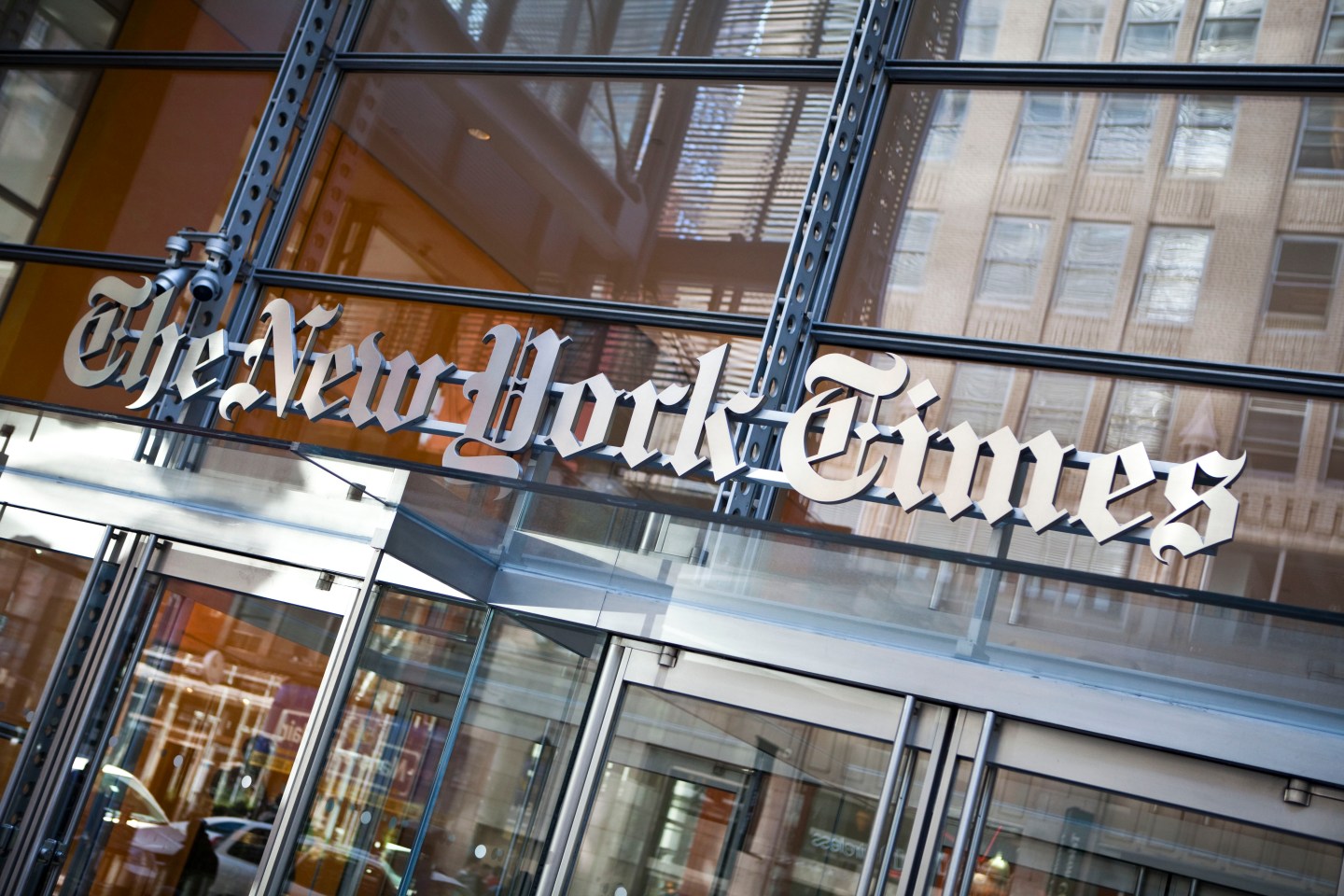
New York Times' Quarterly Profits Falls 58 Percent
Ramin Talaie Getty Images

On hearing the news that the New York Times is paying an estimated $30 million to acquire a site called The Wirecutter, a fairly common reaction from non-media observers was “What is a Wirecutter, and why is it worth $30 million?” The first part of that question is relatively easy to answer, but the second part is a little harder.

When it comes to the what, The Wirecutter and sister site The Sweethome are technology and consumer-product review sites started by Brian Lam, a former editor of the tech site Gizmodo, which at one time was part of Nick Denton’s Gawker Media empire (which went bankrupt and was bought by Univision).

Lam quit Gizmodo after five years of editing the site and driving it to new traffic heights—including the scoop of a lifetime, when he got his hands on a prototype of the iPhone 4, an event that led to a series of awkward personal calls from former Apple CEO Steve Jobs.

Burned out by the never-ending race to boost traffic, Lam moved to Hawaii to surf, and in his spare time he started a small review site focused on gadgets, originally as part of a blog network called The Awl.

Get Data Sheet, Fortune’s technology newsletter.

Wirecutter’s approach was fairly simple. It hired professional reviewers to sample and test every major product in a specific category—headphones, cameras, disk drives, etc.—then picked one to recommend. The site had few ads. Instead, it earned money through “affiliate” links, which pay a referral fee when links to products are clicked on and a product is purchased.

Because of the quality of its in-depth reviews, Wirecutter started drawing a significant audience of gadget fans and people obsessed with researching every aspect of a purchase.

When Bloomberg wrote about it earlier this year, it said Wirecutter was driving $150 million in e-commerce transactions a year (of which Wirecutter would keep a small percentage, usually in the 4% to 8% range). The site only posted a few articles a week, but was generating revenue that was orders of magnitude larger than its competitors.

Assuming Wirecutter gets an average of 6% for its affiliate links, the company’s annual revenue is probably in the $10 million range. So is that worth $30 million? That’s a harder question to answer.

Facebook Wants to Host the Content, Not Just the Links

The appeal for the New York Times isn’t necessarily how much revenue Wirecutter and Sweethome generate, since it’s probably not going to move the needle much at a company with annual revenues of about $1.6 billion. And the paper already uses affiliate links in a number of places on its site, including books and theater reviews.

The potential is that learning from Lam and what he’s been able to build at Wirecutter—with a tiny fraction of the number of staff the New York Times has—could help the paper learn and adapt that model to a whole range of different products and services such as food, fashion, etc.

If it can do that effectively (which is obviously a question mark), the Times might be able to turn Wirecutter into the revenue engine for a growing digital unit, something it has very few of.

The paper’s experiments with standalone apps haven’t really paid off in most cases, subscription growth is slowing, and both digital and print-advertising revenue are in decline. Overall, the company is barely managing to keep its head above water, and it is looking at what are expected to be significant cuts to the newsroom.

Is buying The Wirecutter going to solve all of those problems? No. But it is a sign that the Times is thinking about alternative models beyond just display advertising and digital subscriptions, and that is worth taking note of, even if the size of the deal itself is small.


About the Author
By Mathew Ingram
See full bioRight Arrow Button Icon

Latest in Tech

InvestingStock
There have been head fakes before, but this time may be different as the latest stock rotation out of AI is just getting started, analysts say
By Jason MaDecember 13, 2025
33 minutes ago
Politicsdavid sacks
Can there be competency without conflict in Washington?
By Alyson ShontellDecember 13, 2025
1 hour ago
InnovationRobots
Even in Silicon Valley, skepticism looms over robots, while ‘China has certainly a lot more momentum on humanoids’
By Matt O'Brien and The Associated PressDecember 13, 2025
3 hours ago
Sarandos
Arts & EntertainmentM&A
It’s a sequel, it’s a remake, it’s a reboot: Lawyers grow wistful for old corporate rumbles as Paramount, Netflix fight for Warner
By Nick LichtenbergDecember 13, 2025
7 hours ago
Oracle chairman of the board and chief technology officer Larry Ellison delivers a keynote address during the 2019 Oracle OpenWorld on September 16, 2019 in San Francisco, California.
AIOracle
Oracle’s collapsing stock shows the AI boom is running into two hard limits: physics and debt markets
By Eva RoytburgDecember 13, 2025
8 hours ago
robots
InnovationRobots
‘The question is really just how long it will take’: Over 2,000 gather at Humanoids Summit to meet the robots who may take their jobs someday
By Matt O'Brien and The Associated PressDecember 12, 2025
21 hours ago

Most Popular

placeholder alt text
Economy
Tariffs are taxes and they were used to finance the federal government until the 1913 income tax. A top economist breaks it down
By Kent JonesDecember 12, 2025
1 day ago
placeholder alt text
Success
Apple cofounder Ronald Wayne sold his 10% stake for $800 in 1976—today it’d be worth up to $400 billion
By Preston ForeDecember 12, 2025
1 day ago
placeholder alt text
Success
40% of Stanford undergrads receive disability accommodations—but it’s become a college-wide phenomenon as Gen Z try to succeed in the current climate
By Preston ForeDecember 12, 2025
1 day ago
placeholder alt text
Economy
For the first time since Trump’s tariff rollout, import tax revenue has fallen, threatening his lofty plans to slash the $38 trillion national debt
By Sasha RogelbergDecember 12, 2025
23 hours ago
placeholder alt text
Economy
The Fed just ‘Trump-proofed’ itself with a unanimous move to preempt a potential leadership shake-up
By Jason MaDecember 12, 2025
21 hours ago
placeholder alt text
Success
At 18, doctors gave him three hours to live. He played video games from his hospital bed—and now, he’s built a $10 million-a-year video game studio
By Preston ForeDecember 10, 2025
3 days ago
Rankings
  • 100 Best Companies
  • Fortune 500
  • Global 500
  • Fortune 500 Europe
  • Most Powerful Women
  • Future 50
  • World’s Most Admired Companies
  • See All Rankings
Sections
  • Finance
  • Leadership
  • Success
  • Tech
  • Asia
  • Europe
  • Environment
  • Fortune Crypto
  • Health
  • Retail
  • Lifestyle
  • Politics
  • Newsletters
  • Magazine
  • Features
  • Commentary
  • Mpw
  • CEO Initiative
  • Conferences
  • Personal Finance
  • Education
Customer Support
  • Frequently Asked Questions
  • Customer Service Portal
  • Privacy Policy
  • Terms Of Use
  • Single Issues For Purchase
  • International Print
Commercial Services
  • Advertising
  • Fortune Brand Studio
  • Fortune Analytics
  • Fortune Conferences
  • Business Development
About Us
  • About Us
  • Editorial Calendar
  • Press Center
  • Work At Fortune
  • Diversity And Inclusion
  • Terms And Conditions
  • Site Map

© 2025 Fortune Media IP Limited. All Rights Reserved. Use of this site constitutes acceptance of our Terms of Use and Privacy Policy | CA Notice at Collection and Privacy Notice | Do Not Sell/Share My Personal Information
FORTUNE is a trademark of Fortune Media IP Limited, registered in the U.S. and other countries. FORTUNE may receive compensation for some links to products and services on this website. Offers may be subject to change without notice.