• Home
  • Latest
  • Fortune 500
  • Finance
  • Tech
  • Leadership
  • Lifestyle
  • Rankings
  • Multimedia
HealthDigital Health

IBM Workers to Use Watson Supercomputer to Find Cancer Treatments

By
Sy Mukherjee
Sy Mukherjee
Down Arrow Button Icon
By
Sy Mukherjee
Sy Mukherjee
Down Arrow Button Icon
October 11, 2016, 5:06 PM ET
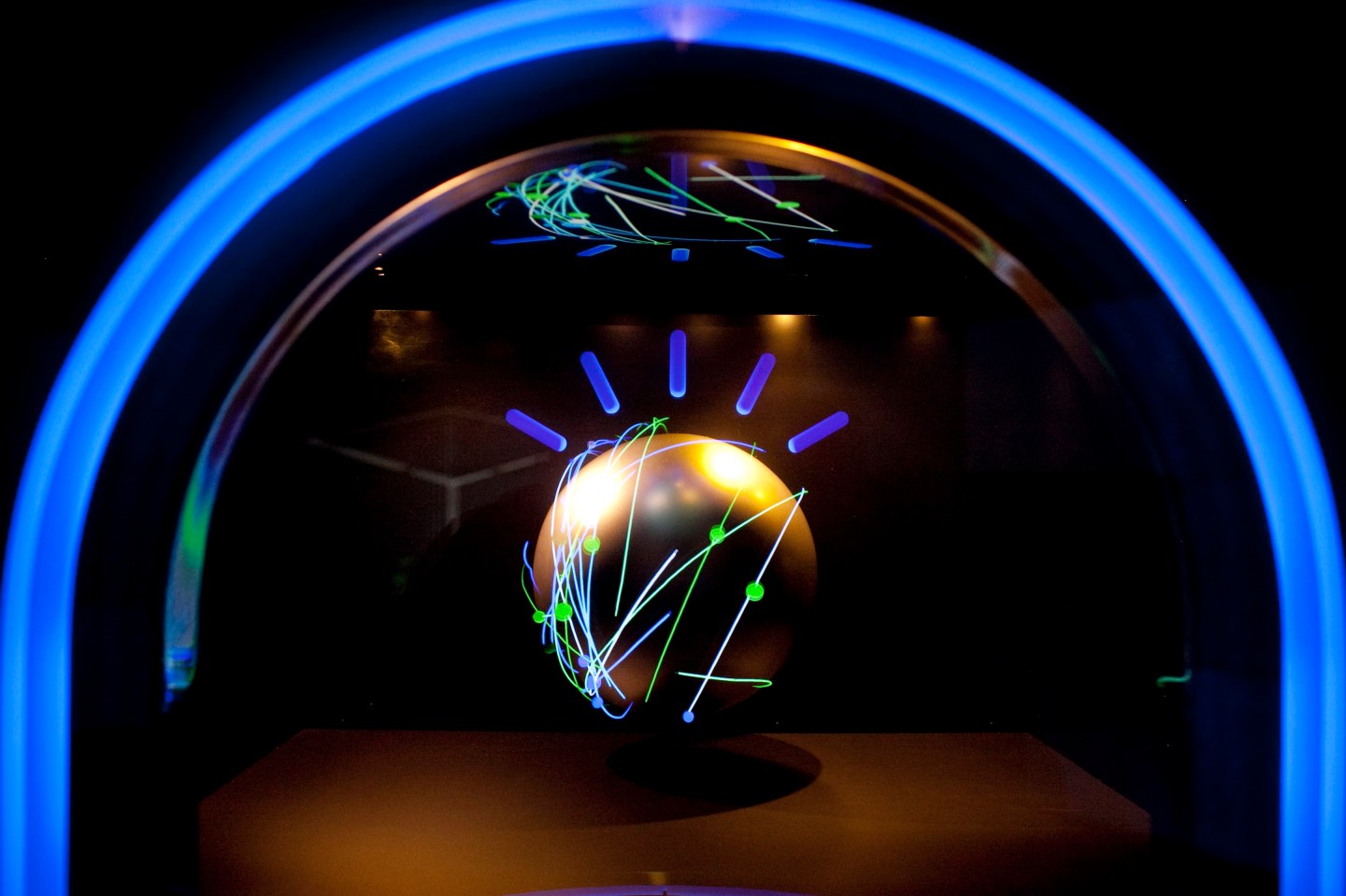
Watson computer at IBM in New York City
NEW YORK CITY, NY- MAY 27: IBM Watson's computer housing case. IBM's Watson computer is best known for winning Jeopardy, unaware of time constraints, while playing against humans. Some of Watson's other features are based in problem solving across many different careers. A demonstration showed how quickly Watson is able to diagnose illnesses, and provided a real life case that took doctors and nurses six days to diagnose, and only ended with the correct diagnosis because a nurse had seen the disease before. Based on symptoms input, Watson was able to correctly diagnose in minutes. The demonstration took place at IBM Watson's New York City, New York office on May 27, 2015. (Photo by Andrew Spear for The Washington Post via Getty Images.)Andrew Spear—The Washington Post The Washington Post via Getty Images

IBM (IBM) says it is trying to make it a little easier for its American workers to find the best cancer treatments.

Beginning in January 2017, IBM employees in the U.S. will be able to use Watson supercomputer technology to help find the most effective oncology drugs and clinical trials for their specific cancers, IBM announced.

“For anyone receiving the diagnosis, or supporting a loved one through it, cancer can be overwhelming,” Kyu Rhee, MD, chief health officer, IBM Watson Health, said in the release, adding, “With this first-ever U.S. rollout of the technology, the full breadth and depth of Watson’s services can benefit an entire population of individuals who need them.”

It’s unclear just how much of IBM’s workforce will receive the benefits (the firm has 377,000 employees worldwide, although it doesn’t specify how many are in the U.S.) but the company says that many of the services will be covered by several of its American health plans.

IBM’s push into health care has been defined by its data-driven approach, especially when it comes to cancer. The company points to a simple resource allocation problem that’s hindered the most effective patient care: the fact that it is physically impossible for oncologists to keep track of every study, every clinical trial, and every breakthrough in the wildly stratified world of cancer research. Different cancers can mutate in different ways and be driven by a variety of genetic factors, and certain treatments will be more effective for some patients than for others.

Subscribe to Brainstorm Health Daily, our upcoming newsletter about health innovations.

So, IBM’s strategy is to use Watson, armed with its super-computing abilities and artificial intelligence, to help give doctors and scientists in the research process an informed “second opinion” by scouring the available data, as Rhee puts it.

The firm is already helping a variety of major cancer centers with its tech; the new worker benefit program will allow employees to consult with their doctors by giving them their medical history and getting their specific cancers genetically sequenced. After that, Watson will take assist by providing both physician and patient with a report that includes the most relevant drug trial and academic studies for their specific conditions.

Traditional pharma giants like Bristol-Myers Squibb (BMY), Merck (MRK), and a compendium of newer biotechs have been treating cancer with an individualized approach since the disease can take so many forms. But there’s also been a simultaneous push by the Obama administration, as well as private business leaders like Sean Parker, for more data-sharing in biopharma, especially when it comes to developing cancer cures.

IBM’s Watson Health unit also has ambitious goals beyond oncology. The company announced a global partnership with Siemens (SIEGY) to track population health metrics earlier this week.

About the Author
By Sy Mukherjee
See full bioRight Arrow Button Icon

Latest in Health

Healthmeal delivery
Factor Meals Review 2025: Tester Approved
By Christina SnyderDecember 12, 2025
21 minutes ago
Donald Trump
HealthHealth Insurance
‘Tragedy in the making’: Top healthcare exec on why insurance will spike to subsidize a tax cut to millionaires and billionaires
By Nick LichtenbergDecember 12, 2025
1 hour ago
HelloFresh meal delivery service.
Healthmeal delivery
HelloFresh Review : We Tasted Everything so You Don’t Have To
By Christina SnyderDecember 12, 2025
2 hours ago
Noom as best weight loss program
HealthWeight Loss
Noom Review (2025): Everything You Need to Know
By Christina SnyderDecember 12, 2025
4 hours ago
Tensed teenage girl writing on paper
SuccessColleges and Universities
40% of Stanford undergrads receive disability accommodations—but it’s become a college-wide phenomenon as Gen Z try to succeed in the current climate
By Preston ForeDecember 12, 2025
6 hours ago
Dr. Javier Cárdenas is the director of the Rockefeller Neuroscience Institute NeuroPerformance Innovation Center.
Commentaryconcussions
Fists, not football: There is no concussion protocol for domestic violence survivors
By Javier CárdenasDecember 12, 2025
7 hours ago

Most Popular

placeholder alt text
Economy
Tariffs are taxes and they were used to finance the federal government until the 1913 income tax. A top economist breaks it down
By Kent JonesDecember 12, 2025
11 hours ago
placeholder alt text
Success
At 18, doctors gave him three hours to live. He played video games from his hospital bed—and now, he’s built a $10 million-a-year video game studio
By Preston ForeDecember 10, 2025
2 days ago
placeholder alt text
Success
Palantir cofounder calls elite college undergrads a ‘loser generation’ as data reveals rise in students seeking support for disabilities, like ADHD
By Preston ForeDecember 11, 2025
1 day ago
placeholder alt text
Investing
Baby boomers have now 'gobbled up' nearly one-third of America's wealth share, and they're leaving Gen Z and millennials behind
By Sasha RogelbergDecember 8, 2025
4 days ago
placeholder alt text
Arts & Entertainment
'We're not just going to want to be fed AI slop for 16 hours a day': Analyst sees Disney/OpenAI deal as a dividing line in entertainment history
By Nick LichtenbergDecember 11, 2025
23 hours ago
placeholder alt text
Economy
‘We have not seen this rosy picture’: ADP’s chief economist warns the real economy is pretty different from Wall Street’s bullish outlook
By Eleanor PringleDecember 11, 2025
1 day ago
Rankings
  • 100 Best Companies
  • Fortune 500
  • Global 500
  • Fortune 500 Europe
  • Most Powerful Women
  • Future 50
  • World’s Most Admired Companies
  • See All Rankings
Sections
  • Finance
  • Leadership
  • Success
  • Tech
  • Asia
  • Europe
  • Environment
  • Fortune Crypto
  • Health
  • Retail
  • Lifestyle
  • Politics
  • Newsletters
  • Magazine
  • Features
  • Commentary
  • Mpw
  • CEO Initiative
  • Conferences
  • Personal Finance
  • Education
Customer Support
  • Frequently Asked Questions
  • Customer Service Portal
  • Privacy Policy
  • Terms Of Use
  • Single Issues For Purchase
  • International Print
Commercial Services
  • Advertising
  • Fortune Brand Studio
  • Fortune Analytics
  • Fortune Conferences
  • Business Development
About Us
  • About Us
  • Editorial Calendar
  • Press Center
  • Work At Fortune
  • Diversity And Inclusion
  • Terms And Conditions
  • Site Map

© 2025 Fortune Media IP Limited. All Rights Reserved. Use of this site constitutes acceptance of our Terms of Use and Privacy Policy | CA Notice at Collection and Privacy Notice | Do Not Sell/Share My Personal Information
FORTUNE is a trademark of Fortune Media IP Limited, registered in the U.S. and other countries. FORTUNE may receive compensation for some links to products and services on this website. Offers may be subject to change without notice.