• Home
  • Latest
  • Fortune 500
  • Finance
  • Tech
  • Leadership
  • Lifestyle
  • Rankings
  • Multimedia
Finance

What Self-Driving Cars Will Mean for Automakers’ Stocks

By
Ryan Derousseau
Ryan Derousseau
Down Arrow Button Icon
By
Ryan Derousseau
Ryan Derousseau
Down Arrow Button Icon
September 6, 2016, 8:00 AM ET
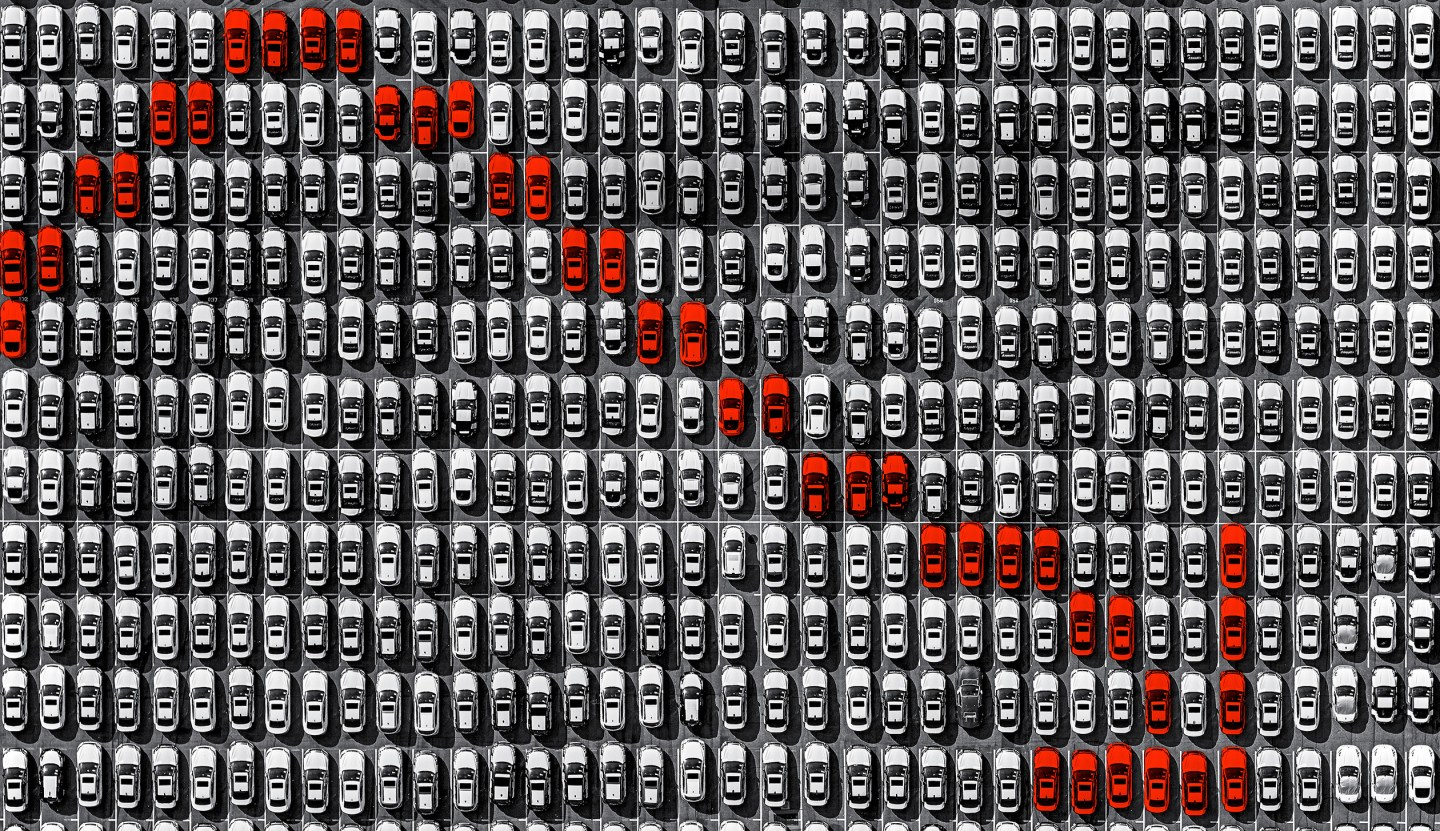
Original photograph by Jeffrey Milstein

One of the auto industry’s worst attributes, from an investor’s standpoint, is its predictability. While car companies benefit when the economy rises, the road always turns back downhill, and automobile sales inevitably shift into reverse.

Industry watchers can see this dynamic playing out right now, even as 2017 models begin to roll onto dealers’ lots. In the first half of this year the auto industry’s revenues hit $151.8 billion, up 7.8% from the previous year. Vehicle sales are on pace to top the nearly 17.5 million cars and trucks sold in 2015. But the current run is “in extra innings,” says Adam Jonas, an analyst for Morgan Stanley: After six years of almost uninterrupted growth, August car sales dropped a sobering 4% year over year. And investors are already anticipating the end of the party. The S&P 500 Automobile Manufacturer’s index has dropped 8% this year. Shares of General Motors, Ford, Fiat Chrysler (FCAU), Toyota (TM)—heck, even tech darling Tesla—are all well below their 2014 or 2015 peaks.

So are auto stocks doomed to the same old repetitive commute from peak to trough? Maybe not. As cars become the epicenter of innovation, there’s a factor in play this time around that was absent the last time carmakers struggled. That, of course, is the rise of autonomous-driving technology, which could upend the business model of the industry in the not-too-distant future—in ways that carmakers and their investors could profit from. While it’s far too early to pick winners in the self-driving-car arms race, the current down cycle in auto stocks could let investors place some early bets at bargain prices.

Auto industry ­insiders believe that in a world where self-driving tech becomes commonplace, the whole culture of driving will shift. Fewer people would own vehicles, and more would rent cars only when needed. (Think Uber, all the time, but driverless.) On the surface that sounds like a 70-car pileup in the making for automakers: Fewer car sales, after all, should mean less revenue.

For more on the auto industry, watch this Fortune video:

But there are two factors that ease the pessimism. The first is that any shift will be both gradual and incomplete. Car-­sharing works best in densely packed cities like New York or San Francisco, for example. And autonomous driving won’t fit the needs of all drivers, so the automakers will still have a big “traditional” car customer base for a long time.

What’s more, some analysts believe an autonomous-driving culture may actually give automakers a more profitable business model—one in which they sell services as well as vehicles. Citigroup (C) analyst Itay Michaeli says automakers will profit not just by selling vehicles (to consumers and to ride-sharing services) but also through “revenues per mile” driven. Ford or GM could sell you or rent you the ride, and sell you services you consume while you’re not driving (streamed movies, for example). Michaeli says this model could let car manufacturers bring in double the amount of variable profits that they make today, and better yet, move “beyond the cycle” of consumer-driven peaks and troughs.

There’s one big problem with this theory: “Somebody has to create a compelling business model,” says Susquehanna International Group analyst ­Matthew Stover, and nobody has done it yet. So while automakers angle to make it happen—whether through partnerships, R&D, or acquisition—investors should think of any present-day auto stock play as both a bet on today’s car industry and a very speculative bet on the future.


Among the companies with a big U.S. market presence, General Motors (GM) has made the biggest public commitment to the new generation of driving tech. Along with other moves, it has invested $500 million in ride-sharing service Lyft and spent just over $1 billion to acquire Cruise Automation, a Silicon Valley startup that makes sensors and software for self-driving cars. Investing in GM based on those factors alone would be “a really speculative move,” notes Annie Rosen, portfolio manager of the Fidelity Select Automotive Portfolio. But it looks like a decent buy for other reasons. At under $32 a share, GM trades at just above four times earnings, which is far below the industry average of nine (and of course, far below the S&P 500’s absurd 20). Welcome to life in the auto cycle. GM has authorized $9 billion to buy back stock through the end of 2017: It’s trying to convince investors that it will still grow its earnings, even if a recession occurs. “When you went bankrupt last time” there was a recession, Stover says, “the market is not going to give you the benefit of the doubt.”

INV.09.15.16.chart
Click here to enlarge.

If investors have avoided GM of late, they’ve absolutely punished Ford Motor (F). Its shares have fallen 28% over the past 18 months, partly because the company made an ill-timed bet on eco-friendly cars, which haven’t sold as well since the price of gas plummeted. Through August, sales of the Fiesta and Focus, which feature Ford’s climate-friendly EcoBoost engine, are down 17% for 2016, and Ford’s sales for that month were down 8% year over year. “The stock has been under really great pressure,” says Stover, who adds that “Ford has validated the fears” by downgrading its outlook.

The sales slowdown hasn’t stalled Ford’s plans on the autonomous-­technology front, though. The company has targeted 2021 as the year it will release a vehicle without a steering wheel or pedals, working with four startups to accomplish the feat. Morgan Stanley’s Jonas says that relatively speedy timetable is intended to give Ford an edge in the “fight for brains,” as it competes with Apple (AAPL), Alphabet (GOOGL), other tech firms and the rest of Big Auto to attract software talent.

No discussion of New Age vehicles can leave out Tesla Motors (TSLA), since CEO Elon Musk’s pioneering firm already offers some—limited—autonomous technology in its cars through its autopilot feature. Tesla hasn’t been as vulnerable to economic cycles as other auto­makers, since its luxury-oriented customers can afford to pay $90,000 or more for a vehicle. Its Model 3 version, which will start at around $35,000, is scheduled for delivery in late 2017; that, oddly enough, could make the company more recession-sensitive, as average-income consumers become customers. But given its still hypothetical profits—and its growing cash-flow problem, which ­Fortune has detailed—many investors are wary of Tesla’s stock at its current prices. The company’s impending acquisition of SolarCity also muddies the investing outlook. The fact that a future Tesla would sell not only vehicles and car batteries but also solar panels “dilutes the whole story,” says Bill Selesky of Argus Research.

Investors should think of any auto stock play today as a more than usually speculative bet on the future.

The Tesla saga just underscores how hard it is to find autonomous-driving “pure plays” among publicly traded companies. Most makers of back-end autonomous sensors and software are fairly widely diversified. For example, Delphi Auto­motive (DLPH), the big maker of electronic, engine, and safety systems, creates sensors for autonomous driving, including some used in a pilot project by the Singapore Land Transport Authority. But its autonomous efforts account for no more than 2% of its $15 billion in annual revenue right now. “We see them as well positioned” as the technology unfolds, says Jonas, but “not a safe haven” against traditional cycles in the auto market.

MobilEye may be the only pure autonomous play available. That company makes software and sensors that primarily work at what regulators call the tier-2 level of autonomy, where cars handle some functions on their own—the level you’re likely to see soonest on dealers’ lots. But as car companies build software internally, Mobileye’s market share could drop. Plus, the stock is not cheap.

The evolution of the auto industry over the next decade is going to be fascinating to watch. But it will be a long time before it creates any investing slam dunks.

Gearing up for a long drive

It’s likely to be a decade or more before self-driving technology makes a significant impact on the revenues of automakers and auto suppliers. But that isn’t stopping big companies in the field from souping themselves up for the race to come.

General Motors

Big Tech Plays: Spent just over $1 billion to buy self-driving tech startup Cruise Automation; invested $500 million in ride-sharing service Lyft.
Big Picture: North American sales jumped 11% in the first half of 2016, but the stock trades for barely four times earnings. GM plans $9 billion worth of stock buybacks to encourage shareholders to stick around.

Ford Motor

Big Tech Plays: Aims to release a vehicle without a steering wheel or pedals by 2021.
Big Picture: Ford’s stock has tumbled by almost a third over the past 18 months, due in part to the oil crash—the company made a big commitment to smaller cars, whose popularity has declined as gas prices dropped. Of course, what goes down may come up again; in the meantime Ford pays a dividend of nearly 5%.

Tesla Motors

Big Tech Plays: Acquiring SolarCity in a move that, among other things, could make Tesla’s battery technology cheaper and more powerful.
Big Picture: The arrival of the mass-market-oriented Model 3 late next year could be the turning point that boosts the company to profitability. But some investors fret that the SolarCity deal could muck up the company’s finances.

Delphi Automotive

Big Tech Plays: Testing its sensors in self-driving cars in Singapore.
Big Picture: Self-driving tech accounts for no more than 2% of Delphi’s revenue, but its deep experience in automotive electronics and safety systems could give it an advantage in the long run. Morgan Stanley auto stock analyst Adam Jonas sees Delphi as “well positioned” for the technology’s evolution.

A version of this article appears in the September 15, 2016 issue of Fortune.
About the Author
By Ryan Derousseau
See full bioRight Arrow Button Icon

Latest in Finance

Finance
Lorem ipsum dolor sit amet, consectetur adipiscing elit, sed do eiusmod tempor incididunt ut labore et dolore magna aliqua. Ut enim ad minim veniam
By Fortune Editors
October 20, 2025
Finance
Lorem ipsum dolor sit amet, consectetur adipiscing elit, sed do eiusmod tempor incididunt ut labore et dolore magna aliqua. Ut enim ad minim veniam
By Fortune Editors
October 20, 2025
Finance
Lorem ipsum dolor sit amet, consectetur adipiscing elit, sed do eiusmod tempor incididunt ut labore et dolore magna aliqua. Ut enim ad minim veniam
By Fortune Editors
October 20, 2025
Finance
Lorem ipsum dolor sit amet, consectetur adipiscing elit, sed do eiusmod tempor incididunt ut labore et dolore magna aliqua. Ut enim ad minim veniam
By Fortune Editors
October 20, 2025
Finance
Lorem ipsum dolor sit amet, consectetur adipiscing elit, sed do eiusmod tempor incididunt ut labore et dolore magna aliqua. Ut enim ad minim veniam
By Fortune Editors
October 20, 2025
Finance
Lorem ipsum dolor sit amet, consectetur adipiscing elit, sed do eiusmod tempor incididunt ut labore et dolore magna aliqua. Ut enim ad minim veniam
By Fortune Editors
October 20, 2025

Most Popular

Finance
Lorem ipsum dolor sit amet, consectetur adipiscing elit, sed do eiusmod tempor incididunt ut labore et dolore magna aliqua. Ut enim ad minim veniam
By Fortune Editors
October 20, 2025
Finance
Lorem ipsum dolor sit amet, consectetur adipiscing elit, sed do eiusmod tempor incididunt ut labore et dolore magna aliqua. Ut enim ad minim veniam
By Fortune Editors
October 20, 2025
Finance
Lorem ipsum dolor sit amet, consectetur adipiscing elit, sed do eiusmod tempor incididunt ut labore et dolore magna aliqua. Ut enim ad minim veniam
By Fortune Editors
October 20, 2025
Finance
Lorem ipsum dolor sit amet, consectetur adipiscing elit, sed do eiusmod tempor incididunt ut labore et dolore magna aliqua. Ut enim ad minim veniam
By Fortune Editors
October 20, 2025
Finance
Lorem ipsum dolor sit amet, consectetur adipiscing elit, sed do eiusmod tempor incididunt ut labore et dolore magna aliqua. Ut enim ad minim veniam
By Fortune Editors
October 20, 2025
Finance
Lorem ipsum dolor sit amet, consectetur adipiscing elit, sed do eiusmod tempor incididunt ut labore et dolore magna aliqua. Ut enim ad minim veniam
By Fortune Editors
October 20, 2025
Fortune Secondary Logo
Rankings
  • 100 Best Companies
  • Fortune 500
  • Global 500
  • Fortune 500 Europe
  • Most Powerful Women
  • Future 50
  • World’s Most Admired Companies
  • See All Rankings
Sections
  • Finance
  • Fortune Crypto
  • Features
  • Leadership
  • Health
  • Commentary
  • Success
  • Retail
  • Mpw
  • Tech
  • Lifestyle
  • CEO Initiative
  • Asia
  • Politics
  • Conferences
  • Europe
  • Newsletters
  • Personal Finance
  • Environment
  • Magazine
  • Education
Customer Support
  • Frequently Asked Questions
  • Customer Service Portal
  • Privacy Policy
  • Terms Of Use
  • Single Issues For Purchase
  • International Print
Commercial Services
  • Advertising
  • Fortune Brand Studio
  • Fortune Analytics
  • Fortune Conferences
  • Business Development
  • Group Subscriptions
About Us
  • About Us
  • Editorial Calendar
  • Press Center
  • Work At Fortune
  • Diversity And Inclusion
  • Terms And Conditions
  • Site Map
  • About Us
  • Editorial Calendar
  • Press Center
  • Work At Fortune
  • Diversity And Inclusion
  • Terms And Conditions
  • Site Map
  • Facebook icon
  • Twitter icon
  • LinkedIn icon
  • Instagram icon
  • Pinterest icon

Latest in Finance

Donald Trump stands behind a podium while pointing a finger in front of him.
EconomyTariffs
‘People are trying to be creative’: Tariff-battered American companies are so cash-starved they are using refund claims as collateral for loans
By Sasha RogelbergApril 12, 2026
1 hour ago
Former Citgo Petroleum interim CEO José Pereira was one of the 'Citgo Six' political prisoners held captive in Venezuela for nearly five years.
EnergyVenezuela
Former ‘Citgo 6’ political prisoner sees ‘karma’ in Maduro ouster, but Venezuelan oil won’t rebound until there’s true regime change
By Jordan BlumApril 12, 2026
3 hours ago
JD Vance leaves Pakistan after marathon talks with Iran end without a deal as Tehran refuses U.S. demand not to develop nuclear weapons
PoliticsIran
JD Vance leaves Pakistan after marathon talks with Iran end without a deal as Tehran refuses U.S. demand not to develop nuclear weapons
By Munir Ahmed, E. Eduardo Castillo, Samy Magdy, Cara Anna, Ben Finley, Collin Binkley and The Associated PressApril 11, 2026
6 hours ago
‘This is the last warning.’ Iran threatens U.S. warships after they throw down the gauntlet for winner-take-all Strait of Hormuz
PoliticsIran
‘This is the last warning.’ Iran threatens U.S. warships after they throw down the gauntlet for winner-take-all Strait of Hormuz
By Jason MaApril 11, 2026
11 hours ago
The petrodollar faces increased risk, but a petroyuan is ‘far-fetched’ as fears of U.S. losing superpower status are overhyped, strategist says
EconomyCurrency
The petrodollar faces increased risk, but a petroyuan is ‘far-fetched’ as fears of U.S. losing superpower status are overhyped, strategist says
By Jason MaApril 11, 2026
14 hours ago
Average price of new cars nears $50,000 as automakers focus on big pickups and SUVs while cheaper sedans get phased out
EconomyAutos
Average price of new cars nears $50,000 as automakers focus on big pickups and SUVs while cheaper sedans get phased out
By Alexa St. John and The Associated PressApril 11, 2026
16 hours ago

Most Popular

'This is the last warning.' Iran threatens U.S. warships after they throw down the gauntlet for winner-take-all Strait of Hormuz
Politics
'This is the last warning.' Iran threatens U.S. warships after they throw down the gauntlet for winner-take-all Strait of Hormuz
By Fortune EditorsApril 11, 2026
11 hours ago
Palantir CEO says AI ‘will destroy’ humanities jobs but there will be ‘more than enough jobs’ for people with vocational training
Future of Work
Palantir CEO says AI ‘will destroy’ humanities jobs but there will be ‘more than enough jobs’ for people with vocational training
By Fortune EditorsApril 11, 2026
22 hours ago
The 'affordability economy' has created a housing market nobody predicted: Prices collapsing in the Sun Belt, soaring in the Rust Belt
Real Estate
The 'affordability economy' has created a housing market nobody predicted: Prices collapsing in the Sun Belt, soaring in the Rust Belt
By Fortune EditorsApril 11, 2026
1 day ago
Warren Buffett says 'accumulating great amounts of money' doesn’t achieve greatness—He still lives in a $31,500 Nebraska home and clipped coupons
Success
Warren Buffett says 'accumulating great amounts of money' doesn’t achieve greatness—He still lives in a $31,500 Nebraska home and clipped coupons
By Fortune EditorsApril 11, 2026
23 hours ago
Scottie Scheffler joined Tiger Woods and Rory McIlroy in golf's $100M club—and donated his entire Ryder Cup stipend to charity
Success
Scottie Scheffler joined Tiger Woods and Rory McIlroy in golf's $100M club—and donated his entire Ryder Cup stipend to charity
By Fortune EditorsApril 10, 2026
2 days ago
Navy tests Hormuz blockade as expert says U.S. military prepares for round 2 and could degrade Iran's hold over the strait to a 'manageable level'
Politics
Navy tests Hormuz blockade as expert says U.S. military prepares for round 2 and could degrade Iran's hold over the strait to a 'manageable level'
By Fortune EditorsApril 11, 2026
16 hours ago

© 2026 Fortune Media IP Limited. All Rights Reserved. Use of this site constitutes acceptance of our Terms of Use and Privacy Policy | CA Notice at Collection and Privacy Notice | Do Not Sell/Share My Personal Information
FORTUNE is a trademark of Fortune Media IP Limited, registered in the U.S. and other countries. FORTUNE may receive compensation for some links to products and services on this website. Offers may be subject to change without notice.