• Home
  • Latest
  • Fortune 500
  • Finance
  • Tech
  • Leadership
  • Lifestyle
  • Rankings
  • Multimedia
FinanceInsider trading

Why Insider Trading May Be Tougher Than Ever to Prosecute

By
Roger Parloff
Roger Parloff
Down Arrow Button Icon
By
Roger Parloff
Roger Parloff
Down Arrow Button Icon
August 23, 2016, 6:30 AM ET
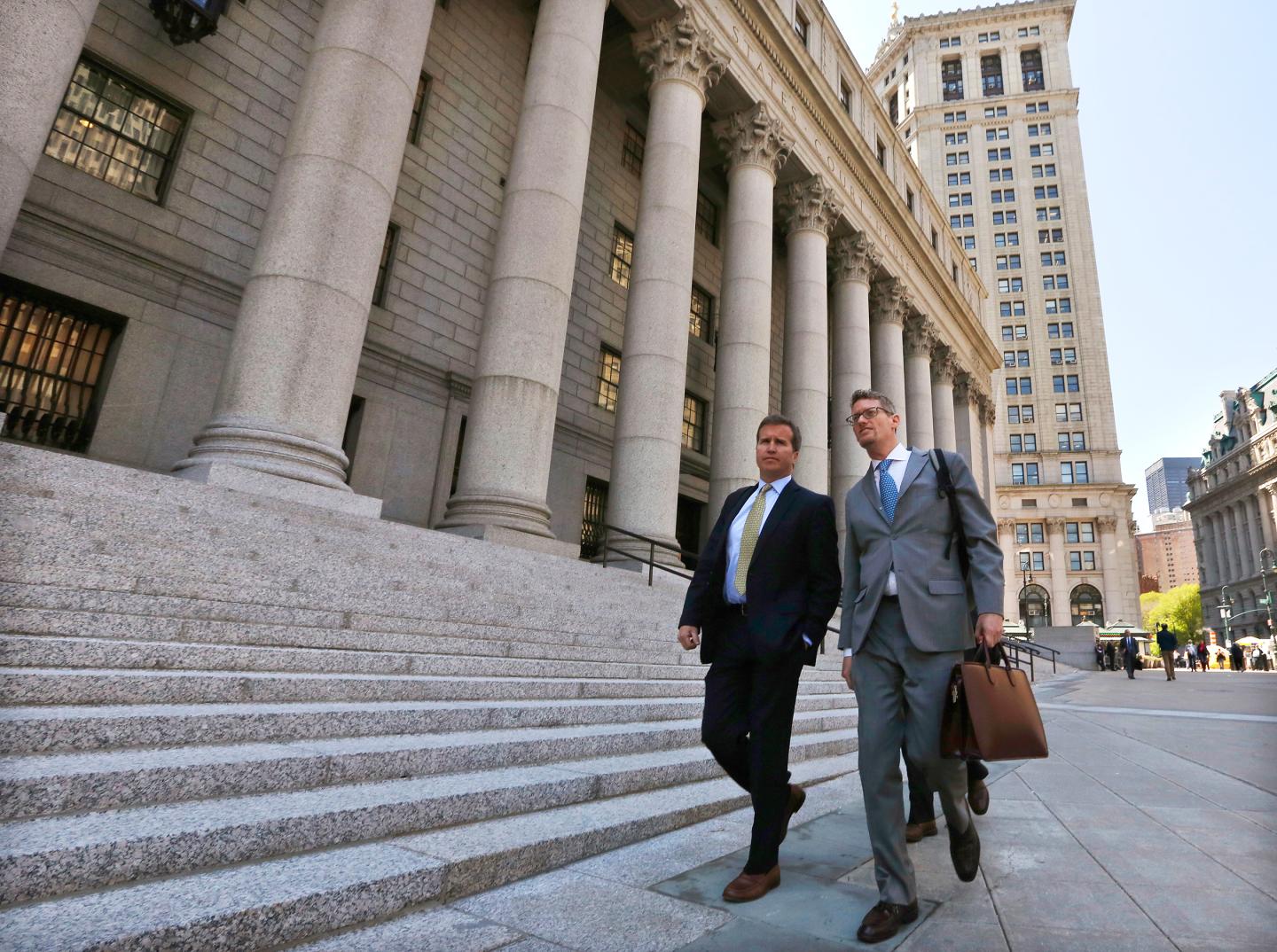
Todd Newman, Diamondback Capital Management portfolio manager, exits the United States Court in Manhattan
Todd Newman, (L) Diamondback Capital Management portfolio manager, exits the United States Court in Manhattan with his attorney John Nathanson following his sentencing hearing in New York, May 2, 2013. Newman, who was convicted in December of four counts of securities fraud and one count of conspiracy tied to illegal trades in Dell Inc and Nvidia Corp stock, was sentenced to 4-1/2 years in prison. REUTERS/Brendan McDermid (UNITED STATES - Tags: BUSINESS CRIME LAW) - RTXZ7S9Photograph by Brendan McDermid—Reuters

The ruling by the U.S. Court of Appeals for the Second Circuit, in December 2014, that overturned the conviction of hedge fund trader Todd Newman has roiled the legal landscape and demonstrated just how nonintuitive the definition of insider trading is.

In response, the office of Manhattan’s top prosecutor, Preet Bharara, has protested through legal filings—so far in vain—that the decision would “dramatically limit the government’s ability to prosecute some of the most common, culpable, and market-threatening forms of insider trading.”

Though Newman’s exoneration is final—last year the Supreme Court rebuffed the government’s request to hear its appeal—the controversies raised by his case rage on.

In October the U.S. Supreme Court will hear a case from California, known as Bassam Salman v. United States, which presents similar issues. Meanwhile, several bills have been introduced in Congress to overturn the Second Circuit’s precedent. (Many bills concerning insider trading have been floated over the years, but if the Salman ruling endorses the decision in Newman’s case, one may actually pass this time.)

For more on Todd Newman and his case, read our feature “The Hedge Fund Trader Who Beat the Feds.”

The disputes spawned by Newman’s case are, in some respects, not new. They are, rather, the latest permutation of a debate that has been playing out for decades over the proper policy goals of our insider-trading laws.

The arguments stem from the fact that there is no actual statute defining the offense. Instead, the law that is used to prosecute it is a general one prohibiting securities fraud, and judges have decided that not all leaks of material nonpublic information rise to the level of “fraud.”

Historically, liberals (and the U.S. Securities and Exchange Commission) have favored creating a level playing field for all investors, where no one has an informational advantage. Conservatives, on the other hand, have urged—and the Supreme Court has held—that markets actually benefit when analysts are rewarded for digging for informational advantages. As a consequence, only trading on information obtained via theft or by breach of a fiduciary duty can amount to insider trading.

Against this benchmark, Newman’s trading fell into a gray area. He was what’s known as a “remote tippee.” To understand that term, we need to take a step back.

If a trader gives a corporate officer a briefcase full of cash in exchange for material nonpublic information, both the officer (the “tipper”) and the trader (“the tippee”) are guilty of insider trading. The tipper has violated his fiduciary duty to the corporation’s shareholders, while the guilt of the tippee derives from the tipper’s.

For more on insider trading, watch this Fortune video:

A tougher case arises when the tipper doesn’t receive any obvious payment. In the landmark 1983 Supreme Court case SEC v. Dirks, the Supreme Court held that if the tipper receives no personal benefit in exchange for a tip, he hasn’t committed fraud and thus can’t be guilty of insider trading. In that case—a weird one factually—a former officer of an insurance company tipped off analyst Raymond Dirks, without recompense, to the fact that fraud was taking place within the company, apparently in an effort to blow the whistle.

Yet even the Dirks court acknowledged that some “gifts” of information—for example, those to a “trading relative or friend”—could still amount to illegal insider trading because of the intangible benefits that accrue to the tipper in those situations.

In Newman’s case, corporate insiders passed tips to a circle of back-scratching hedge fund analysts, who then passed the tips to each other and then up the line to their portfolio managers—including Newman. The original tippers had received no payments in exchange for passing the information, but prosecutors argued that they were still culpable under Dirks, because they had received intangible benefits from having given gifts of information to “trading friends.”

The Second Circuit rejected the argument for two reasons. First, it gave a very narrow interpretation to Dirks’s language about gifts—one that the government has since claimed interprets the language “out of existence.”

Second, the appeals court found that even if the tipper had received some personal benefit, the prosecution hadn’t proved that Newman—the remote ­tippee—knew he had.

This second hurdle has particularly incensed the ruling’s critics, who protest that it all but immunizes big shots. This standard “provides a virtual road map for savvy hedge-fund managers,” Bharara’s prosecutors wrote in their unsuccessful petition for reconsideration, “to insulate themselves from tippee liability by knowingly placing themselves at the end of a chain of insider information and avoiding learning details about the sources of obvious confidential and improperly disclosed information.”

Newman’s attorneys responded that the Second Circuit had simply applied the “time-­honored principle that a defendant may be criminally convicted only if he knows the facts that render his conduct unlawful.”

Newman’s argument carried the day then. But now the Justice Department is hoping for a do-over courtesy of the Supreme Court in the Salman case, in which it’s arguing that the Newman precedent was simply “erroneous.” Given that the late Justice Scalia hasn’t yet been replaced on the court, however, there’s a good chance of a 4–4 stalemate ruling.

A version of this article appears in the September 1, 2016 issue of Fortune with the headline “The New Legal Limbo.”

About the Author
By Roger Parloff
See full bioRight Arrow Button Icon

Latest in Finance

Finance
Lorem ipsum dolor sit amet, consectetur adipiscing elit, sed do eiusmod tempor incididunt ut labore et dolore magna aliqua. Ut enim ad minim veniam
By Fortune Editors
October 20, 2025
Finance
Lorem ipsum dolor sit amet, consectetur adipiscing elit, sed do eiusmod tempor incididunt ut labore et dolore magna aliqua. Ut enim ad minim veniam
By Fortune Editors
October 20, 2025
Finance
Lorem ipsum dolor sit amet, consectetur adipiscing elit, sed do eiusmod tempor incididunt ut labore et dolore magna aliqua. Ut enim ad minim veniam
By Fortune Editors
October 20, 2025
Finance
Lorem ipsum dolor sit amet, consectetur adipiscing elit, sed do eiusmod tempor incididunt ut labore et dolore magna aliqua. Ut enim ad minim veniam
By Fortune Editors
October 20, 2025
Finance
Lorem ipsum dolor sit amet, consectetur adipiscing elit, sed do eiusmod tempor incididunt ut labore et dolore magna aliqua. Ut enim ad minim veniam
By Fortune Editors
October 20, 2025
Finance
Lorem ipsum dolor sit amet, consectetur adipiscing elit, sed do eiusmod tempor incididunt ut labore et dolore magna aliqua. Ut enim ad minim veniam
By Fortune Editors
October 20, 2025

Most Popular

Finance
Lorem ipsum dolor sit amet, consectetur adipiscing elit, sed do eiusmod tempor incididunt ut labore et dolore magna aliqua. Ut enim ad minim veniam
By Fortune Editors
October 20, 2025
Finance
Lorem ipsum dolor sit amet, consectetur adipiscing elit, sed do eiusmod tempor incididunt ut labore et dolore magna aliqua. Ut enim ad minim veniam
By Fortune Editors
October 20, 2025
Finance
Lorem ipsum dolor sit amet, consectetur adipiscing elit, sed do eiusmod tempor incididunt ut labore et dolore magna aliqua. Ut enim ad minim veniam
By Fortune Editors
October 20, 2025
Finance
Lorem ipsum dolor sit amet, consectetur adipiscing elit, sed do eiusmod tempor incididunt ut labore et dolore magna aliqua. Ut enim ad minim veniam
By Fortune Editors
October 20, 2025
Finance
Lorem ipsum dolor sit amet, consectetur adipiscing elit, sed do eiusmod tempor incididunt ut labore et dolore magna aliqua. Ut enim ad minim veniam
By Fortune Editors
October 20, 2025
Finance
Lorem ipsum dolor sit amet, consectetur adipiscing elit, sed do eiusmod tempor incididunt ut labore et dolore magna aliqua. Ut enim ad minim veniam
By Fortune Editors
October 20, 2025
Rankings
  • 100 Best Companies
  • Fortune 500
  • Global 500
  • Fortune 500 Europe
  • Most Powerful Women
  • Future 50
  • World’s Most Admired Companies
  • See All Rankings
Sections
  • Finance
  • Leadership
  • Success
  • Tech
  • Asia
  • Europe
  • Environment
  • Fortune Crypto
  • Health
  • Retail
  • Lifestyle
  • Politics
  • Newsletters
  • Magazine
  • Features
  • Commentary
  • Mpw
  • CEO Initiative
  • Conferences
  • Personal Finance
  • Education
Customer Support
  • Frequently Asked Questions
  • Customer Service Portal
  • Privacy Policy
  • Terms Of Use
  • Single Issues For Purchase
  • International Print
Commercial Services
  • Advertising
  • Fortune Brand Studio
  • Fortune Analytics
  • Fortune Conferences
  • Business Development
About Us
  • About Us
  • Editorial Calendar
  • Press Center
  • Work At Fortune
  • Diversity And Inclusion
  • Terms And Conditions
  • Site Map
  • Facebook icon
  • Twitter icon
  • LinkedIn icon
  • Instagram icon
  • Pinterest icon

Latest in Finance

Young teacher in classroom
SuccessGen Z
Echoing the Great Recession, Gen Z graduates are pouring into education, with Teach For America reporting a 43% surge
By Emma BurleighJanuary 12, 2026
8 hours ago
Future of WorkJobs
Acquisition.com CEO says leaders ‘have it backwards’ when it comes to hiring: She says she hires for emotional intelligence over technical skills
By Jacqueline MunisJanuary 12, 2026
8 hours ago
Real EstateHousing
‘Something big’ just happened in the U.S. housing market, real estate CEO says. And it could mean the difference of being able to buy a home or not
By Sydney LakeJanuary 12, 2026
8 hours ago
EconomyFederal Reserve
The FOMC has the power to pick its own chair and could keep Powell—unless the DOJ probe and Supreme Court let Trump oust him from the Fed
By Jason MaJanuary 12, 2026
8 hours ago
Jerome Powell adjusts his glasses, looking to his left.
EconomyFederal Reserve
Goldman Sachs top economist says Powell probe won’t change the Fed: ‘Decisions are going to be made based on employment and inflation’
By Sasha RogelbergJanuary 12, 2026
8 hours ago
Personal Financegold prices
Current price of gold as of January 12, 2026
By Danny BakstJanuary 12, 2026
11 hours ago

Most Popular

placeholder alt text
Economy
‘Sell America’: Investors dump U.S. assets in fear of the end of Fed independence
By Jim EdwardsJanuary 12, 2026
14 hours ago
placeholder alt text
AI
This CEO laid off nearly 80% of his staff because they refused to adopt AI fast enough. 2 years later, he says he'd do it again
By Nick LichtenbergJanuary 11, 2026
1 day ago
placeholder alt text
Economy
Treasury spent $276 billion in interest on the national debt in the final three months of 2025, says the CBO—up $30 billion from a year prior
By Eleanor PringleJanuary 12, 2026
13 hours ago
placeholder alt text
Economy
Trump may be raising your taxes with his tariffs but he could actually cut inflation with them, too, SF Fed says
By Jake AngeloJanuary 6, 2026
6 days ago
placeholder alt text
Economy
A Supreme Court ruling that strikes down Trump's tariffs would be the fastest way to revive the stalling job market, top economist says
By Jason MaJanuary 11, 2026
1 day ago
placeholder alt text
Success
An exec at $62 billion giant Colgate says Gen Z workers, despite getting flak for being woke and lazy, are actually ‘pushing us to get better’
By Emma BurleighJanuary 10, 2026
3 days ago

© 2025 Fortune Media IP Limited. All Rights Reserved. Use of this site constitutes acceptance of our Terms of Use and Privacy Policy | CA Notice at Collection and Privacy Notice | Do Not Sell/Share My Personal Information
FORTUNE is a trademark of Fortune Media IP Limited, registered in the U.S. and other countries. FORTUNE may receive compensation for some links to products and services on this website. Offers may be subject to change without notice.