• Home
  • Latest
  • Fortune 500
  • Finance
  • Tech
  • Leadership
  • Lifestyle
  • Rankings
  • Multimedia
TechFortune 500

Facebook Makes It Clear That Advertisers Are More Important Than You Are

By
Mathew Ingram
Mathew Ingram
Down Arrow Button Icon
By
Mathew Ingram
Mathew Ingram
Down Arrow Button Icon
August 10, 2016, 12:19 PM ET
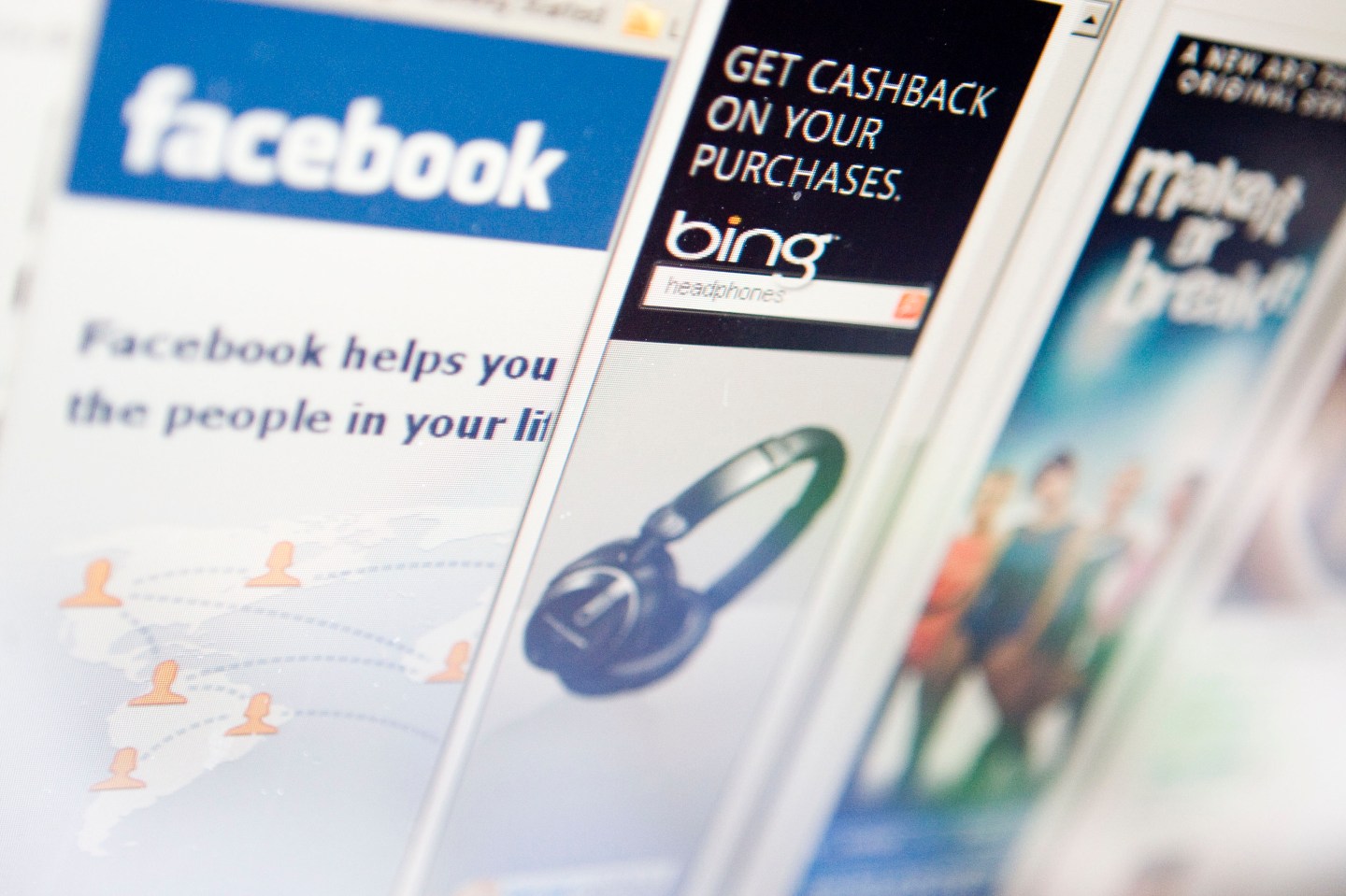
Advertisements on Facebook are displayed on a computer monit
Advertisements on Facebook are displayed on a computer monitor in New York, U.S., on Monday, June 22, 2009, Facebook Inc. said the number of customers using its automated online-advertising system more than tripled in the past year, a sign more small- and medium-sized businesses are turning to the social-networking site. Photograph by Andrew Harrer — Bloomberg via Getty Images

If there’s one battle that has crystallized a lot of the fear and uncertainty around the media business recently, it’s the fight over ad blocking. Most publishers see it as nothing less than an existential threat to their way of life, and they view users who do it as traitors and thieves. And now they have a powerful ally in that war—namely, the world’s largest social network.

There was a lot of obfuscation in Facebook’s announcement on Tuesday, but the bottom line is that the social-networking behemoth has short-circuited the way that ad blockers function, by removing all the indicators that tell ad-blocking software what is an ad and what isn’t. The end result is that users will no longer be able to block ads on its site.

Not surprisingly, advertisers and publishers were overjoyed to have Facebook (FB) in their corner. The Interactive Advertising Bureau said the social network “should be applauded for its leadership on preserving a vibrant value exchange with its users,” and the Newspaper Association of America said it should be “a wake-up call for any publishers who haven’t taken ad-blocking seriously so far.”

For months, publishers have been trying to find ways to combat the rise of ad blocking. Some have taken to using popups that ask users to “whitelist” the site, while others have blocked anyone using ad-blocking software from reading anything on their pages. New York Times editor Mark Thompson said recently that the paper planned to step up the fight because “no one who refuses to contribute to the creation of high quality journalism has the right to consume it.”

Get Data Sheet, Fortune’s technology newsletter.

Facebook, meanwhile, tried hard to argue that it isn’t blocking ads just because they make the network billions of dollars in revenue. Andrew Bosworth, the VP in charge of advertising and business use of the platform, said in an interview with the Wall Street Journal that the decision “isn’t motivated by inventory. We’re doing it more for the principle of the thing.”

That’s a noble sentiment. But which principle is Facebook trying to uphold exactly? The company says that advertising is “part of the Facebook experience,” and it is rolling out tools to help users choose what kinds of ads they see. But ultimately, it has decided that advertisers are more important than users.

The reason for this decision is the same as it is for the New York Times or any other publisher that is trying to crack down on ad blocking: Facebook is fundamentally a media company at its core, in the sense that it relies on advertising as its only revenue source. It has no other option but to fight ad blocking with every tool it has. In 2015, ads made up 95% of the company’s $17.9 billion in revenue.

There’s an age-old expression about web businesses, to the effect that if they don’t charge you for their product or service, then you are the product that is being sold. And that is true in spades for Facebook.

It’s also true that as large and influential as it already is in the advertising market, Facebook is still trying to expand. Among other things, it is working hard to get publishers and advertisers interested in its Facebook Audience Network, which allows ads outside of the Facebook site or app to be targeted to users based on the data that the social network has about their interests.

The lab where Facebook builds its future. Watch:

On that score, Facebook got a very obvious message from one of the world’s largest advertisers that it still has work to do. On the same day Facebook announced its ad-blocking moves, Procter & Gamble said it is planning to scale back its use of targeted Facebook ads, because it has found them to be of “limited effectiveness.”

Although P&G said it isn’t cutting back on its Facebook spending overall, that was still a rather large wakeup call about the marketability of Facebook’s advertising model. The kind of detailed demographic and interest-based targeting that the company specializes in makes sense for plenty of advertisers and marketers, but for a consumer-goods company like P&G that is more interested in broad reach and awareness, that kind of targeting may not be terribly compelling.

To use a real-world analogy, Facebook is still a lot more like direct mail than it is like television, and not everything works well with a direct-mail approach. That’s part of the reason Facebook wants to expand more into video, so that it can give advertisers like P&G more of what they want.

In the meantime, the company’s decisions on ad blocking send a very obvious message, both to advertisers and to users. To the former it says “We are with you, and we will do whatever we have to in order to make sure your messages get through.” And to the latter, it says: “Enjoy the free services that we provide, but be aware that we are paying for those with your attention, and the ones paying for it come first.”


About the Author
By Mathew Ingram
See full bioRight Arrow Button Icon

Latest in Tech

Finance
Lorem ipsum dolor sit amet, consectetur adipiscing elit, sed do eiusmod tempor incididunt ut labore et dolore magna aliqua. Ut enim ad minim veniam
By Fortune Editors
October 20, 2025
Finance
Lorem ipsum dolor sit amet, consectetur adipiscing elit, sed do eiusmod tempor incididunt ut labore et dolore magna aliqua. Ut enim ad minim veniam
By Fortune Editors
October 20, 2025
Finance
Lorem ipsum dolor sit amet, consectetur adipiscing elit, sed do eiusmod tempor incididunt ut labore et dolore magna aliqua. Ut enim ad minim veniam
By Fortune Editors
October 20, 2025
Finance
Lorem ipsum dolor sit amet, consectetur adipiscing elit, sed do eiusmod tempor incididunt ut labore et dolore magna aliqua. Ut enim ad minim veniam
By Fortune Editors
October 20, 2025
Finance
Lorem ipsum dolor sit amet, consectetur adipiscing elit, sed do eiusmod tempor incididunt ut labore et dolore magna aliqua. Ut enim ad minim veniam
By Fortune Editors
October 20, 2025
Finance
Lorem ipsum dolor sit amet, consectetur adipiscing elit, sed do eiusmod tempor incididunt ut labore et dolore magna aliqua. Ut enim ad minim veniam
By Fortune Editors
October 20, 2025

Most Popular

Finance
Lorem ipsum dolor sit amet, consectetur adipiscing elit, sed do eiusmod tempor incididunt ut labore et dolore magna aliqua. Ut enim ad minim veniam
By Fortune Editors
October 20, 2025
Finance
Lorem ipsum dolor sit amet, consectetur adipiscing elit, sed do eiusmod tempor incididunt ut labore et dolore magna aliqua. Ut enim ad minim veniam
By Fortune Editors
October 20, 2025
Finance
Lorem ipsum dolor sit amet, consectetur adipiscing elit, sed do eiusmod tempor incididunt ut labore et dolore magna aliqua. Ut enim ad minim veniam
By Fortune Editors
October 20, 2025
Finance
Lorem ipsum dolor sit amet, consectetur adipiscing elit, sed do eiusmod tempor incididunt ut labore et dolore magna aliqua. Ut enim ad minim veniam
By Fortune Editors
October 20, 2025
Finance
Lorem ipsum dolor sit amet, consectetur adipiscing elit, sed do eiusmod tempor incididunt ut labore et dolore magna aliqua. Ut enim ad minim veniam
By Fortune Editors
October 20, 2025
Finance
Lorem ipsum dolor sit amet, consectetur adipiscing elit, sed do eiusmod tempor incididunt ut labore et dolore magna aliqua. Ut enim ad minim veniam
By Fortune Editors
October 20, 2025
Fortune Secondary Logo
Rankings
  • 100 Best Companies
  • Fortune 500
  • Global 500
  • Fortune 500 Europe
  • Most Powerful Women
  • Future 50
  • World’s Most Admired Companies
  • See All Rankings
Sections
  • Finance
  • Fortune Crypto
  • Features
  • Leadership
  • Health
  • Commentary
  • Success
  • Retail
  • Mpw
  • Tech
  • Lifestyle
  • CEO Initiative
  • Asia
  • Politics
  • Conferences
  • Europe
  • Newsletters
  • Personal Finance
  • Environment
  • Magazine
  • Education
Customer Support
  • Frequently Asked Questions
  • Customer Service Portal
  • Privacy Policy
  • Terms Of Use
  • Single Issues For Purchase
  • International Print
Commercial Services
  • Advertising
  • Fortune Brand Studio
  • Fortune Analytics
  • Fortune Conferences
  • Business Development
About Us
  • About Us
  • Editorial Calendar
  • Press Center
  • Work At Fortune
  • Diversity And Inclusion
  • Terms And Conditions
  • Site Map
Fortune Secondary Logo
  • About Us
  • Editorial Calendar
  • Press Center
  • Work At Fortune
  • Diversity And Inclusion
  • Terms And Conditions
  • Site Map
  • Facebook icon
  • Twitter icon
  • LinkedIn icon
  • Instagram icon
  • Pinterest icon

Latest in Tech

Form Energy CEO Mateo Jaramillo is pictured at Form Factory 1 in Weirton, West Virginia.
Energybatteries
Google is building a bevy of renewable energy in Minnesota—including the world’s largest battery system providing power for a whopping 100 hours
By Jordan BlumFebruary 28, 2026
1 hour ago
sam altman
AIOpenAI
Sam Altman tells staff at an all-hands that OpenAI is negotiating a deal with the Pentagon, after Trump orders the end of Anthropic contracts
By Sharon GoldmanFebruary 27, 2026
10 hours ago
Future of Workthe future of work
Have good taste? It may just get you a job during the AI jobs apocalypse, says Sam Altman
By Marco Quiroz-GutierrezFebruary 27, 2026
11 hours ago
CybersecurityMeta
Trump’s FTC backs off social media regulation despite finding that nearly 20% of America’s children are online for 4 hours or more
By Catherina GioinoFebruary 27, 2026
11 hours ago
Emil Michael smirks
AIAnthropic
Emil Michael, the Silicon Valley exec turned Trump official leading the war against Anthropic, has deep ties to the tech world
By Lily Mae LazarusFebruary 27, 2026
11 hours ago
AIMilitary
Trump orders U.S. government to stop using Anthropic but gives Pentagon six months to phase it out while Hegseth adds supply-chain risk designation
By Jason MaFebruary 27, 2026
12 hours ago

Most Popular

placeholder alt text
Innovation
An MIT roboticist who cofounded bankrupt robot vacuum maker iRobot says Elon Musk’s vision of humanoid robot assistants is ‘pure fantasy thinking’
By Marco Quiroz-GutierrezFebruary 25, 2026
3 days ago
placeholder alt text
Success
Japanese companies are paying older workers to sit by a window and do nothing—while Western CEOs demand super-AI productivity just to keep your job
By Orianna Rosa RoyleFebruary 27, 2026
18 hours ago
placeholder alt text
Commentary
'The Pitt': a masterclass display of DEI in action 
By Robert RabenFebruary 26, 2026
2 days ago
placeholder alt text
Economy
It’s more than George Clooney moving to France: America is becoming the ‘uncool’ country that people want to move away from
By Nick LichtenbergFebruary 27, 2026
1 day ago
placeholder alt text
Success
Walmart exec says U.S. workforces needs to take inspiration from China where ‘5 year-olds are learning DeepSeek’
By Preston ForeFebruary 27, 2026
1 day ago
placeholder alt text
Success
Jeff Bezos says being lazy, not working hard, is the root of anxiety: ‘The stress goes away the second I take that first step’
By Sydney LakeFebruary 25, 2026
3 days ago

© 2026 Fortune Media IP Limited. All Rights Reserved. Use of this site constitutes acceptance of our Terms of Use and Privacy Policy | CA Notice at Collection and Privacy Notice | Do Not Sell/Share My Personal Information
FORTUNE is a trademark of Fortune Media IP Limited, registered in the U.S. and other countries. FORTUNE may receive compensation for some links to products and services on this website. Offers may be subject to change without notice.