• Home
  • Latest
  • Fortune 500
  • Finance
  • Tech
  • Leadership
  • Lifestyle
  • Rankings
  • Multimedia

Trendingnow

1

Jeff Bezos wants the bottom half of earners to pay zero income tax—he says nurses making just $75K should save $12K a year

2

Apple’s Steve Wozniak says he cofounded the tech giant after 5 rejections from HP—not to ‘make money.’ For years, his paycheck was just $50

3

Indeed chief economist says we’re entering an era of ‘great mismatch’ thanks to a generational imbalance of workers

1

Jeff Bezos wants the bottom half of earners to pay zero income tax—he says nurses making just $75K should save $12K a year

2

Apple’s Steve Wozniak says he cofounded the tech giant after 5 rejections from HP—not to ‘make money.’ For years, his paycheck was just $50

3

Indeed chief economist says we’re entering an era of ‘great mismatch’ thanks to a generational imbalance of workers
Finance

Why the Bank Stress Tests Don’t Really Matter

By
Stephen Gandel
Stephen Gandel
Down Arrow Button Icon
By
Stephen Gandel
Stephen Gandel
Down Arrow Button Icon
July 2, 2016, 6:48 AM ET
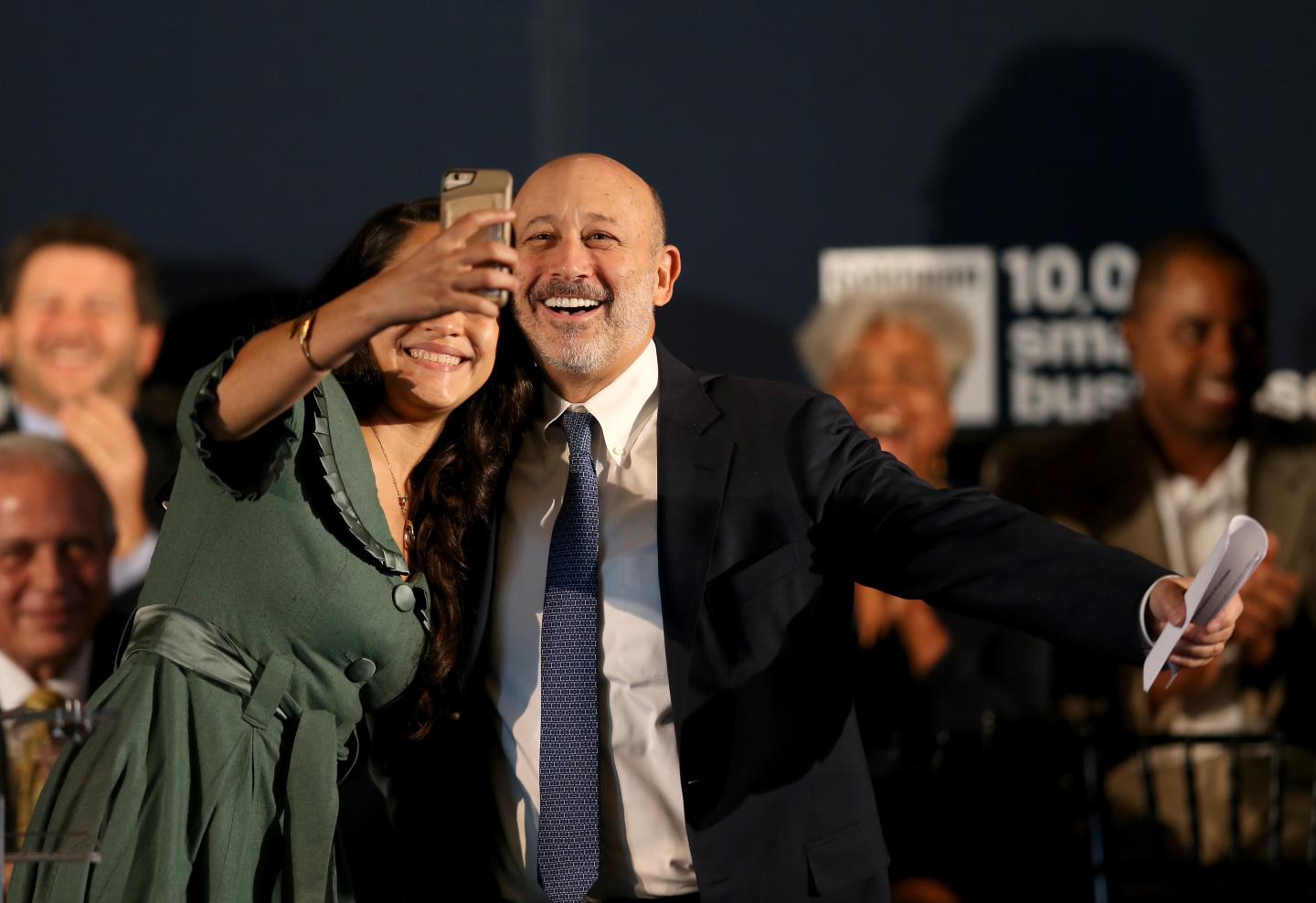
Marco Rubio Joins Goldman Sachs CEO At Small Business Graduation Ceremony
Joe Raedle Getty Images

For all the hullabaloo about the stress tests, the truth is the Fed is making bank executives sweat a little less than it used to. What’s more, after six years of doing these annual tests, the incentive for banks to do well is eroding: It turns out the penalty for not fully passing is essentially nil.

On Wednesday, the Federal Reserve announced that nearly every big bank unconditionally passed its annual stress test, with the notable exception of Morgan Stanley (MS) among U.S.-based firms.

“Over the six years in which [Comprehensive Capital Analysis and Review] has been in place, the participating firms have strengthened their capital positions and improved their risk-management capacities,” Fed governor Daniel Tarullo said in a release.

But what the U.S.’s primary bank regulator didn’t broadcast, nor did any of the individual banks, is that the test was a whole less easier than it was last year—at least for the big banks.

For the nation’s six-largest banks; Bank of America, Citigroup, Goldman Sachs, J.P. Morgan Chase, Morgan Stanley, Wells Fargo; the Fed estimated this year that even after a severe economic shock the banks would have more than enough capital to cover losses—8.4% of their their risk-weighted assets on average. That was up from an average of just over 7% in the stress test a year ago, and by far the best outcome for the banks since the financial crisis. Get down to very low capital levels and you are out of business. Below 5% is considered failing the test.

The Fed says the banks came out looking better this year because they are financially stronger than they have been in recent years. Since the financial crisis and the passage of Dodd-Frank legislation, banks have sought to reduce their exposure to trading and raise the amount of capital on their balance sheets.

But another reason banks fared better on the 2016 stress test is that the test was easier than it used to be, at least for the big banks, based on Fortune’s analysis of the stress test results. For example, when it came to capital ratios, the Fed predicted the big banks on average would lose 20% less than a year ago.

Take Goldman Sachs (GS). A year ago, the Fed predicted Goldman would have a trading loss of $17 billion. This year it downgraded Goldman’s potential trading losses to $10 billion, or just 1.1% of the firm’s assets. The result: The Fed estimated that Goldman’s capital ratio in this year stress test would drop just 5.3 percentage points, down significantly from the 8.5 percentage point drop the Fed forecasted a year ago.

A senior Fed official says that was by design, particularly when it comes to Goldman, which gets more of its revenue from trading than any of the other big banks. This year the firms that get more of their revenue from Wall Street trading businesses fared better than those that primary focus on lending. The reason: In this year’s stress test, regulators factored in what would happen if interest rates went negative in the U.S.—something a top Fed official said on Friday in unlikely to happen. As a result, this year’s stress test included less revenue from loans, because rates are lower, but also fewer market losses for the big banks, on the idea that lower interest rates would prop up the stock market.

But who knows? If rates do end up going negative in the U.S., as they have in large parts of Europe, that would suggest things are going to be pretty bad for the economy, and Goldman and everyone else’s losses could be a lot more than expected. What’s more, if we enter a period of negative interest rates, markets will not function as normal. It seems odd then to expect fewer losses and not more.

On top of that, the Fed in this year’s test reduced the amount of money the banks would have in legal expenses because many of the financial crisis-related cases are gone. But if we experience another financial crisis, expect the claims against Wall Street, and the banks’ legal expenses, to crank up again.

<h2>What, Me Worry?</h2>

But it might not actually matter that the Fed’s stress test was not as stringent as it has been in the past. Even if you don’t pass the test, the penalty box is pretty comfortable. That’s what happened to Morgan Stanley, the only big bank not to fully pass the test in 2016. The Fed said Morgan Stanley had a “material weakness” in its “capital planning process.” The regulator also said that Morgan Stanley internal stress tests did not adequately reflect the “risks and vulnerabilities specific to the firm.”

The punishment? Not a heck of a lot. Morgan Stanley has to resubmit its plan by the end of the year. But if the bank is still deemed to have deficiencies, a senior Fed official said that the central bank still might not impose any penalties. Clearly investors didn’t think there would be any ramifications either. Morgan Stanley’s stock rallied despite its bad stress-test results and was actually the best-performer among the big-six banks this week.

Then there’s Deutsche Bank (DB) and Santander (SC) . U.S.-based subsidiaries of those two foreign banks have failed the Fed’s stress test three years and two years in a row, respectively. The consequences: No fines. No immediate orders to add capital. The Fed had some harsh words for those banks this year, but that’s about it. (Notably, the IMF declared Deutsche Bank to be “the most important net contributor to systemic risks” among the world’s largest banks.)

Of course, the Fed’s stress test has always served a dual role—testing the banks, but also reassuring the public that they were safe. And that’s been a problem. In the beginning, the issue was that if the Fed made the test too hard it might rattle confidence if a number of banks failed. But if the test keeps moving in the opposite direction, few will be willing to trust it either.

When the Federal Reserve’s stress test first came out it was credited with restoring confidence in the banks and jumpstarting the financial system after the credit crunch. It was such a success that pretty much everyone agreed that it should become an annual thing. But like all annual gatherings, the stress tests are starting to look a little tired.

About the Author
By Stephen Gandel
See full bioRight Arrow Button Icon

Latest in Finance

Finance
Lorem ipsum dolor sit amet, consectetur adipiscing elit, sed do eiusmod tempor incididunt ut labore et dolore magna aliqua. Ut enim ad minim veniam
By Fortune Editors
October 20, 2025
Finance
Lorem ipsum dolor sit amet, consectetur adipiscing elit, sed do eiusmod tempor incididunt ut labore et dolore magna aliqua. Ut enim ad minim veniam
By Fortune Editors
October 20, 2025
Finance
Lorem ipsum dolor sit amet, consectetur adipiscing elit, sed do eiusmod tempor incididunt ut labore et dolore magna aliqua. Ut enim ad minim veniam
By Fortune Editors
October 20, 2025
Finance
Lorem ipsum dolor sit amet, consectetur adipiscing elit, sed do eiusmod tempor incididunt ut labore et dolore magna aliqua. Ut enim ad minim veniam
By Fortune Editors
October 20, 2025
Finance
Lorem ipsum dolor sit amet, consectetur adipiscing elit, sed do eiusmod tempor incididunt ut labore et dolore magna aliqua. Ut enim ad minim veniam
By Fortune Editors
October 20, 2025
Finance
Lorem ipsum dolor sit amet, consectetur adipiscing elit, sed do eiusmod tempor incididunt ut labore et dolore magna aliqua. Ut enim ad minim veniam
By Fortune Editors
October 20, 2025

Most Popular

Finance
Lorem ipsum dolor sit amet, consectetur adipiscing elit, sed do eiusmod tempor incididunt ut labore et dolore magna aliqua. Ut enim ad minim veniam
By Fortune Editors
October 20, 2025
Finance
Lorem ipsum dolor sit amet, consectetur adipiscing elit, sed do eiusmod tempor incididunt ut labore et dolore magna aliqua. Ut enim ad minim veniam
By Fortune Editors
October 20, 2025
Finance
Lorem ipsum dolor sit amet, consectetur adipiscing elit, sed do eiusmod tempor incididunt ut labore et dolore magna aliqua. Ut enim ad minim veniam
By Fortune Editors
October 20, 2025
Finance
Lorem ipsum dolor sit amet, consectetur adipiscing elit, sed do eiusmod tempor incididunt ut labore et dolore magna aliqua. Ut enim ad minim veniam
By Fortune Editors
October 20, 2025
Finance
Lorem ipsum dolor sit amet, consectetur adipiscing elit, sed do eiusmod tempor incididunt ut labore et dolore magna aliqua. Ut enim ad minim veniam
By Fortune Editors
October 20, 2025
Finance
Lorem ipsum dolor sit amet, consectetur adipiscing elit, sed do eiusmod tempor incididunt ut labore et dolore magna aliqua. Ut enim ad minim veniam
By Fortune Editors
October 20, 2025
Fortune Secondary Logo
Rankings
  • 100 Best Companies
  • Fortune 500
  • Global 500
  • Fortune 500 Europe
  • Most Powerful Women
  • World's Most Admired Companies
  • See All Rankings
  • Lists Calendar
Sections
  • Finance
  • Fortune Crypto
  • Features
  • Leadership
  • Health
  • Commentary
  • Success
  • Retail
  • Mpw
  • Tech
  • Lifestyle
  • CEO Initiative
  • Asia
  • Politics
  • Conferences
  • Europe
  • Newsletters
  • Personal Finance
  • Environment
  • Magazine
  • Education
Customer Support
  • Frequently Asked Questions
  • Customer Service Portal
  • Privacy Policy
  • Terms Of Use
  • Single Issues For Purchase
  • International Print
Commercial Services
  • Advertising
  • Fortune Brand Studio
  • Fortune Analytics
  • Fortune Conferences
  • Business Development
  • Group Subscriptions
About Us
  • About Us
  • Press Center
  • Work At Fortune
  • Terms And Conditions
  • Site Map
  • About Us
  • Press Center
  • Work At Fortune
  • Terms And Conditions
  • Site Map
  • Facebook icon
  • Twitter icon
  • LinkedIn icon
  • Instagram icon
  • Pinterest icon

Latest in Finance

Inside the ‘stealth wealth’ playbook: How Silicon Valley’s elite buy multimillion-dollar mansions without leaving a paper trail
Real EstateLuxury
Inside the ‘stealth wealth’ playbook: How Silicon Valley’s elite buy multimillion-dollar mansions without leaving a paper trail
By Sydney LakeMay 24, 2026
11 minutes ago
Someone leafs through titles stacked in a library
AIResearch
AI hallucinations are infiltrating expert work—and entering the permanent body of knowledge
By Tristan BoveMay 24, 2026
2 hours ago
It took over a decade, but NextDecade’s longshot bet to lead Texas LNG is finally paying off
EnergyLNG
It took over a decade, but NextDecade’s longshot bet to lead Texas LNG is finally paying off
By Jordan BlumMay 24, 2026
4 hours ago
U.S. reaches limit of sanctions power in targeting Iran’s economy
PoliticsIran
U.S. reaches limit of sanctions power in targeting Iran’s economy
By Magdalena Del Valle and BloombergMay 23, 2026
12 hours ago
Trump’s 3,711 trades point to multiple stock-market strategies
InvestingDonald Trump
Trump’s 3,711 trades point to multiple stock-market strategies
By Justina Lee, Vivien Ngo, Elena Popina, Matthew Griffin and BloombergMay 23, 2026
12 hours ago
U.S. debt is the ‘elephant in the room’ amid bond market rout as Fed-fueled interest costs could drive even larger deficits, analysts warn
EconomyDebt
U.S. debt is the ‘elephant in the room’ amid bond market rout as Fed-fueled interest costs could drive even larger deficits, analysts warn
By Jason MaMay 23, 2026
15 hours ago

Most Popular

Jeff Bezos wants the bottom half of earners to pay zero income tax—he says nurses making just $75K should save $12K a year
Success
Jeff Bezos wants the bottom half of earners to pay zero income tax—he says nurses making just $75K should save $12K a year
By Preston ForeMay 21, 2026
3 days ago
Apple’s Steve Wozniak says he cofounded the tech giant after 5 rejections from HP—not to ‘make money.’ For years, his paycheck was just $50
Success
Apple’s Steve Wozniak says he cofounded the tech giant after 5 rejections from HP—not to ‘make money.’ For years, his paycheck was just $50
By Preston ForeMay 22, 2026
2 days ago
Indeed chief economist says we’re entering an era of ‘great mismatch’ thanks to a generational imbalance of workers
Success
Indeed chief economist says we’re entering an era of ‘great mismatch’ thanks to a generational imbalance of workers
By Emma BurleighMay 22, 2026
2 days ago
Microsoft reports are exposing AI's real cost problem: Using the tech is more expensive than paying human employees
AI
Microsoft reports are exposing AI's real cost problem: Using the tech is more expensive than paying human employees
By Jake AngeloMay 22, 2026
2 days ago
Elon Musk's SpaceX IPO filing just told us what business he's betting on for the future—and it's not rockets
Investing
Elon Musk's SpaceX IPO filing just told us what business he's betting on for the future—and it's not rockets
By Shawn TullyMay 23, 2026
1 day ago
Meet a 21-year-old community college student who's going to China as the first American woman welder in the trades Olympics
Future of Work
Meet a 21-year-old community college student who's going to China as the first American woman welder in the trades Olympics
By Mike Householder and The Associated PressMay 17, 2026
7 days ago

© 2026 Fortune Media IP Limited. All Rights Reserved. Use of this site constitutes acceptance of our Terms of Use and Privacy Policy | CA Notice at Collection and Privacy Notice | Do Not Sell/Share My Personal Information
FORTUNE is a trademark of Fortune Media IP Limited, registered in the U.S. and other countries. FORTUNE may receive compensation for some links to products and services on this website. Offers may be subject to change without notice.