• Home
  • Latest
  • Fortune 500
  • Finance
  • Tech
  • Leadership
  • Lifestyle
  • Rankings
  • Multimedia
LeadershipComputer history

Why IBM Will Soar While Apple Stumbles

By
Charles O’Reilly III
and
Michael Tushman
Michael Tushman
Down Arrow Button Icon
By
Charles O’Reilly III
and
Michael Tushman
Michael Tushman
Down Arrow Button Icon
June 30, 2016, 11:30 AM ET
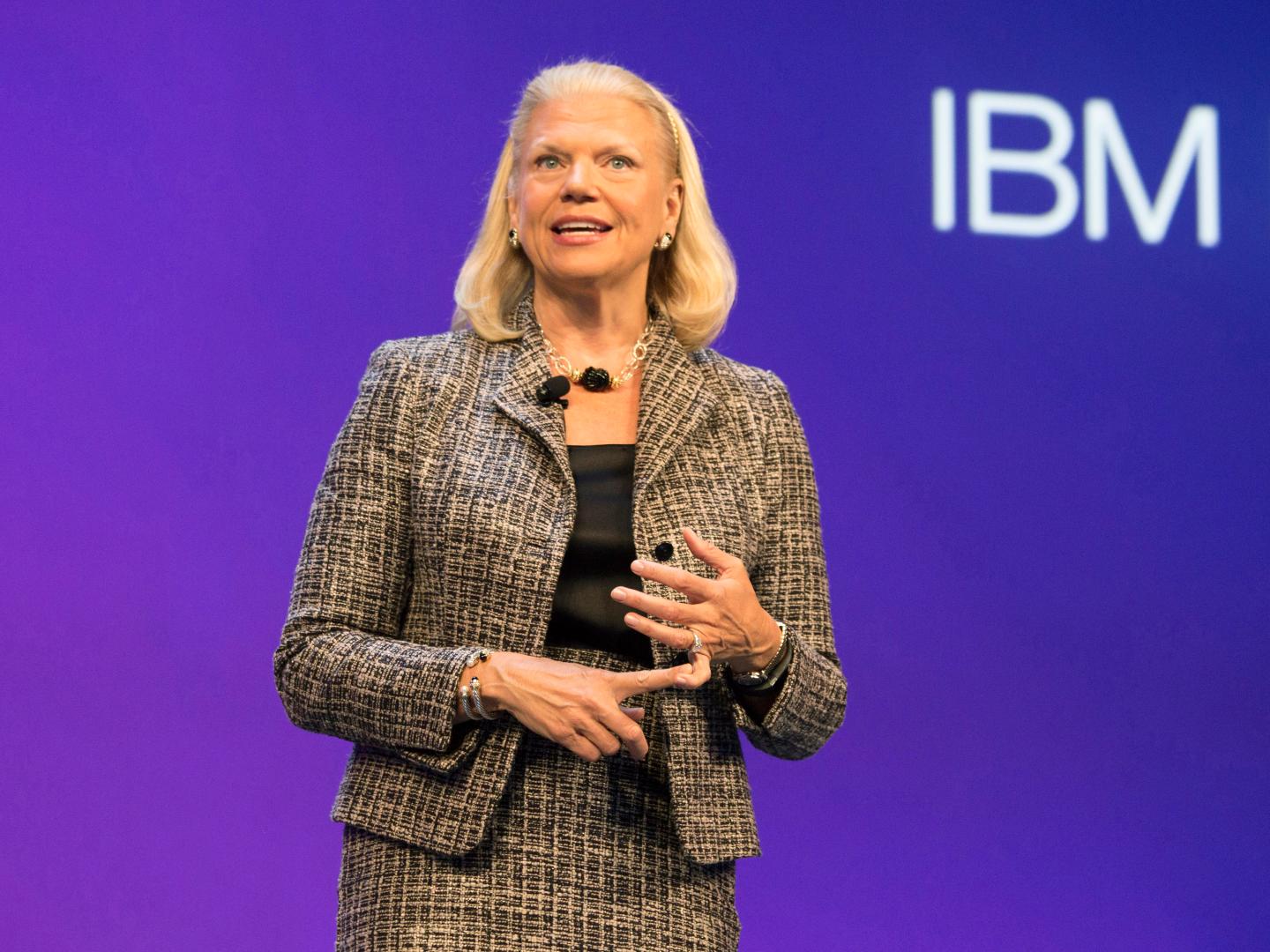
IBM CEO DISCUSSES BUSINESS PARTNER ROLE IN THE COGNITIVE ERA
**COMMERCIAL IMAGE** In this photo distributed by Feature Photo Service for IBM: February 16, 2016 - In Orlando, FL at the IBM PartnerWorld Leadership Conference, IBM Chairman and CEO Ginni Rometty addressed more than 1,500 IBM Business Partners from 78 countries. IBM announced a redesign of its Business Partner program with a roadmap for driving business growth and education for the cognitive era. (Sophie Elgort/Feature Photo Service for IBM)Photograph by Sophie Elgort/Feature Photo Service for IBM—AP

IBM and Apple are firms at a crossroad. Neither can continue as it is; both face a fundamental reinvention. The difference is that one knows it, and the other shows all the signs of being in denial. Our bet is that IBM will succeed, and that Apple, contrary to conventional wisdom, may be the one to fail.

IBM (IBM) is on a long losing streak, with 14 quarters of revenue decline. Many commentators have forecast that this decline will soon undermine profits, and some have even expressed doubt in the wisdom of the mighty Warren Buffet for his investment in the firm.

Apple (AAPL), on the other hand, is the world’s most highly valued company and one that has brought delight to its millions of loyal customers. It’s a firm at the top of its game and, despite slipping from its pedestal last quarter, it still enjoys the enthusiasm of investors.

And that’s a reason for worry. Our research over more than 30 years has told us that it can be dangerous to be at the top of your game the way Apple is now. Business history is littered with examples of once great companies that missed the next wave of innovation in their markets. The likes of Kodak, Blackberry, and Nokia have all fallen by the wayside in recent years.

What we’ve learned is that these companies didn’t fail because of technology or bad luck, but because of arrogance. Sears (SHLD) is a fine example. At one time, one in every nine dollars spent in America was at a Sears store. Its executives ignored the advance of Wal-Mart (WMT) and built the Sears Tower as a monument to their greatness.

IBM and Apple have both faced adversity. Apple was in trouble before Steve Jobs’s triumphant return in 1997, and IBM famously danced its way back to profitability under legendary CEO Lou Gerstner following its near-death experience of the early 1990s.


What separates the two is that IBM learned from the experience and reinvented itself in the early 2000s as a business services firm. It is no longer as dependent on selling computer hardware, and it is a major provider of business consulting and analytics.

IBM was thus able to move ahead of the next curve, bypassing the disruption that claimed HP, Dell, Sun, and other competitors. In contrast, Apple remains dependent on an array of well-designed products that are beginning to lose some of their luster and cachet.

IBM’s recipe for transformation was what we call the ambidextrous organization. The company learned how to lead in core markets, like those for computer hardware and software, even as it created disruption in emerging markets.

It did this with a series of carefully designed experiments led by Emerging Business Opportunity units (EBOs). For example, IBM Life Sciences was set up as a quasi-independent unit with the goal of making the company central to the emerging fields of genetic and proteomic research. At its core is much of what IBM now calls Watson.

The EBOs were separated from IBM’s management system and its focus on driving short-term profits. With EBOs, the mission was to test the market, learn what value proposition worked, and then establish IBM’s market position as quickly as possible. Leaders of new EBOs, however, were free to find new ways of working, changing IBM’s typical approach when necessary and recruiting deep specialist skills appropriate to solving the customer’s problem, not simply to selling IBM technology.

By 2006, EBOs alone had contributed more than $15 billion in incremental IBM growth and were a more effective growth instrument than acquisitions. One senior executive estimates that 45% of IBM’s current profits derive from these initial EBOs. IBM learned how to grow through experimentation.

IBM continues to transform itself today. While CEO Ginni Rometty is under pressure to deliver results, she is leading a firm that knows how to manage these major pivots. Its DNA is different from the firm that arrogantly ignored the threat of Microsoft (MSFT) and others in the early 1990s.

Apple’s challenge is that it may not have learned the same lesson from its own past. Its rapid rise was based on some fundamentals about product experience, speed of innovation, and a dedication to be the leader in any product category.

Unfortunately, these great strengths may have become toxic. Its culture has become highly secretive. Suppliers may only refer to Apple by a specially assigned code name. They win new contracts without knowing why and what Apple plans to do with their technology and then lose them again without knowing what they did wrong.

For these reasons, Apple risks become inwardly focused, cutting itself off from the lessons that IBM’s experiments were able to teach it. It is suffering the curse that comes with being the inventor of a whole new product class—an environment in which organizations begin to believe their own propaganda.

Apple’s new $5 billion “spaceship” headquarters is just one indicator that they too are gripped by the “success syndrome.” Let’s hope that in years to come it does not stand next to the Sears Tower as an expression not of success but of hubris.


Charles O’Reilly III and Michael Tushman are professors at the Stanford Graduate School of Business and Harvard Business School, respectively, and authors of Lead and Disrupt: How to Solve the Innovator’s Dilemma (Stanford Business Books, 2016).

About the Authors
By Charles O’Reilly III
See full bioRight Arrow Button Icon
By Michael Tushman
See full bioRight Arrow Button Icon

Latest in Leadership

Finance
Lorem ipsum dolor sit amet, consectetur adipiscing elit, sed do eiusmod tempor incididunt ut labore et dolore magna aliqua. Ut enim ad minim veniam
By Fortune Editors
October 20, 2025
Finance
Lorem ipsum dolor sit amet, consectetur adipiscing elit, sed do eiusmod tempor incididunt ut labore et dolore magna aliqua. Ut enim ad minim veniam
By Fortune Editors
October 20, 2025
Finance
Lorem ipsum dolor sit amet, consectetur adipiscing elit, sed do eiusmod tempor incididunt ut labore et dolore magna aliqua. Ut enim ad minim veniam
By Fortune Editors
October 20, 2025
Finance
Lorem ipsum dolor sit amet, consectetur adipiscing elit, sed do eiusmod tempor incididunt ut labore et dolore magna aliqua. Ut enim ad minim veniam
By Fortune Editors
October 20, 2025
Finance
Lorem ipsum dolor sit amet, consectetur adipiscing elit, sed do eiusmod tempor incididunt ut labore et dolore magna aliqua. Ut enim ad minim veniam
By Fortune Editors
October 20, 2025
Finance
Lorem ipsum dolor sit amet, consectetur adipiscing elit, sed do eiusmod tempor incididunt ut labore et dolore magna aliqua. Ut enim ad minim veniam
By Fortune Editors
October 20, 2025

Most Popular

Finance
Lorem ipsum dolor sit amet, consectetur adipiscing elit, sed do eiusmod tempor incididunt ut labore et dolore magna aliqua. Ut enim ad minim veniam
By Fortune Editors
October 20, 2025
Finance
Lorem ipsum dolor sit amet, consectetur adipiscing elit, sed do eiusmod tempor incididunt ut labore et dolore magna aliqua. Ut enim ad minim veniam
By Fortune Editors
October 20, 2025
Finance
Lorem ipsum dolor sit amet, consectetur adipiscing elit, sed do eiusmod tempor incididunt ut labore et dolore magna aliqua. Ut enim ad minim veniam
By Fortune Editors
October 20, 2025
Finance
Lorem ipsum dolor sit amet, consectetur adipiscing elit, sed do eiusmod tempor incididunt ut labore et dolore magna aliqua. Ut enim ad minim veniam
By Fortune Editors
October 20, 2025
Finance
Lorem ipsum dolor sit amet, consectetur adipiscing elit, sed do eiusmod tempor incididunt ut labore et dolore magna aliqua. Ut enim ad minim veniam
By Fortune Editors
October 20, 2025
Finance
Lorem ipsum dolor sit amet, consectetur adipiscing elit, sed do eiusmod tempor incididunt ut labore et dolore magna aliqua. Ut enim ad minim veniam
By Fortune Editors
October 20, 2025
Fortune Secondary Logo
Rankings
  • 100 Best Companies
  • Fortune 500
  • Global 500
  • Fortune 500 Europe
  • Most Powerful Women
  • World's Most Admired Companies
  • See All Rankings
  • Lists Calendar
Sections
  • Finance
  • Fortune Crypto
  • Features
  • Leadership
  • Health
  • Commentary
  • Success
  • Retail
  • Mpw
  • Tech
  • Lifestyle
  • CEO Initiative
  • Asia
  • Politics
  • Conferences
  • Europe
  • Newsletters
  • Personal Finance
  • Environment
  • Magazine
  • Education
Customer Support
  • Frequently Asked Questions
  • Customer Service Portal
  • Privacy Policy
  • Terms Of Use
  • Single Issues For Purchase
  • International Print
Commercial Services
  • Advertising
  • Fortune Brand Studio
  • Fortune Analytics
  • Fortune Conferences
  • Business Development
  • Group Subscriptions
About Us
  • About Us
  • Press Center
  • Work At Fortune
  • Terms And Conditions
  • Site Map
  • About Us
  • Press Center
  • Work At Fortune
  • Terms And Conditions
  • Site Map
  • Facebook icon
  • Twitter icon
  • LinkedIn icon
  • Instagram icon
  • Pinterest icon

Latest in Leadership

old
Commentaryaffordability
The American household just took an 81% margin cut. Wall Street hasn’t priced it in
By Katica RoyMay 2, 2026
2 hours ago
mackenzie
Commentaryphilanthropy
Stop donating to Harvard and the Ivy League. There’s a better option that MacKenzie Scott already figured out
By Ed Smith-LewisMay 2, 2026
5 hours ago
Blackstone’s Steve Schwarzman built a program to teach young leaders about China. It’s harder to get into than Harvard
C-SuiteFinance
Blackstone’s Steve Schwarzman built a program to teach young leaders about China. It’s harder to get into than Harvard
By Shawn TullyMay 2, 2026
6 hours ago
cox
C-SuiteWealth
Billionaires have a problem money can’t solve: They don’t know how to talk to their kids
By Nick LichtenbergMay 1, 2026
19 hours ago
male engineer working under pylon
EnergyElectricity
Utility CEOs pocket $626 million as American energy bills hit record highs
By Tristan BoveMay 1, 2026
19 hours ago
Fortune 500 Power Moves: Which executives gained and lost power this week
C-SuiteFortune 500 Power Moves
Fortune 500 Power Moves: Which executives gained and lost power this week
By Fortune EditorsMay 1, 2026
22 hours ago

Most Popular

Scott Bessent on financial literacy: 'it drives me crazy' to see young men in blue-collar construction jobs playing the lottery
Personal Finance
Scott Bessent on financial literacy: 'it drives me crazy' to see young men in blue-collar construction jobs playing the lottery
By Fatima Hussein and The Associated PressMay 1, 2026
1 day ago
China dominates the world's lithium supply. The U.S. just found 328 years' worth in its own backyard
North America
China dominates the world's lithium supply. The U.S. just found 328 years' worth in its own backyard
By Jake AngeloApril 30, 2026
2 days ago
The U.S. economy is booming — just not where 50 million Americans live
Commentary
The U.S. economy is booming — just not where 50 million Americans live
By Derek KilmerMay 1, 2026
1 day ago
Current price of oil as of May 1, 2026
Personal Finance
Current price of oil as of May 1, 2026
By Joseph HostetlerMay 1, 2026
1 day ago
A Chick-fil-A worker got fired and then showed up behind the register to allegedly refund himself over $80,000 in mac and cheese
Law
A Chick-fil-A worker got fired and then showed up behind the register to allegedly refund himself over $80,000 in mac and cheese
By Catherina GioinoMay 1, 2026
20 hours ago
Apple cofounder Ronald Wayne—whose stake would be worth up to $400 billion had he not sold it in 1976—says that at 91, he has no regrets
Success
Apple cofounder Ronald Wayne—whose stake would be worth up to $400 billion had he not sold it in 1976—says that at 91, he has no regrets
By Preston ForeApril 27, 2026
5 days ago

© 2026 Fortune Media IP Limited. All Rights Reserved. Use of this site constitutes acceptance of our Terms of Use and Privacy Policy | CA Notice at Collection and Privacy Notice | Do Not Sell/Share My Personal Information
FORTUNE is a trademark of Fortune Media IP Limited, registered in the U.S. and other countries. FORTUNE may receive compensation for some links to products and services on this website. Offers may be subject to change without notice.