A succession of funding deals by deep-pocketed sovereign wealth funds have thrown a life preserver to some of the world’s biggest private tech firms whose high valuations have come under scrutiny in the past year.
Saudi Arabia and other Gulf States along with state-backed investors in Singapore and China have plowed money into hot tech investments such as ride-sharing company Uber and Chinese Internet giant Alibaba (BABA) and its private affiliates.
With overall funding for start-ups slowing down by a third to $25.5 billion in the last two quarters, according to data from CB Insights, high-profile ventures are turning to government funds or institutional money to create “private IPOs” rather than to venture capitalists or chancing public listings.
These capital injections have helped to keep valuations high as other tech ventures such as those of cloud storage service Dropbox or Indian takeaway food ordering app Zomato have been marked down by some earlier backers.
“Sovereign wealth funds are well placed to make large bets…given their deep access to capital and their risk appetite for growth investments,” said Jacqueline Chan, a Singapore-based partner at law firm Milbank, who has advised sovereign wealth funds.
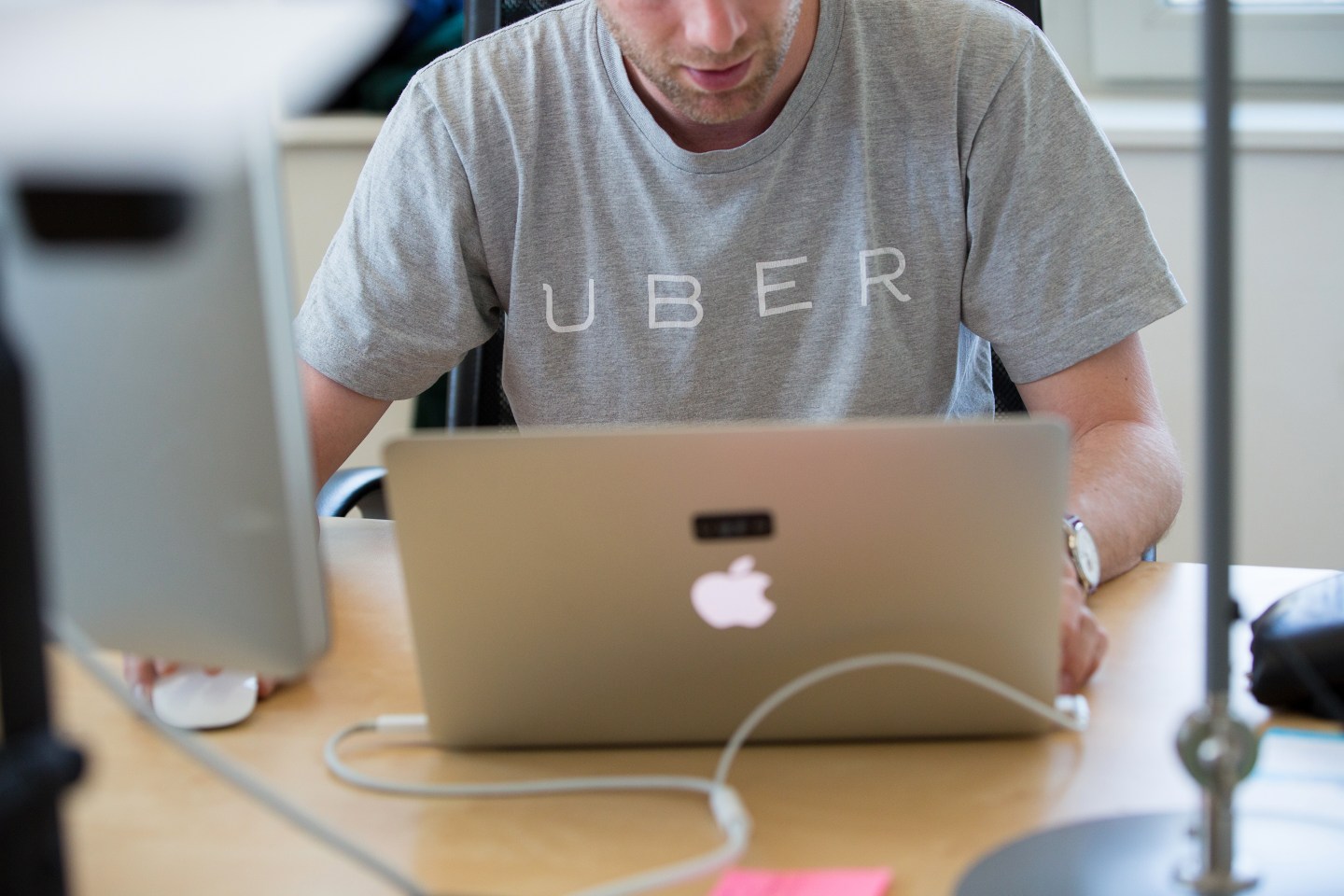
Saudi Arabia’s Public Investment Fund said last week it invested $3.5 billion in Uber, Silicon Valley’s most highly valued private company. At $62.5 billion, the car-sharing firm is worth more than the stock market capitalizations of automakers BMW (BMW-HM) or GM (GM) and close to VW (VLKAY), Daimler (DDAIF), and Ford (F).
For more, read: Uber’s No Good, Very Bad Deal with Saudi Arabia
Also last week, Singapore’s two big government investors bought $1 billion of Alibaba Group shares, while in April, China Investment, took part in a $4.5 billion round in Alibaba’s financial services affiliate ANT Financial with other investors, marking the largest ever funding round in a fintech firm.
FUNDRAISING ARMS RACE
Technology stakes still make up only a tiny fraction of investment portfolios for sovereigns, with most sticking with conventional fixed income and equity investments and long-term projects like hotels, shopping centers, and ports.
And only about 10 of the world’s 80 or more sovereign funds have made sizable investments in tech ventures so far according to market research firm Sovereign Wealth Fund Institute.
“It becomes a waste of time to write small checks for funds of this scale,” SWF Institute president Michael Maduell said.
But the pace of sovereign investment in tech ventures is picking up with more than two dozen in the past year.
Singapore state fund Temasek has invested in more tech ventures than all other sovereign funds combined – more than 70 dating back to the dot-com era.
Temasek has backed Airbnb, Chinese Uber rival Didi Chuxing, and China Internet Plus Group, the country’s largest online group buying site, as well as Alibaba.
“New, disruptive, technologies and platforms are very much part of our investment focus,” Temasek spokesman Stephen Forshaw said.
The new sovereign investments have had an outsized impact on the private market for new companies, long dominated by venture capitalists in Silicon Valley and Israel, and more recently, in China, India, and Europe.
Top venture capital firms such as Accel, Peter Thiel’s Founders Fund, Andreessen Horowitz, Sequoia Capital, and Index Ventures have responded by raising big new funds to stay in the game by focusing on earlier, riskier stages of funding than sovereign funds are ever likely to do due to their size.
INFLUENTIAL
Singapore’s other big sovereign investor GIC manages central bank reserves and has traditionally invested with private equity firms, but lately has been going alone on private equity-type tech investments such as U.S. payments provider Square, a year ahead of its late 2015 IPO.
“Technology is a very important part of our investment universe, and will be increasingly so,” said Lim Chow Kiat, GIC’s deputy president and group chief investment officer. “It’s critical for GIC to stay involved as all these changes are producing big opportunities as well as risks.”
Sovereign funds in oil-rich Gulf states have also begun to take positions in tech ventures, breaking with a prior focus on real estate deals.
Saudi Arabia’s $3.5 billion stake in Uber was the largest ever single private investment in a tech company while the Kuwait Investment Authority took the lead this year in a $165 million private equity funding for struggling U.S. wearable devices maker Jawbone, one of seven tech and healthcare ventures it has made in the last two years. Qatar Investment Authority invested in Uber and Indian e-commerce firm Flipkart in 2014.
Get Data Sheet, Fortune’s technology newsletter.
“While sovereign wealth funds are not going to be in every tech deal, they are starting to exert their influence,” Maduell said. “They have definitely begun to get their hands dirty.”
Nevertheless, tech ventures are still too risky for some sovereign funds, with mandates to preserve capital and ensure predictable returns.
Norway’s $865-billion fund, the world’s largest sovereign wealth investor, is a major backer of publicly traded tech stocks such as Apple (AAPL), but it can only invest in an unlisted company in the final run up to a public offering.
Restrictions on private investments mean it passed on an offer from Facebook (FB) to invest several years ago.
“Facebook made contact and asked us whether we wanted to be a shareholder. We said no,” the fund’s CEO, Yngve Slyngstad, told Norwegian daily VG a week ago.