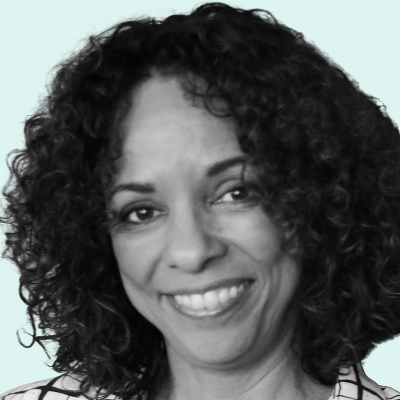

Gil Addo is the CEO and co-founder of RubiconMD, a healthcare start-up with a lofty sounding mission: To democratize access to medical expertise. The company, which was launched on a relative shoestring in March 2013, is a tech platform that matches primary care doctors with online, on-demand consults from vetted specialists. Addo, a first generation American, got the idea when he watched his grandmother, from Barbados, struggle to find access to expertise when she was diagnosed with a brain tumor. “Where you live determines the kind of care you receive,” he says. “It’s pretty clear.”
His parents – his father is from Ghana and his mother is from Barbados – arrived in the U.S. with little, but both managed to make it through four-year universities and eventually establish themselves in the middle class. Addo studied biomedical engineering at Yale and got his MBA at Harvard. His co-founders have similar pedigrees, one is board certified in internal medicine. As origin stories go, it’s a great one.
He describes a recent experience with a mid-tier, West Coast venture firm that went well, until it didn’t. “We met their valuation requirements,” he says. The tech passed muster, and there was real enthusiasm for the business model from the limited partners. The term “in our wheelhouse” was thrown around. Then the man who would lead the investment committee took an in-person meeting. The firm promptly passed.
“There is one logical conclusion,” Addo says calmly. “It was us.” Though there may be a growing acceptance of young black entrepreneurs in sectors like fashion, entertainment, and consumer brands, in more conservative industries like healthcare, there is still limited representation. “The difference between someone with a great idea and a great business is access to capital,” he says. “Are you still worth investing in when you don’t fit the mold?”
RubiconMD closed a $4 million series A this month, in a round led by Waterline Ventures out of Cambridge, Mass. They’ll be working on making changes to improve clinician workflow and data analytics. With some $1.5 billion being poured into transforming the primary care experience, Addo says, it’s a segment that makes sense.
But it’s the double bottom line that makes RubiconMD a poster child for diverse founders and unconventional business thinking. It’s worth the risk, he says. The company is revenue producing, operating in 26 states, and nearly half the population they serve are Medicaid-eligible or otherwise vulnerable, people who don’t typically see the kind of doctors who have top specialists on speed dial. “Health care is a public good regardless of where you are,” he says. “We’re building a great business that helps the underserved.”
On Point
| I vote, you vote. |
| When Virginia Governor Terry McAuliffe restored voting rights to more than 200,000 convicted felons this past April, he was overturning a long embedded and racist tactic to strip African Americans of their ability to participate in civic life. “The whole genesis of what we’re talking about goes to the core of racism in this country,” he told The Atlantic. Vann R. Newkirk interviewed some of the people who will be voting this year, many for the first time. |
| The Atlantic |
| You must be better than everyone else. |
| A recently published study of 16,426 working adults in Norway has human resource professionals and other clinicians working overtime. In a first ever large scale study, researchers showed a “positive and significant correlation” between workaholism—investing so much time and effort at work that it impairs other important life areas—and a host of psychiatric disorder symptoms, ranging from ADHD to anxiety and depression. Though the survey doesn’t examine the effect based on race, it’s worth considering the workaholic tendencies of underrepresented or other minority groups in your workforce. |
| PLOS ONE |
| Stand by me. |
| The city of Jennings, Mo. sits on the southeast border of its more famous neighbor Ferguson, but their stories are similar. The Jennings Police Department was so plagued by lawsuits and racist complaints that it was disbanded in 2011. (It has since been reconstituted, to a measurable degree of success.) But the tiny town is enjoying some rare good news, in the form of Tiffany Anderson, a creative school superintendent who is going to great lengths to turn her school system into a sustainable bridge out of poverty for the 3,000 students she serves. Her solutions include healthy food, low cost mental and physical healthcare, and free laundry rooms for strapped families. Laura Ling has a great video profile. |
| Seeker |
| Location, location, location. |
| In China, a squirrelly stock market and government restrictions on sending cash overseas has made real estate an attractive investment for its large middle class population. There’s a hitch: you can own your home, but the land underneath is owned and leased by the government. So, what happens when government regulations prevent you from selling or profiting on your home? Recent and widespread problems with the land-lease system have huge implications for the Chinese economy. Chinese families pour as much as two-thirds of their wealth into housing and real estate investments. |
| New York Times |
The Woke Leader
| Sweet Sweetback’s Car Wash in Selma. |
| Slate asked some 20 filmmakers, scholars, and other thinkers to nominate their favorites to create this video tribute to the 50 greatest films by black directors. Despite the need for more, and more meaningful, inclusion, “Black filmmakers have long been contributing some of the industry’s best work.” The supercut reads as a history of cinema, a tribute to black culture and an attempt to create a common vernacular for black artistry. Shade alert: Tyler Perry was not invited to this house party. |
| Slate |
| The unbearable whiteness of being. |
| NPR’s excellent Code Switch kicks off its first podcast with a philosophical investigation: What do we mean when we talk about “being white?” And why is whiteness so hard to talk about? Contrary to popular understanding, there are white studies classes in college but, as Gene Demby found out, talking about white identity is a challenge. “Since we don't have very useful language around white identity, we mostly talk about it as a kind of empty space, defined by what it's not,” says historian and author Nell Irvin Painter. The podcast series is hosted by Gene Demby and Shereen Marisol Meraji. |
| NPR |
| What color is autism? |
| Long considered a disease of white, often affluent children, kids of color with autism are less likely to be diagnosed early—or at all—or get the specialized services that they need. With research, advocacy, and support geared toward white families, other folks are having a hard time navigating an already hard road. One example: How do you teach a noncompliant and agitated black boy to survive an encounter with the police? White children are 30% more likely to receive an autism diagnosis than blacks, and 50% more likely than Hispanics, according to 2014 data from the CDC. |
| Pacific Standard |
Quote
|
|---|