• Home
  • Latest
  • Fortune 500
  • Finance
  • Tech
  • Leadership
  • Lifestyle
  • Rankings
  • Multimedia
TechToyota

Toyota Is Turning This City Into a Giant Connected Car Experiment

By
Kirsten Korosec
Kirsten Korosec
Down Arrow Button Icon
By
Kirsten Korosec
Kirsten Korosec
Down Arrow Button Icon
April 14, 2016, 7:14 AM ET
JAPAN-AUTO-TECHNOLOGY-TOYOTA
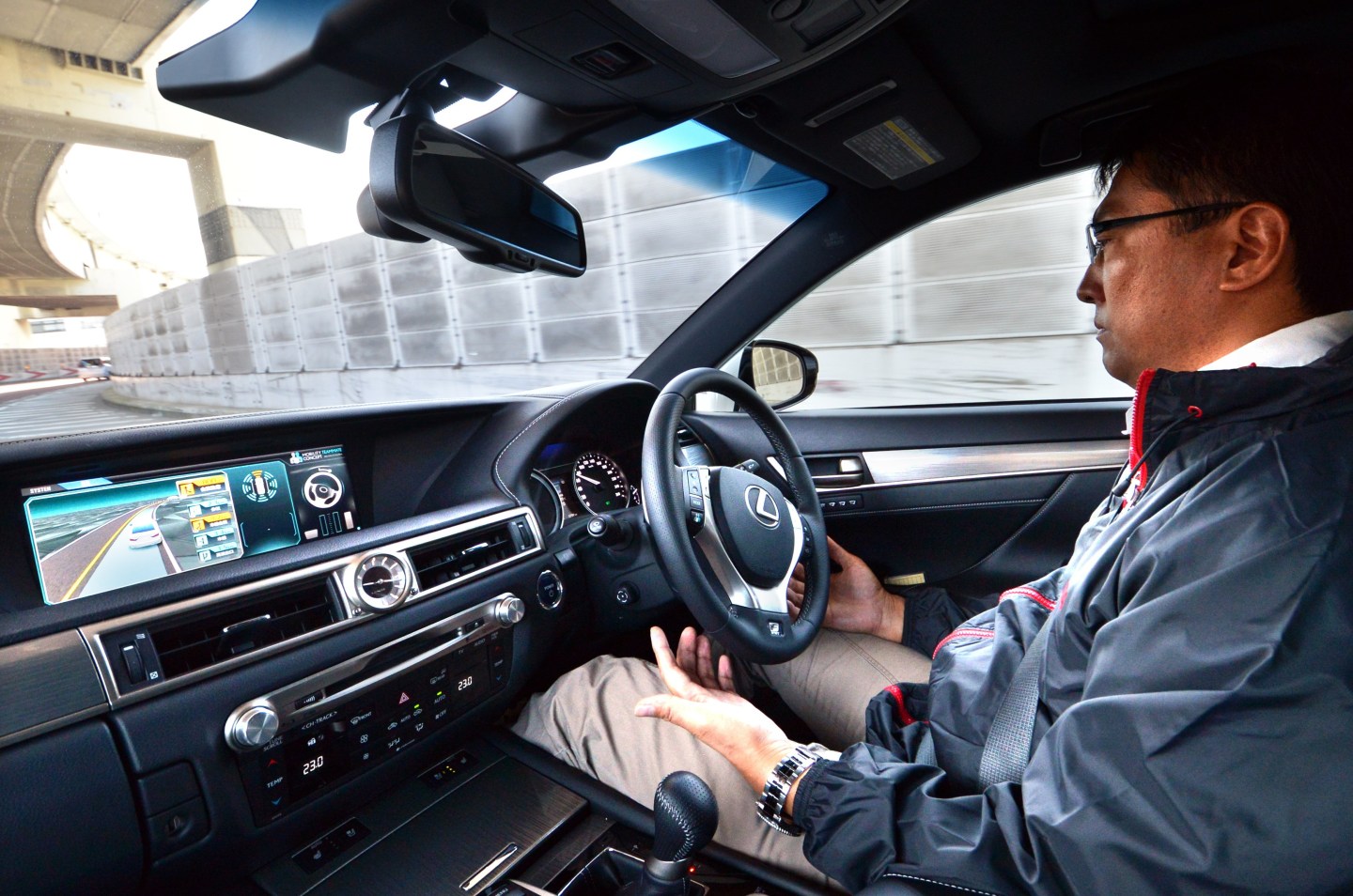
Japan's auto giant Toyota demonstrates autonomous driving with a Lexus GS450h on the Tokyo metropolitan highway during Toyota's advanced technology presentation in Tokyo on October 6, 2015. Toyota is expecting to commercialise autonomous vehicles before the Tokyo Olympics in 2020. AFP PHOTO / Yoshikazu TSUNO (Photo credit should read YOSHIKAZU TSUNO/AFP/Getty Images)Photograph by Yoshikazu Tsuno — AFP via Getty Images

Toyota, the world’s largest automaker, is sending 5,000 connected cars that can wirelessly communicate with other vehicles and infrastructure onto the streets of Ann Arbor, Mich., in a real-world experiment designed to move autonomous driving closer to reality.

Toyota (TM) is partnering with the University of Michigan’s Transportation Research Institute on the project. Drivers who agree to participate in the tests will have a small data-collecting box installed in the trunk area of their car and two small antennas—one on or near the rear windshield and another on the roof. The equipment transmits speed and position data from the vehicle to other participating vehicles as well as infrastructure such as traffic signals and research equipment located at intersections or along roadways.

Get Data Sheet, Fortune’s technology newsletter.

Drivers won’t be required to take specific routes. Researchers want to gather data on regular everyday driving. The hope is that the results of the study will help develop future vehicle-to-vehicle and vehicle-to-infrastructure driver assistance and safety systems for passenger vehicles. Before self-driving cars can be deployed on a mass scale they need to be able to do more than recognize objects in the surrounding environment; they also need to be able to communicate with other vehicles.

“The current limitation of connected vehicle testing outside of a closed circuit test tracks is the lack connected vehicles,” Toyota said in a statement. “In order to move autonomous driving toward reality, testing requires more cars, more drivers, and more day-to-day miles traveled than any combination of research facilities could support.”

The announcement comes on the heels of Toyota’s plans to add a third artificial intelligence and robotics center in Ann Arbor. The Toyota Research Institute opened two locations in January: one in Palo Alto, Calif., next to existing AI partner Stanford University and a second in Cambridge near the Massachusetts Institute of Technology. This third facility will be near the University of Michigan, where it will fund research in artificial intelligence, robotics, and materials science.

Toyota recently scaled up its plans for connected cars—an industry term that refers to Internet capability in vehicles that allows wireless communication with other vehicles and infrastructure and the delivery of services within the car that a user might expect from a smartphone.

Earlier this month, Toyota formed a new data analytics company in partnership with Microsoft to bring new Internet-connected services into the car without overwhelming the driver with technology. The new entity, named Toyota Connect, will use Microsoft’s cloud computing platform Azure to crunch data and help develop new products for drivers, businesses with car fleets, and even dealers.

For more on Toyota, watch:

Last year, Toyota said it would invest $1 billion over the next five years in a research center for artificial intelligence to be based in Palo Alto. The institute aims to bridge the gap between research in AI and robotics in order to bring this technology to market. The technology is largely being developed for self-driving cars, but the institute is also researching and developing AI products for the home.

About the Author
By Kirsten Korosec
See full bioRight Arrow Button Icon

Latest in Tech

NewslettersCIO Intelligence
Inside tractor maker CNH’s push to bring more artificial intelligence to the farm
By John KellDecember 10, 2025
3 hours ago
NewslettersTerm Sheet
5 VCs sounds off on the AI question du jour
By Amanda GerutDecember 10, 2025
4 hours ago
Databricks co-founder and CEO Ali Ghodsi (right) with Fortune editorial director Andrew Nusca at Fortune Brainstorm AI 2025 in San Francisco. (Photo: Stuart Isett/Fortune)
NewslettersFortune Tech
How Databricks could achieve a trillion-dollar valuation
By Andrew NuscaDecember 10, 2025
5 hours ago
Zhenghua Yang
SuccessSmall Business
At 18, doctors gave him three hours to live. He played video games from his hospital bed—and now, he’s built a $10 million-a-year video game studio
By Preston ForeDecember 10, 2025
5 hours ago
AsiaCoupang
Coupang CEO resigns over historic South Korean data breach
By Yoolim Lee and BloombergDecember 10, 2025
7 hours ago
AIpalantir
New contract shows Palantir is working on a tech platform for another federal agency that works with ICE
By Jessica MathewsDecember 9, 2025
14 hours ago

Most Popular

placeholder alt text
Economy
‘Fodder for a recession’: Top economist Mark Zandi warns about so many Americans ‘already living on the financial edge’ in a K-shaped economy 
By Eva RoytburgDecember 9, 2025
18 hours ago
placeholder alt text
Success
When David Ellison was 13, his billionaire father Larry bought him a plane. He competed in air shows before leaving it to become a Hollywood executive
By Dave SmithDecember 9, 2025
1 day ago
placeholder alt text
Banking
Jamie Dimon taps Jeff Bezos, Michael Dell, and Ford CEO Jim Farley to advise JPMorgan's $1.5 trillion national security initiative
By Nino PaoliDecember 9, 2025
20 hours ago
placeholder alt text
Uncategorized
Transforming customer support through intelligent AI operations
By Lauren ChomiukNovember 26, 2025
14 days ago
placeholder alt text
Economy
The 'forever layoffs' era hits a recession trigger as corporates sack 1.1 million workers through November
By Nick Lichtenberg and Eva RoytburgDecember 9, 2025
1 day ago
placeholder alt text
Success
Even the man behind ChatGPT, OpenAI CEO Sam Altman, is worried about the ‘rate of change that’s happening in the world right now’ thanks to AI
By Preston ForeDecember 9, 2025
23 hours ago
Rankings
  • 100 Best Companies
  • Fortune 500
  • Global 500
  • Fortune 500 Europe
  • Most Powerful Women
  • Future 50
  • World’s Most Admired Companies
  • See All Rankings
Sections
  • Finance
  • Leadership
  • Success
  • Tech
  • Asia
  • Europe
  • Environment
  • Fortune Crypto
  • Health
  • Retail
  • Lifestyle
  • Politics
  • Newsletters
  • Magazine
  • Features
  • Commentary
  • Mpw
  • CEO Initiative
  • Conferences
  • Personal Finance
  • Education
Customer Support
  • Frequently Asked Questions
  • Customer Service Portal
  • Privacy Policy
  • Terms Of Use
  • Single Issues For Purchase
  • International Print
Commercial Services
  • Advertising
  • Fortune Brand Studio
  • Fortune Analytics
  • Fortune Conferences
  • Business Development
About Us
  • About Us
  • Editorial Calendar
  • Press Center
  • Work At Fortune
  • Diversity And Inclusion
  • Terms And Conditions
  • Site Map

© 2025 Fortune Media IP Limited. All Rights Reserved. Use of this site constitutes acceptance of our Terms of Use and Privacy Policy | CA Notice at Collection and Privacy Notice | Do Not Sell/Share My Personal Information
FORTUNE is a trademark of Fortune Media IP Limited, registered in the U.S. and other countries. FORTUNE may receive compensation for some links to products and services on this website. Offers may be subject to change without notice.