• Home
  • News
  • Fortune 500
  • Tech
  • Finance
  • Leadership
  • Lifestyle
  • Rankings
  • Multimedia
TechPrivacy

U.K. Snooper’s Charter Appears To Break European Privacy Law, Says U.N. Expert

By
David Meyer
David Meyer
Down Arrow Button Icon
By
David Meyer
David Meyer
Down Arrow Button Icon
March 9, 2016, 11:25 AM ET
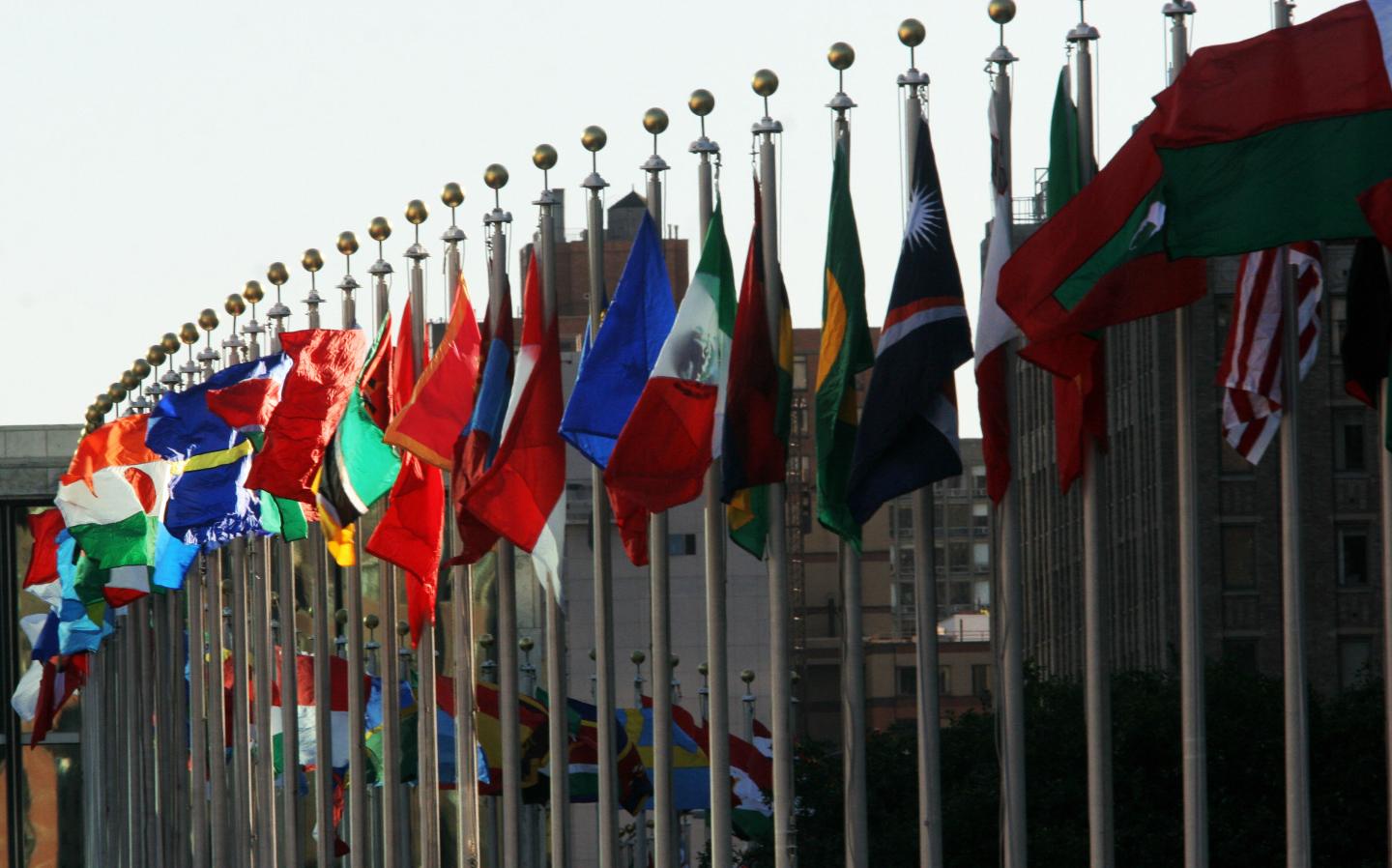
Flags flutter in the wind outside United
Flags flutter in the wind outside United Nations headquarters in New York 24 September 2007, on the eve of the UN General Assembly. AFP PHOTO/Nicholas KAMM (Photo credit should read NICHOLAS KAMM/AFP/Getty Images)Photograph by Nicholas Kamm—AFP via Getty Images

The British government’s “snooper’s charter” appears to go against major European judgements that forbid mass surveillance, according to the United Nations’ top expert on privacy, Joseph Cannataci.

Cannataci, the UN’s “special rapporteur” on the subject, issued a report on Wednesday that said the U.K. government seemed not to appreciate “the serious and possibly unintended consequences of legitimizing bulk interception and bulk hacking.” He urged the government to step back and set a better example to other countries.

The Investigatory Powers Bill would force British Internet service providers to keep logs of all the websites people visit and all the calls they make. It would allow the government to hack many people’s computing devices at once, force organizations to hand over bulk datasets on their customers, and make tech firms remove encryption on their products when asked to do so.

The judgements Cannataci referred to were those of the European Court of Justice (ECJ) in the Schrems case, and the European Court of Human Rights (ECtHR) in the Zakharov case.

Get Data Sheet, Fortune’s technology newsletter.

The Schrems judgement is pretty well known—that was where the EU’s highest court struck down the EU-U.S. Safe Harbor data-transfer agreement, partly because of the U.S. PRISM mass surveillance program. In the ruling, the ECJ said any non-targeted surveillance program giving authorities “generalized” access to people’s data must by definition violate the right to privacy.

The Zakharov ruling, which came through in early December, is perhaps less well-known. It concerned Council of Europe member Russia, which runs a deeply intrusive surveillance apparatus called SORM that gives the authorities direct access to everyone’s communications.

The ECtHR ruled even more explicitly than the ECJ, declaring the illegality of any system that gives the security services and police the “technical means to circumvent the authorization procedure and to intercept any communications without obtaining prior judicial authorization.” Such systems are open to abuse, the court said.

The British government took into account reports from three parliamentary committees on its draft Investigatory Powers Bill, before producing the finished product this month. According to Cannataci, those proposals still “fail the benchmarks” set by the ECJ and ECtHR.

Cannataci encouraged the parliamentary committees to “continue, with renewed vigor and determination, to exert their influence in order that disproportionate, privacy-intrusive measures such as bulk surveillance and bulk hacking as contemplated in the Investigatory Powers Bill be outlawed rather than legitimized.”

For more on national security and privacy, watch:

The rapporteur also praised the governments of the U.S. and the Netherlands for rejecting the use of backdoors, which would allow deliberate ways through encrypted communications techniques for the benefit of investigators and intelligence agencies.

He also backed up the intervention of the United Nation’s high commissioner for human rights, Zeid Ra’ad Al Hussein, in the case of the FBI versus Apple. Zeid said the authorities risk opening a “Pandora’s Box” if they succeed in forcing Apple to make a special version of the iPhone software to help investigators access a locked phone that was used by San Bernardino killer Syed Farook.

“It is encouraging to note the latest comments made by US defense secretary Ash Carter when he declared ‘that strong encryption is essential to the nation’s security’,” Cannataci wrote.


About the Author
By David Meyer
LinkedIn icon
See full bioRight Arrow Button Icon

Latest in Tech

AITech
Nvidia’s CEO says AI adoption will be gradual, but when it does hit, we may all end up making robot clothing
By Marco Quiroz-GutierrezDecember 6, 2025
2 hours ago
Mark Zuckerberg laughs during his 2017 Harvard commencement speech
SuccessMark Zuckerberg
Mark Zuckerberg says the ‘most important thing’ he built at Harvard was a prank website: ‘Without Facemash I wouldn’t have met Priscilla’
By Dave SmithDecember 6, 2025
4 hours ago
AIMeta
It’s ‘kind of jarring’: AI labs like Meta, Deepseek, and Xai earned some of the worst grades possible on an existential safety index
By Patrick Kulp and Tech BrewDecember 5, 2025
16 hours ago
Elon Musk
Big TechSpaceX
Musk’s SpaceX discusses record valuation, IPO as soon as 2026
By Edward Ludlow, Loren Grush, Lizette Chapman, Eric Johnson and BloombergDecember 5, 2025
16 hours ago
data center
EnvironmentData centers
The rise of AI reasoning models comes with a big energy tradeoff
By Rachel Metz, Dina Bass and BloombergDecember 5, 2025
16 hours ago
netflix
Arts & EntertainmentAntitrust
Hollywood writers say Warner takeover ‘must be blocked’
By Thomas Buckley and BloombergDecember 5, 2025
16 hours ago

Most Popular

placeholder alt text
Economy
Two months into the new fiscal year and the U.S. government is already spending more than $10 billion a week servicing national debt
By Eleanor PringleDecember 4, 2025
2 days ago
placeholder alt text
Success
‘Godfather of AI’ says Bill Gates and Elon Musk are right about the future of work—but he predicts mass unemployment is on its way
By Preston ForeDecember 4, 2025
2 days ago
placeholder alt text
Success
Nearly 4 million new manufacturing jobs are coming to America as boomers retire—but it's the one trade job Gen Z doesn't want
By Emma BurleighDecember 4, 2025
2 days ago
placeholder alt text
Success
Nvidia CEO Jensen Huang admits he works 7 days a week, including holidays, in a constant 'state of anxiety' out of fear of going bankrupt
By Jessica CoacciDecember 4, 2025
2 days ago
placeholder alt text
Big Tech
Mark Zuckerberg rebranded Facebook for the metaverse. Four years and $70 billion in losses later, he’s moving on
By Eva RoytburgDecember 5, 2025
20 hours ago
placeholder alt text
Real Estate
‘There is no Mamdani effect’: Manhattan luxury home sales surge after mayoral election, undercutting predictions of doom and escape to Florida
By Sasha RogelbergDecember 4, 2025
2 days ago
Rankings
  • 100 Best Companies
  • Fortune 500
  • Global 500
  • Fortune 500 Europe
  • Most Powerful Women
  • Future 50
  • World’s Most Admired Companies
  • See All Rankings
Sections
  • Finance
  • Leadership
  • Success
  • Tech
  • Asia
  • Europe
  • Environment
  • Fortune Crypto
  • Health
  • Retail
  • Lifestyle
  • Politics
  • Newsletters
  • Magazine
  • Features
  • Commentary
  • Mpw
  • CEO Initiative
  • Conferences
  • Personal Finance
  • Education
Customer Support
  • Frequently Asked Questions
  • Customer Service Portal
  • Privacy Policy
  • Terms Of Use
  • Single Issues For Purchase
  • International Print
Commercial Services
  • Advertising
  • Fortune Brand Studio
  • Fortune Analytics
  • Fortune Conferences
  • Business Development
About Us
  • About Us
  • Editorial Calendar
  • Press Center
  • Work At Fortune
  • Diversity And Inclusion
  • Terms And Conditions
  • Site Map

© 2025 Fortune Media IP Limited. All Rights Reserved. Use of this site constitutes acceptance of our Terms of Use and Privacy Policy | CA Notice at Collection and Privacy Notice | Do Not Sell/Share My Personal Information
FORTUNE is a trademark of Fortune Media IP Limited, registered in the U.S. and other countries. FORTUNE may receive compensation for some links to products and services on this website. Offers may be subject to change without notice.