• Home
  • Latest
  • Fortune 500
  • Finance
  • Tech
  • Leadership
  • Lifestyle
  • Rankings
  • Multimedia
CommentaryOil

Why a Production Freeze Won’t Fix the Oil Collapse

By
Mark A. Barteau
Mark A. Barteau
Down Arrow Button Icon
By
Mark A. Barteau
Mark A. Barteau
Down Arrow Button Icon
February 20, 2016, 9:00 AM ET
Operations Inside MOL Hungarian Oil & Gas Plc Refinery
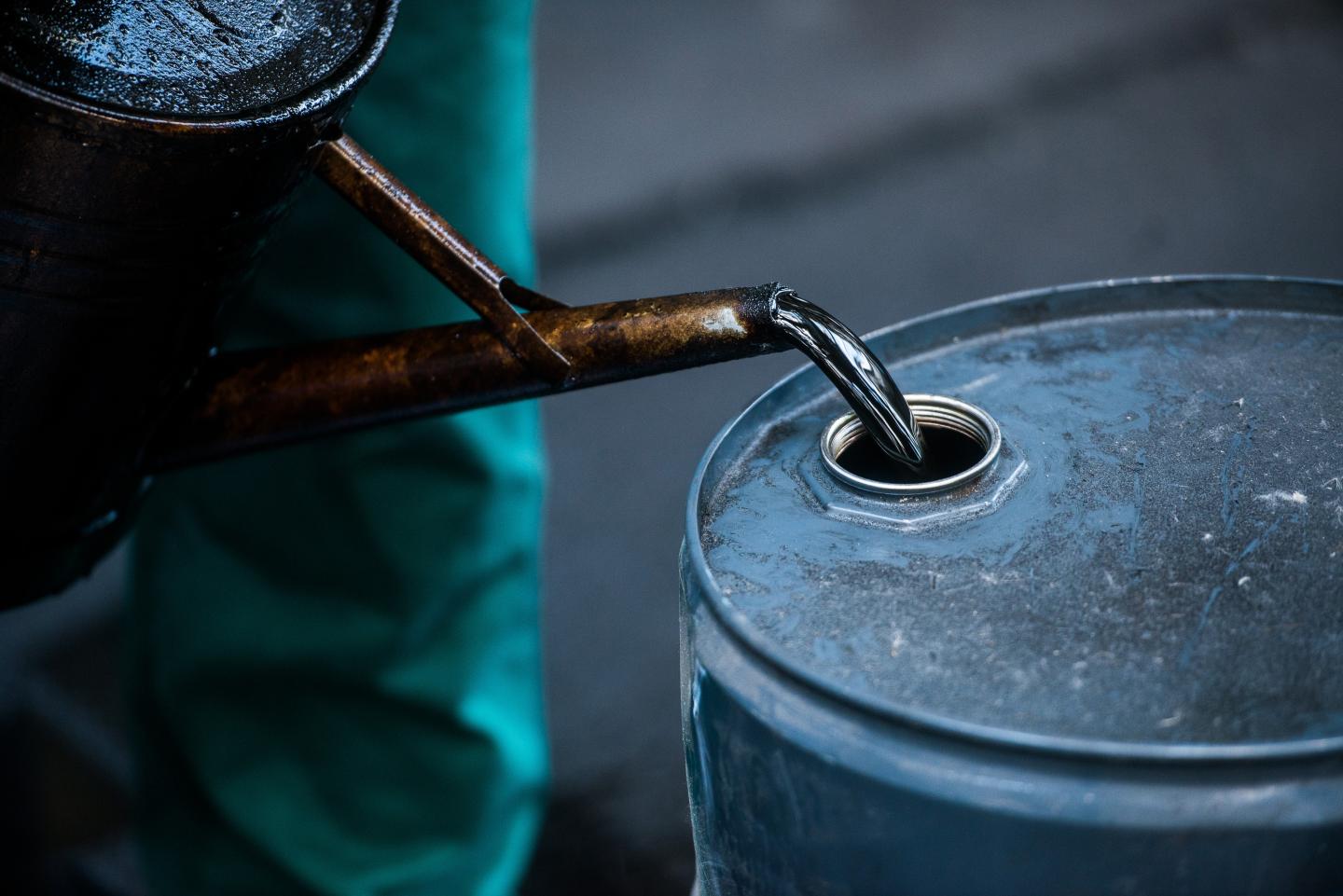
A worker pours liquid oil into a barrel at the delayed coker unit of the Duna oil refinery operated by MOL Hungarian Oil and Gas Plc in Szazhalombatta, Hungary, on Tuesday, July 9, 2013. Hungary refiner Mol may take part in oil exploration in Montenegro after country calls tender in July, daily Magyar Hirlap says. Photographer: Akos Stiller/Bloomberg via Getty ImagesPhotograph by Akos Stiller — Bloomberg via Getty Images

Long ago, in a galaxy far, far away, the news of “collusion” between Russia, Saudi Arabia, Venezuela and Qatar to freeze petroleum production would have been greeted with howls that this was a declaration of economic war. It would have prompted frenzied calls for “Energy Independence” and for dramatic increases in alternative domestic energy supplies, especially in the hyperbole-laden rhetoric of an election year. Ah, but the place was not so far away nor the time so long ago. Every U.S. president from Richard Nixon to Barack Obama has unambiguously declared the need to end America’s dependence on foreign oil and with it our vulnerability to supply limitations imposed by other powers. We have seen that movie, its sequels and its remakes, before.

This time, the story is different. The news this week of a potential production freeze including the world’s two largest crude producers was greeted with yawns. Commentaries were written about the vulnerability, not of the U.S. economy, but of the strategy behind the freeze. Either we have a global case of amnesia or we have entered an era of a “new normal.”

Aphorisms about those forgetting the past being condemned to repeat it aside, there is ample evidence that we have arrived upon a new normal: we have likely entered an era of abundant and relatively cheap oil.

The past two years herald this shift. During that time, global oil supply has exceeded demand by more than 1 million barrels per day. Only once before in the 21st century has such a gap persisted for even two quarters. In fact, going back at least as far as the oil shocks of the 1970s and 80s — the shocks that defined our perceptions of energy scarcity for nearly two generations — global supply has not exceeded consumption by such an amount for two consecutive years. We are indeed in uncharted waters.

Read more: The Devastating Impact of Falling Oil Prices, in One Chart

The contributions to increased global oil supplies over the past decade are well documented: most significant are the near-doubling of U.S. production by tapping shale resources via fracking, and increased production from Saudi Arabia and Iraq. Production by Libya and Iran has dropped over the past five years, but the latter is poised to increase significantly with the end of sanctions. At the same time demand growth has been sluggish, particularly in developing markets like China, leading to an ever-widening gap between supply and demand.

This raises two important questions. First, are production limitations by Russia, Saudi Arabia and others likely to close the supply-demand gap? In the short term, no. The levels at which these countries have propose to freeze production represent record highs, and even those caps are subject to agreement by other major producers. In addition, global oil storage inventories accumulated during the current glut are at record levels. These provide a buffer against contractions or reversals of the gap between supply and demand. Finally, while US crude production has begun to decline slightly from its mid-2015 high and drilling rig counts have dropped in response to low prices, this could reverse if the price of oil were to rebound. Because the market for oil is global, modest constriction of supply by one producer can be replaced by increases from another, often at small marginal cost.

A fundamentally more important question is whether we are prepared to change the mindset about energy supplies and energy security seared into our national consciousness by the shock of the 1973 embargo and periodic upheavals in the Middle East. We no longer live in an era of expensive and uncertain oil and gas supplies (if indeed we ever did.) While oil prices may not remain at recent low levels and there will be occasional price fluctuations and spikes on top of longer term trends, we should recognize that we live in a new era of abundant and relatively inexpensive fossil fuels.

Read more: What’s Driving the Plunge in Oil Prices

We can respond in the usual way – by consuming more and by turning away from alternative energy sources as uneconomical and unneeded. Or we can realize that the use of fossil energy sources is ultimately unsustainable, not because of supply or resource limitations, but because of the environmental and climate consequences of using them. If we choose this new pathway we will continue to expand alternative energy sources and technologies that reduce the carbon emissions footprint of our economy. Admittedly, this is more easily done for virtually oil-free sectors, like electricity generation, than for our toughest challenge – the transportation sector, our largest domestic oil consumer.

Oil production freezes like those announced this week are indicators of the new normal, not threats to it. We can wallow in our windfall of cheap crude, or we can invest some of its financial benefits in creating a less carbon-dependent future. That is the real wake-up call.

Mark A. Barteau is director of University of Michigan Energy Institute.

About the Author
By Mark A. Barteau
See full bioRight Arrow Button Icon

Latest in Commentary

Finance
Lorem ipsum dolor sit amet, consectetur adipiscing elit, sed do eiusmod tempor incididunt ut labore et dolore magna aliqua. Ut enim ad minim veniam
By Fortune Editors
October 20, 2025
Finance
Lorem ipsum dolor sit amet, consectetur adipiscing elit, sed do eiusmod tempor incididunt ut labore et dolore magna aliqua. Ut enim ad minim veniam
By Fortune Editors
October 20, 2025
Finance
Lorem ipsum dolor sit amet, consectetur adipiscing elit, sed do eiusmod tempor incididunt ut labore et dolore magna aliqua. Ut enim ad minim veniam
By Fortune Editors
October 20, 2025
Finance
Lorem ipsum dolor sit amet, consectetur adipiscing elit, sed do eiusmod tempor incididunt ut labore et dolore magna aliqua. Ut enim ad minim veniam
By Fortune Editors
October 20, 2025
Finance
Lorem ipsum dolor sit amet, consectetur adipiscing elit, sed do eiusmod tempor incididunt ut labore et dolore magna aliqua. Ut enim ad minim veniam
By Fortune Editors
October 20, 2025
Finance
Lorem ipsum dolor sit amet, consectetur adipiscing elit, sed do eiusmod tempor incididunt ut labore et dolore magna aliqua. Ut enim ad minim veniam
By Fortune Editors
October 20, 2025

Most Popular

Finance
Lorem ipsum dolor sit amet, consectetur adipiscing elit, sed do eiusmod tempor incididunt ut labore et dolore magna aliqua. Ut enim ad minim veniam
By Fortune Editors
October 20, 2025
Finance
Lorem ipsum dolor sit amet, consectetur adipiscing elit, sed do eiusmod tempor incididunt ut labore et dolore magna aliqua. Ut enim ad minim veniam
By Fortune Editors
October 20, 2025
Finance
Lorem ipsum dolor sit amet, consectetur adipiscing elit, sed do eiusmod tempor incididunt ut labore et dolore magna aliqua. Ut enim ad minim veniam
By Fortune Editors
October 20, 2025
Finance
Lorem ipsum dolor sit amet, consectetur adipiscing elit, sed do eiusmod tempor incididunt ut labore et dolore magna aliqua. Ut enim ad minim veniam
By Fortune Editors
October 20, 2025
Finance
Lorem ipsum dolor sit amet, consectetur adipiscing elit, sed do eiusmod tempor incididunt ut labore et dolore magna aliqua. Ut enim ad minim veniam
By Fortune Editors
October 20, 2025
Finance
Lorem ipsum dolor sit amet, consectetur adipiscing elit, sed do eiusmod tempor incididunt ut labore et dolore magna aliqua. Ut enim ad minim veniam
By Fortune Editors
October 20, 2025
Rankings
  • 100 Best Companies
  • Fortune 500
  • Global 500
  • Fortune 500 Europe
  • Most Powerful Women
  • Future 50
  • World’s Most Admired Companies
  • See All Rankings
Sections
  • Finance
  • Leadership
  • Success
  • Tech
  • Asia
  • Europe
  • Environment
  • Fortune Crypto
  • Health
  • Retail
  • Lifestyle
  • Politics
  • Newsletters
  • Magazine
  • Features
  • Commentary
  • Mpw
  • CEO Initiative
  • Conferences
  • Personal Finance
  • Education
Customer Support
  • Frequently Asked Questions
  • Customer Service Portal
  • Privacy Policy
  • Terms Of Use
  • Single Issues For Purchase
  • International Print
Commercial Services
  • Advertising
  • Fortune Brand Studio
  • Fortune Analytics
  • Fortune Conferences
  • Business Development
About Us
  • About Us
  • Editorial Calendar
  • Press Center
  • Work At Fortune
  • Diversity And Inclusion
  • Terms And Conditions
  • Site Map
  • Facebook icon
  • Twitter icon
  • LinkedIn icon
  • Instagram icon
  • Pinterest icon

Most Popular

placeholder alt text
Economy
'I just don't have a good feeling about this': Top economist Claudia Sahm says the economy quietly shifted and everyone's now looking at the wrong alarm
By Eleanor PringleJanuary 31, 2026
1 day ago
placeholder alt text
Future of Work
Ford CEO has 5,000 open mechanic jobs with up to 6-figure salaries from the shortage of manually skilled workers: 'We are in trouble in our country'
By Marco Quiroz-GutierrezJanuary 31, 2026
1 day ago
placeholder alt text
Success
Ryan Serhant starts work at 4:30 a.m.—he says most people don’t achieve their dreams because ‘what they really want is just to be lazy’
By Preston ForeJanuary 31, 2026
1 day ago
placeholder alt text
Success
Alexis Ohanian walked out of the LSAT 20 minutes in, went to a Waffle House, and decided he was 'gonna invent a career.' He founded Reddit
By Preston ForeJanuary 31, 2026
1 day ago
placeholder alt text
Economy
Meet the first CEO of the IRS: A Jamie Dimon protege facing a $5 trillion test this tax season
By Shawn TullyJanuary 31, 2026
1 day ago
placeholder alt text
Startups & Venture
Silicon Valley legend Kleiner Perkins was written off. Then an unlikely VC showed up
By Allie GarfinkleJanuary 31, 2026
21 hours ago

© 2026 Fortune Media IP Limited. All Rights Reserved. Use of this site constitutes acceptance of our Terms of Use and Privacy Policy | CA Notice at Collection and Privacy Notice | Do Not Sell/Share My Personal Information
FORTUNE is a trademark of Fortune Media IP Limited, registered in the U.S. and other countries. FORTUNE may receive compensation for some links to products and services on this website. Offers may be subject to change without notice.


Latest in Commentary

dewar
CommentaryLeadership
The AI adoption story is haunted by fear as today’s efficiency programs look like tomorrow’s job cuts. Leaders need to win workers’ trust
By Carolyn DewarFebruary 1, 2026
3 hours ago
CommentaryLeadership
How Trump helped Harvard: 5 ‘Crimson’ leadership lessons on standing up to bullies 
By Jeffrey Sonnenfeld, Steven Tian and Stephen HenriquesFebruary 1, 2026
5 hours ago
Economygeopolitics
BRICS could become a new pillar of global governance—if its rapid growth doesn’t erode its newfound clout
By Brian WongJanuary 31, 2026
17 hours ago
taxi
Commentaryregulation
America’s AI regulatory patchwork is crushing startups and helping China
By James Richardson and Eric TanenblattJanuary 30, 2026
2 days ago
EuropeLetter from London
Struggling to remain relevant during the AI watercooler chat? Talk about your latest ‘new collar’ hire
By Kamal AhmedJanuary 29, 2026
3 days ago
trump
Commentaryregulation
Trump is driving capital out of capitalism
By Andrew BeharJanuary 29, 2026
3 days ago