• Home
  • News
  • Fortune 500
  • Tech
  • Finance
  • Leadership
  • Lifestyle
  • Rankings
  • Multimedia
LeadershipSupreme Court

Justice Scalia’s Death: This Changes Everything

By
Roger Parloff
Roger Parloff
Down Arrow Button Icon
By
Roger Parloff
Roger Parloff
Down Arrow Button Icon
February 13, 2016, 9:06 PM ET
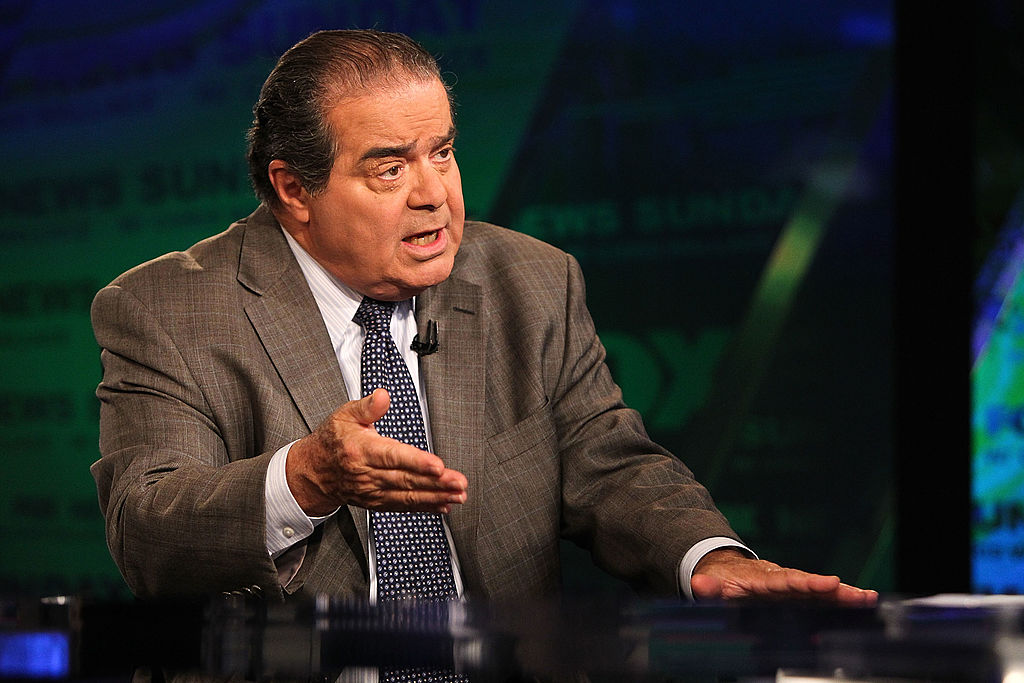
U.S. Supreme Court Justice Antonin Scalia
Paul Morigi—Getty Images

It is hard to imagine the death of anyone in government today—including the President himself—having a greater impact on the everyday life of most Americans than that of Associate Justice Antonin Scalia, who died on Saturday in Texas at 79.

On our closely divided Supreme Court, which sooner or later seems to decide all of the most emotionally freighted political questions of the day—affirmative action, abortion, gun rights, gay rights, labor and employment issues, immigration, Obamacare, the death penalty, and on it goes—a decisive, conservative 5-4 majority has just been shaved to a 4-4 toss-up.

But Scalia was not just one of five conservative votes on that Court. For the last 29 years, he has been the conservative faction’s most commanding, most combative, most entertaining, and most influential voice, both among lawyers and, more remarkably, among the general population.

He refined, redirected, championed, and popularized the notion of “originalism”—the idea that the Constitution’s words should be interpreted the way they were understood at the time they were written or ratified. Today, the doctrine probably has many more adherents among non-lawyers, like Tea Partiers, than it does among lawyers. Its popularity owes much to Scalia’s stylish, persuasive advocacy in terms that lay people could understand.

In the wake of Scalia’s death—reportedly from natural causes—Court watchers are now in the process of combing through a docket that, until now, everyone thought they already understood. They are recounting the remaining votes, rehandicapping the outcomes, and checking to see how the lower court decided the case. This last factor—largely ignored until now—has just become crucial. That’s because when the Court renders a tie vote of 4-4, the lower court decision stands, although it has no precedential weight.

The consensus appears to be that the Senate will not permit President Obama to appoint Scalia’s replacement, and that the 4-4 stalemate will therefore persist until at least the November elections. (President Obama has already pledged to make a nomination, and Charles Grassley, head of the Senate Judiciary Committee, has already pledged to never let it see the light of day.)

That means that a cloud of uncertainty will loom over the remainder of the Court’s current term (ending in late June) and well into the next one (which begins in October).

Court watchers (like Tom Goldstein, publisher of SCOTUSblog) believe that one of the first altered case outcomes, as a result of Scalia’s death, will likely be Friedrichs v. California Teachers Association, a case in which it had been expected that the Court would strike down laws requiring non-union public employees to pay public-sector union dues.

President Obama’s executive orders on immigration also now seem less likely to be struck down by the Court. But since the lower courts also enjoined his orders, it’s not clear that the government will prevail. (See, for instance, Ian Millhiser, of Think Progress.)

As for this term’s important affirmative action case, Fisher v. University of Texas, it is actually not expected to be directly affected by Scalia’s death, since Justice Elena Kagan had recused herself from hearing that case, leaving only three liberal-leaning justices on the bench. That case still seems to be in the hands of Anthony Kennedy.

What does Scalia’s death mean specifically for the business docket? That’s harder to say, Goldstein writes in an email, since those cases aren’t as reliably split along ideological lines.

“But going forward,” he says, “the business community has lost a reliable and strong voice for limiting lawsuits, including class actions.”

About the Author
By Roger Parloff
See full bioRight Arrow Button Icon

Latest in Leadership

Rich woman lounging on boat
SuccessWealth
The wealthy 1% are turning to new status symbols that can’t be bought—and it’s hurting Dior, Versace, and Burberry
By Emma BurleighDecember 3, 2025
4 hours ago
Mark Zuckerberg, chief executive officer of Meta Platforms Inc., during the Meta Connect event in Menlo Park, California, US, on Wednesday, Sept. 25, 2024.
AIMeta
Inside Silicon Valley’s ‘soup wars’: Why Mark Zuckerberg and OpenAI are hand-delivering soup to poach talent
By Eva RoytburgDecember 3, 2025
4 hours ago
Alex Karp smiles on stage
Big TechPalantir Technologies
Alex Karp credits his dyslexia for Palantir’s $415 billion success: ‘There is no playbook a dyslexic can master … therefore we learn to think freely’
By Lily Mae LazarusDecember 3, 2025
5 hours ago
Isaacman
PoliticsNASA
Billionaire spacewalker pleads his case to lead NASA, again, in Senate hearing
By Marcia Dunn and The Associated PressDecember 3, 2025
6 hours ago
UPS
LawUPS
Lawyer blasts UPS for favoring profits over safety after fiery, deadly crash in Kentucky
By Jeffrey Collins and The Associated PressDecember 3, 2025
6 hours ago
Startups & VentureLeadership Next
Only social media platforms with ‘real humanity’ will survive, investor and Reddit cofounder Alexis Ohanian says
By Fortune EditorsDecember 3, 2025
6 hours ago

Most Popular

placeholder alt text
North America
Jeff Bezos and Lauren Sánchez Bezos commit $102.5 million to organizations combating homelessness across the U.S.: ‘This is just the beginning’
By Sydney LakeDecember 2, 2025
1 day ago
placeholder alt text
Economy
Ford workers told their CEO 'none of the young people want to work here.' So Jim Farley took a page out of the founder's playbook
By Sasha RogelbergNovember 28, 2025
5 days ago
placeholder alt text
North America
Anonymous $50 million donation helps cover the next 50 years of tuition for medical lab science students at University of Washington
By The Associated PressDecember 2, 2025
1 day ago
placeholder alt text
C-Suite
MacKenzie Scott's $19 billion donations have turned philanthropy on its head—why her style of giving actually works
By Sydney LakeDecember 2, 2025
2 days ago
placeholder alt text
Law
Netflix gave him $11 million to make his dream show. Instead, prosecutors say he spent it on Rolls-Royces, a Ferrari, and wildly expensive mattresses
By Dave SmithDecember 2, 2025
1 day ago
placeholder alt text
Innovation
Google CEO Sundar Pichai says we’re just a decade away from a new normal of extraterrestrial data centers
By Sasha RogelbergDecember 1, 2025
2 days ago
Rankings
  • 100 Best Companies
  • Fortune 500
  • Global 500
  • Fortune 500 Europe
  • Most Powerful Women
  • Future 50
  • World’s Most Admired Companies
  • See All Rankings
Sections
  • Finance
  • Leadership
  • Success
  • Tech
  • Asia
  • Europe
  • Environment
  • Fortune Crypto
  • Health
  • Retail
  • Lifestyle
  • Politics
  • Newsletters
  • Magazine
  • Features
  • Commentary
  • Mpw
  • CEO Initiative
  • Conferences
  • Personal Finance
  • Education
Customer Support
  • Frequently Asked Questions
  • Customer Service Portal
  • Privacy Policy
  • Terms Of Use
  • Single Issues For Purchase
  • International Print
Commercial Services
  • Advertising
  • Fortune Brand Studio
  • Fortune Analytics
  • Fortune Conferences
  • Business Development
About Us
  • About Us
  • Editorial Calendar
  • Press Center
  • Work At Fortune
  • Diversity And Inclusion
  • Terms And Conditions
  • Site Map

© 2025 Fortune Media IP Limited. All Rights Reserved. Use of this site constitutes acceptance of our Terms of Use and Privacy Policy | CA Notice at Collection and Privacy Notice | Do Not Sell/Share My Personal Information
FORTUNE is a trademark of Fortune Media IP Limited, registered in the U.S. and other countries. FORTUNE may receive compensation for some links to products and services on this website. Offers may be subject to change without notice.