• Home
  • Latest
  • Fortune 500
  • Finance
  • Tech
  • Leadership
  • Lifestyle
  • Rankings
  • Multimedia
Commentary

This Is Why China’s Housing Market Is Such a Mess

By
Howard Yu
Howard Yu
and
Bethany Cianciolo
Bethany Cianciolo
Down Arrow Button Icon
By
Howard Yu
Howard Yu
and
Bethany Cianciolo
Bethany Cianciolo
Down Arrow Button Icon
February 10, 2016, 7:00 PM ET
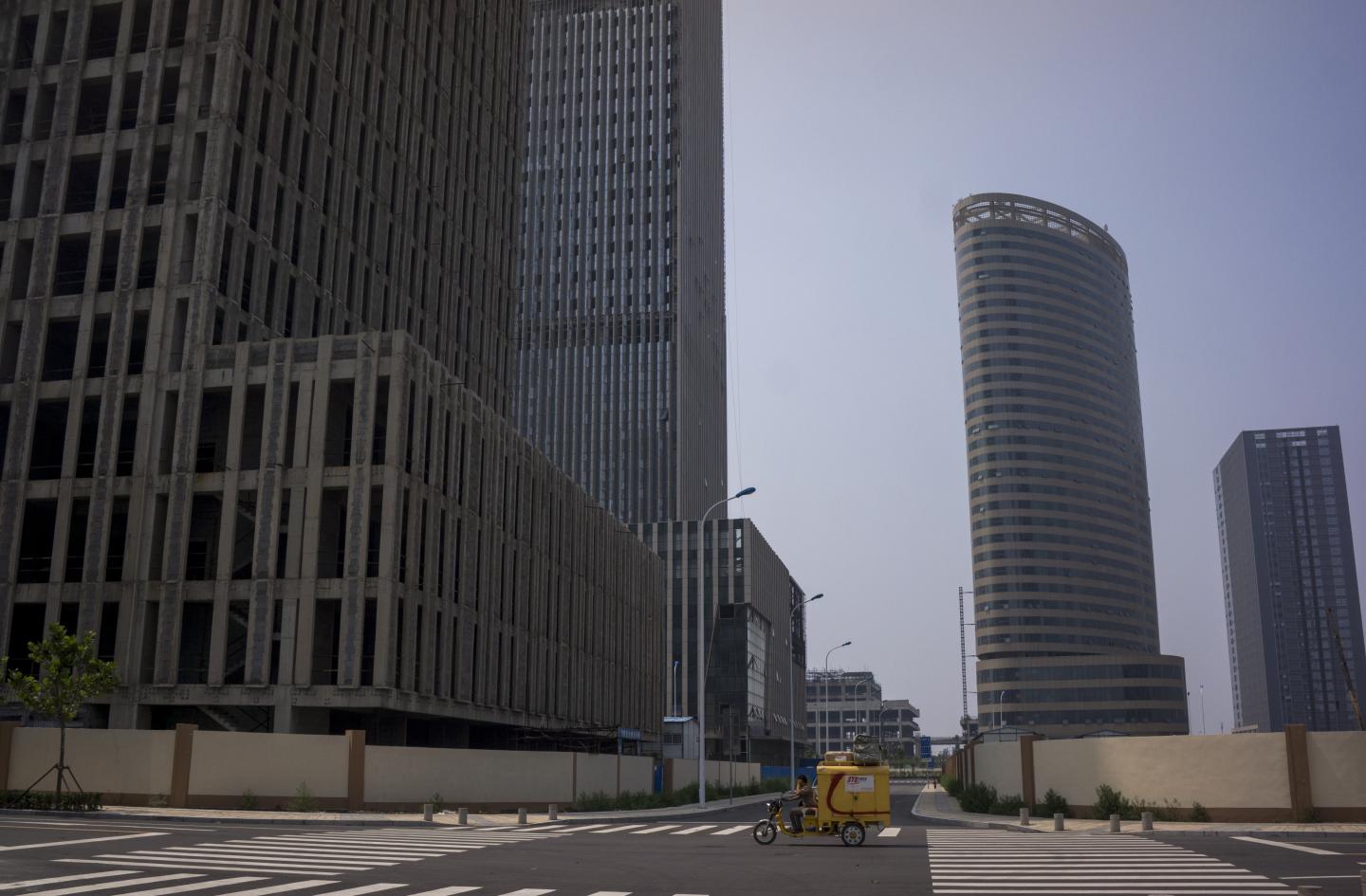
Unfinished buildings and vacant streets in Xiangluo Bay.
YUJIAPU CBD, TIANJIN, CHINA - 2014/08/20: Unfinished buildings and vacant streets in Xiangluo Bay. Yujiapu & Xiangluo Bay, a new biggest central business district under construction in Tianjin , has been expected to be China's Manhattan, now is reported as a Ghost city. The nation's slowing economy is putting the project into jeopardy. (Photo by Zhang Peng/LightRocket via Getty Images)Photograph by Zhang Peng — LightRocket via Getty Images

Just a week before the Chinese New Year, China’s central bank cut the minimum mortgage down payment for first-time buyers from 25% to 20%, as it sought to shore up the property market. The new rules apply to all but a handful of cities—such as Beijing, Shanghai, Shenzhen, and Guangzhou—where demand remains strong. It’s a tale of two tiers of cities, and one that likely won’t have a huge impact.

Construction is everywhere in China. Between 2011 and 2013, China consumed around 6.4 gigatons of cement, according to The Washington Post—more than what the United States used during the course of the 20th century. If Japan taught the world just-in-time production, where inventory should be minimized, China has mastered just-in-case construction—build now and figure out what to do with it later. In its ferocious race to modernity, with three decades of double-digit growth, China has built enough floor space to cover Hong Kong twice over every year. And now, cracks are beginning to show.

There are 13 million vacant homes in China, according to Reuters. Known as “China’s ghost cities,” there is an abundance of newly built urban areas complete with shopping malls, central squares, stadiums, avant-garde administrative buildings, luxurious condos, and villas—everything except people. In the city of Xi’an last year, a never-used 27-floor high-rise that covered 37,000 square meters was blown up and cleared away because it had been left vacant for too long and deteriorated beyond repair.

This is all the more disturbing, given that one-fifth of China’s economic activities are related to the property market. The consequences are many. Zoomlion, the country’s leading construction machinery and sanitation equipment maker, announced a 90% net profit drop in 2015. Fifteen Chinese real estate companies projected a loss for 2015 due to the recent market slowdown. Wanda Commercial Properties, whose founder was until recently China’s richest man, was downgraded last week by Standard and Poor’s to junk bond status, and by Fitch Ratings to “BBB,” hovering two notches above junk bond status, according to The Wall Street Journal.


While reducing China’s housing supply is crucial, it is anything but straightforward. Prices have bounced back in top-tier cities, while dropping in all of those below. Buyers have learned the importance of location the hard way. A viable city needs vibrant economic activity and a sizable population to sustain itself. Price increases, when they occur, tend to be concentrated in a small segment of Chinese markets.

Chinese authorities have long manipulated interest rates and down payment requirements, played with tax rates, and imposed purchase restrictions to either curb or spur the property market. From the second half of 2014 onward, there’s been no hampering of the real estate sector—all moves have been stimulus-oriented, including a six-fold reduction of interest rates. How successful this latest round will be to lure potential buyers into rural cities is anyone’s guess. But the real problem for policymakers is that the root causes of China’s real estate disease run much deeper.

As early as the second half of the 2000s, municipal governments have routinely handed over land to developers. Developers would then receive loans from banks to develop the land. Individual investors bought housing units at inflated prices. In the process, local government pocketed much-needed revenue, local GDP grew, politicians got patted on the back, jobs were created, and everyone made money so the wheels kept turning. But the system has proved to be extremely inefficient at building what is actually needed and yielding return on investment.

In recent years, tier 3 and 4 cities accounted for 80% to 90% of total new construction, an analyst at the Commonwealth Bank of Australia tells Business Insider. With state-owned banks indiscriminately channeling financial resources to property developers, other types of private enterprises and local businesses have been starved of capital. The Chinese government has long been adamant about transforming the nation from an investment-focused to a consumption-driven, technologically-advanced, knowledge-based economy. The current system encourages exactly the opposite.

For China’s middle class, a weakening economy is a mere inconvenience. For the 70 million people who live in abject poverty, a small contraction in living standards could be an utter disaster—enough to trigger social unrest. With overall GDP growth grinding to a record low of 6.9%, the Chinese government has had no choice but to inject more stimulus.This temporary tweak to avoid deeper shocks is needed without a doubt. But the urgency for broader economic reforms is needed even more.

Howard Yu is a professor of strategic management and innovation at IMD, a business school based in Lausanne, Switzerland.

About the Authors
By Howard Yu
See full bioRight Arrow Button Icon
By Bethany Cianciolo
See full bioRight Arrow Button Icon

Latest in Commentary

Finance
Lorem ipsum dolor sit amet, consectetur adipiscing elit, sed do eiusmod tempor incididunt ut labore et dolore magna aliqua. Ut enim ad minim veniam
By Fortune Editors
October 20, 2025
Finance
Lorem ipsum dolor sit amet, consectetur adipiscing elit, sed do eiusmod tempor incididunt ut labore et dolore magna aliqua. Ut enim ad minim veniam
By Fortune Editors
October 20, 2025
Finance
Lorem ipsum dolor sit amet, consectetur adipiscing elit, sed do eiusmod tempor incididunt ut labore et dolore magna aliqua. Ut enim ad minim veniam
By Fortune Editors
October 20, 2025
Finance
Lorem ipsum dolor sit amet, consectetur adipiscing elit, sed do eiusmod tempor incididunt ut labore et dolore magna aliqua. Ut enim ad minim veniam
By Fortune Editors
October 20, 2025
Finance
Lorem ipsum dolor sit amet, consectetur adipiscing elit, sed do eiusmod tempor incididunt ut labore et dolore magna aliqua. Ut enim ad minim veniam
By Fortune Editors
October 20, 2025
Finance
Lorem ipsum dolor sit amet, consectetur adipiscing elit, sed do eiusmod tempor incididunt ut labore et dolore magna aliqua. Ut enim ad minim veniam
By Fortune Editors
October 20, 2025

Most Popular

Finance
Lorem ipsum dolor sit amet, consectetur adipiscing elit, sed do eiusmod tempor incididunt ut labore et dolore magna aliqua. Ut enim ad minim veniam
By Fortune Editors
October 20, 2025
Finance
Lorem ipsum dolor sit amet, consectetur adipiscing elit, sed do eiusmod tempor incididunt ut labore et dolore magna aliqua. Ut enim ad minim veniam
By Fortune Editors
October 20, 2025
Finance
Lorem ipsum dolor sit amet, consectetur adipiscing elit, sed do eiusmod tempor incididunt ut labore et dolore magna aliqua. Ut enim ad minim veniam
By Fortune Editors
October 20, 2025
Finance
Lorem ipsum dolor sit amet, consectetur adipiscing elit, sed do eiusmod tempor incididunt ut labore et dolore magna aliqua. Ut enim ad minim veniam
By Fortune Editors
October 20, 2025
Finance
Lorem ipsum dolor sit amet, consectetur adipiscing elit, sed do eiusmod tempor incididunt ut labore et dolore magna aliqua. Ut enim ad minim veniam
By Fortune Editors
October 20, 2025
Finance
Lorem ipsum dolor sit amet, consectetur adipiscing elit, sed do eiusmod tempor incididunt ut labore et dolore magna aliqua. Ut enim ad minim veniam
By Fortune Editors
October 20, 2025
Rankings
  • 100 Best Companies
  • Fortune 500
  • Global 500
  • Fortune 500 Europe
  • Most Powerful Women
  • Future 50
  • World’s Most Admired Companies
  • See All Rankings
Sections
  • Finance
  • Leadership
  • Success
  • Tech
  • Asia
  • Europe
  • Environment
  • Fortune Crypto
  • Health
  • Retail
  • Lifestyle
  • Politics
  • Newsletters
  • Magazine
  • Features
  • Commentary
  • Mpw
  • CEO Initiative
  • Conferences
  • Personal Finance
  • Education
Customer Support
  • Frequently Asked Questions
  • Customer Service Portal
  • Privacy Policy
  • Terms Of Use
  • Single Issues For Purchase
  • International Print
Commercial Services
  • Advertising
  • Fortune Brand Studio
  • Fortune Analytics
  • Fortune Conferences
  • Business Development
About Us
  • About Us
  • Editorial Calendar
  • Press Center
  • Work At Fortune
  • Diversity And Inclusion
  • Terms And Conditions
  • Site Map
  • Facebook icon
  • Twitter icon
  • LinkedIn icon
  • Instagram icon
  • Pinterest icon

Latest in Commentary

paramount
CommentaryM&A
A cautionary Hollywood tale: the Ellisons’ lose-lose Paramount positioning
By Jeffrey Sonnenfeld and Stephen HenriquesJanuary 12, 2026
20 hours ago
Walken
Commentarybeverages
Molson Coors CEO: We’re doing our part to solve society’s ‘occasion problem’ – and we’re getting some unexpected help
By Rahul GoyalJanuary 12, 2026
21 hours ago
AsiaChina
What global executives need to ask about China in 2026
By Joe Ngai and Jeongmin SeongJanuary 11, 2026
1 day ago
Justin Harlan
Commentaryremote work
I run one of America’s most successful remote work programs and the critics are right. Their solutions are all wrong, though
By Justin HarlanJanuary 11, 2026
2 days ago
Gene Ludwig
Commentaryaffordability
Millions of Americans are grappling with years of declining economic wellbeing and affordability needs a rethink
By Gene Ludwig and Shannon MeyerJanuary 11, 2026
2 days ago
doctor
CommentaryMedicaid
Former White House advisor on the real reason your health care costs are going up: Medicare’s doctor pay gap
By Tomas J. PhilipsonJanuary 9, 2026
4 days ago

© 2025 Fortune Media IP Limited. All Rights Reserved. Use of this site constitutes acceptance of our Terms of Use and Privacy Policy | CA Notice at Collection and Privacy Notice | Do Not Sell/Share My Personal Information
FORTUNE is a trademark of Fortune Media IP Limited, registered in the U.S. and other countries. FORTUNE may receive compensation for some links to products and services on this website. Offers may be subject to change without notice.


Most Popular

placeholder alt text
Economy
Treasury spent $276 billion in interest on the national debt in the final three months of 2025, says the CBO—up $30 billion from a year prior
By Eleanor PringleJanuary 12, 2026
21 hours ago
placeholder alt text
Economy
‘Sell America’: Investors dump U.S. assets in fear of the end of Fed independence
By Jim EdwardsJanuary 12, 2026
22 hours ago
placeholder alt text
Success
An exec at $62 billion giant Colgate says Gen Z workers, despite getting flak for being woke and lazy, are actually ‘pushing us to get better’
By Emma BurleighJanuary 10, 2026
3 days ago
placeholder alt text
AI
This CEO laid off nearly 80% of his staff because they refused to adopt AI fast enough. 2 years later, he says he'd do it again
By Nick LichtenbergJanuary 11, 2026
2 days ago
placeholder alt text
Economy
A Supreme Court ruling that strikes down Trump's tariffs would be the fastest way to revive the stalling job market, top economist says
By Jason MaJanuary 11, 2026
2 days ago
placeholder alt text
Commentary
I run one of America's most successful remote work programs and the critics are right. Their solutions are all wrong, though
By Justin HarlanJanuary 11, 2026
2 days ago