• Home
  • News
  • Fortune 500
  • Tech
  • Finance
  • Leadership
  • Lifestyle
  • Rankings
  • Multimedia
Tech

Obama’s Smart Transit Plan Hinges on Oil Tax

By
David Z. Morris
David Z. Morris
Down Arrow Button Icon
By
David Z. Morris
David Z. Morris
Down Arrow Button Icon
February 8, 2016, 11:47 AM ET
US-POLITICS-STATE OF THE UNION-OBAMA
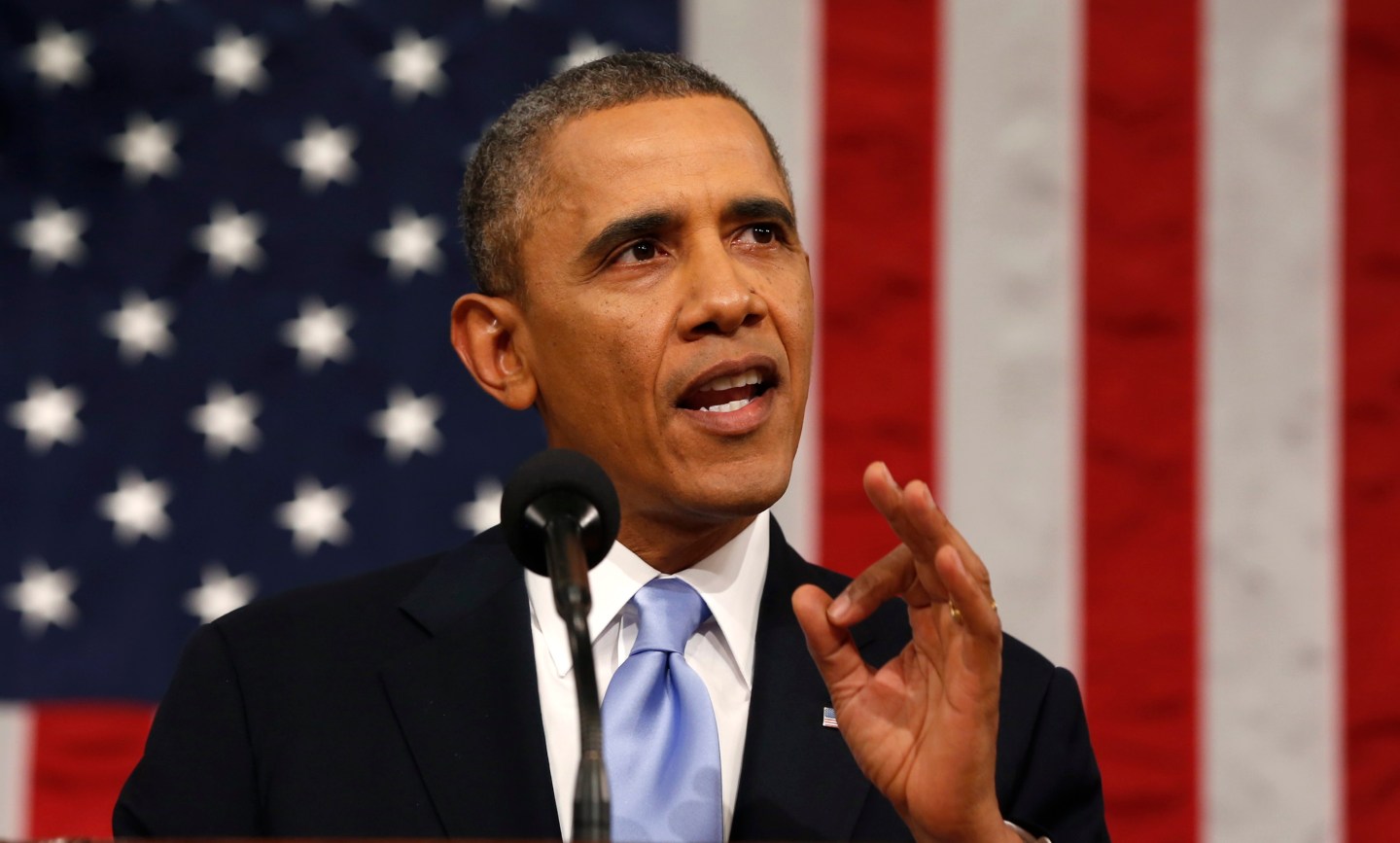
US President Barack Obama delivers the State of the Union address at the US Capitol in Washington on January 28, 2014. AFP PHOTO/Larry DOWNING/Pool (Photo credit should read LARRY DOWNING/AFP/Getty Images)Photograph by Larry Downing — AFP via Getty Images

This week, the Obama administration is expected to release a budget plan that would put more than $300 billion over the next decade into carbon-reducing transportation technology. As the President hinted in his State of the Union Address last month, the plan would be funded in large part by a $10 a barrel tax on oil.

A White House statement previewing the proposal frames it primarily as a response to the threat of climate change, pointing out that transportation accounts for 30% of U.S. greenhouse gas emissions. The new proposal, according to the White House, represents a roughly 50% increase in U.S. investments in clean transportation infrastructure. That would include increased funding for high-speed rail, mag-lev, and autonomous vehicles.

The plan will also include incentives that realign transportation planning at the state and local level to better prioritize mass transit, smarter land use, and clean transportation investment. That would push back against a longstanding and single-minded emphasis among state Departments of Transportation on decreasing driving delays, primarily by expanding highways. Critics—increasingly including Federal administrators—have said that emphasis has become counterproductive.

Get Data Sheet, Fortune’s technology newsletter.

A per-barrel tax on oil is broader than a tax on gasoline, but would have similar effects at the pump. Politico estimates that a $10 per barrel tax could raise gasoline prices by as much as 25 cents per gallon. As we explored following the State of the Union address, such an increase would in theory shift driver behavior to better reflect the environmental costs of cars, encouraging more use of alternatives like biking and mass transit.

The White House argues, though, that the plan would be economically beneficial in the long run, as increased funding would defray what it says is a more than $190 billion in “hidden taxes” imposed on families and businesses by the declining state of existing transportation options.

This is a bold proposal—and it can afford to be, since it’s a largely symbolic gesture from a lame-duck executive facing an uncooperative legislature unlikely to even give it a serious hearing. The Obama administration, though, has already taken concrete steps to promote its vision, including signing a transportation bill last year that defended funding for bicycle infrastructure and provided more than $4 billion in funding for automated vehicle research.

Regulation, though, remains the Obama administration’s most viable tool in shifting the nation’s transportation landscape. The U.S. Department of Transportation is expected to release guidelines for autonomous vehicles within the next six months, with the goal of streamlining innovation. Federal authorities will also soon roll out new performance standards for state DOTs, adding environmental and safety goals to the measurement of driving delays.

For more on the future of transportation technology, watch our video.

Future Federal transportation policy hinges in large part on this year’s presidential election outcome, but the Obama proposal could be a preview. Hillary Clinton, the favorite for the Democratic nomination, has released a transportation platform heavy on innovation and green initiatives, while Senator Bernie Sanders last year introduced a massive $1 trillion, five-year transportation infrastructure bill. Among the Republican candidates, by contrast, Senator Marco Rubio has proposed a large cut to gas taxes and the “devolution” of Federal highway funds to states.


About the Author
By David Z. Morris
See full bioRight Arrow Button Icon

Latest in Tech

Big TechStreaming
Trump warns Netflix-Warner deal may pose antitrust ‘problem’
By Hadriana Lowenkron, Se Young Lee and BloombergDecember 7, 2025
7 hours ago
Big TechOpenAI
OpenAI goes from stock market savior to burden as AI risks mount
By Ryan Vlastelica and BloombergDecember 7, 2025
7 hours ago
AIData centers
HP’s chief commercial officer predicts the future will include AI-powered PCs that don’t share data in the cloud
By Nicholas GordonDecember 7, 2025
9 hours ago
Future of WorkJamie Dimon
Jamie Dimon says even though AI will eliminate some jobs ‘maybe one day we’ll be working less hard but having wonderful lives’
By Jason MaDecember 7, 2025
13 hours ago
CryptoCryptocurrency
So much of crypto is not even real—but that’s starting to change
By Pete Najarian and Joe BruzzesiDecember 7, 2025
18 hours ago
Elon Musk
Big TechSpaceX
SpaceX to offer insider shares at record-setting $800 billion valuation
By Edward Ludlow, Loren Grush, Lizette Chapman, Eric Johnson and BloombergDecember 6, 2025
1 day ago

Most Popular

placeholder alt text
Real Estate
The 'Great Housing Reset' is coming: Income growth will outpace home-price growth in 2026, Redfin forecasts
By Nino PaoliDecember 6, 2025
2 days ago
placeholder alt text
AI
Nvidia CEO says data centers take about 3 years to construct in the U.S., while in China 'they can build a hospital in a weekend'
By Nino PaoliDecember 6, 2025
2 days ago
placeholder alt text
Economy
The most likely solution to the U.S. debt crisis is severe austerity triggered by a fiscal calamity, former White House economic adviser says
By Jason MaDecember 6, 2025
1 day ago
placeholder alt text
Economy
JPMorgan CEO Jamie Dimon says Europe has a 'real problem’
By Katherine Chiglinsky and BloombergDecember 6, 2025
1 day ago
placeholder alt text
Big Tech
Mark Zuckerberg rebranded Facebook for the metaverse. Four years and $70 billion in losses later, he’s moving on
By Eva RoytburgDecember 5, 2025
3 days ago
placeholder alt text
Politics
Supreme Court to reconsider a 90-year-old unanimous ruling that limits presidential power on removing heads of independent agencies
By Mark Sherman and The Associated PressDecember 7, 2025
15 hours ago
Rankings
  • 100 Best Companies
  • Fortune 500
  • Global 500
  • Fortune 500 Europe
  • Most Powerful Women
  • Future 50
  • World’s Most Admired Companies
  • See All Rankings
Sections
  • Finance
  • Leadership
  • Success
  • Tech
  • Asia
  • Europe
  • Environment
  • Fortune Crypto
  • Health
  • Retail
  • Lifestyle
  • Politics
  • Newsletters
  • Magazine
  • Features
  • Commentary
  • Mpw
  • CEO Initiative
  • Conferences
  • Personal Finance
  • Education
Customer Support
  • Frequently Asked Questions
  • Customer Service Portal
  • Privacy Policy
  • Terms Of Use
  • Single Issues For Purchase
  • International Print
Commercial Services
  • Advertising
  • Fortune Brand Studio
  • Fortune Analytics
  • Fortune Conferences
  • Business Development
About Us
  • About Us
  • Editorial Calendar
  • Press Center
  • Work At Fortune
  • Diversity And Inclusion
  • Terms And Conditions
  • Site Map

© 2025 Fortune Media IP Limited. All Rights Reserved. Use of this site constitutes acceptance of our Terms of Use and Privacy Policy | CA Notice at Collection and Privacy Notice | Do Not Sell/Share My Personal Information
FORTUNE is a trademark of Fortune Media IP Limited, registered in the U.S. and other countries. FORTUNE may receive compensation for some links to products and services on this website. Offers may be subject to change without notice.